
How to Live With Cats and Combat Allergies
Living with cats can be a joy, but if you’re one of the many people struggling with allergies, it can also feel like a challenge. You’re not alone—many cat lovers face the dilemma of wanting feline companionship while battling allergy symptoms.
If you want to live with cats despite allergies, focus on choosing low-allergen breeds like Siberian or Balinese, and create a clean, allergen-controlled environment.
Use HEPA filters, frequently vacuum, wash bedding, and establish “cat-free zones” to minimize exposure.
Regular grooming and air purifiers help reduce airborne dander, while medical options such as antihistamines or immunotherapy can ease symptoms.
To learn more about balancing your feline love with allergy management, keep exploring these helpful strategies.
Key Takeaways
- Choose low-allergen cat breeds like Siberian or Balinese and spend time with them before adoption. This helps you see how your allergies might react.
- Keep your home clean by vacuuming with HEPA filters and washing cat items often. Regular cleaning makes a big difference.
- Use air purifiers in common areas and bedrooms to cut down on airborne allergens and improve air quality.
- Make grooming part of your daily routine to help reduce dander and dust around your home.
- Consider medical options like antihistamines or allergy immunotherapy for long-term relief.
What Are Cat Allergies and Why Do They Happen?
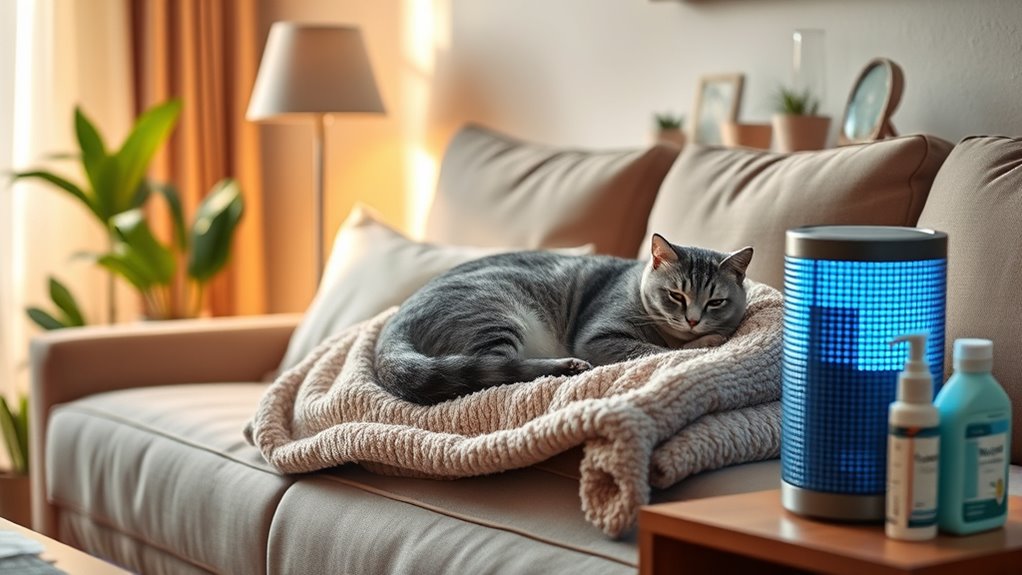
Cat allergies happen when your immune system overreacts to proteins in a cat’s skin cells, saliva, or urine. These proteins, called cat allergens, get released through dander like skin flakes, saliva, and urine.
When you’re exposed, your immune system reacts as if these harmless substances are threats. This causes allergy symptoms such as sneezing, a runny nose, itchy eyes, and congestion.
Your body releases histamine, leading to inflammation and discomfort. Understanding why cat allergies happen involves knowing that some people are more sensitive due to genetics.
Environmental factors like dust or tobacco smoke can make symptoms worse by increasing allergen levels. To help manage these reactions, regular cleaning, air filters, and reducing contact with dander sources are effective.
While you can’t always avoid exposure, controlling these factors can lessen your allergy symptoms. This way, you can still enjoy life with cats even if you’re sensitive.
How to Choose a Low-Allergen Cat Breed
Choosing the right feline companion can make living with allergies much easier. Focus on cat breed traits that reduce allergen production. Some breeds, like Siberian or Balinese, produce fewer allergenic proteins, which makes them better options for allergy sufferers.
Before bringing a new cat home, allergy testing can help you see how sensitive you are to specific breeds or individual cats. This step helps you pick a breed that’s less likely to trigger strong reactions.
Look for breeds known for lower allergen levels, but remember that each cat can be different. Spending time with a potential new pet beforehand can give you a clearer idea of how your allergies might react.
Creating an Allergy-Friendly Home for Cat Owners
Want to make your home more allergy-friendly if you’re a cat owner? One of the best things you can do is install air purification systems that help trap airborne allergens. It’s such a simple step, but it can really make a difference in how comfortable you feel.
And don’t forget about keeping your space super clean. Regular vacuuming and dusting are key to reducing dander buildup, which is often the main culprit behind allergy symptoms. Just taking these small steps can really improve your comfort and make living with your furry friend a lot more enjoyable.
Implement Air Purification Systems
Implementing air purification systems is one of the most effective ways to reduce allergens in your home. These systems improve air quality by capturing airborne allergen sources like pet dander, dust mites, and pollen.
HEPA filters are especially good at trapping tiny particles that cause allergic reactions. Place purifiers in common areas and bedrooms for the best results.
Make sure your unit has the right capacity for your space to maintain proper airflow and filtration. Regularly replace filters as instructed by the manufacturer to keep your system working well.
Regular Cleaning Routines
Establishing a regular cleaning routine is key to keeping allergens away in a home with cats. Vacuum often using a HEPA filter to pick up pet dander effectively. Consider using pet-safe, allergen-free cleaning products for the best results.
Wipe down surfaces daily to stop dust and fur from building up, especially in areas your cat likes to hang out. Wash your cat’s bedding, blankets, and toys regularly to cut down on dander accumulation.
Use allergen-free cleaning products made for pet areas, which help keep airborne allergens low. Keeping your home clean and sticking to a regular cleaning routine creates a healthier environment for both you and your cats.
Consistency is essential for maintaining an allergen-friendly home.
Easy Ways to Keep Your Home Clean and Reduce Allergens
Keeping your home clean is one of the best ways to reduce allergens and create a healthier environment for both you and your cats. Regularly dust, vacuum, and mop to get rid of cat dander and hair.
Use allergy-friendly products like HEPA filters and non-toxic cleaners. These help trap allergens more effectively and keep your home safer.
Try implementing cat-proofing strategies to stop cats from accessing areas where allergens settle, like bedrooms or furniture. This helps prevent the spread of dander and hair throughout your home.
You can also set up “cat-free zones” to minimize allergen buildup. This simple step makes a big difference in keeping your space cleaner.
For quick reference, here’s a helpful chart:
| Best Practices | Tools Needed | Areas to Focus |
|---|---|---|
| Regular vacuuming | HEPA vacuum cleaner | Carpets and upholstery |
| Dusting with damp cloth | Allergy-friendly cleaning products | Surfaces and shelves |
| Creating “cat-free zones” | Barriers, furniture covers | Bedrooms and furniture |
| Air purification | HEPA air purifier | Living spaces and bedrooms |
Following these easy steps can help keep your environment allergen-conscious and comfortable for everyone.
Grooming Tips to Minimize Cat Dander
Regular grooming is one of the most effective ways to minimize cat dander in your home. Using the right grooming tools, like a fine-mesh brush or grooming glove, helps remove loose fur and dander before they become airborne.
When brushing, use gentle, consistent strokes to avoid stressing your cat and to ensure thorough removal of loose hairs. Focus on areas prone to shedding, such as the back, sides, and under the chin.
Establish a regular grooming schedule, ideally several times a week, to keep dander levels down. Be sure to brush your cat in a well-ventilated space and wash your hands afterward to prevent transferring allergens.
Proper brushing techniques not only reduce allergens but also strengthen your bond with your pet. Keep your grooming tools clean by washing them regularly and avoid using harsh chemicals that might irritate your cat’s skin or worsen allergies.
Using HEPA Filters and Air Purifiers Effectively
To get the most out of HEPA filters and air purifiers in your home, it’s important to use them correctly and consistently. Start by choosing an air purifier with a true HEPA filter, which effectively captures airborne allergens like cat dander.
Follow HEPA maintenance tips, such as regularly replacing or cleaning filters as recommended by the manufacturer, to keep it running at its best. Proper placement is key—put your air purifier in common areas where you spend a lot of time.
Position it at face level and avoid blocking airflow with furniture or placing it in corners. Keeping doors and windows closed during operation helps prevent outdoor allergens from coming inside.
Regularly monitor and maintain your air purifier so it continues to work well. With consistent use and proper placement, HEPA filters and air purifiers can really cut down on airborne allergens, making your space more comfortable and allergy-friendly.
Establishing a Daily Routine to Manage Dander and Dust
Setting up a daily routine can really help keep dander and dust under control in your home. It’s a good idea to choose specific times each day for cleaning and stick to that schedule — consistency makes a big difference when managing allergens.
Also, don’t forget to groom your cat regularly; it helps reduce the amount of dander they shed. Using air purifiers can be a game-changer too, as they help clear out airborne particles and improve the air quality in your space.
Designate Cleaning Times
Establishing a consistent cleaning schedule is key to keeping dander and dust levels under control. Set specific times each day to focus on cleaning your home, especially in pet zones where dander tends to gather.
Use effective cleaning products designed to trap allergens, like damp cloths and vacuum cleaners with HEPA filters. Prioritize areas your cats visit most, like living rooms or sleeping spots, and clean them thoroughly.
Regularly wiping down surfaces helps prevent dust buildup. Sticking to a routine reduces airborne allergens and creates a healthier environment for everyone.
Consistent cleaning also makes managing allergens easier and stops dander from becoming overwhelming. Keep your schedule simple and steady to maintain a cleaner, more allergen-friendly space for both you and your cats.
Implement Grooming Schedule
Implementing a daily grooming routine for your cats is one of the best ways to reduce dander and dust in your home. Using the right grooming tools, like brushes and combs suited to your cat’s coat type, can help remove loose fur and cut down on shedding.
Focus on gentle grooming techniques, such as brushing in the direction of hair growth. This helps minimize stress and skin irritation for your cat. Regular grooming traps loose fur, keeping it from becoming airborne and triggering allergies.
Keep grooming sessions short and consistent, ideally every day. This creates a routine that maintains a cleaner environment. By doing this, you’ll lower the amount of dander dispersed around your home and make it more comfortable for allergy sufferers—without sacrificing your cat’s care.
Use Air Purifiers Regularly
Using air purifiers regularly can significantly cut down airborne allergens like pet dander and dust, making your home more comfortable for allergy sufferers. These devices catch allergy triggers that float in the air, especially when your cat’s behavior stirs up dust or sheds fur.
Consistently using air purifiers creates a cleaner environment and helps reduce allergy symptoms. Place them in common areas and bedrooms where you spend most of your time, and keep them running continuously for the best results.
Be sure to keep filters clean and replace them as recommended. This routine not only helps manage allergy triggers but also gives you a better understanding of your cat’s behavior, which can influence allergen levels.
Regular air purification is a simple yet effective step toward living harmoniously with your feline friend despite allergies.
Designing Safe Spaces for Allergy Relief
Creating a dedicated safe space for allergy relief involves more than just closing a door; it requires thoughtful design to minimize allergen exposure. Start by choosing allergy-safe materials for flooring, furniture, and curtains—look for hypoallergenic fabrics and easy-to-clean surfaces.
Incorporate cat-friendly furniture that’s easy to wipe down or wash regularly, reducing dander buildup. Keep this area well-ventilated with air purifiers to filter airborne allergens. Use airtight storage for cat toys, bedding, and other items to prevent dust and dander buildup.
Consider adding a HEPA filter to keep the space fresh. Keep clutter to a minimum to make cleaning easier and prevent allergen traps. Finally, designate this space as a no-cat zone when you need relief, ensuring it remains a sanctuary free from dander and dust so you can breathe easier and relax more comfortably.
Medical Options to Help Control Your Cat Allergy Symptoms
If you’re struggling with allergy symptoms despite your best efforts at managing your environment, medical options can provide significant relief. There are various medications and allergy treatments designed to reduce your reactions.
Antihistamines, like loratadine or cetirizine, can block allergy signals, easing sneezing and itching. Nasal sprays, such as corticosteroids, reduce inflammation in your nasal passages.
Allergy shots, or immunotherapy, gradually desensitize your immune system to cat allergens, offering long-term relief. Decongestants can also help by relieving nasal congestion.
Balancing Your Love for Cats and Your Allergy Management
If you’re a cat lover dealing with allergies, don’t worry—you can still enjoy having cats around! The key is to create allergy-friendly spaces in your home and develop a good cleaning routine. Regularly vacuuming with a HEPA filter and washing your hands after petting your cats can make a big difference.
Another option is to think about getting hypoallergenic cats. While no cat breed is completely allergen-free, some tend to produce fewer allergens, which can help keep your allergy symptoms in check.
Creating Allergy-Friendly Spaces
Balancing your love for cats with allergy management means planning your space carefully. Designate certain areas as cat-free zones, especially bedrooms and workspaces.
Use cat-safe materials like hardwood or tile flooring, which are easier to clean and help reduce allergen buildup. Incorporate allergy-friendly plants like spider plants or bamboo to help purify the air.
Adding air purifiers with HEPA filters in key rooms can make a big difference. Keep furniture covered with washable covers and vacuum regularly with a HEPA filter vacuum.
Here’s a quick overview:
| Space | Material/Plant | Tips |
|---|---|---|
| Living Room | Hardwood, allergy-friendly plants | Regular cleaning, use air purifiers |
| Bedroom | Tile, HEPA-filtered air | Use washable covers, keep pets out |
| Workspace | Laminate, low-allergen plants | Vacuum often, ensure good ventilation |
Choosing Hypoallergenic Cats
Are hypoallergenic cats truly a solution for allergy sufferers who love feline companionship? Not entirely. Many believe certain cat breeds, like Sphynx or Balinese, produce less pet dander, but allergy myths often exaggerate this. It’s essential to evaluate breed temperament and how it fits your lifestyle, along with environmental factors in your home.
Allergy testing can help identify sensitivities, but managing pet dander also depends on grooming products and routines. Regular bathing, along with choosing the right breed, can reduce allergens. However, no cat breed is completely hypoallergenic.
To balance your love for cats and allergy management, combine breed selection with ongoing lifestyle adjustments and environmental control. This way, you can enjoy feline companionship without overwhelming allergy symptoms.
Implementing Effective Cleaning Routines
| Task | Frequency | Focus Area |
|---|---|---|
| Vacuuming | 2-3 times a week | Carpets and upholstery |
| Dusting | Daily | Surfaces and furniture |
| Wiping surfaces | Weekly | Hard floors and furniture |
Frequently Asked Questions
Can Allergy Symptoms Worsen Over Time With Continuous Cat Exposure?
Yes, allergy symptoms can get worse over time if you’re constantly around cats. The longer you’re exposed, the more your symptoms might increase in severity.
As your immune system reacts repeatedly, it can become more sensitive, leading to more congestion, sneezing, or even asthma symptoms. To help prevent this, try to cut down on your exposure, clean regularly, or talk to a doctor about allergy treatments.
Managing how much you’re around cats is key to stopping your symptoms from worsening over time.
Are There Specific Foods That Help Reduce Allergy Symptoms in Cat Owners?
Yes, certain foods can help reduce allergy symptoms in cat owners. You might want to try dietary changes that include foods rich in quercetin, vitamin C, and omega-3 fatty acids, which can boost your immune system.
Try adding fruits like citrus and berries, leafy greens, and fatty fish into your meals. These foods can support your immune health and may help lessen allergic reactions.
Eating these foods might make it easier for you to enjoy time with your cats more comfortably.
How Do Outdoor Cats Impact Indoor Allergy Levels?
Outdoor cats can significantly impact your indoor allergy levels by bringing in outdoor allergens and cat dander.
When your cat goes outside, they pick up pollen, mold spores, and other allergens, which then get tracked inside on their fur and paws.
This can increase the amount of cat dander in your home, leading to allergy symptoms.
To help reduce this, consider limiting your cat’s outdoor access or regularly grooming them to cut down on allergen transfer.
Is It Safe to Use Natural Remedies for Cat Allergy Relief?
You might think natural remedies are harmless, but they aren’t always safe or effective.
While natural antihistamines and homeopathic treatments sound appealing, their benefits often lack scientific backing.
Relying solely on these can give a false sense of security, leaving allergy symptoms untreated.
Always consult a healthcare professional before trying natural remedies, especially if you’re sensitive.
Can Certain Types of Cat Litter Reduce Airborne Allergens Effectively?
Yes, certain types of cat litter can reduce airborne allergens effectively. Clumping litter helps trap dander and waste, so they don’t get into the air as easily.
Hypoallergenic options are designed to produce less dust and fewer allergens, making them a better choice if you have allergies.
Switching to these litters can help minimize allergen spread in your home, so you can enjoy your cat without as much sneezing or irritation.
Conclusion
Living with cats and allergies is like tending a delicate garden. You need to nurture your love for cats while managing the weeds of allergy symptoms.
With patience, proper care, and smart choices, you can enjoy feline companionship without suffering from allergies. Think of your home as a sanctuary where both your love for cats and your health can thrive.
Stay vigilant and proactive. By doing so, you’ll create a harmonious space where your bond with your cats can truly flourish. Living well with cats and allergies is possible with the right approach.