5 Tips to Hold Your Cat Still for Medicine
Many cat owners know how challenging it can be to hold your feline still for medicine. You’re not alone—many people struggle with this daily task. It’s frustrating when your cat resists, making medication time stressful for both of you.
To hold your cat still for medicine, start by creating a calm, distraction-free space and use treats to encourage cooperation. Use gentle restraint, supporting the body with a towel if needed, and speak softly to reassure your cat.
Combining positive reinforcement and short, calm sessions will ease the process. If resistance persists, try distraction techniques or consult your vet. Keep learning more strategies to make medication time smoother for both of you.
Key Takeaways
- Choose a quiet, clutter-free space to help reduce stress during medication time.
- Use gentle, secure holds and support your cat’s body to prevent sudden movements.
- Employ positive reinforcement like treats and praise to encourage your cat to stay calm.
- Break the process into short, positive sessions to make it less overwhelming.
- Watch out for triggers like fear or pain, and try distraction techniques to keep your cat calm.
Why Keeping Your Cat Still Matters for Safe Medication
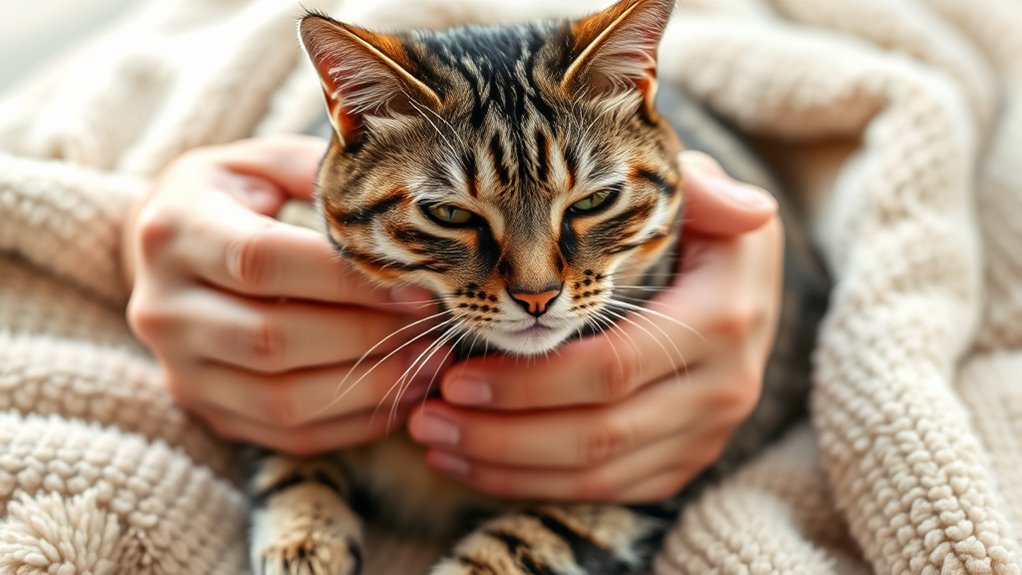
Keeping your cat still during medication is important because sudden movements can cause the medication to be misadministered or ingested improperly. Properly giving medication is crucial because it directly affects your cat’s health and recovery.
If your cat moves suddenly, you risk dosing errors, which can make the medication less effective or cause an overdose. Safety concerns also increase when your cat struggles, possibly leading to injuries for both of you.
A calm, steady approach helps ensure the medication goes where it’s supposed to, reducing stress for your feline friend. Moving or struggling makes giving pills, liquids, or topical treatments more difficult and raises the chance of accidental injury or incomplete dosing.
How to Prepare a Calm Space and Use Treats for Medication Success
Creating a calm space before giving medication can make the process much smoother for both you and your cat. Choose a quiet, comfortable area free of loud noises or distractions.
A calm environment helps your cat feel secure, reducing stress and resistance. Beforehand, gather treats that your cat really loves—these will be key to positive reinforcement.
Select treats that are small, tasty, and easy to give quickly, so you can reward calm behavior throughout the process. Confirm the space is free of clutter and has everything you need within arm’s reach, minimizing disruptions.
Gentle Restraint Techniques to Keep Your Cat Safe
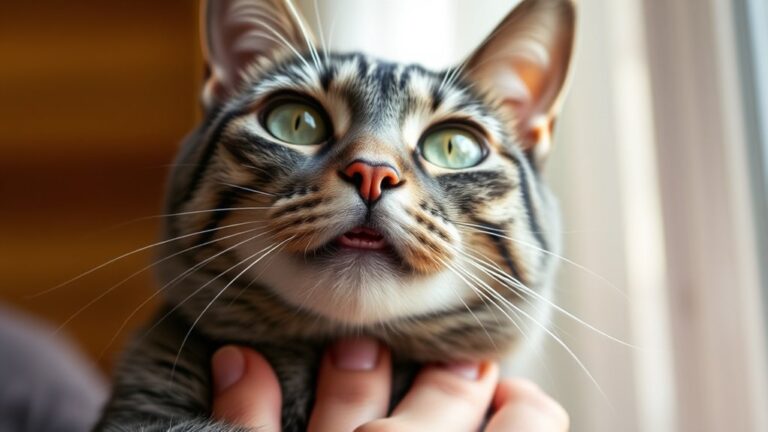
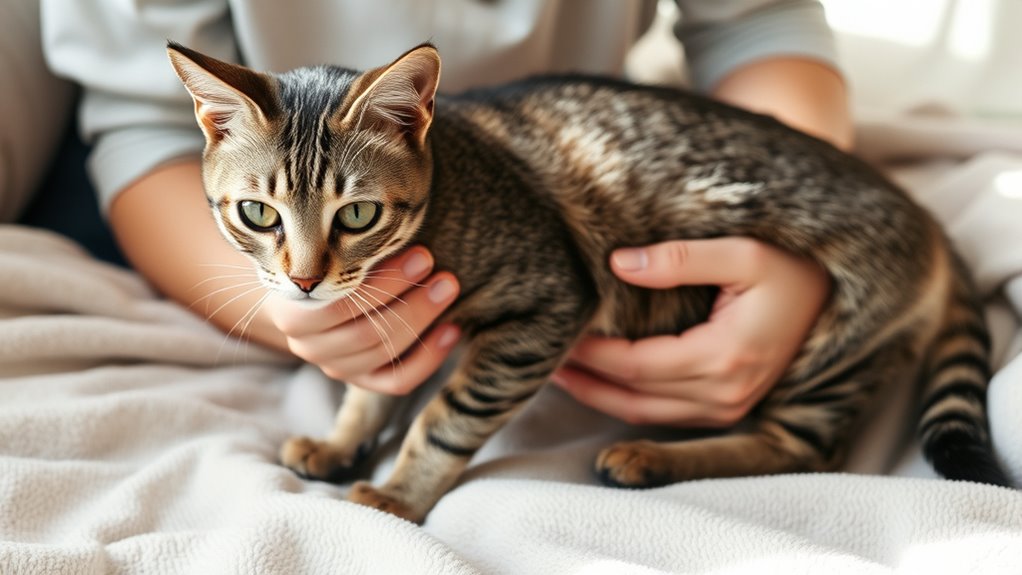
How can you guarantee your cat stays safe during medication time? Gentle restraint techniques are key. Start by calmly holding your cat in a comfortable, secure position to ensure safe handling. Use your hands to support their body, avoiding sudden movements that could cause stress or injury.
Wrap your cat gently in a towel or blanket if they tend to struggle, which helps reduce stress and gives you better control. Keep your voice soothing and speak softly to reassure them. Focus on minimal restraint—only hold them as firmly as necessary to prevent escape and avoid causing discomfort.
If your cat starts to panic, pause and give them a moment to calm down. These gentle restraint techniques promote safe handling and stress reduction, making medication time less intimidating for both of you. Remember, patience and calmness are essential to keep your feline safe and cooperative.
Using Positive Reinforcement to Make Future Meds Easier
After practicing gentle restraint techniques, adding positive reinforcement can make future medication sessions easier and less stressful for your cat. One effective method is clicker training, which helps your cat associate good behavior with a clear signal.
Use the clicker right when your cat stays calm or accepts your handling, then give a tasty reward. Timing is key—rewards should come immediately after the desired behavior to strengthen the connection.
Gradually, your cat will understand that staying still and relaxed leads to positive outcomes. Keep sessions short and consistent, slowly increasing the time your cat remains calm.
Over time, this builds trust and makes medication days less intimidating. Remember, patience and positive reinforcement are essential—your cat will learn that cooperation earns treats and praise, making future routines easier.
Troubleshooting Resistance and Handling Difficult Behaviors
When your cat resists medication or becomes difficult to handle, it’s important to stay calm and assess the situation.
Try to recognize any triggers like fear, stress, or pain that might be causing the resistance.
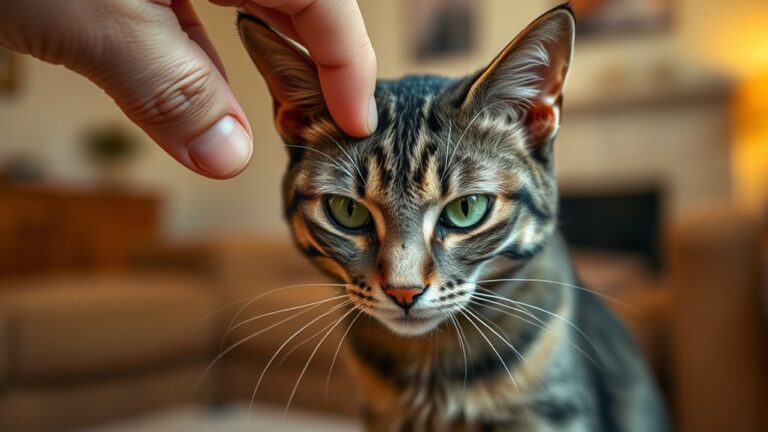
To help manage this, use distraction techniques such as offering a treat, petting gently, or playing with a favorite toy to redirect their attention.
These methods can help reduce anxiety and make handling easier for both of you.
Consider these strategies:
- Identify and remove triggers before medication time
- Use distraction techniques to shift your cat’s focus
- Break the process into short, positive sessions to build trust
Being patient and gentle helps your cat feel safe, which can decrease resistance over time.
If your cat consistently behaves difficult during handling, don’t hesitate to consult your vet for extra advice or calming options.
Understanding what triggers your cat’s resistance and using distraction techniques can make the process smoother and less stressful for everyone.
Frequently Asked Questions
What Are Alternative Methods if My Cat Refuses Medication?
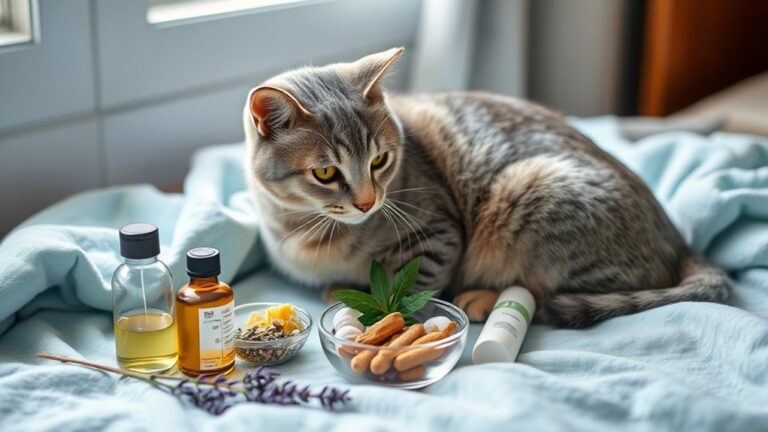
If your cat refuses medication, try mixing flavored medications with tasty treats or food to mask the taste. You could also look into herbal remedies that might help, but always check with your vet first.
Using a syringe to give liquids can be easier if your cat resists pills. Patience and gentle handling can help reduce stress during the process.
How Can I Tell if My Cat Is Stressed During Medication?
You can tell if your cat is stressed during medication by watching for signs like flattened ears, dilated pupils, tense body language, or attempts to escape.
To help ease their discomfort, try calming techniques such as speaking softly, offering gentle strokes, or using pheromone sprays.
If your cat shows signs of stress, pause and give them a break. Then, try calming methods again to make the process smoother and less stressful for both of you.
Are There Any Safety Tips for Administering Medicine Alone?
When administering medicine alone, prioritize safety by using calming techniques like speaking softly or offering treats beforehand.
Always secure your cat gently but firmly, avoiding force that could cause stress or injury. Keep your movements smooth and confident to prevent startling your pet.
Use a towel or blanket if needed for extra control. Remember, patience is key—taking your time helps ensure safety for both you and your cat.
How Often Should I Practice Handling My Cat for Future Meds?
You should practice handling your cat daily until it feels like second nature—like a superhero mastering their powers! Regular handling helps build trust, making future meds easier to give.
Use positive reinforcement every time, like treats or gentle praise, to create a positive association. Start with short sessions and slowly increase them as your cat gets more comfortable.
Keep an eye on your cat’s comfort level and go at a gentle pace. Consistent practice strengthens your bond and makes giving meds a smooth, stress-free experience for both of you.
What Signs Indicate I Should Consult a Veterinarian for Medication Issues?
If you notice medication side effects like vomiting, diarrhea, or lethargy, you should consult a veterinarian promptly.
Also, watch for signs of feline anxiety, such as excessive hiding, vocalization, or aggression. These may indicate your cat isn’t coping well.
These signs help guarantee your cat’s health and comfort, so don’t hesitate to seek professional advice.
This can help you adjust the treatment plan or investigate alternative options.
Conclusion
So, there you have it—your foolproof guide to turning your cat into a willing patient. Who knew that patience, treats, and gentle handling could solve all your medication woes?
Maybe someday your feline friend will thank you or at least tolerate you. Until then, keep calm, carry treats, and remember: if all else fails, a little humor and maybe a catnip distraction can save the day.
Happy medicating with these tips to hold your cat still for medicine!