7 Essential Tips to Pet Your Cat Right
Many cat owners struggle with figuring out how to pet their feline friends without upsetting them. You’re not alone—understanding your cat’s body language can be tricky at first.
To pet your cat right, pay attention to their body language. Relaxed tails and leaning in mean they’re happy, while puffed tails or ears flattened back signal discomfort.
Focus on gentle strokes behind the ears and along the back, avoiding sensitive areas.
Watch for signs your cat has had enough, like pulling away or tail flicks. Building trust takes patience and respecting boundaries.
Keep these tips in mind, and you’ll create a stronger bond, uncovering even more ways to make petting enjoyable for both of you.
Key Takeaways
- Observe your cat’s body language to make sure they’re comfortable and relaxed before petting.
- Focus on gentle areas like behind the ears and chin, and avoid sensitive spots.
- Use slow, steady strokes with light pressure to prevent overstimulation.
- Pay attention to signs of discomfort, like tail flicking or pulling away, and respect their boundaries.
- Keep petting sessions short and positive—this helps build trust and prevents overwhelming your cat.
How Can You Read Your Cat’s Body Language?
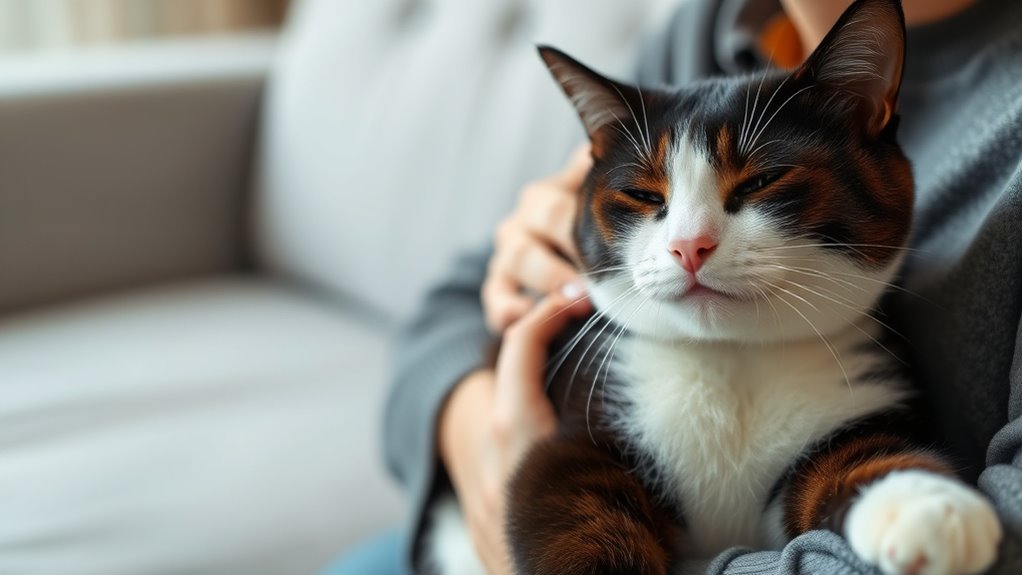
Understanding your cat’s body language is key to knowing when they’re comfortable or stressed. One of the most telling signs is their tail signals. A relaxed tail, gently swaying or held high, shows happiness and confidence.
A relaxed tail signals happiness and confidence in your cat.
On the other hand, a puffed-up tail indicates fear or agitation, while a low, flicking tail signals irritation. Pay attention to their ears too. Ears pointed forward suggest curiosity or engagement, while flattened ears show fear or aggression.
Slightly tilted ears can mean your cat is relaxed but alert. When reading your cat, combine these signals with other cues like eye contact or body posture for a complete picture. Remember, each cat is unique, so observing their usual behaviors helps you understand their mood better.
Noticing these subtle signs lets you respond the right way, making your interactions positive and helping your cat feel safe.
Which Are the Best Places to Pet Your Cat?
You know, cats have their favorite spots when it comes to being petted, and figuring them out can be quite the fun! Most cats really enjoy gentle scratches behind their ears, and they often love a good chin rub too. Soft strokes on their belly can be nice, but it’s a bit more hit or miss—some cats love it, while others prefer to keep their tummy to themselves.
The key is paying close attention to how your cat reacts. If they lean into your touch, purr, or even nudge your hand, you’ve found a winner! But if they start to twitch, pull away, or seem uncomfortable, it’s best to stop and try somewhere else. Every cat is a little different, so just take your time and enjoy discovering their favorite spots!
Favorite Spot Behind Ears
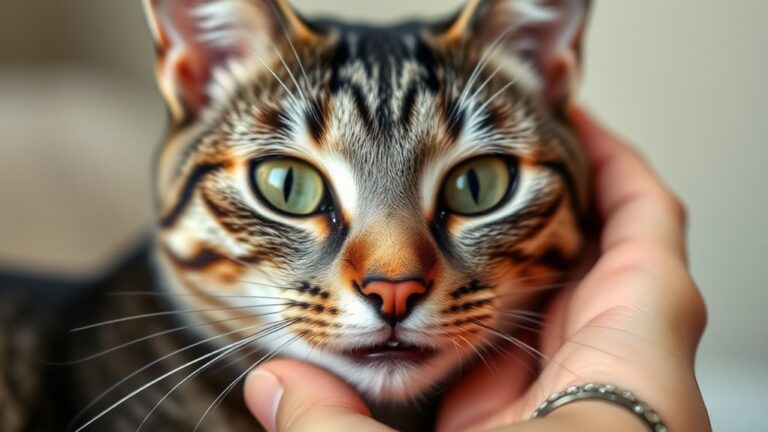
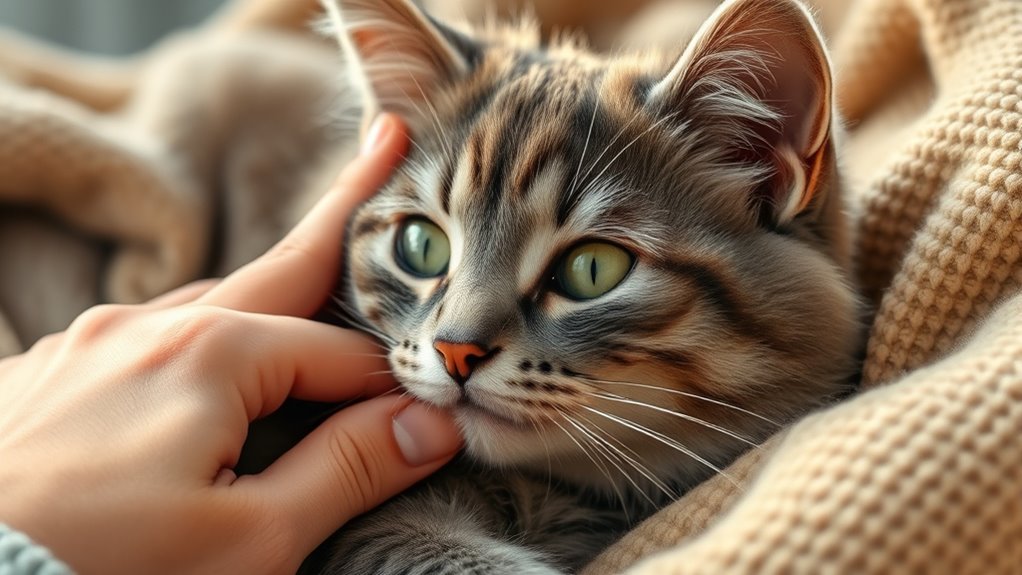
The area behind your cat’s ears is often a favorite spot for them to be petted because it’s a place where they can easily feel your gentle touch and enjoy some affection.
To maximize comfort, use gentle ear scratching techniques—soft, light strokes work best.
Your fingers or a favorite petting tool, like a soft brush or your fingertips, can help deliver soothing sensations. Many cats love this spot because it’s easy to access and signals trust.
Pay attention to their reactions; if they lean into your touch, you’re doing it right. Avoid applying too much pressure, as this can cause discomfort.
Regular, gentle petting here can strengthen your bond and make your cat feel safe and loved.
Gentle Chin Rubs
Consider these four spots for effective chin rubs:
- Just below the whisker pads for a soothing sensation.
- The soft spot between the jaw and the chin.
- The sides of the face, near the cheeks.
- The area around the corners of the mouth.
Chin rubs can help reduce stress, strengthen your bond, and encourage trust. When done gently and thoughtfully, they can become a favorite part of your petting routine.
Soft Belly Strokes
After enjoying gentle chin rubs, many cats begin to relax enough to accept soft belly strokes. If your cat shows trust, gently expose their belly, as belly rubs can deepen your bond and offer comfort.
Always use safe petting techniques—watch for signs of discomfort like twitching or swatting. When you start, use slow, gentle strokes and stop immediately if your cat pulls away.
Not all cats enjoy belly rubs, so only proceed if they seem receptive. For those that do, soft belly strokes can be incredibly soothing and a sign of mutual trust.
How Can You Pet Your Cat Gently for Maximum Relaxation?
Gently petting your cat can greatly improve their relaxation, but it’s important to do it thoughtfully. Creating a calm environment and using slow, gentle movements helps your cat feel safe and comfortable.
Find a quiet, cozy spot free of loud noises or sudden interruptions. Use gentle, slow strokes on areas like the head, chin, or back, but avoid sensitive spots.
Pay attention to your cat’s body language—if they lean into your hand, keep going. If they pull away, it’s time to stop. Keep your touch light and steady, and stay relaxed yourself.
How Do You Know When Your Cat Has Had Enough?
Want to know if your cat has had enough? Just keep an eye on their body language. For example, if their tail is twitching or their ears are pinned back, it’s a good sign they’re done. You might also notice them pulling away or suddenly stopping what they’re doing—that’s a clear sign they want some space.
And don’t forget to listen for any vocal cues. If your cat starts hissing or growling, it’s time to back off. These sounds usually mean they’re feeling uncomfortable or overwhelmed. So, paying attention to these little signals can help you know when to stop petting and give your kitty a break.
Watch for Body Language
Recognizing when your cat has had enough is key to making sure she feels safe and relaxed. Watching her body language can give you a good idea of how she’s feeling.
Look for signs like her body shifting from relaxed to tense or stiff, which shows she might be uncomfortable. If she starts to pull away or tries to escape your touch, that’s a clear signal.
Pay attention to her tail—if it flicks rapidly or away from your hand, she’s probably annoyed or stressed. Flattened ears or narrowed eyes also indicate irritation or discomfort.
Notice Vocal Cues
Vocal cues can be an immediate and clear way to tell if your cat has had enough of the petting session. Pay attention to their vocal patterns—sudden meows, growls, or hissing often mean they’re uncomfortable or annoyed.
Your cat’s communication cues include stopping purring, moving away, or trying to escape. If they start vocalizing more sharply or seem tense, it’s a sign they’re signaling you to stop.
Some cats softly chirp or hum when they’re happy, but if their sounds get more insistent or abrupt, it’s time to back off. Recognizing these cues helps you respect their boundaries and keeps petting a positive experience for both of you.
Recognize Withdrawal Signs
Just as vocal cues reveal your cat’s mood, their body language can tell you when they’ve had enough of the petting session. Recognizing withdrawal signs helps prevent stress signals and guarantees a positive experience. Watch for these cues:
- Your cat suddenly pulls away or shifts to a different position.
- Their tail flicks or lashes, which can indicate irritation.
- Ears flatten or rotate backward, signaling discomfort.
- They stop purring or start to hiss or growl.
These signals show your cat is reaching their limit. Ignoring these stress signals can lead to stress or even aggression. Paying attention to when your cat wants to stop ensures you respect their boundaries and creates a trusting, comfortable environment for your feline friend.
How Can You Build Trust and a Strong Bond Through Petting?
Building trust and a strong bond with your cat through petting starts with paying attention to her signals. Watch for signs of comfort, like purring or leaning into your touch, and respond accordingly.
Use gentle, slow strokes and avoid sudden movements to help your cat feel safe. Respect her boundaries; if she pulls away or shows signs of discomfort, give her space.
Gentle, slow strokes and respecting boundaries help your cat feel safe and secure.
Consistency is key—regular, calm interactions help your cat associate petting with positive experiences. Focus on areas she enjoys, like the cheeks or under the chin, to improve her comfort and build trust.
Over time, these small, thoughtful actions strengthen your connection. Remember, building trust isn’t about rushing; it’s about creating a safe environment where your cat feels secure and loved.
With patience and attentiveness, your bond will grow stronger through every gentle touch.
What Common Petting Mistakes Should You Avoid?
While petting your cat can strengthen your bond, it’s important to avoid common mistakes that might make her uncomfortable or stressed. Many pet owners have misconceptions about the best petting techniques, which can accidentally cause her discomfort.
Here are four mistakes to watch out for:
- Ignoring her body language – If she tenses or moves away, stop immediately.
- Petting her in the wrong spots – Avoid the belly or tail unless she shows she’s comfortable there.
- Using rough or inconsistent pressure – Gentle, steady strokes work best to prevent irritation.
- Overdoing it – Too much petting can overwhelm her. Keep sessions short and watch her reactions.
Understanding these common pitfalls and adjusting your petting style will help her feel safe and loved. Always pay attention to her cues and respect her boundaries for a positive, stress-free experience.
How Can You Adjust Your Petting Technique to Suit Your Cat’s Preferences?
To make petting sessions enjoyable for your cat, pay close attention to her unique preferences and responses. Observe her purring, as it often shows she’s comfortable and happy, but also watch for signs of touch sensitivity or discomfort.
If she leans into your hand or purrs softly, she’s probably enjoying the interaction. But if she pulls away, flattens her ears, or tucks her paws, it’s a sign to stop or change your approach.
Adjust your petting by focusing on the areas she seems to like, like behind the ears or along the back. Avoid sensitive spots such as the belly or tail if she shows signs of unease.
Use gentle, slow strokes and be mindful of her body language. Tailoring your touch to her responses helps build trust and makes her feel safe and relaxed during petting sessions.
Frequently Asked Questions
How Often Should I Pet My Cat to Keep Them Happy?
You should pet your cat daily, paying attention to their purring preferences and comfort levels. Keep petting sessions short at first, about 3-5 minutes, so your cat doesn’t get overwhelmed.
Watch for signs of enjoyment or overstimulation. If your cat seems happy, you can gradually increase the petting time. Every cat is different, so their reactions will guide you.
Are There Specific Signs My Cat Enjoys Being Petted?
Think of your cat’s signals like a dance, guiding you through their comfort. If they purr softly, knead, or nuzzle, these are clear signs they enjoy being petted.
Watch their tail—if it flicks or curls gently, they’re relaxed. When your cat purrs signals contentment and their tail language shows ease, you’re on the right track.
Respond to these cues, and your bond will grow stronger with each gentle touch.
Can Over-Petting Harm My Cat?
Yes, over-petting can harm your cat. Too much petting can cause stress, irritation, or even make your cat more aggressive.
Pay close attention to your cat’s body language. Signs like tail flicking, ears back, or swatting mean you should stop.
By noticing these signals, you can prevent your cat from feeling uncomfortable. This helps ensure they enjoy petting sessions safely.
What Are the Best Toys to Use Alongside Petting?
To make your cuddling sessions even better, pick toys that spark your cat’s curiosity, like interactive playthings and enrichment activities. Feather wands, laser pointers, and puzzle feeders are great because they engage your cat’s mind and body.
These toys make petting more fun for both of you. They also help build trust and keep your feline entertained, strengthening your bond.
Just remember to pay attention to what your cat prefers and switch up toys now and then. This keeps things interesting and makes sure your cat stays happy and engaged.
How Do I Introduce My Cat to New Petting Routines?
You introduce your cat to new petting routines gradually, paying attention to their purring patterns and comfort zones. Start with short sessions, using gentle strokes to build trust.
Watch for signs of relaxation or discomfort, and adjust your approach accordingly. Gradually extend your petting, always respecting their boundaries.
Consistency helps your cat feel safe, making it easier for them to accept new routines and enjoy the experience.
Conclusion
By tuning into your cat’s body language and respecting their boundaries, you create a bond that’s both gentle and genuine. Remember, petting is an art, not a science, and every cat has their unique preferences.
Think of it as a dance—you lead with kindness and patience. When you adapt your technique and listen carefully, petting becomes a language of love spoken fluently through trust and tenderness.
Mastering how to pet your cat right helps build a strong, trusting relationship. It’s all about understanding your feline friend and showing them love in a way they truly appreciate.