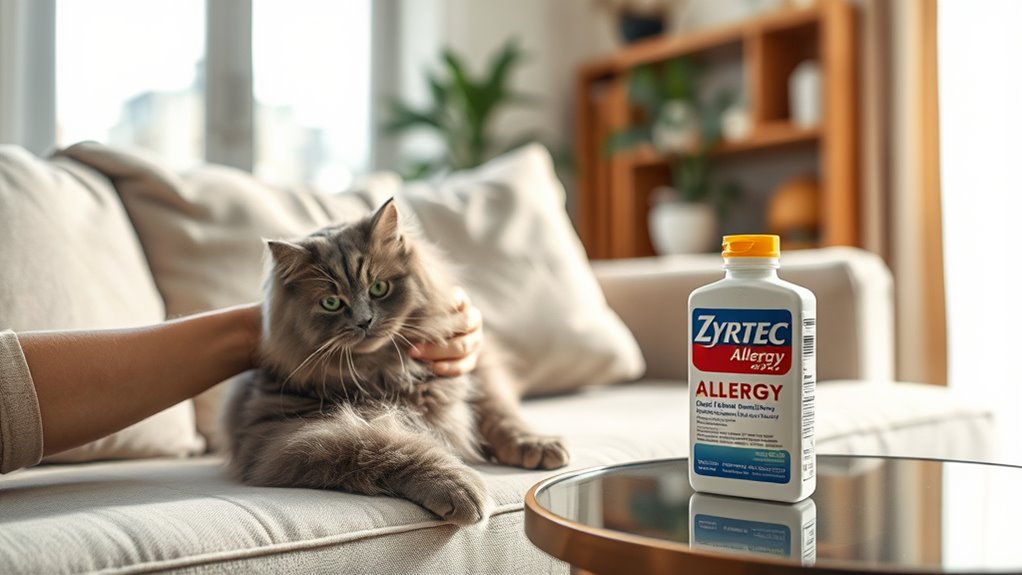
How Does Zyrtec Help With Cat Allergies?
If you’re one of the many people who struggle with cat allergies, you know how tough it can be to breathe easy and enjoy time at home.
It’s frustrating to deal with sneezing, itching, and watery eyes, especially when you love cuddling your furry friend.
Zyrtec helps with cat allergies by blocking histamine receptors, which reduces sneezing, itching, runny nose, and watery eyes.
It works quickly, often providing relief within an hour, and allows you to breathe easier.
Taking it daily at the same time maximizes its effectiveness, but be aware of possible side effects like drowsiness.
To learn more about how Zyrtec can manage your symptoms and safe usage tips, keep exploring these details.
Key Takeaways
- Zyrtec blocks histamine receptors, which helps reduce allergy symptoms caused by cat dander.
- It alleviates sneezing, itching, watery eyes, and nasal congestion.
- You can often feel relief within an hour of taking it.
- It also helps control inflammation and makes breathing easier during allergy flare-ups.
- Regular use can manage your symptoms over time, making it more comfortable around cats.
What Are the Common Symptoms of Cat Allergies?
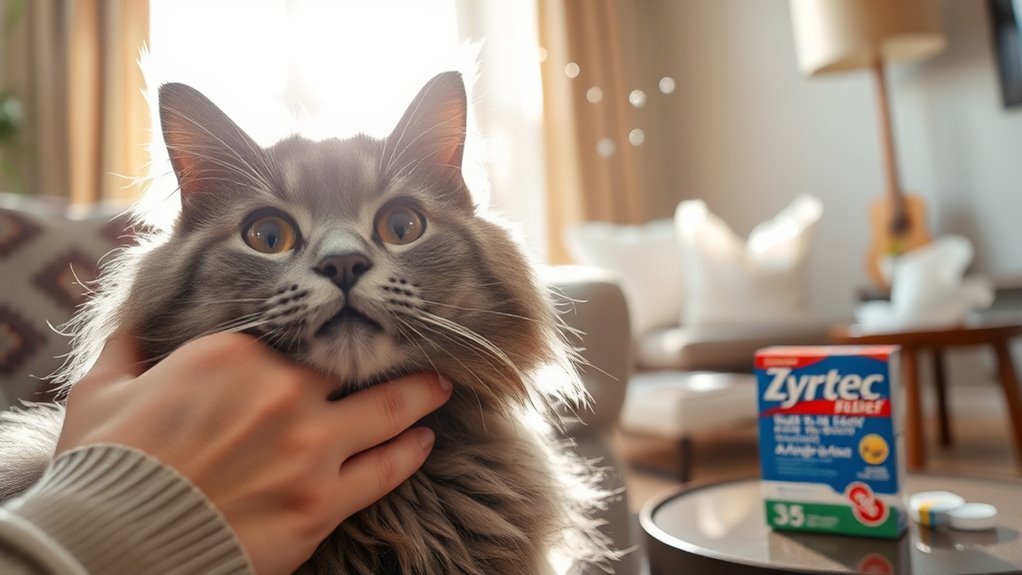
If you’re allergic to cats, you’ll probably notice some symptoms that can impact your daily routine. Pet dander, tiny skin flakes from cats, is a common trigger that causes many of these issues.
You might find yourself sneezing a lot, especially when you’re around cats or in dusty places. Your nose may run constantly, and nasal congestion can make it hard to breathe clearly.
It’s also common to have itchy, watery eyes that bother you throughout the day. Some people notice their skin itching or developing a rash after contact with pet dander.
In more severe cases, allergy symptoms can lead to asthma-like issues, such as wheezing or shortness of breath. These symptoms can interfere with your sleep, work, and everyday activities.
Recognizing these signs early helps you manage your allergy and take steps to reduce exposure to pet dander.
How Does Cat Allergy Medication Work?
Cat allergy medications work by targeting the specific ways your body reacts to pet dander. When you’re exposed, your immune response kicks in, recognizing dander as a threat.
This triggers the release of chemicals like histamine, which cause allergy symptoms such as sneezing, itching, and a runny nose. Medications like Zyrtec work by blocking histamine receptors, preventing histamine from binding and reducing symptoms.
Some allergy medicines also influence other parts of your immune response, calming inflammation and easing congestion. By inhibiting histamine release or its effects, these drugs help you breathe easier and feel less uncomfortable.
Understanding how they work can help you pick the right treatment for your allergy symptoms. Keep in mind, while they don’t eliminate all reactions, these medications can significantly lessen the severity of your immune response to cat dander.
Can Zyrtec Help Relieve Cat Allergy Symptoms?
Sure! Zyrtec can really help with those pesky cat allergy symptoms like sneezing and itching, making you feel a lot more comfortable. It also helps with a runny nose and watery eyes, so breathing becomes a bit easier. If you’re thinking about trying it, it’s good to know how it works to target these symptoms and give you relief.
Reduces Sneezing and Itching
Zyrtec can effectively minimize sneezing and itching caused by cat allergies by blocking the body’s allergic response. When you take Zyrtec, it works to reduce the release of chemicals that trigger allergy symptoms.
This provides noticeable sneezing relief and itching reduction. You might find your sneezing episodes decrease in both frequency and intensity, helping you breathe easier.
It also helps calm itchy skin or eyes often linked to cat allergies. This makes daily activities more comfortable and less disruptive.
Because Zyrtec acts quickly, you could notice improvements within an hour. Consistent use can help manage symptoms over time, giving you a better quality of life even around cats.
Alleviates Runny Nose
When allergy symptoms flare, a common issue is a runny nose that can be both uncomfortable and disruptive. Zyrtec is effective at providing allergy relief by targeting the histamines responsible for nasal congestion and excess mucus.
When you take Zyrtec, it helps reduce the severity of your runny nose, allowing you to breathe more easily and feel more comfortable. Its antihistamine properties work quickly to block the allergic response that causes nasal drip.
This means you won’t have to deal with constant sniffling or wiping. Many people find Zyrtec to be a reliable option for alleviating a runny nose caused by cat allergies, helping you enjoy a clearer, more comfortable day.
Controls Watery Eyes
Watery eyes are a common and irritating symptom of cat allergies, often making your daily activities uncomfortable. Zyrtec can help with allergy relief by reducing the histamine response that causes eye irritation. It works to control watery eyes, making eye care easier and more effective.
To understand its benefits, consider this table:
| Symptom | How Zyrtec Helps | Additional Tips |
|---|---|---|
| Watery eyes | Reduces histamine release | Use artificial tears |
| Itching | Decreases inflammation | Keep windows closed |
| Redness | Minimizes blood vessel dilation | Wash hands frequently |
| Swelling | Limits fluid buildup | Maintain clean bedding |
| Overall allergy relief | Eases multiple symptoms | Consult your doctor |
Zyrtec provides targeted allergy relief, helping you manage watery eyes and improve your eye care routine effectively.
How Quickly Does Zyrtec Work for Cat Allergies?
Many people wonder how quickly Zyrtec begins to relieve allergy symptoms after taking it for cat allergies. Typically, Zyrtec’s effectiveness kicks in within about an hour, making it a fast-acting option for allergy relief. You might notice a reduction in sneezing, nasal congestion, or itchy eyes fairly quickly after taking the medication.
The allergy symptom onset can vary a bit from person to person, but most find relief within 30 minutes to an hour. Keep in mind that Zyrtec’s full effects may take a few days of consistent use to become more noticeable, especially if your allergies are severe.
What’s the Best Way to Take Zyrtec for Relief?
To get the best relief from Zyrtec, it’s a good idea to take it at the same time every day. Consistency really helps keep your allergy symptoms under control better than just taking it now and then. Also, taking Zyrtec with food can help prevent any stomach upset and make sure your body absorbs it more effectively.
Correct Dosage Timing
Taking Zyrtec at the right time can really make a difference in managing your allergy symptoms. Consistent timing and knowing how often to take it helps you get the best relief.
Ideally, take Zyrtec once daily, around the same time each day. This helps keep the medication levels steady in your system. You can take it with or without food, but sticking to your routine is key.
Here’s a simple table to help visualize your options:
| Time of Day | Effectiveness | Routine Consistency |
|---|---|---|
| Morning | Starts working quickly | Easy to remember |
| Afternoon | Covers peak allergy times | Fits your daily schedule |
| Evening | Prevents overnight symptoms | Keeps you regular |
| Before Bed | Helps you sleep better | Easy to include in your night routine |
Choosing a specific time and sticking to it will give you the best results.
Consistent Use Benefits
Consistent use of Zyrtec guarantees you get steady relief from allergy symptoms and helps prevent flare-ups. Maintaining dosage consistency ensures your body adapts properly and maximizes the medication’s effectiveness.
Regular use can also lower the risk of long-term effects from allergy exposure, like chronic inflammation or respiratory issues. Taking Zyrtec daily at the same time helps you avoid missed doses that could lead to symptoms coming back.
This consistency keeps your immune system stable and prevents sudden allergy attacks. Be sure to follow your healthcare provider’s instructions for dosage and how often you should take it, especially if you’re using Zyrtec long-term.
Staying consistent is key to managing your symptoms effectively and safely.
Taking With Food
Eating food before or with Zyrtec can help reduce the chance of stomach upset, which some people experience when taking the medication on an empty stomach.
To get the most benefit from Zyrtec and avoid food interactions, try these tips:
- Take Zyrtec with a meal or snack, like toast or yogurt, to protect your stomach.
- Steer clear of high-fat foods that might slow down absorption and reduce its effectiveness.
- Keep your schedule consistent by taking it at the same time every day for steady relief.
Are Zyrtec and Other Allergy Medications Safe to Use Together?
| Feeling Confident | Feeling Overwhelmed |
|---|---|
| You’re in control of your health. | Uncertain about drug interactions? |
| Your safety is the top priority. | Worried about medication safety? |
| Trust your doctor’s advice. | Fear of unintended side effects? |
Always check with your doctor or pharmacist before taking multiple allergy medications. Staying informed helps you avoid risky drug interactions and keeps your medication safe. It’s better to be cautious than deal with avoidable side effects or health issues.
What Are the Side Effects of Zyrtec for Cat Allergies?
While Zyrtec is generally considered safe for managing cat allergies, it’s important to be aware of its potential side effects. Some people may experience mild reactions, while others might encounter more noticeable symptoms.
Common side effects include drowsiness or fatigue, which can affect your daily activities. You might also feel dry mouth, making you thirsty and uncomfortable. Headache or dizziness can occur, especially when you’re just starting the medication.
Common side effects include drowsiness, dry mouth, headache, and dizziness, especially when starting Zyrtec.
It’s also important to watch out for interactions with other medications. Combining Zyrtec with sedatives or alcohol can increase drowsiness and impair your coordination. Be cautious if you’re taking other allergy meds or drugs that cause drowsiness.
If you notice any unusual or severe side effects, it’s best to consult your healthcare provider promptly. Being aware of these side effects helps you use Zyrtec safely and effectively to manage your cat allergies.
Who Should Avoid Using Zyrtec for Cat Allergies?
Certain people should avoid using Zyrtec for their cat allergies, especially if they have specific health conditions or are on certain medications.
If you have kidney or liver problems, Zyrtec might not be the best choice because it can impact these organs. Pregnant or breastfeeding women should also check with their doctor since safety during pregnancy isn’t fully proven.
People with a history of allergic reactions to antihistamines should be cautious too. If you’re already taking Zyrtec and it doesn’t seem to help, you might want to consider alternatives like nasal sprays or immunotherapy.
Remember, allergy triggers are different for everyone, and Zyrtec might not cover all your symptoms. Always talk to your healthcare provider before starting or stopping any medication.
This is especially important if you have health issues or are on other drugs. That way, you can find the safest and most effective way to manage your cat allergies.
What Are Some Tips to Reduce Cat Allergy Symptoms Naturally?
To reduce cat allergy symptoms naturally, start by minimizing your exposure to cat dander and allergens. Small lifestyle changes and natural remedies can really help.
First, keep your environment clean by vacuuming with a HEPA filter and dusting surfaces regularly. This helps remove allergens from your home.
Keep your home allergen-free by vacuuming with a HEPA filter and dusting regularly.
Next, use HEPA air purifiers to filter out airborne allergens and improve indoor air quality. It’s a simple step that can make a noticeable difference.
Finally, practice good personal hygiene. Wash your hands after handling your cat and avoid touching your face to prevent transferring allergens.
These habits can lower allergen levels and ease your symptoms. Consistency is key—little daily efforts add up over time. While they won’t completely eliminate allergies, they support better symptom management.
Are There Alternatives to Zyrtec for Managing Cat Allergies?
Are you wondering if there are other options besides Zyrtec to help with your cat allergies? Luckily, there are a few antihistamines out there that might work just as well. Plus, some natural remedies could also help ease your symptoms without needing medication.
It’s a good idea to compare different treatments, whether they’re prescription medicines or over-the-counter options. Finding the right fit for you can make managing your allergies much easier and more comfortable.
Alternative Antihistamines Available
If Zyrtec doesn’t work for you or causes unwanted side effects, there are several alternative antihistamines that can help manage cat allergies. These medications often work just as well and may have fewer side effects for some people. Here are some popular options:
- Loratadine (Claritin) offers non-drowsy relief and is easy to take daily.
- Fexofenadine (Allegra) is known for quick action and minimal sedation.
- Diphenhydramine (Benadryl) provides strong relief but can cause drowsiness, so use it carefully.
These options give you flexibility depending on your symptoms and lifestyle. Always talk to your healthcare provider to find the best allergy medication for your specific needs.
Natural Allergy Remedies
While medications like Zyrtec are commonly used to manage cat allergies, many people look for natural remedies as alternatives. Herbal remedies such as butterbur, quercetin, and nettle may help reduce allergy symptoms naturally.
These herbs have anti-inflammatory properties and can support your immune response. Making dietary changes can also make a difference; reducing processed foods and adding foods rich in omega-3 fatty acids like fish and flaxseeds might help lessen inflammation.
Some people find that local honey or probiotics improve their allergy symptoms over time. While natural remedies can work for some, they often do best when combined with other allergy management strategies.
Always talk to a healthcare professional before starting any herbal or dietary regimen.
Prescription vs Over-the-Counter
When considering options to manage cat allergies, it’s helpful to understand the differences between prescription medications and over-the-counter (OTC) remedies. Prescription options usually offer stronger or more targeted relief but require a visit to your doctor.
OTC options are more accessible and typically include antihistamines like Zyrtec, loratadine, or cetirizine, which you can buy without a prescription.
Here are some options to think about:
- Prescription medications like nasal steroids or allergy immunotherapy.
- OTC antihistamines such as loratadine or fexofenadine.
- Natural remedies and lifestyle adjustments as extra options.
Knowing your choices helps you pick the most effective treatment for your needs, balancing convenience and strength.
Frequently Asked Questions
Can Zyrtec Be Used Long-Term for Cat Allergy Management?
Yes, you can use Zyrtec long-term for managing cat allergies, but it’s important to consider potential long-term effects and proper dosage. Regular use might cause side effects like drowsiness or dry mouth.
Be sure to talk to your doctor about the right dosage and how long you should take it. They can help monitor your response and make adjustments if needed.
This way, you can get effective allergy relief without risking unnecessary health issues.
Does Zyrtec Affect Cats or Only Humans?
Did you know that Zyrtec is designed specifically for humans and isn’t approved for cats? It mainly affects humans’ immune responses, so we don’t really know how well it works for cats.
Giving Zyrtec to cats could be risky because the right dosage can be very different between species.
Always talk to a vet before giving any medication, including Zyrtec, to your feline friends. This way, you can ensure their safety and get the correct dosage.
Are There Age Restrictions for Taking Zyrtec for Allergies?
You should be aware that age restrictions for Zyrtec depend on age and health. For children, pediatric considerations include adjusting the Zyrtec dosage appropriately, often lower than adult doses.
Adults can generally take Zyrtec safely, but you should be mindful of potential side effects like drowsiness or dry mouth.
Always consult a healthcare professional before starting Zyrtec, especially for children, to guarantee safe and effective use.
How Does Zyrtec Compare to Other Antihistamines for Cat Allergies?
Ah, the grand quest for allergy relief! Zyrtec often outshines other antihistamines with its notable effectiveness against cat allergies, providing quicker relief with fewer sedative effects.
While some antihistamines may cause drowsiness or dry mouth, Zyrtec generally offers a better balance of efficacy and minimal side effects.
Can Zyrtec Prevent Allergic Reactions Before Exposure to Cats?
Zyrtec can help prevent allergic reactions if taken proactively, but it’s not a guaranteed preventive measure. You should follow dosage recommendations carefully, usually taking it once daily.
Incorporate other preventive measures like limiting exposure and cleaning your environment. Taking Zyrtec before contact with cats may reduce symptoms, but it’s best to check with your doctor for personalized advice.
It’s a good idea to combine medication with avoidance strategies for the most effective allergy management.
Conclusion
While Zyrtec can effectively relieve your cat allergy symptoms by blocking histamine, it’s not a cure. Some believe it also reduces your body’s allergic response over time, but the evidence is mixed.
To truly manage allergies, combining medication with natural strategies can be more effective. So, if you’re hoping Zyrtec alone will keep your symptoms at bay, consider a thorough approach for better relief and a happier, allergy-friendly home.
Using Zyrtec for cat allergies is helpful, but it works best when paired with other allergy management techniques.