Do Cats Like These 10 Favorite Petting Areas?
Many cat owners know the struggle of figuring out how to pet their feline friends without causing discomfort or missing those special spots they love. You’re not alone—many people find it tricky to understand what makes their cats feel safe and happy during cuddle time.
Yes, most cats love being gently petted on areas like their cheeks, ears, and chin, which contain scent glands that bring comfort. They generally enjoy soft strokes behind the ears and under the chin, but avoid sensitive spots like the belly or paws.
Look for signs of enjoyment like slow blinking or purring, and watch for cues to stop if they seem overwhelmed.
If you continue exploring, you’ll uncover how to make your bond even stronger.
Key Takeaways
- Cats usually love gentle petting on their cheeks, ears, and chin because these spots have scent glands and help them feel relaxed.
- When your cat purrs or lies down comfortably, it’s a good sign they’re happy with the petting in their favorite areas.
- Try to avoid sensitive spots like the belly and paws to prevent upsetting your cat or causing negative reactions.
- Keep in mind, each cat is different—age, breed, and personality all play a role in what they enjoy.
- Pay attention to your cat’s signals and stop petting if they seem overstimulated or uncomfortable to keep things positive.
What Are the Main Cats’ Favorite Petting Zones?
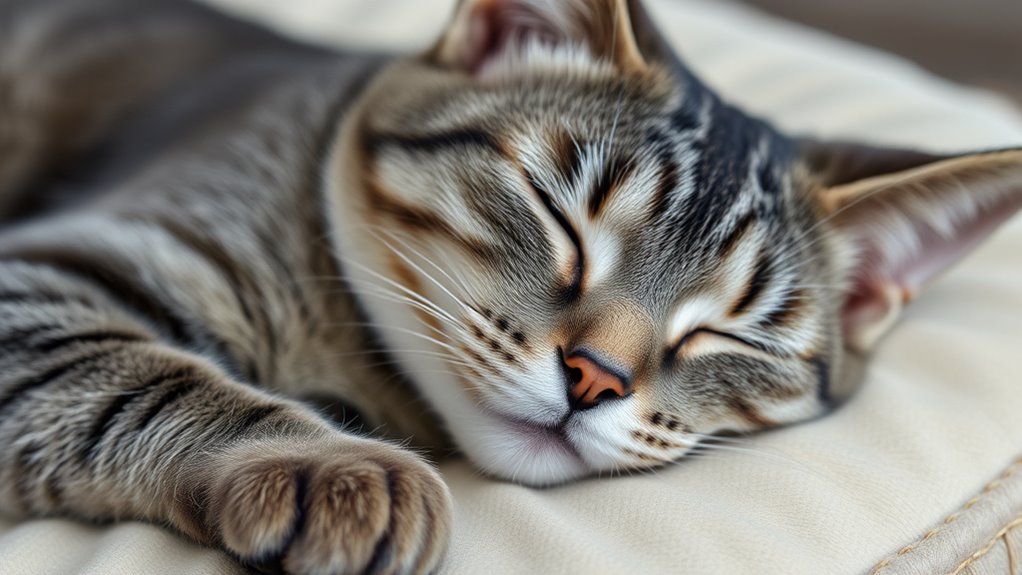
Have you ever wondered why some spots on your cat’s body seem to inspire instant purring and headbutts? These are often your cat’s favorite spots, where they enjoy being gently petted.
Many cats prefer their cheeks, around the ears, or along the chin, as these areas contain scent glands and are naturally comforting. Their petting preferences vary, but gentle approaches tend to produce the best results.
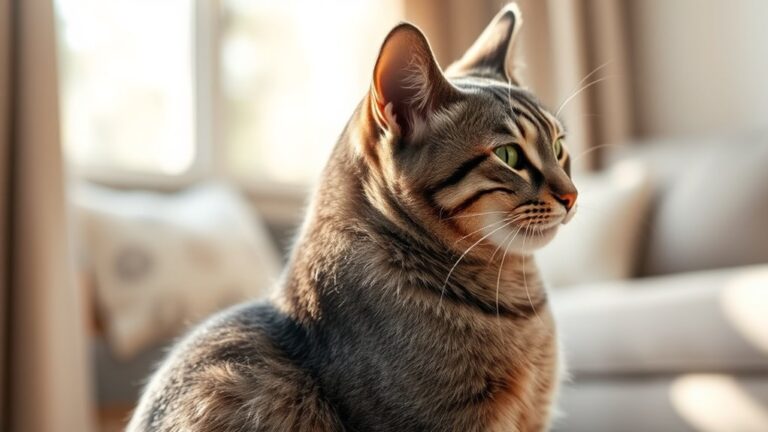
Many cats love gentle petting on their cheeks, ears, and chin—areas rich in scent glands and naturally soothing.
When you focus on these zones, you use soothing techniques that help your cat feel secure and loved. Avoid rough or sudden movements, as cats respond better to soft strokes.
The key is to pay attention to your cat’s reactions and adjust your petting accordingly. By targeting their favorite spots and employing gentle, consistent touches, you create a positive experience.
This encourages more relaxed interactions. Knowing these zones helps you build trust and deepens your bond with your feline friend.
How Can You Tell If Your Cat Enjoys Being Petted?
Wondering how to tell if your cat truly enjoys being petted? Observing your cat’s behavior is the key. When cats enjoy petting, they often show relaxed body language like slow blinking, soft purring, or leaning into your touch.
You might notice their tail flicking gently or their paws kneading, which indicates they’re comfortable. Conversely, if your cat pulls away, flicks their tail sharply, or shows signs of agitation like hissing or swatting, it’s a clear sign they’re not enjoying the petting.
Every cat has unique petting preferences, so pay attention to subtle cues. Consistent positive reactions suggest your cat is happy with your touch. Remember, not all cats are the same, and respecting their cues guarantees a pleasant experience.
Why Do Cats Love Being Petted Behind the Ears and Chin?
If your cat shows signs of enjoying petting in certain areas, you might notice they seem especially content when you scratch behind their ears or gently rub their chin.
Cats love these spots because they’re linked to their ear sensitivity and chin grooming habits. Behind the ears, the skin is thin and sensitive, making gentle scratching feel good and comforting.
Cats enjoy gentle scratches behind their ears and under their chin because it taps into their natural grooming and comfort instincts.
Cats often have scent glands there, so petting helps them mark territory and feel secure. Rubbing the chin taps into their natural grooming instincts, which they associate with affection and cleanliness.
This area is also less exposed, making it a safe zone where cats feel relaxed. When you pet these spots, you’re engaging with their natural behaviors, boosting their comfort and trust.
That’s why cats often purr or lean into your touch when you pet behind their ears or under their chin.
Signs Your Cat Is Comfortable During Petting
When your cat feels comfortable during petting, they often show subtle but clear signs of relaxation and contentment. Paying attention to their feline signals helps you understand how they like to be petted. You might notice your cat gently purring, which means they’re really enjoying the interaction.
A relaxed, soft gaze or slow blinking also shows trust and comfort. If your cat leans into your touch or nudges your hand, it’s a sign they’re receptive to petting. Their body language, like a loose, relaxed posture and a gently swishing tail, further confirms they’re happy.
On the other hand, if your cat’s ears tilt back or they suddenly pull away, it could mean they’re uncomfortable. Recognizing these signals helps you adjust your petting style to match their preferences. This makes the experience more positive for both of you.
Understanding these feline comfort signals strengthens your bond and leads to more enjoyable interactions.
Areas Cats Usually Avoid or Find Unpleasant
While many cats enjoy being petted, they often have specific areas they prefer to avoid or find unpleasant. These spots can cause discomfort due to textures or sensitive areas. You might notice your cat reacts negatively when touched near their belly, tail, or paws.
Sudden movements or loud noises can also startle them, especially if they’re feeling overstimulated. Some common areas cats avoid include the belly, especially if it’s sensitive, and their paws, since they’re highly sensitive.
The tail base can be an overstimulation trigger, and behind the ears or head might cause discomfort if touched too much. Cats also tend to prefer privacy near their territory boundaries.
Understanding these preferences helps you respect your cat’s grooming preferences and boundaries. This ensures petting stays a positive experience for both of you. Avoid forcing contact on unpleasant spots or textures, and watch for signs of discomfort to build trust.
Do Age or Breed Influence Your Cat’s Favorite Petting Spots?
Age and breed can significantly influence where your cat enjoys being petted, as individual preferences often change over time and vary across breeds. Younger cats might prefer more playful or gentle strokes, while older cats often favor softer, less invasive areas.
Breed tendencies also play a role. Some breeds, like Siamese or Abyssinians, enjoy being stroked along their backs or heads. Others, like Ragdolls, often prefer cuddling and gentle touches on their chests or cheeks.
As your cat ages, their preferences may shift. What they liked as a kitten might no longer appeal to them as an adult. Recognizing these differences helps you tailor your petting approach.
This way, you ensure your cat feels comfortable and appreciated. Understanding breed tendencies and age-related preferences can help you build a stronger bond.
It also creates a positive grooming experience for your feline friend.
How to Gently Explore New Petting Areas Without Upsetting Your Cat
As you pay attention to your cat’s preferred petting spots, introduce new areas gradually to keep them comfortable. A gentle approach shows respect for their preferences and helps avoid overwhelming them. Start by softly petting near familiar zones, then slowly move to adjacent areas.
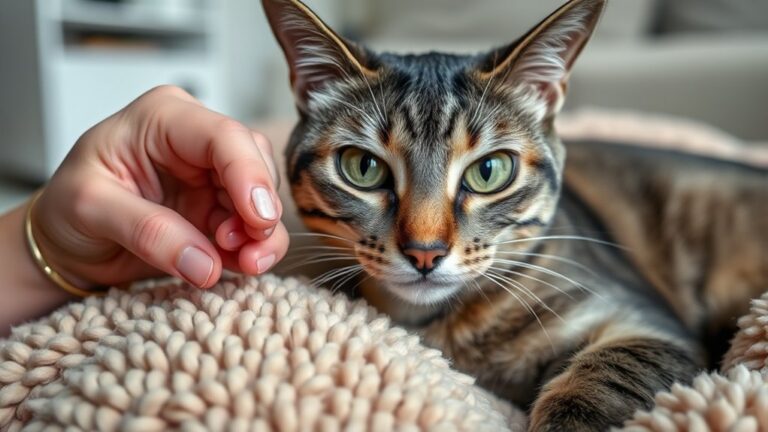
Watch for subtle cues like twitching tails or flattened ears, which signal discomfort. To explore new spots smoothly, use your fingertips gently to test the waters. Offering treats or praise can help create positive associations.
Limit initial sessions to just a few seconds and gradually increase the duration. Observe your cat’s body language closely and be patient. If they pull away, don’t force contact—respect their boundaries.
Common Mistakes to Avoid When Petting Your Cat
Many petting mistakes can upset your cat or make them less likely to enjoy being touched. One common misconception is that all cats want to be petted in the same way. In reality, each cat has unique preferences.
Poor petting techniques, like squeezing too hard or petting too aggressively, can cause discomfort or stress. Avoid sudden movements or petting areas your cat dislikes, such as the belly or tail, unless they show signs of comfort.
Another mistake is overdoing it—long, continuous petting can become overwhelming. Pay attention to your cat’s body language and stop if they show signs of irritation, like tail flicks or swatting.
Using Petting to Strengthen Your Bond With Your Cat
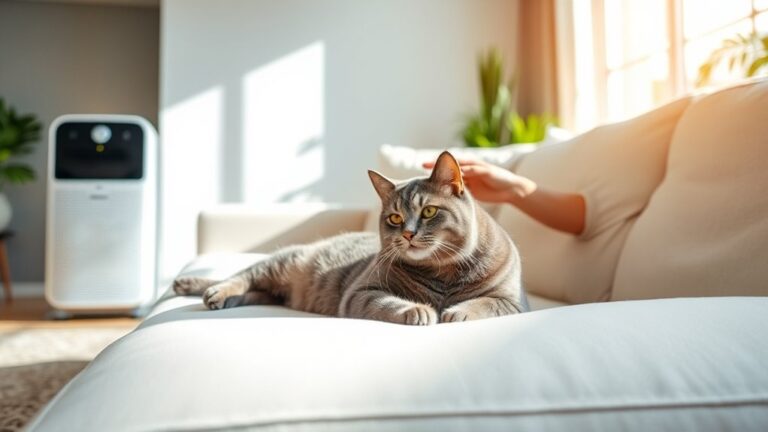
Petting your cat can be a great way to build trust and get even closer. Just remember, it’s all about paying attention to how your kitty is feeling. When your cat starts to relax or leans into your touch, that’s a good sign—they’re really enjoying the interaction.
Keeping an eye out for these little cues helps you strengthen your bond while also making sure your cat feels safe and comfy. It’s all about being in tune with their preferences and respecting their boundaries.
Building Trust Through Touch
Building trust with your cat through touch starts with paying attention to her responses. When you gently pet her, watch how she reacts—whether she leans in, purrs, or pulls away.
Positive reinforcement helps her connect your touch with feeling safe and comfortable, which strengthens your bond. Focus on being consistent and gentle, and always respect her boundaries.
Here are some key tips: Use soft, slow strokes to help her relax. Pay close attention to her body language for clues about how she’s feeling.
Avoid sudden or rough movements that might scare her. Offering treats or praise during petting sessions can make her feel more at ease.
Keep your sessions short at first and gradually increase the duration as she gets more comfortable.
Recognizing Cat Comfort Cues
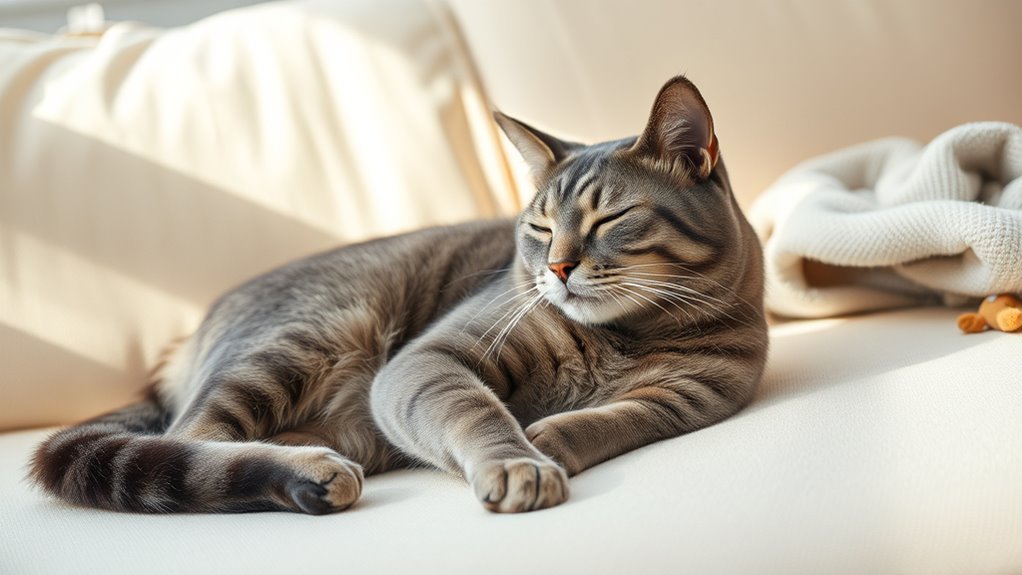
How can you tell if your cat is comfortable during petting? Watch their body language for subtle cues. When your cat feels safe, they may purr, knead, or relax with half-closed eyes.
On the other hand, if they start twitching their tail, flattening their ears, or trying to move away, they’re signaling discomfort. These are often signs they’re leaving their comfort zone.
Recognizing these cues helps you adjust your approach. Here’s a quick guide:
| Cue | Meaning | Action |
|---|---|---|
| Purring | Comfort and contentment | Continue petting gently |
| Tail flicking | Mild irritation or impatience | Pause or stop petting |
| Flattened ears | Discomfort or warning | Give space or stop |
| Relaxed posture | Trust and relaxation | Keep bonding peacefully |
When Should You Stop Petting to Keep Your Cat Happy?
Pay close attention to how your cat is feeling. If they start to move away or flatten their ears, it’s a good sign you should stop petting them. They have personal space just like us, so it’s important to respect that. Even if they seem to be enjoying it, try not to overstimulate them.
Keep an eye out for signs that they’re uncomfortable, like their tail twitching or sudden jerky movements. If you notice these, it’s best to stop petting them before they get too upset. Remember, a happy cat is a relaxed cat!
Recognize Body Language Signs
Sometimes, even the most loving cats signal that they’ve had enough of petting through subtle body language. Recognizing these feline signals helps you know when to stop, so you don’t upset your pet.
Watch for cues like tail flicks, ear positions, or tense muscles. A relaxed posture usually means your cat is comfortable, but signs like flattening ears, dilated pupils, or a twitching tail mean it’s time to back off.
Here are some key body language signals to watch:
- Tail flicking or thrashing
- Ears pinned back
- Pupil dilation
- Tense body or crouching
- Moving away or trying to escape
Being attentive to these signals can prevent overstimulation and keep your cat happy during petting sessions.
Respect Personal Space Limits
Knowing when to stop petting your cat is key to keeping her happy and comfortable. Respecting her personal space helps prevent overstimulation and shows you understand her behavior.
Watch for subtle cues like twitching tail, flattened ears, or shifting away. These signals tell you she’s reached her boundary.
To better understand her limits, check out this table:
| Signal | Meaning | Action |
|---|---|---|
| Purring softly | Contentment or overstimulation | Pause or switch to gentle petting |
| Tail flicking | Annoyance or agitation | Stop petting immediately |
| Moving away | Personal space boundary | Respect her space |
| Flattened ears | Discomfort or irritation | Cease all contact |
Pay close attention to her behavior and respect her boundaries. Knowing when to stop keeps her happy and helps build trust.
Watch for Signs of Discomfort
Recognizing when your cat feels uncomfortable is key to a positive petting experience. Watch their body language to know when to stop.
Signs of discomfort include tense muscles, flattened ears, or a twitching tail. If your cat nudges away or swats, it’s time to pause.
Use gentle petting techniques, avoiding rapid or rough strokes. Keep an eye out for subtle cues like flattened ears or dilated pupils.
You might notice the tail puffed up or flicking quickly. Moving away or trying to escape are clear signs. Swatting or gentle biting also indicate discomfort.
Tensing or stiffening your cat’s body shows they want a break. Stopping at these signs helps build trust and keeps petting a positive experience.
Frequently Asked Questions
Do Cats Prefer Certain Textures When Being Petted?
Cats do have texture preferences when being petted, often favoring soft, smooth surfaces like their fur or gentle, velvety touches.
You should use gentle petting techniques to match their comfort level, avoiding rough or coarse textures that might bother them.
How Do Cats React to Being Petted in Different Environments?
Cats react to being petted differently depending on their environment. It’s almost like they’re tuning into a radio station.
When you’re in a calm, familiar setting, they often show positive cues like purring or kneading.
But in noisy or unfamiliar environments, they might become aloof or even defensive.
Environmental factors really influence how comfortable they feel.
Pay close attention to their behavioral cues to make the experience gentle and enjoyable for both of you.
Can Petting Habits Influence a Cat’s Behavior Long-Term?
Yes, your petting habits can influence a cat’s behavior long-term. Using gentle petting techniques builds trust and encourages positive interactions, which can lead to behavioral changes over time.
Consistent, respectful petting helps your cat feel safe, reducing aggression or anxiety. Building trust through regular, attentive petting creates a stronger bond.
This stronger bond benefits both your cat’s emotional well-being and your relationship. It makes interactions more enjoyable and harmonious for everyone involved.
Are There Specific Signs Indicating Overstimulation During Petting?
Yes, there are clear signs of overstimulation during petting, like flicking tails, flattened ears, or sudden bites. Keep an eye out for these cues so you don’t go past your cat’s comfort zone.
If your cat begins to show these signs, stop petting right away to avoid upsetting them. Recognizing these signals helps you respect their boundaries and keeps your interactions positive.
Pay attention to your cat’s body language during petting. Being mindful of their signals builds trust and makes your time together more enjoyable for both of you.
How Do Seasonal Changes Affect a Cat’s Petting Preferences?
Seasonal changes do influence your cat’s petting preferences.
Studies show that cats become more sensitive to the seasons and often seek warmer spots during colder months.
You’ll notice they prefer different areas based on temperature preferences, cuddling more in cozy spots when it’s chilly.
In summer, they might shy away from certain spots or prefer gentle petting to avoid overstimulation.
Adjust your petting approach accordingly, respecting their comfort as the seasons change.
Conclusion
By understanding your cat’s favorite petting spots, recognizing their comfort signals, and respecting their boundaries, you create a bond built on trust and mutual enjoyment. Pay attention to their reactions, investigate gently, and always be mindful of their cues.
Keep the experience positive, keep the pace gentle, and keep the love flowing. When you do, you’re not just petting a cat—you’re nurturing a friendship, building a connection, and creating moments of joy that last.
Remember, cats have their favorite petting areas, and knowing them helps make your time together more enjoyable. Respect their signals, and you’ll strengthen your bond with your feline friend.