Can You Cure Cat Allergies?
Are you tired of sneezing, itchy eyes, and a runny nose every time you’re around cats? You’re not alone—many people struggle with cat allergies and wish they could enjoy their furry friends without discomfort.
You can’t currently cure cat allergies, but you can manage symptoms effectively. Avoid exposure by cleaning regularly, using air purifiers, and limiting contact with cats in certain areas.
Medications like antihistamines and nasal sprays offer quick relief, while immunotherapy can reduce sensitivity over time. Natural remedies and lifestyle changes also help, but they won’t eliminate the allergy entirely.
To investigate more ways to control your allergy and stay comfortable, keep going.
Key Takeaways
There is no complete cure for cat allergies; management focuses on reducing exposure and alleviating symptoms.
Immunotherapy, like allergy shots, can help desensitize your immune system over time.
Environmental controls such as HEPA filters and regular cleaning can significantly lower allergen levels.
Natural remedies and lifestyle changes might ease your symptoms but won’t eliminate the allergies.
Future innovations like gene therapy and allergy vaccines could provide more effective long-term solutions.
Can You Fully Cure or Just Manage Cat Allergies?
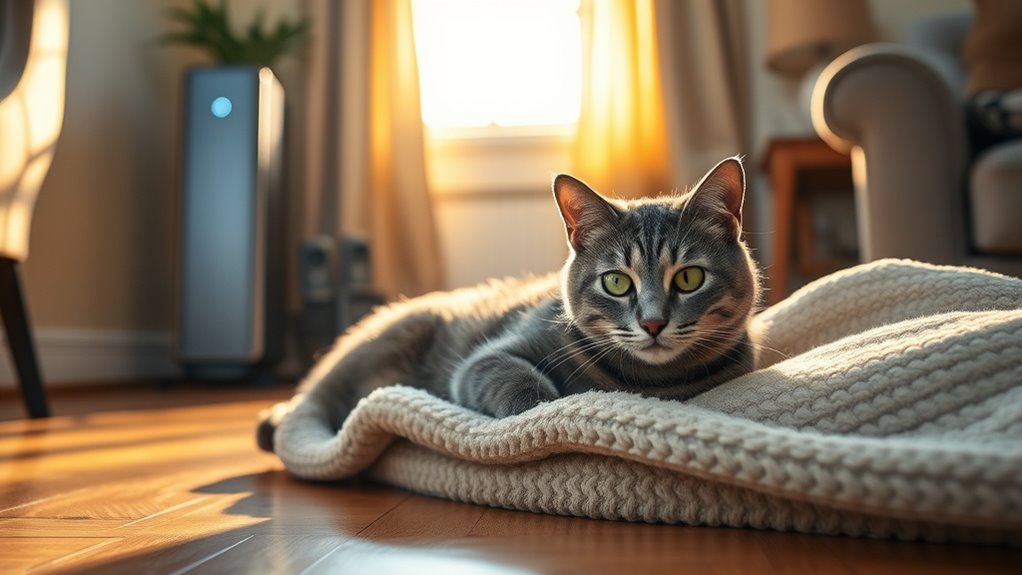
While some people hope for a complete cure, current science suggests that managing cat allergies is more realistic than eliminating them entirely. You can’t usually fully cure these allergies, but you can adopt strategies to lessen symptoms.
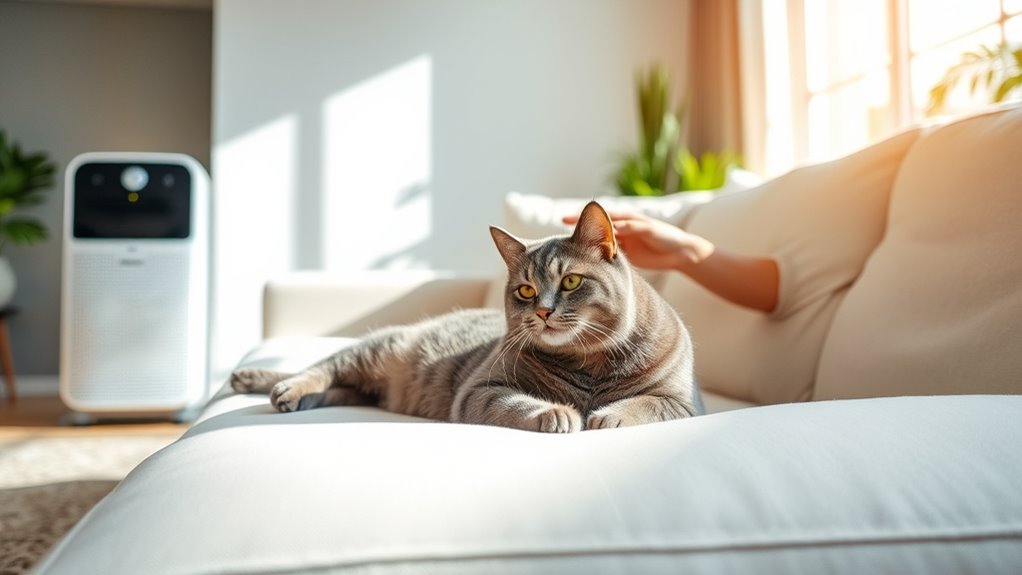
Holistic approaches like improving your indoor air quality with HEPA filters, regular cleaning, and using allergen-proof bedding can make a big difference. Exploring pet alternatives like hypoallergenic cats or even non-feline pets might help if your allergies are severe.
Improving air quality, regular cleaning, and allergen-proof bedding can significantly reduce allergy symptoms.
Some people try desensitization therapy or medications, but these often only offer temporary relief. Managing your environment and lifestyle allows you to coexist more comfortably with cats, even if a complete cure isn’t possible.
Ultimately, the goal is to reduce exposure and control symptoms so you can enjoy the companionship of pets without constant allergy attacks.
What Causes Cat Allergies and How Can You Avoid Them?
Have you ever wondered what exactly triggers your cat allergy symptoms? The main culprit is cat dander—tiny skin flakes that contain allergen sources like proteins from saliva and urine. These allergens become airborne, settle on surfaces, and trigger your immune response.
Your genetic factors can influence how strongly you react to these allergens. Environmental triggers like dusty furniture, pollen, or cigarette smoke can also make symptoms worse. To reduce exposure, focus on pet hygiene—regularly grooming your cat and cleaning routines that eliminate allergen buildup.
Creating allergen-free zones, like bedrooms, helps limit contact. Allergy testing can identify specific sensitivities, guiding your avoidance strategies. Managing stress is important too, as it can amplify allergy symptoms.
Medical Treatments for Cat Allergies
If you’re dealing with cat allergies, there are a few medical options that can really help reduce your symptoms. Antihistamines are often the first thing people try because they can provide quick relief from things like sneezing, runny nose, and itchy eyes.
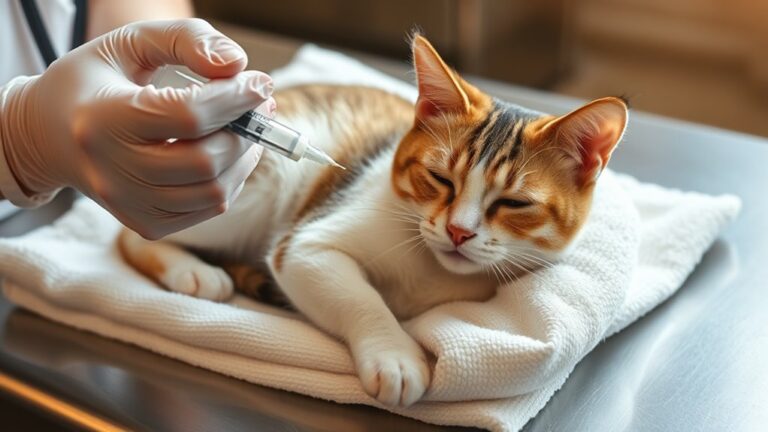
On the other hand, immunotherapy, such as allergy shots, might take some time to work, but they can offer more long-term benefits. These shots gradually help your body build up a tolerance to the allergens, which can make a big difference over time.
Besides these, there are other treatments to help manage your symptoms so you can live more comfortably, even if you’re still allergic to cats. It’s all about finding the right combination that works for you!
Antihistamines and Relief
Antihistamines are a common and effective way to manage the symptoms of cat allergies. They work by blocking histamine, the chemical responsible for allergy symptoms like sneezing, runny nose, and itchy eyes.
There are various antihistamine types, including first-generation options that may cause drowsiness and newer, non-drowsy formulations. Choosing the right one depends on your specific symptoms and lifestyle.
When taken as directed, antihistamines provide quick relief, making daily activities more comfortable. Over-the-counter options like cetirizine, loratadine, and fexofenadine are popular choices.
Always talk to your healthcare provider to find the best antihistamine for your needs and ensure safe, effective symptom management.
Immunotherapy Options Available
For those seeking a more long-term solution beyond antihistamines, immunotherapy offers an effective way to manage cat allergies. This treatment gradually exposes you to small amounts of cat allergens, helping your immune system build tolerance.
The effectiveness of immunotherapy varies from person to person, but it can significantly reduce allergy symptoms over time. You might receive allergy shots or sublingual tablets, both tailored to your specific allergy profile.
Personalized treatment ensures the therapy targets your unique sensitivities, which can increase its chances of success. While it requires commitment and regular visits, many people find that immunotherapy provides lasting relief.
This approach allows them to better tolerate cats and enjoy a more comfortable life. If you’re interested in a sustainable solution, talking with your allergist about immunotherapy options could be a great next step.
Managing Allergic Symptoms
- Antihistamines help reduce sneezing, itching, and a runny nose quickly.
- Nasal sprays are great for controlling nasal inflammation and congestion.
- Decongestants can help relieve nasal blockage during flare-ups.
- Allergy medications should be taken as your doctor advises for targeted relief.
Alongside medication, try lifestyle changes like regular cleaning, using HEPA filters, and keeping cats out of bedrooms. These steps can help minimize exposure and make your symptoms easier to manage.
Can Immunotherapy Help Reduce Your Cat Allergy?
Have you thought about immunotherapy to help reduce your cat allergy symptoms? This treatment exposes you to small, controlled amounts of cat allergens to help your body build tolerance over time.
Many people find that the effectiveness varies, but with consistent sessions, it can significantly lessen allergic reactions. The treatment usually lasts several months to a few years, depending on how you respond.
During this period, you’ll get regular injections or drops, with gradually increasing exposure levels. To picture this, here’s a simple overview:
| Stage | Description | Expected Outcome |
|---|---|---|
| Initial Phase | Weekly injections or drops | Mild reactions, monitoring |
| Peak Phase | Bi-weekly or monthly maintenance | Fewer allergy symptoms |
| Long-term Phase | Longer intervals or stopping treatment | Lasting tolerance |
This structured approach aims to help you manage symptoms better and might even reduce your need for medications.
Diet and Lifestyle Changes to Manage Cat Allergies
Making simple diet and lifestyle adjustments can really help reduce your exposure to cat allergens and make your symptoms easier to manage. Small changes in your daily habits can make a noticeable difference.
Here are four effective strategies:
- Limit contact with cats whenever possible, especially in your bedroom or personal spaces.
- Implement lifestyle modifications like using air purifiers with HEPA filters to cut down on airborne allergens.
- Adjust your diet by avoiding foods that might trigger inflammation or worsen allergy symptoms.
- Wear a mask when cleaning or handling pet-related items to prevent inhaling allergens.
These dietary adjustments and lifestyle changes can help decrease allergen buildup and improve your comfort. Consistency is key—regularly applying these tips can significantly lessen your allergy symptoms over time.
Cleaning Strategies to Reduce Cat Allergens at Home
Effective cleaning techniques are essential for minimizing cat allergens in your home. Start with air purification; using HEPA filters helps trap airborne allergens.
Vacuum regularly with high-efficiency methods, focusing on carpets, rugs, and upholstery. Consistent pet grooming reduces dander, decreasing allergen spread.
Clean furniture thoroughly with allergen barriers, like washable slipcovers. Implement dust control by wiping surfaces and using microfiber cloths, which trap dust rather than spread it.
Maintain proper humidity levels, ideally between 40-50%, to prevent dander from becoming airborne. When choosing fabrics, opt for hard surfaces like wood or tile over plush textiles, which trap dander.
Use effective cleaning products that are free of harsh chemicals to avoid irritating your respiratory system. Regular maintenance, including deep cleaning and replacing filters, is key to controlling allergens and creating a healthier environment for allergy sufferers.
Natural Remedies for Cat Allergies: Do They Work?
Are natural remedies truly capable of alleviating cat allergy symptoms? The answer varies, but some people find relief through holistic approaches. While they aren’t guaranteed cures, certain methods may help reduce your allergic reactions.
Herbal supplements and immune support – Herbs like stinging nettle or quercetin can support your immune system and lessen allergy symptoms.
Essential oils and environmental controls – Using oils like eucalyptus or lavender, combined with air purification, can improve air quality and decrease allergens.
Homeopathy remedies and dietary adjustments – Some find relief with homeopathic treatments, alongside foods that boost immune health.
Stress reduction and pet grooming – Managing stress and regularly grooming your cat can lower dander spread, minimizing triggers.
Holistic methods focus on reducing allergen exposure and supporting your immune system, but always check with a healthcare professional before trying new remedies.
How Effective Are Allergy Shots and Medications?
You might find allergy shots and medications helpful, but how well they work can really depend on the person. Some people see great results, while others might need to try different options to find what works best for them.
There are different kinds of medications out there, like antihistamines or corticosteroids, and each one targets specific allergy symptoms. They’re used in different ways too, depending on what symptoms you’re dealing with.
Usually, managing allergies long-term means combining these treatments to keep your symptoms under control. It’s all about finding the right mix that works for you.
Effectiveness of Allergy Shots
Many people find allergy shots to be a promising option for managing cat allergies, but their success varies from person to person. The allergy shot timeline typically spans 6 months to several years, depending on how well it works for you. You might notice gradual improvements, but results differ based on individual immune responses.
To get the most out of your treatment, consistency with injections is key. Here are some important points to keep in mind:
- Response time varies — some see improvement in 6 months, others take longer.
- Allergy severity impacts success — higher sensitivities may need more intensive treatment.
- Proper dosage matters — following your allergist’s recommendations boosts effectiveness.
- Long-term commitment is essential — staying the course often leads to better results.
While allergy shots can help reduce symptoms, the effectiveness ultimately depends on your unique immune response and how well you stick to the plan.
Medication Types and Use
When managing cat allergies, a variety of medications can provide relief, but their effectiveness depends on choosing the right type and using it correctly.
Antihistamines are common—they block allergy-causing chemicals and reduce symptoms, but they may cause side effects like drowsiness or dry mouth.
Decongestants can relieve nasal congestion but often come with increased blood pressure risks.
Nasal sprays, such as corticosteroids, effectively reduce inflammation with fewer side effects when used properly.
Some people explore alternative treatments like herbal remedies or saline rinses, though their effectiveness varies.
Always consult your healthcare provider to weigh the benefits against potential medication side effects and to find the safest, most effective options for you.
Proper use improves relief and minimizes risks.
Long-Term Management Strategies
You can improve effectiveness by making environmental changes, like using HEPA air filters and regularly grooming your cat to cut down on allergens.
Allergen testing can pinpoint specific triggers, which helps you create a more targeted approach.
Stress management is also important since stress can make allergy symptoms worse.
Thinking about hypoallergenic cat breeds or paying attention to seasonal changes might help lessen your reactions.
Regular cleaning and designating pet-free areas in your home can limit allergen spread.
Immunotherapy, like allergy shots, gradually desensitizes your immune system, making your symptoms easier to handle.
Putting these strategies together gives you a well-rounded way to manage cat allergies long-term, so you can enjoy a more comfortable environment around your feline friends.
Does Regular Exposure Help Reduce Cat Allergy Sensitivity?
Does exposing yourself to cats regularly help lessen allergy symptoms over time? The answer depends on how often you’re exposed and how your body reacts.
Some people find that consistent, controlled exposure can help their immune system get used to cats, reducing sensitivity. Starting with short visits and gradually increasing exposure allows your body to adapt without overwhelming it.
This process, called desensitization, aims to weaken allergic responses over time. But keep in mind, how well it works varies from person to person. Too much or unplanned exposure might even make symptoms worse.
If you want to try this, it’s best to do so under medical supervision, especially if your allergy is severe. The goal is steady, manageable exposure that helps your body build tolerance without causing intense reactions.
While this method can help some lower their allergy symptoms, it’s not a guaranteed cure. It should be part of a comprehensive allergy management plan.
Future Innovations in Cat Allergy Treatment
In the future, we might see new allergy vaccines that are better at pinpointing the specific allergens causing reactions. This could make treatments more precise and effective.
Plus, with advancements in gene editing, there’s hope for personalized therapies that could actually reduce or even eliminate allergic responses altogether. These exciting innovations could really change the game and make managing or curing cat allergies much easier.
Advances in Allergy Vaccines
Recent advances in allergy vaccine research offer promising prospects for more effective and targeted treatments for cat allergies. Scientists are developing vaccines focused on allergy prevention by training your immune system to tolerate cat allergens. These vaccines aim to reduce allergy symptoms more reliably than current options.
Here are some exciting developments:
- Improved vaccine formulations targeting specific allergens
- Use of recombinant proteins for precise immune modulation
- Longer-lasting effects with fewer doses needed
- Personalized vaccines based on individual allergy profiles
These innovations could transform how you manage cat allergies, making treatments more effective and less invasive. As vaccine research progresses, you may see a future where allergy prevention becomes a routine part of allergy care, greatly reducing your allergic reactions and improving your quality of life.
Gene Editing Breakthroughs
Gene editing technologies are opening new horizons for treating cat allergies by directly targeting and modifying the genes responsible for producing allergenic proteins. Using CRISPR applications, scientists can perform precise genetic modifications to reduce or eliminate the production of specific allergens.
This advances gene therapy approaches that aim to alter the immune response, making it less reactive to cat proteins. These breakthroughs could lead to permanent solutions rather than temporary relief. Here’s a quick overview:
| Technique | Purpose | Benefit |
|---|---|---|
| CRISPR applications | Edit allergen-producing genes | Reduce allergen levels |
| Genetic modifications | Alter immune response | Minimize allergic reactions |
| Gene therapy | Correct faulty genes | Long-term allergy relief |
This innovation could transform how we manage cat allergies in the future.
Frequently Asked Questions
Are There Specific Cat Breeds Less Likely to Trigger Allergies?
Yes, some hypoallergenic breeds are less likely to trigger your allergies. Breeds like Siamese, Sphynx, and Russian Blue produce fewer allergenic proteins or shed less, making allergy management easier for sensitive individuals.
While no cat is completely allergy-proof, choosing these breeds can greatly reduce symptoms. Regular grooming, cleaning, and air filtration also help, but opting for hypoallergenic breeds is a smart step toward enjoying feline companionship without constant allergy issues.
Can Children Outgrow Cat Allergies Over Time?
Yes, children can outgrow cat allergies over time. You might notice allergy symptoms lessen as they go through childhood, which can sometimes lead to tolerance.
But this isn’t guaranteed, and some kids keep having allergy symptoms into adulthood. To manage their allergies, regular cleaning, air purifiers, and seeing an allergist can help.
Early exposure might help reduce sensitivity, but it varies from person to person.
How Do Environmental Factors Influence Cat Allergy Severity?
Environmental factors greatly influence cat allergy severity. You might think allergen exposure is unavoidable, but controlling indoor air quality can really help.
Regular grooming practices reduce dander, and seasonal changes often make symptoms worse during certain times of the year.
By keeping your environment clean, using air purifiers, and grooming your cat often, you can lower allergen levels and make allergy symptoms more manageable.
This makes living with a cat much more comfortable.
Are There Any New Experimental Treatments for Cat Allergies?
Yes, there are new experimental treatments for cat allergies. Researchers are exploring advancements in immunotherapy, such as allergy shots and sublingual tablets, to help desensitize your immune system to cat allergens.
Additionally, new allergy medications are being developed to better manage symptoms and have fewer side effects. These innovations aim to provide more effective relief and may even reduce allergy severity over time.
What Role Does Genetics Play in Developing Cat Allergies?
Genetics plays a big role in developing cat allergies, with about 30-40% of allergy cases linked to inherited factors.
If allergy runs in your family, you’re more likely to develop sensitivities. Your immune system’s response to cat proteins is shaped by specific genes, making some people more prone to allergic reactions.
Knowing your genetic background can help you better manage or even prevent allergy symptoms.
Conclusion
While there’s no guaranteed cure for cat allergies, managing symptoms is often possible through treatments like allergy shots and lifestyle changes. Did you know that about 10% of people with pet allergies see significant improvement with immunotherapy?
With ongoing research, future innovations promise even better options. Keep exploring, stay proactive, and work closely with your healthcare provider. You might find relief and be able to enjoy your feline friends without the discomfort.