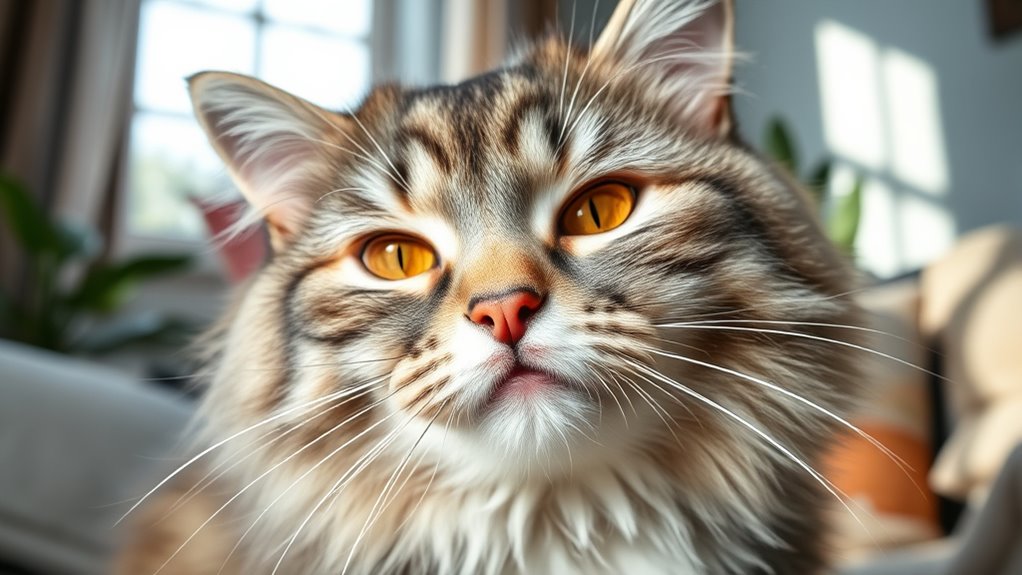
What to Do if Cats Sneeze From Allergies?
If your cat keeps sneezing from allergies, you’re not alone. Many pet owners struggle with figuring out how to help their furry friends feel better. Allergies can be frustrating for both you and your cat, but there are steps you can take.
Start by identifying potential triggers like dust, pollen, or strong scents around your home. Keep their environment clean by vacuuming regularly, washing bedding, and removing clutter.
Consider using air purifiers and hypoallergenic materials to reduce irritants.
Monitor your cat carefully and note any changes in symptoms. If sneezing persists or worsens, consult a veterinarian for proper diagnosis and targeted treatment options.
There’s more you can do to help your cat feel better.
Key Takeaways
- Identify and remove potential environmental allergens like dust, pollen, or strong scents from your home.
- Regularly groom and clean your cat to help reduce dander and irritants.
- Use air purifiers and HEPA filters to help improve indoor air quality.
- Keep a journal to monitor symptoms and spot any specific triggers or patterns.
- If your cat keeps sneezing or shows other health issues, it’s best to consult a veterinarian.
Why Is My Cat Sneezing? Understanding the Problem
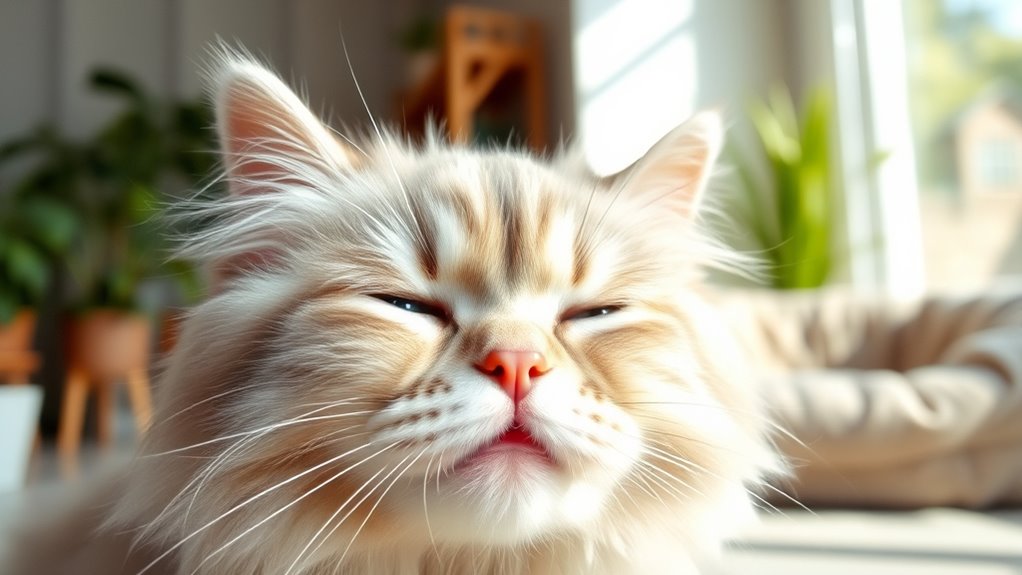
If your cat starts sneezing more than usual, it’s important to figure out what might be causing it. Sneezing triggers can vary, especially when it comes to feline respiratory health. Allergies are common, but dust, strong scents, or environmental irritants can also cause sneezing fits.
If your cat sneezes more, identify triggers like allergies, dust, or strong scents to help them feel better.
You might notice your cat sneezes repeatedly or has a runny nose, which suggests irritation inside the respiratory system. Sometimes, sneezing happens after exposure to new cleaning products, pollen, or cigarette smoke.
Knowing these triggers helps you determine if allergies are behind the sneezing or if something else is irritating your cat’s nose. Watch for other signs like watery eyes or coughing, which can give clues about what’s going on.
Spotting these symptoms early means you can take steps to reduce your cat’s exposure to irritants and help them feel more comfortable.
What Are Common Causes of Cat Sneezing?
Cats can sneeze for a variety of reasons, and figuring out the cause is important to help your pet feel better. Common reasons include dust mites, which love dusty environments, and indoor plants that can release pollen or irritants.
Seasonal changes might also trigger sneezing if your cat reacts to mold or outdoor allergens. Poor air quality from pet dander, smoke, or chemicals can irritate their nasal passages.
Environmental changes, like moving to a new home or rearranging furniture, can cause temporary sneezing too. Your cat’s diet and food might contribute if they develop sensitivities or allergies.
Regular grooming helps reduce dander buildup, and keeping indoor plants and dust levels in check can improve air quality. Knowing these common causes can help you spot triggers and take steps to reduce your cat’s sneezing episodes.
How Do I Recognize Signs of Cat Allergies?
Want to know if your cat might be allergic to something? Well, there are some pretty common signs to look out for. You might notice your cat sneezing a lot, or maybe they have a runny nose and watery eyes. These can all be clues that allergies are at play.
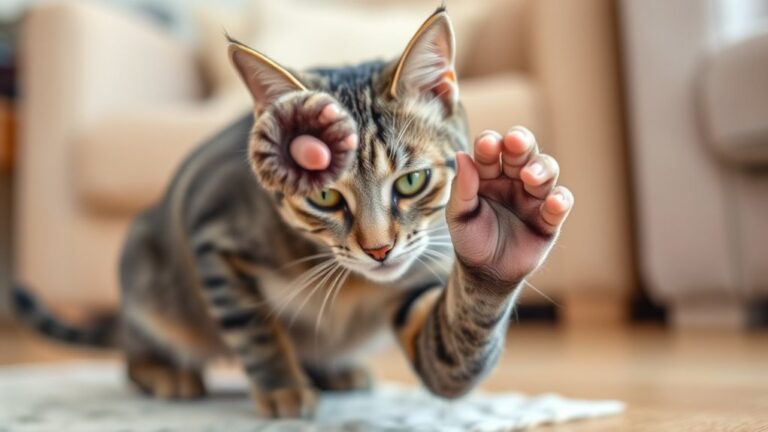
When you give your cat a quick check-up, keep an eye out for redness, swelling, or skin irritation—especially around their face and paws. Catching these signs early can really help you figure out if allergies are what’s bothering your furry friend.
Common Allergy Symptoms
Recognizing the signs of cat allergies can help you address the issue early and seek the right treatment. Common allergy symptoms often include sneezing and a runny nose, especially during seasons like spring or fall.
Itchy, watery eyes that may feel irritated or swollen are also common. You might experience coughing or wheezing, which can mimic asthma symptoms.
Skin reactions such as rashes or hives can occur, sometimes linked to food sensitivities or contact with cat dander. Being aware of these signs helps you identify allergies promptly.
Symptoms might worsen during certain seasons or after specific foods, pointing to seasonal triggers or food sensitivities. Recognizing these symptoms allows you to take steps to reduce exposure and seek proper care.
Physical Examination Signs
When examining someone for signs of a cat allergy, physical clues can reveal how their body is reacting to allergens. You might see nasal discharge or frequent sneezing, which signals irritation.
Eye irritation, like redness or watery eyes, often shows up along with sneezing. Coughing and breathing difficulties, such as wheezing or shortness of breath, also point to allergic responses.
Look for behavioral changes like restlessness or lethargy, which can indicate discomfort. Skin irritation, including redness or rashes, may occur from contact with the allergen.
You might also notice appetite changes, either decreased or increased, due to overall discomfort. Recognizing these signs during a physical exam helps identify allergy symptoms and guides further steps for relief and treatment.
What Environmental Factors Could Be Making My Cat Sneeze?
Environmental factors in your home can really contribute to your cat’s sneezing. Spotting these triggers can help ease their discomfort. Here are some common ones:
Environmental triggers like pollen, smoke, and mold can cause your cat to sneeze. Identifying them helps ease discomfort.
- Pollen exposure, especially if your cat goes outside or windows stay open during high pollen seasons.
- Smoke irritants like cigarette smoke, fireplace fumes, or other airborne smoke can bother their respiratory system.
- Mold in moist areas like bathrooms or basements can cause allergies and trigger sneezing.
- Household chemicals such as cleaners, air fresheners, and disinfectants release fumes that may irritate your cat’s nose.
Other things to watch out for include dust mites, pet dander, and certain fragrances. Regular cleaning, using air purifiers, and limiting exposure to these irritants can make your cat more comfortable. Changes in environment can really impact their sneezing, so staying alert is key to managing their allergies.
How Can I Safely Test My Cat for Allergies at Home?
If you suspect your cat’s sneezing is caused by allergies, try some simple at-home tests to identify the triggers without rushing to the vet. Start by observing your cat’s environment and noting when the sneezing happens.
Remove obvious allergy triggers like scented candles, certain cleaning products, or new plants, and see if there’s any improvement. You can also test by gradually introducing potential allergens one at a time, such as switching to hypoallergenic litter or changing bedding.
Keep a journal to track any changes in sneezing or other symptoms. Watch for signs like itching or watery eyes when exposing your cat to suspected allergens. This way, you can narrow down what might be causing their symptoms through careful observation and elimination.
When Should I See a Vet for Cat Allergies?
Persistent or severe sneezing, especially if it’s combined with other signs like eye discharge, coughing, or trouble breathing, means it’s time to see a vet. They can do allergy testing to find out what’s causing the problem and suggest the best treatment options. Ignoring these signs could make your cat’s condition worse or lead to secondary infections.
You should visit the vet if:
- The sneezing lasts more than a few days or gets worse.
- Your cat shows signs of distress, like difficulty breathing or wheezing.
- Eye discharge, nasal congestion, or coughing comes with sneezing.
- You notice changes in appetite, activity, or behavior.
A vet can help identify what’s triggering your cat’s allergies and discuss treatment options tailored just for them. Catching it early makes managing symptoms easier and helps your cat stay comfortable. Don’t wait if symptoms get worse or don’t improve.
What Treatment Options Are Available for Cat Allergies?
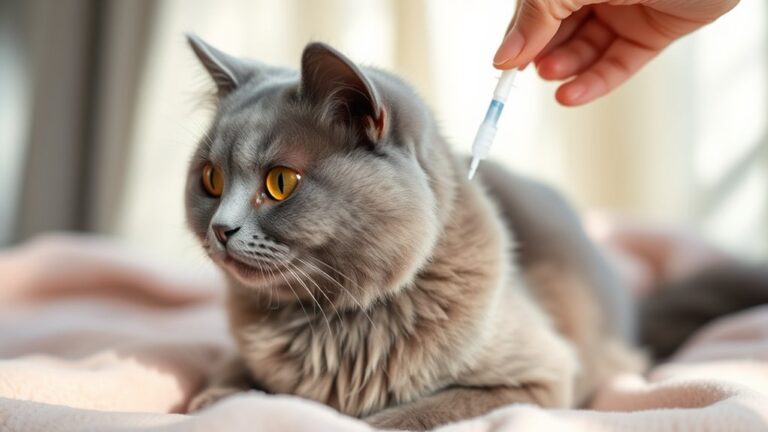
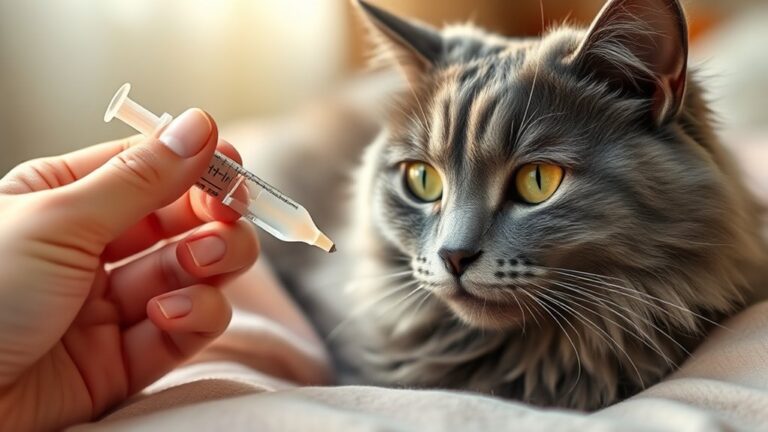
When your cat shows signs of allergies, several treatment options can help alleviate their symptoms and improve their comfort. Allergy medications like antihistamines or corticosteroids may be prescribed by your vet to reduce inflammation and sneezing.
Treating feline allergies with medications can reduce inflammation and ease sneezing.
Natural remedies, such as saline nasal sprays or calming herbal supplements, can also provide relief without heavy medications. Dietary changes might be necessary, especially if food allergies are involved; switching to hypoallergenic or limited-ingredient diets can help identify and eliminate triggers.
Supporting your cat’s immune system is just as important. Adding omega-3 fatty acids or probiotics can strengthen their defenses against allergens. Always check with your veterinarian before starting any treatment plan to make sure it’s safe and suitable for your cat’s specific needs.
Combining medical options with natural approaches and dietary adjustments can greatly ease allergy symptoms and boost your cat’s overall well-being.
How Can I Manage My Cat’s Allergies Effectively?
Wondering how to keep your cat comfortable despite allergies? Managing allergies starts with understanding what your cat needs. Here are four simple steps to help:
- Regular grooming. Brushing your cat helps remove allergens like pollen and dust from their fur. It’s a quick way to reduce irritation.
- Clean living space. Vacuum often, wash bedding regularly, and keep your home free of dust and pet dander. A clean environment makes a big difference.
- Dietary adjustments. Talk to your vet about hypoallergenic foods or special diets. They can help reduce allergic reactions.
- Monitor and record symptoms. Keep track of your cat’s sneezing, coughing, or itching. This helps identify triggers and adjust your approach.
Following these steps can lessen allergy symptoms and make your cat more comfortable. Consistent management and diet changes really improve your cat’s quality of life. If symptoms stick around, consult your vet for personalized advice.
How Do I Create a Low-Allergen Home for My Cat?
If you want to create a low-allergen home for your cat, start by choosing materials that are hypoallergenic and less likely to cause allergies. This can help minimize the amount of dander and irritants in your environment.
Keeping your living spaces clean is also super important. Make sure to vacuum regularly and wash your cat’s bedding often to get rid of any lingering allergens.
Additionally, using air purifiers can really help reduce dust and dander floating around in the air. And try to keep clutter to a minimum, since dust tends to settle in tight spaces and can be hard to clean. All these steps can make your home more comfortable for both you and your furry friend.
Choose Hypoallergenic Materials
Choosing hypoallergenic materials is an important step in reducing your cat’s allergy symptoms. Start by picking fabrics made from hypoallergenic materials that resist dust mites and allergens.
Opt for pet-safe furniture and bedding to help minimize allergic reactions. Consider these options:
- Use washable, allergen-resistant covers on furniture
- Choose natural, breathable fabrics like cotton or bamboo
- Avoid synthetic materials that trap allergens
- Select pet-safe, hypoallergenic rugs or carpets
These choices help reduce airborne allergens and prevent allergen buildup on surfaces. Regularly washing these materials keeps them free of dust and dander.
Maintain Clean Living Spaces
Maintaining a clean living space is key to reducing allergens and creating a healthier environment for both you and your cat. Regular grooming helps minimize loose fur and dander, which can lower airborne allergens.
Using air purification systems can improve air quality by filtering out particles. Keep your home tidy by vacuuming carpets and upholstery often, and wash your cat’s bedding weekly.
Here’s a simple overview to visualize these steps:
| Action | Purpose | Tips |
|---|---|---|
| Regular grooming | Reduces loose fur and dander | Brush daily, bathe monthly |
| Air purification | Filters airborne allergens | Use HEPA filters |
| Cleaning surfaces | Eliminates settled dust and fur | Vacuum and wipe regularly |
Following these steps creates a low-allergen home, which can help ease your cat’s sneezing issues.
Minimize Dust and Dander
To minimize dust and dander in your home, it’s important to adopt targeted cleaning habits that cut down on airborne allergens. First, use air purifiers with HEPA filters to catch tiny particles.
Second, schedule regular grooming for your cat to reduce shedding and dander buildup. Third, vacuum carpets and upholstery often with a HEPA filter vacuum to remove dust.
Fourth, dust surfaces using a damp cloth to prevent dust from becoming airborne. These steps help keep dander levels low and create a healthier environment for your allergic cat.
Consistent cleaning combined with air purification really makes a difference in reducing sneezing and allergy symptoms, making your home more comfortable for both you and your feline friend.
What Can I Do to Prevent Future Allergic Reactions?
Preventing future allergic reactions in your cat involves taking proactive steps to minimize their exposure to allergens. Focus on allergy prevention through consistent environmental control. Regularly clean your home, vacuuming carpets, furniture, and curtains to remove dust, dander, and other irritants.
Use high-efficiency particulate air (HEPA) filters in your HVAC system to reduce airborne allergens. Wash your cat’s bedding frequently in hypoallergenic or gentle detergents. Consider creating a designated allergy-free zone where your cat can retreat from allergen-heavy areas.
Keep your cat indoors during peak pollen seasons to limit exposure to outdoor allergens. Groom your cat regularly with a damp cloth or brush to reduce dander buildup. These measures help control environmental factors that trigger allergies, reducing sneezing and other reactions.
Frequently Asked Questions
Can My Cat Develop Allergies Later in Life?
Yes, your cat can develop allergies later in life. You should watch for symptoms like sneezing, itching, or respiratory issues.
Keep an eye on potential triggers such as new foods, environmental changes, or household chemicals. If your cat shows any signs, check with your veterinarian for proper diagnosis and treatment.
Identifying and managing allergy triggers helps your cat stay comfortable and healthy, even if allergies develop during adulthood.
Are Certain Cat Breeds Less Prone to Allergies?
Like the myth of the Greek Hydra, some breeds seem to have fewer allergy issues. Hypoallergenic breeds, such as Siamese or Balinese, are less likely to trigger allergy symptoms.
While no cat is completely allergy-proof, these breeds produce fewer allergens, helping you breathe easier. Keep in mind, individual reactions vary, so spend time with different breeds to see how your allergies respond before making a decision.
Do Indoor Cats Also Get Allergies?
Indoor cats can definitely get allergies, just like outdoor cats. You might notice symptoms like sneezing, itching, or watery eyes if your cat reacts to indoor allergens such as dust, mold, or certain cleaning products.
Keep an eye on their behavior and symptoms, and try to limit their exposure to potential indoor allergens. Regular cleaning and creating a low-allergen environment can help reduce allergy symptoms in your indoor feline.
How Do I Differentiate Between a Cold and Allergies?
Think of it as a detective story—you’re trying to tell apart a cold from allergies. If your cat has symptoms like sneezing, a runny nose, or watery eyes that stick around for more than a week, it could be a cold.
Allergy triggers often cause sneezing, itching, or watery eyes that come and go depending on exposure. Keep track of when symptoms appear and what might be causing them.
If you’re unsure, it’s best to check with your vet. They can give you a clear diagnosis and suggest the right treatment.
Can Human Allergies Affect My Cat’s Sneezing?
Yes, your allergies can affect your cat’s sneezing. When you have allergy symptoms from things like pollen, dust, or mold, these particles can also irritate your cat’s respiratory system.
Your cat might then start sneezing a lot or show other allergy signs. To help, try to reduce exposure to these triggers, keep your home clean, and talk to your vet if the sneezing keeps up.
This way, both you and your feline friend can stay comfortable and healthy.
Conclusion
By paying close attention to your cat’s sneezing patterns and environmental factors, you might realize that what seems like a coincidence—an occasional sneeze—actually points to a deeper allergy issue.
Addressing potential triggers and consulting your vet can help turn this coincidence into a manageable situation. A little effort and awareness can create a healthier space for your feline friend.
Sometimes, what looks like mere coincidence is actually the first sign of allergy problems. Recognizing this early allows you to take steps toward better care.