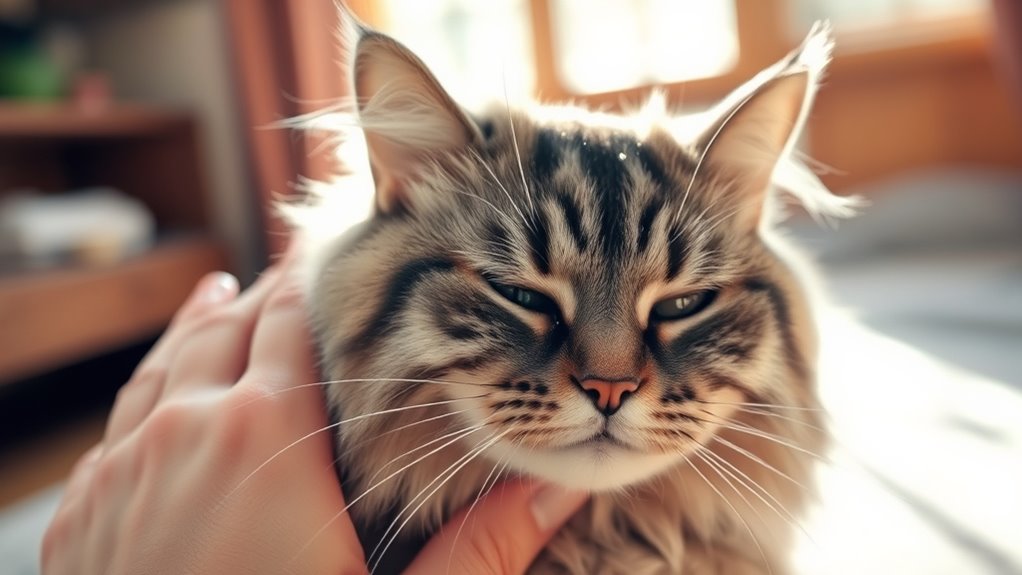
What Makes Petting My Cat Safe?
Many cat owners know how tricky it can be to pet their feline friends without causing discomfort or stress. You’re not alone—many people struggle with understanding how to make their cats feel safe and loved during petting sessions.
The key is knowing what makes petting your cat safe and enjoyable for both of you.
To keep petting your cat safe, pay close attention to their body language and respect their boundaries. Watch for signs of discomfort like flattened ears, twitching tails, or stiffening muscles, and stop petting when you see them.
Focus on gentle areas like cheeks and chin, avoiding sensitive spots. Create a calm environment and keep sessions short to build trust.
If you’re curious about making every interaction comfortable, there’s plenty more to uncover about safe petting techniques.
Key Takeaways
- Watch your cat’s body language to spot signs of comfort or discomfort when petting.
- Stick to safe areas like cheeks, chin, and back, and avoid sensitive spots like the belly and paws.
- Keep the environment calm with soft lighting, gentle sounds, and minimal noise to help your cat stay relaxed.
- Respect your cat’s preferences by limiting how long you pet and watching for cues to stop.
- Don’t overdo it or make sudden movements. Build trust with gentle, predictable interactions.
Understanding Why Safe Petting Matters for Your Cat
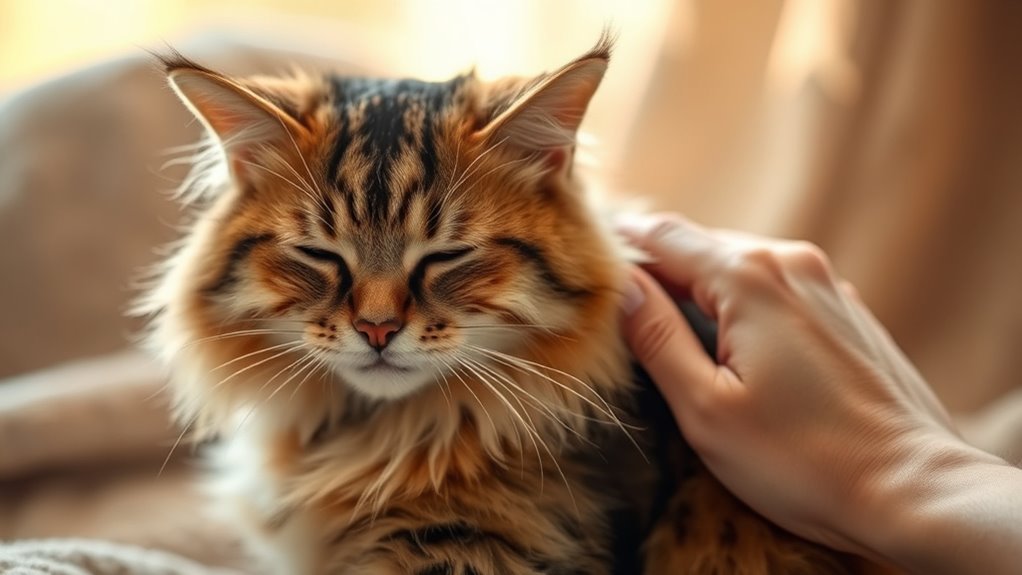
Cats can be sensitive to touch, and not all areas are good for petting. By learning what your cat prefers, you make them feel more at ease overall.
Overstepping boundaries can cause stress or even make your cat aggressive, which can hurt your bond. Safe petting helps your cat see you as a positive presence.
It also makes future interactions more enjoyable. Remember, every cat is different; some love a gentle stroke, while others prefer minimal contact.
Watching how your cat reacts helps you figure out what’s okay. Setting clear boundaries isn’t just about avoiding discomfort—it’s about building trust and helping your cat feel safe and relaxed every time you interact.
How to Read Your Cat’s Body Language for Safe Interactions
To keep interactions safe, it’s really important to understand your cat’s body language. When your cat is relaxed, you might notice it purring or softly blinking—these are good signs that it’s comfortable and happy. It’s kind of like when someone smiles or relaxes their shoulders; it shows they’re at ease.
On the flip side, if you see warning signs like flattened ears or a twitching tail, it’s best to give your cat some space. These signals mean your cat might be feeling overwhelmed or wants to be left alone for now. Paying attention to these cues can help you have better, safer moments with your feline friend.
Recognizing Relaxed Postures
A relaxed posture is one of the clearest signs your cat feels safe and comfortable. When you observe your cat’s body language, look for feline relaxation cues like loose muscles, a gently swaying tail, and ears pointing forward or slightly to the side.
Cats who are comfortable often lie on their side or stretch out, showing trust and ease. Their eyes may be half-closed or slowly blinking, which are subtle signals of comfort. You might also notice their whiskers relaxed and paws resting calmly.
These relaxed postures show your cat feels secure in your presence. Recognizing these cues helps you know when it’s safe to pet and interact without causing stress or discomfort.
Identifying Warning Signs
Even when your cat seems relaxed, it’s important to watch for small warning signs that might show discomfort or agitation.
Look out for stress signals like tail flicks, flattened ears, or dilated pupils, which can mean your cat wants some space.
Pay attention to body language—an arched back, puffed fur, or swatting can indicate play aggression or overstimulation.
Recognizing these cues helps you adjust your petting and avoid upsetting your cat’s comfort zones.
Building trust depends on safe handling and understanding your cat’s signals accurately.
If your cat shows signs of discomfort, give it some time to relax before continuing to interact.
Using clear body language and respecting boundaries helps your cat feel secure, making your interactions safer and more enjoyable for both of you.
Spotting Signs Your Cat Is Uncomfortable While Petting
Cats often give subtle clues when they’re uncomfortable during petting, so paying close attention to their body language is crucial. Recognizing these signs helps you respect their boundaries and follow proper petting etiquette.
Look for tense muscles, flattened ears, or a flicking tail, which indicate discomfort. If your cat starts to squirm or tries to move away, it’s a clear sign they’ve had enough.
Tense muscles, flattened ears, or a flicking tail signal your cat’s discomfort. Watch for squirming or trying to escape.
Watch for dilated pupils or a sudden stiffening of their body, as these behaviors signal stress. Yawning or licking their lips can also be signs of irritation or overstimulation.
By understanding these cues, you can adjust your petting to keep your cat relaxed and happy. Remember, respecting their signals not only improves your bond but also prevents unwanted scratching or biting.
Paying attention to their behavior guarantees that petting remains a positive experience for both of you.
Best Places to Pet Your Cat for a Calm, Happy Experience
When you’re petting your cat, try to focus on gentle spots like their cheeks, chin, or back. These areas tend to make your kitty feel relaxed and loved.
It’s best to avoid sensitive areas like the belly or paws, since many cats find those spots a bit uncomfortable or even ticklish.
Gentle Touch Areas
Choosing the right spots to pet your cat can make a big difference in how calm and happy they feel. Focus on gentle strokes along their head, cheeks, and the base of their ears, where many cats enjoy being touched.
These areas tend to be less sensitive and help promote relaxation through calming techniques. Avoid sudden movements and use a gentle touch to signal trust.
Watching your cat’s body language helps you gauge their comfort level. If they lean into your hand or purr, you’re doing it right.
Keep your strokes slow and steady to reinforce a sense of safety. By focusing on these gentle touch areas, you create a soothing experience that encourages bonding and reduces stress during petting.
Avoid Sensitive Spots
While gentle touch areas promote relaxation, there are spots you should avoid to keep your cat feeling safe and comfortable. Sensitive areas like the belly, paws, and tail often trigger defensive reactions if touched unexpectedly.
Many cats have specific petting preferences, and crossing those boundaries can cause stress or agitation. Avoid rubbing the stomach unless your cat shows clear comfort with it, as it’s a very vulnerable area.
Similarly, don’t pressure your cat to let you hold or touch sensitive spots like the paws or ears if they resist. Respecting these areas helps build trust and makes petting a calming experience.
Pay attention to your cat’s body language and reactions to better understand their individual boundaries.
How to Approach Your Cat for Comfortable Petting
Ever wonder how to approach your cat so that petting feels safe and enjoyable for both of you? The secret is understanding your cat’s personality traits and petting preferences. Some cats are naturally more exploratory and might welcome gentle strokes right away, while others are more reserved and need a slower, cautious approach.
Watch your cat’s body language—relaxed posture and purring usually mean comfort, while stiffening or backing away can indicate discomfort. Let your cat come to you first, offering your hand nearby for sniffing to build trust. Use a calm, gentle voice to communicate your intentions.
Pay attention to subtle signs—if your cat leans in or nudges your hand, it’s a good cue to start petting. Respect their boundaries and avoid forcing interactions. Tailoring your approach to your cat’s unique traits will make petting a safer, more positive experience for both of you.
Gentle Touch Techniques for Stress-Free Petting
Using gentle touch techniques can make petting your cat a calm and stress-free experience. Focus on soft, slow movements that follow your cat’s cues, creating calming rhythms your feline enjoys.
Keep your hand relaxed and avoid applying too much pressure, which can cause discomfort. Use gentle strokes along areas your cat prefers, such as the back or head, and observe their reactions.
If your cat leans into your touch or purrs, you’re on the right track. If they pull away or flatten their ears, respect their signals and pause.
Consistency in your gentle touch builds trust and comfort over time. Remember, patience is key—every cat has different preferences and sensitivities.
By maintaining calm rhythms and using gentle strokes, you’ll foster a positive, stress-free petting experience that your cat will look forward to.
Observe your cat’s body language for cues. Use slow, deliberate movements and avoid sudden or rough strokes.
Focus on areas your cat enjoys and keep your touch relaxed and gentle throughout.
Knowing When to Stop Petting Your Cat
Paying close attention to your cat’s body language helps you know when it’s time to stop petting. Cats have individual preferences for petting duration, and overdoing it can cause discomfort or stress.
Watch for signs like twitching tails, flattened ears, or sudden movements—these indicate your cat wants to be left alone. If your cat starts to purr loudly or leans into your touch, it’s usually a good sign to continue briefly.
However, once these signs fade or your cat becomes tense, it’s best to stop. Setting boundaries based on your cat’s preferences fosters trust and keeps interactions positive.
Remember, every cat is different; some enjoy longer petting sessions, while others prefer quick, gentle strokes. Paying attention to these cues guarantees you respect your cat’s comfort levels and avoid overstimulation.
Knowing when to stop petting helps maintain a happy, healthy relationship between you and your feline friend.
Creating a Calm Environment for Better Petting Sessions
Creating a calm environment helps make petting sessions more enjoyable and less stressful. When your cat feels relaxed, it’s easier to build trust and ensure they’re comfortable.
Start by choosing quiet spaces free of loud noises or sudden movements. Soft lighting and soothing scents can make the atmosphere cozy and inviting.
Playing calming music can help your cat unwind, and cozy blankets add extra comfort. Establish petting routines and use positive reinforcement to encourage good behavior.
Keep interactive toys nearby to keep your cat engaged and relaxed. Gradual introductions to petting help your feline feel safe and in control.
Designate safe zones where your cat can retreat if overwhelmed. These small changes help your cat associate petting with positive experiences.
Common Mistakes to Avoid When Petting Your Cat
Even with the best intentions, many pet owners make common mistakes that can make petting sessions stressful or uncomfortable for their cats. Misunderstanding cat petting etiquette often leads to unintended discomfort, like petting in the wrong areas or doing it too aggressively. Falling for myths, such as believing cats always want to be petted, can also cause frustration for both of you.
To avoid these pitfalls, pay attention to your cat’s cues and respect their boundaries. Here’s a quick guide to common mistakes:
| Mistake | Why It Matters | How to Avoid |
|---|---|---|
| Ignoring body language | Signs of discomfort often show before scratching | Watch for tail flicks or flattened ears |
| Over-petting | Too much contact can overstimulate or annoy your cat | Limit sessions and stop when they signal |
| Petting in the wrong spots | Some areas are sensitive or off-limits | Focus on the chin, cheeks, and back |
| Believing cats always want petting | Not all cats enjoy constant contact | Respect their mood and preferences |
Building Trust Through Consistent, Respectful Petting
Building trust with your cat starts with consistent, respectful petting that acknowledges their boundaries and preferences. This technique involves establishing predictable petting routines that your cat feels comfortable with. When you follow a gentle, calm approach and pay attention to their signals, your cat learns to associate petting with positive experiences.
Respect their cues. If they twitch, move away, or show signs of discomfort, stop immediately. Over time, this consistency reinforces safety and trust.
To strengthen this bond, focus on these trust-building techniques:
- Follow your cat’s preferred petting spots.
- Use slow, gentle strokes to avoid startling them.
- Keep petting sessions short and frequent.
- Watch for signs of relaxation or enjoyment.
- Respect their moments of independence.
Frequently Asked Questions
Can Certain Breeds Tolerate More or Less Petting Safety?
Certain breeds vary in their petting tolerance because of their temperament. Some cats really enjoy more petting, while others prefer less.
For example, Siamese cats often tolerate more petting, whereas Bengal or Sphynx cats might have specific petting preferences.
Pay attention to your cat’s signals and behavior, and always respect their limits.
Understanding each breed’s temperament helps you know how much petting they can safely handle.
This way, you can make sure both you and your cat have a positive, comfortable experience.
How Does My Cat’s Age Affect Safe Petting Practices?
Your cat’s age affects how you should pet them, whether they’re a playful kitten or a gentle senior.
With kittens, use gentle, short strokes that match their curiosity and developing behavior. They need patience and gentle handling as they explore the world around them.
For seniors, pay attention to their sensitivity. Avoid rough petting and watch for signs of discomfort. Calm, slow touches help keep your cat comfortable and safe.
Are There Specific Grooming Tools That Enhance Safe Petting?
Yes, using specific grooming brushes can make petting safer by helping to reduce discomfort and prevent skin problems.
Choose gentle, soft-bristled brushes for sensitive areas, and wider-toothed combs for thicker coats. Incorporate smooth petting techniques along with these tools to keep your cat relaxed and comfortable.
Always watch your cat’s reactions, and stop if they show signs of stress. Proper grooming tools and gentle petting help build trust and make the experience safe and enjoyable.
Does My Cat’s Health Condition Influence How I Should Pet Them?
Your cat’s health condition definitely influences how you should pet them. For example, if your cat has arthritis, gentle strokes along their back can help avoid discomfort.
Pay attention to signs like limping or lethargy, and watch for cues such as flinching or withdrawal. These tell you when to adjust your touch or stop altogether.
This way, you make sure your pet feels safe and cared for during your interactions.
Can Environmental Factors Impact the Safety of Petting Sessions?
Yes, environmental factors can impact the safety of petting sessions. If it’s too hot or cold, your cat might feel uncomfortable, especially if they’re sensitive to temperature.
Keep an eye out for stress signals like flattened ears or tail flicking. These cues show your cat might be reaching their limits.
Creating a calm, comfortable environment helps make petting a positive experience. It also helps prevent stress and possible injury.
Conclusion
By paying attention to your cat’s body language and respecting their boundaries, you create a safe, trusting environment. For example, if your cat starts flicking their tail or flattening their ears, it’s a sign to stop and give them space.
Remember, building trust isn’t a one-time effort. It’s about consistent, gentle interactions that show you respect their feelings.
When you approach petting with patience and awareness, you’ll enjoy more peaceful, bonding moments. This makes petting your cat safe and enjoyable for both of you.