What Makes Serval Cats Unique as Pets?
Many pet lovers dream of owning something truly unique, but finding a pet that stands out while fitting into everyday life can be challenging. You’re not alone—many people struggle with choosing animals that match their lifestyle and meet their needs.
Serval cats stand out as pets because they combine wild traits with interactive behaviors that differ from domestic cats. Their tall, slender bodies, large ears, and exceptional jumping skills make them fascinating to observe.
They retain strong hunting instincts and need a specialized diet, along with a carefully designed habitat that includes climbing and hiding spots.
Caring for a serval requires specific knowledge and commitment. If you want to uncover more about their unique needs and challenges, keep exploring.
Key Takeaways
- Their tall, slender build and large ears give servals a striking, wild appearance unlike domestic cats.
- Exceptional jumping skills and hunting instincts mimic their wild behavior, so they need specialized enrichment and space.
- Their distinctive coat pattern of spots and stripes provides effective camouflage in enclosure environments.
- Servals retain strong wild instincts, including stalking, pouncing, and vocalizations, making them more challenging than typical pets.
- Proper diet, habitat, and legal considerations are essential, reflecting their unique needs as exotic, wild-origin animals.
What Are Serval Cats and How Are They Different From Domestic Cats?
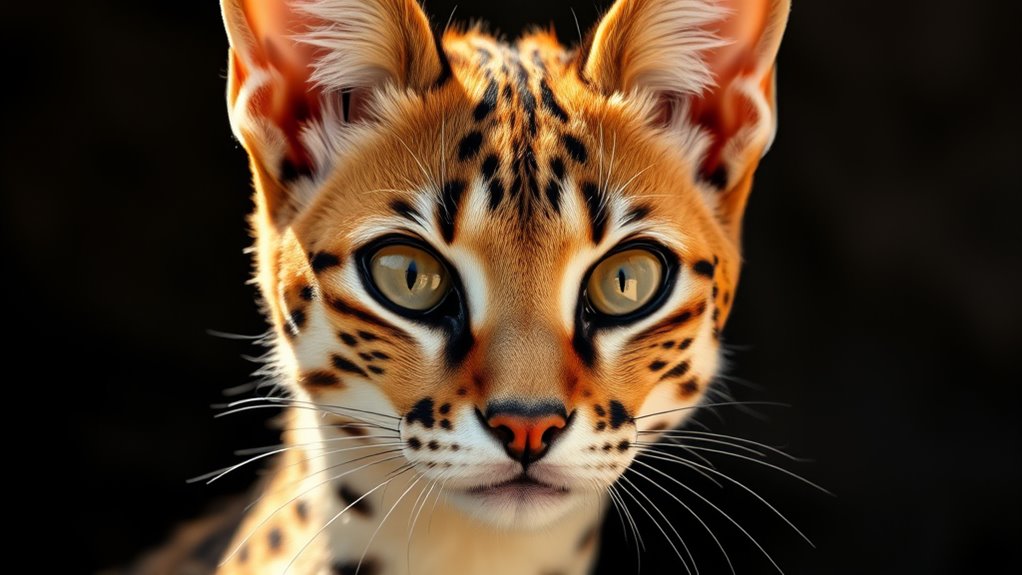
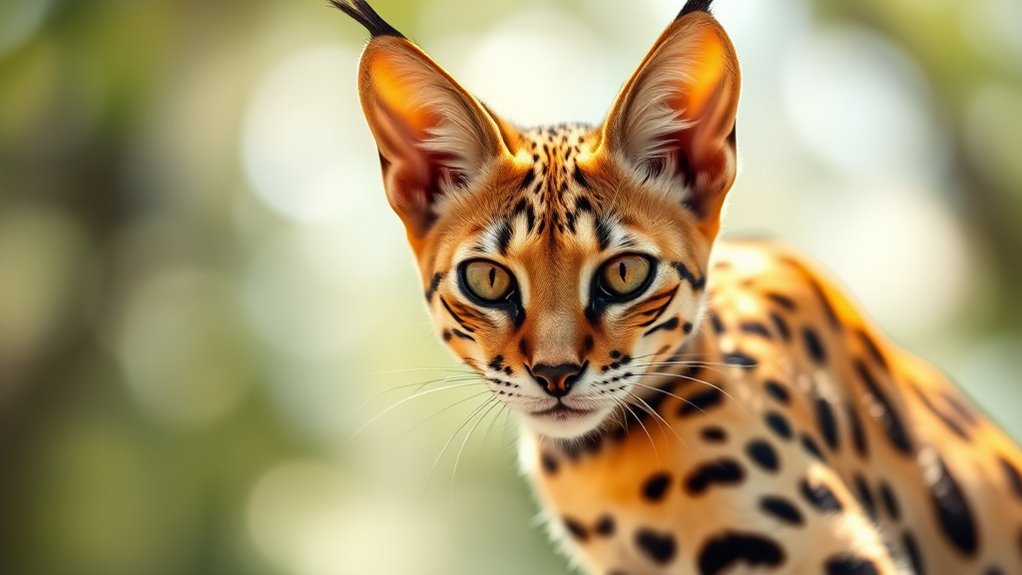
Serval cats are wild African felines known for their striking appearance and remarkable agility. Their tall, slender bodies, long legs, and large ears give them a unique look compared to domestic cats.
Serval cats are wild African felines with tall, slender bodies, long legs, and large ears, known for their agility and striking appearance.
Their characteristics include powerful leaps, sharp hunting instincts, and a distinctive coat pattern of spots and stripes. Unlike domestic cats, which are bred for companionship and tend to have rounded features, servals are built for hunting in the wild.
They’re much more active and need more space to roam. Their behavior is different—they’re solitary, territorial animals that often hunt small prey. Domestic cats, on the other hand, are generally more social, adaptable to indoor living, and have more subdued physical traits.
While they share some traits like sharp claws and keen senses, servals are fundamentally wild animals with instincts and needs that aren’t found in typical house cats.
What Makes Serval Cats’ Physical Traits Unique?
Serval cats have this really eye-catching coat pattern that makes them stand out from regular domestic cats. They’re covered in bold spots and stripes, which give them a wild and exotic look. It’s like they’re wearing a natural camouflage that helps them blend into their environment.
Their big, expressive ears are pretty amazing too. They help them pick up sounds from a distance, so they can detect prey or stay alert to anything around them. And their bodies? They’re built for agility—muscular and sleek, allowing them to move quickly and with power. All of these unique traits make servals truly fascinating and one-of-a-kind among feline species.
Distinctive Coat Pattern
| Pattern Type | Description | Function |
|---|---|---|
| Black Spots | Irregular, scattered spots | Camouflage in tall grass |
| Stripes | Vertical on face and body | Disrupt outline and help with concealment |
| Color Variations | Reddish-tan base with spots | Helps blend into their surroundings |
This distinctive coat makes servals truly unique among wildcats, both visually and functionally.
Large, Expressive Ears
Their large, expressive ears are one of the most striking features that set servals apart from other wildcats. The ear size is impressive, enabling them to hear exceptionally well.
This heightened sensory perception helps them detect prey and predators from great distances. Servals also use their ears for communication, often swiveling and twitching them to signal alertness or curiosity.
These ears do more than just help with hearing; they improve their overall awareness of the environment. Their sharp ears make them excellent hunters and alert companions.
You’ll notice their ears constantly move, revealing their mood and focus. This unique feature is an important part of their physical traits and makes servals fascinating and highly perceptive animals to observe and understand.
Agile, Muscular Body
A sleek, muscular body helps serval cats move with incredible agility and grace. Their long limbs and flexible spine allow quick, precise movements, making agility training both fun and necessary.
This build also gives them amazing jumping skills, so they can leap high and far with ease. Their strong muscles let them keep going—chasing, climbing, and exploring without getting tired quickly.
You’ll see how their powerful muscles help them squeeze through tight spots and pounce with accuracy. This mix of agility and strength makes them impressive hunters and shows off their unique physical traits.
With proper care, you can help your serval stay agile and muscular, keeping them active and healthy.
Do Servals Still Act Wild When Kept as Pets?
You might be curious if servals still act like wild animals even when they’re kept as pets. Honestly, their natural instincts, like hunting and territorial behaviors, tend to stay pretty strong. That can make it tricky for them to fully adapt to life in a home.
Understanding these wild traits is really important if you’re thinking about keeping a serval as a pet. They’re beautiful and fascinating, but they still retain a lot of their wild nature, which can sometimes lead to unexpected behaviors.
Retention of Wild Instincts
Even when kept as pets, servals often keep many of their wild instincts, showing they aren’t fully domesticated. Their wild behaviors can come out unexpectedly, reminding owners of their feline roots. Here are four key points to keep in mind:
- Hunting Instincts: They might stalk, pounce, or hunt small animals or toys.
- Vocalizations: Servals can make loud, wild-sounding calls that sound like their wild relatives.
- Scratching and Climbing: They often scratch furniture and climb high surfaces instinctively.
- Territorial Behavior: They may mark their territory or act aggressively if they feel threatened.
These traits show that, despite efforts to domesticate them, servals still act in a wild manner at heart.
Adaptation Challenges as Pets
While servals may seem manageable as pets, their wild instincts often create big challenges when it comes to adapting at home.
You’ll probably face socialization issues because these cats aren’t naturally inclined to act like typical house pets. Their hunting instincts and unpredictable behavior can make training tough, especially if you don’t start early.
Servals are curious and playful, but they can also get easily overwhelmed or agitated in small spaces. You might notice sudden outbursts or attempts to escape, showing they need plenty of room and stimulation.
To keep a serval as a pet successfully, you need to be ready to put in ongoing effort with socialization and training. Without proper guidance, they can revert to more wild behaviors, making them hard to manage safely.
What Do Serval Cats Eat, and How Do You Meet Their Dietary Needs?
Serval cats are obligate carnivores, meaning their diet must mainly consist of meat to stay healthy. They prefer high-protein, low-carb foods that mimic what they’d hunt in the wild.
Meeting these dietary needs can be tricky for owners, especially when trying to replicate their natural diet. Proper nutrition is essential for keeping your serval happy and healthy.
Replicating a serval’s natural diet is challenging but vital for their health and happiness.
To do this, consider these key points:
- Fresh, raw meat like mice, rats, or poultry is ideal for their diet.
- High-quality commercial diets designed for exotic cats can help supplement their nutrients.
- Offering variety prevents nutritional deficiencies and keeps your serval interested.
- Watching portion sizes is important to prevent overfeeding and obesity, which are common concerns.
Understanding their feeding challenges is crucial for maintaining your serval’s health. Proper diet management takes effort, but it’s vital for your pet’s well-being.
How Do You Design Enclosures and Enrichment for Serval Cats?
Designing an enclosure for a serval cat means creating a space that mimics its natural habitat while keeping it safe and stimulated. Incorporate climbing structures to encourage natural stalking and hunting behaviors.
Include hiding spots to give your serval privacy and help reduce stress, making it feel secure. Water features like shallow pools or streams promote activity and serve as great enrichment activities.
Adding interactive toys keeps your cat mentally engaged and prevents boredom. Safety measures are a must—secure fencing, escape-proof barriers, and escape deterrents ensure your serval stays safe.
Think about socialization strategies too. Supervised interactions with other animals or humans can support healthy behavior. The goal is to create a habitat that blends natural elements with safety for physical activity and mental enrichment.
Regularly update and rotate enrichment items to keep the environment stimulating. This helps your serval stay engaged and happy.
Is It Legal to Own a Serval, and What Are the Regulations?
Owning a serval can be legally complicated because rules vary a lot depending on where you live. Before thinking about getting one as a pet, it’s important to understand the laws and regulations in your area.
Some places ban exotic cats altogether, while others require permits or licenses. It’s a good idea to check your local laws first to avoid any surprises.
Make sure to look into whether you need special permits or licenses. Many regions have specific rules that owners must follow to keep an exotic pet legally.
There might also be legal requirements like habitat standards, vaccinations, and health checks. Knowing these ahead of time can save you trouble later.
Keep in mind that some areas have outright bans, while others have strict regulations. Always verify the current rules before bringing a serval home.
Staying informed helps you stay within the law and avoid fines or confiscation. It’s worth doing your homework to ensure you’re compliant.
What Are the Challenges and Responsibilities of Caring for a Serval?
Caring for a serval isn’t just about providing food; it’s about understanding what they need to thrive. These animals have very specific dietary requirements, so you’ll need to make sure they’re getting the right nutrition. Plus, they need plenty of space to roam and lots of enrichment activities to keep them happy and mentally stimulated.
It’s also important to be aware of the legal restrictions in your area—owning a serval isn’t legal everywhere, and there are safety measures to consider as well. Owning such a unique animal comes with a lot of responsibilities, so it’s really about careful planning and commitment. The goal is to ensure both your safety and the serval’s well-being, which means being prepared for the challenges that come with caring for one of these incredible creatures.
Specialized Diet Requirements
Because serval cats have highly specialized dietary needs, providing them with the right nutrition can be a significant challenge. You need to carefully meet their prey preferences, which include small mammals, birds, and insects.
Ensuring their diet is balanced often requires adding dietary supplements to prevent deficiencies. Here are key points to keep in mind:
- Prey Preferences: Servals prefer live or fresh prey, mimicking their natural hunting instincts.
- Dietary Supplements: These are essential to fill nutritional gaps, especially for vitamins and minerals.
- Protein Needs: They require a high-protein diet similar to what they’d hunt in the wild.
- Feeding Frequency: Regular, consistent feeding schedules help maintain their health and energy levels.
Meeting these needs demands dedication and knowledge, making it a significant responsibility.
Space and Enrichment Needs
Caring for a serval means providing plenty of space and environments that resemble their natural habitat. You should give them enough room to run, climb, and explore.
Add environmental enrichment with activities like puzzle feeders, scratching posts, and naturalistic setups to keep their minds active. Regular play helps with their physical health and social skills.
They need varied terrain such as trees, logs, and hiding spots to encourage natural behaviors. Design their habitat with open areas and cozy retreats so they feel secure.
Meeting these space and enrichment needs is key to their happiness and well-being as your unique pet.
Legal and Safety Considerations
Owning a serval comes with important legal and safety responsibilities that potential owners need to consider. You should understand the laws in your area, which often require permits or licenses.
Safety is just as crucial. Make sure you have secure enclosures to prevent escapes and injuries, as servals are wild animals with strong instincts.
Learn proper handling techniques to keep everyone safe. Regularly talk to exotic animal veterinarians to stay on top of health and safety needs.
Not following legal rules can lead to hefty fines or having the animal taken away. Prioritizing safety and legality helps ensure a responsible and enjoyable ownership experience.
How Do Serval Cats Interact With Humans and Other Animals?
Serval cats are known for their curious and playful nature, which can lead to engaging interactions with humans when properly socialized. Your bond with a serval depends on understanding their social behavior and communication methods.
They thrive on playfulness levels that vary individually, influencing how they interact with you and other animals. While they may enjoy human bonding moments, their territorial instincts can cause caution around unfamiliar animals.
Servals communicate through vocalizations, body language, and scent marking, requiring patience during training challenges. Their stress responses can be triggered by unfamiliar environments or abrupt changes, so a calm, consistent approach works best.
Here’s a quick overview:
| Trait | Description | Impact on Interaction |
|---|---|---|
| Playfulness levels | Vary individually | Influences engagement |
| Social behavior | Curious but cautious | Affects bonding |
| Communication methods | Vocal, body language | Needs understanding |
| Territorial instincts | Protective | May limit interactions |
How Much Does a Serval Cost, and What Are the Financial Considerations?
When considering a serval as a pet, it’s important to understand the financial commitment involved. The cost breakdown includes initial expenses and ongoing costs that require careful financial planning.
First, expect to pay between $4,000 and $12,000 for the serval itself, depending on age and breeder.
Second, licensing and permits can add $50 to $1,000 annually, varying by location.
Third, you’ll need to budget for enclosure setup, which can cost $2,000 or more for secure housing.
Fourth, ongoing expenses like veterinary care, special diets, and enrichment can total $1,000 or higher each year.
These costs highlight the importance of solid financial planning before bringing a serval home.
Understanding these financial considerations guarantees you’re prepared for the true expenses of owning a unique and demanding pet.
Is a Serval the Right Pet for You? Key Questions to Ask Before Getting One
Are you truly prepared for the challenges and responsibilities that come with owning a serval? These cats need more than just love—they require proper socialization techniques and consistent behavioral training.
You must be committed to exposing your serval to new people, environments, and sounds to ensure it stays well-adjusted. Without effective socialization, a serval can become shy or aggressive.
Behavioral training is equally important. It helps set boundaries and prevents destructive habits. Owning a serval isn’t for everyone, especially if you lack the time or patience for ongoing socialization and training.
Think about your ability to provide a secure, stimulating environment that mimics their natural habitat. Also, consider your experience with exotic pets and your willingness to manage their unique needs.
If you’re ready to invest time, effort, and resources into their social and behavioral development, a serval could be a rewarding companion. Otherwise, it’s wise to reconsider.
Frequently Asked Questions
Can Serval Cats Be Trained Like Domestic Cats?
You can train serval cats, but their training methods are a bit different from domestic cats. They respond best to positive reinforcement and consistent routines.
Keep in mind, they may have behavioral challenges like high energy levels and hunting instincts, which can be tricky to manage. Patience and understanding are really important.
You’ll need to adapt your training to their unique nature, making sure to keep safety in mind while encouraging good behavior.
How Long Do Serval Cats Typically Live in Captivity?
Serval cats typically live 12 to 20 years in captivity, and their lifespan depends on things like diet, healthcare, and environment.
Providing proper space to roam and mental stimulation is really important for their health.
If their needs are met, they can live as long as domestic cats.
Taking good care of them and meeting their specific needs can lead to a longer, healthier life.
Responsible care is essential for anyone considering owning a serval.
What Are Common Health Issues in Serval Cats?
You should be aware that serval cats are prone to certain health issues due to genetic predispositions, like respiratory and dental problems.
They also have specific dietary needs that, if not met, can lead to obesity or malnutrition. Regular veterinary checkups are essential to catch issues early.
Providing a balanced diet tailored to their needs and monitoring their health helps guarantee your serval remains healthy and happy.
Do Serval Cats Require Special Veterinary Care?
Like a rare gem, serval cats need special care. You’ll have to provide veterinary care tailored to their unique needs, considering their dietary needs and habitat requirements.
Regular check-ups are essential, and a vet experienced with exotic cats can help prevent health issues. You’ll also need to create a spacious, stimulating environment that mimics their natural habitat.
This way, your serval stays healthy, happy, and thriving under your care.
How Do Serval Cats Communicate With Humans?
You can communicate with serval cats through their vocalizations and body language. They make sounds like chirps, purrs, and meows to show how they’re feeling.
You’ll also notice their body language—ears, tail, and posture—that gives you clues about their mood. Paying close attention to these signals helps you understand what they’re trying to tell you.
Conclusion
Thinking about welcoming a serval into your home is like inviting a wild symphony into your life. You’ll need to understand, respect, and harmonize with its natural rhythm. These cats are extraordinary but come with unique needs and challenges.
By truly knowing what it takes, you can ensure your journey together is a beautiful melody. It’s about blending the wild with the domestic in perfect harmony.
Are you ready to conduct this rare and rewarding composition? Remember, owning a serval cat is a unique experience that requires dedication and understanding.