Why Does My Cat Trill When I Pet Her?
Are you often puzzled by your cat’s subtle sounds and what they really mean? Many cat owners wonder why their furry friends make certain noises during interactions. Understanding these signals can be tricky but rewarding.
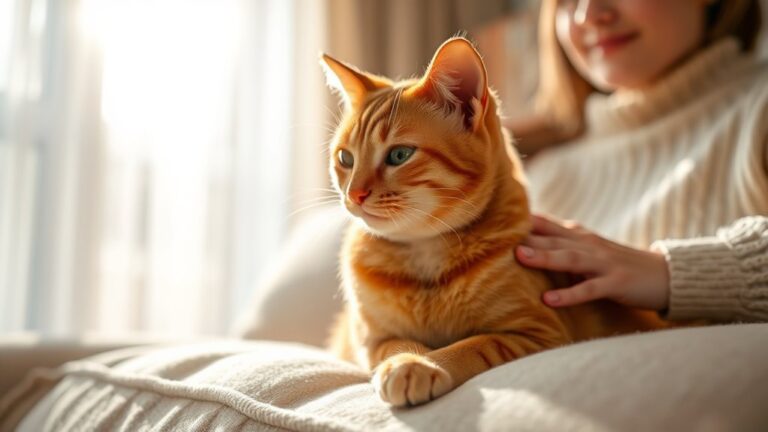
When your cat trills as you pet her, it’s a sign she feels happy, relaxed, and trusts you. Trilling is a gentle, melodic way she shows contentment and may also express curiosity or excitement during your interaction.
It’s different from meowing, which can signal needs or discomfort. If she’s trilling willingly, she’s comfortable and enjoys your company.
To understand more about her signals and strengthen your bond, keep exploring her behaviors further.
Key Takeaways
- Your cat trills to show she’s enjoying and feeling comfortable when you pet her.
- Trilling is a sign that she’s relaxed and positively engaged with you.
- It can also mean she feels safe and happy in your presence.
- Sometimes, she trills as a cheerful greeting or to show affection.
- If she’s trilling a lot, it might mean she’s very excited or a bit overstimulated.
What Is Cat Trilling and Why Do Cats Do It?
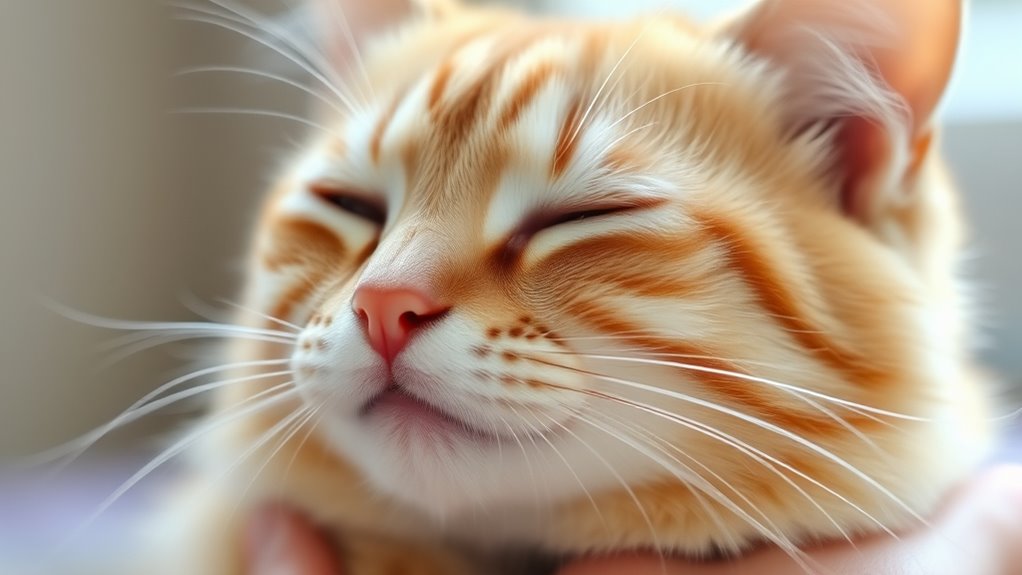
Have you ever wondered what your cat’s cheerful trill really means? Cat communication includes many sounds, and trilling is one of the most positive. When your cat trills, she’s using her vocalizations to express friendliness, curiosity, or excitement.
It’s a form of feline behavior that signals she’s comfortable and engaging with you or her environment. Unlike meowing, which often seeks attention or expresses needs, trilling is more of a greeting or a way to show affection.
Trilling shows your cat’s comfort and affection, unlike meowing which seeks attention or expresses needs.
Cats often trill when they see you after a while or when they’re happy to be near you. This sound helps strengthen your bond and indicates she feels safe. Trilling is a cheerful, musical chirp that’s her way of communicating her positive emotions.
Recognizing this behavior helps you better understand your cat’s mood. It also strengthens your connection through her happy, expressive sounds.
How Is Trilling Different From Meowing?
You’ll probably notice that trilling sounds more melodic and gentle than meowing. It’s like a soft, musical way your cat might get your attention. Meowing, on the other hand, can sometimes sound sharper or more insistent, kind of like your cat is trying to be heard loud and clear.
Trills usually mean your cat is feeling friendly or curious—like they’re happy to see you or interested in what’s going on. Meows, though, can mean a bunch of different things: maybe they’re hungry, feeling uncomfortable, or just trying to get your attention for some reason.
Getting to know these different sounds can really help you understand what your kitty is trying to tell you.
Vocalization Style Differences
While both trilling and meowing are common ways cats communicate, they differ a lot in tone and purpose. Trilling is a melodic, chirping sound that’s usually high-pitched and lively. It often acts as a friendly or excited way for your cat to say hello or show reassurance.
Meowing, on the other hand, can vary quite a bit in sound—from soft to loud. Cats mainly meow to get your attention, share needs, or alert you to something going on.
The main difference is in what they’re trying to say. Trills usually mean happiness or comfort, while meows are more about specific messages. Recognizing these differences helps you understand your cat’s mood better.
This way, you can respond more appropriately, making your bond even stronger through clearer and more responsive communication.
Emotional Expressions Compared
Trilling and meowing are different ways cats show their feelings, helping you understand what they’re experiencing.
Trilling usually means they’re happy, excited, or just saying hello, showing they’re in a good mood.
Meowing can mean a lot of things—hunger, wanting attention, or sometimes just being annoyed.
Knowing the difference makes it easier to respond the right way.
Here’s a quick comparison:
| Vocalization | Emotional State | Typical Context |
|---|---|---|
| Trilling | Happiness, friendliness | Saying hello or happy to see you |
| Meowing | Needs, attention, annoyance | Asking for food or help |
| Purring | Contentment or comfort | When they’re relaxed or being petted |
| Hissing | Fear, aggression | Feeling threatened or scared |
When Do Cats Usually Trill During Petting?
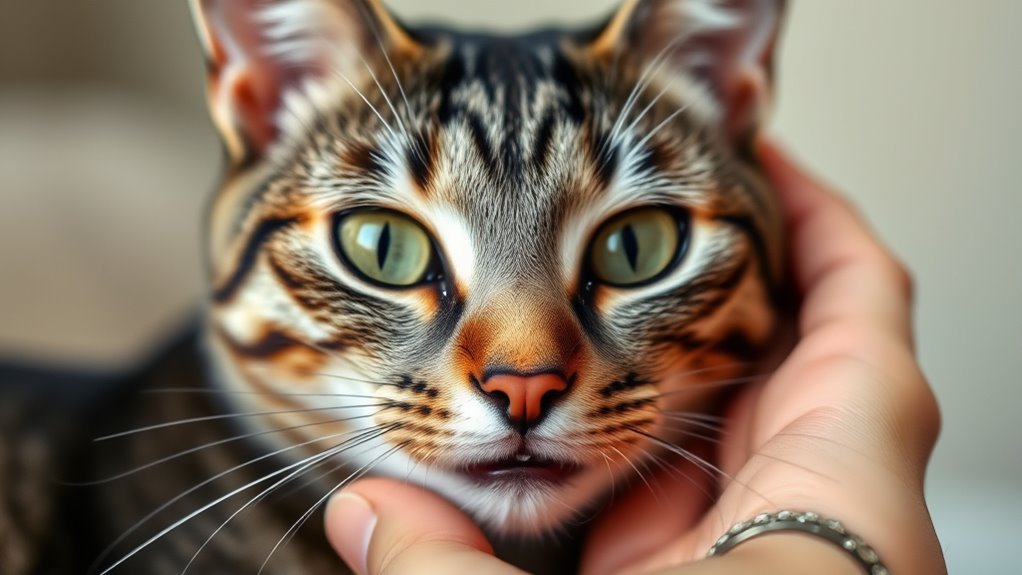
You might notice your cat trilling when you’re gently petting them and they want your attention. It’s like their way of saying, “Hey, I’m really enjoying this!” or “Keep going, please!” Cats often do this when they’re feeling happy and relaxed, so it’s a good sign they’re comfortable with you.
You’ll probably hear these trills especially when your cat is in a good mood or feeling extra affectionate. Sometimes, they do it to encourage you to keep petting them or to let you know they’re enjoying the interaction. So, next time you hear that cheerful trill, it’s a pretty clear sign that your cat feels safe, loved, and connected with you.
During Gentle Petting
Cats often trill during gentle petting when they’re feeling relaxed and content. This sound is part of their purring behavior, signaling comfort and happiness.
During these moments, your cat’s affectionate gestures—like leaning into your touch or nuzzling—show she’s enjoying the interaction. Trilling usually happens when she’s calm and relishing the gentle strokes you give.
It’s her way of expressing pleasure without demanding anything in return. You might notice her ears flicking or her body softly swaying as she responds to your touch.
This combination of purring and trilling shows a strong bond and mutual trust. Keep an eye on her body language, and you’ll see that these gentle petting moments are some of her favorites to connect.
When Seeking Attention
When a cat is actively seeking your attention during petting, she often emits a trill to communicate her desire for interaction. This sound is one of her attention signals, showing her affectionate behavior and happiness.
You’ll notice her trilling when she wants more petting or just craves your focus. She may also nudge or paw at you, but the trill is her way of saying, “I love this, keep going!”
Recognizing this sound helps strengthen your bond and lets her know her signals are understood.
| Attention Signal | Description |
|---|---|
| Trill | Seeks petting or interaction |
| Purring | Contentment and happiness |
| Nudge | Wants attention or more petting |
| Head Butts | Affection and trust |
| Kneading | Comfort and love |
Does Trilling Mean My Cat Is Happy or Stressed?
Is trilling a straightforward sign of your cat’s happiness, or could it also indicate stress? It’s important to understand that vocal cues like trilling can serve different purposes.
Many cats trill when they’re happy or seeking positive interaction, but it can also be a stress signal. For example, if your cat trills suddenly or excessively, she might be trying to communicate discomfort or anxiety.
Pay attention to her body language alongside the sound. Tense muscles or flattened ears could suggest stress. Trilling isn’t always a clear sign of happiness; sometimes, it’s a way to get your attention during stressful moments.
Recognizing the context and other signals helps you interpret her mood correctly. So, don’t assume trilling always means she’s happy—look at her overall behavior to understand how she’s feeling better.
How Cats Use Trilling to Show Contentment
When your cat starts trilling, it’s usually a good sign that they’re feeling happy and at ease around you. It’s like their way of saying, “Hey, I’m comfortable here!” They use this cheerful sound not just to let you know they’re content, but also to communicate with other cats.
Expressing Happiness and Comfort
Cats often trill as a clear sign of their happiness and comfort. When your feline purrs and trills during petting, it shows they’re feeling content and relaxed.
Their body language, like a relaxed posture and gentle eye contact, also confirms this. Trilling is a way they express feeling safe and loved, similar to purring but with a more vocal touch.
Recognizing these signals helps you understand their mood better. Both trilling and purring are signs of happiness, showing contentment and relaxation.
They often vocalize softly and move their tail gently, which adds to their overall sense of comfort. Paying attention to these cues helps strengthen your bond with your cat.
Communicating With Human and Feline
Since cats often use trilling to show they’re happy, it’s a clear sign to both humans and other cats that they feel safe and relaxed. This sound is an important way cats communicate, especially during petting when they’re calm.
Trilling also helps your cat connect with you, showing she’s comfortable and appreciates your gentle touch. Unlike meowing, which might be asking for something, trilling usually means she’s feeling affectionate and content.
Can Trilling Help Strengthen My Bond With My Cat?
Have you ever wondered if trilling can help deepen the bond between you and your cat? Trilling is a friendly, positive way to communicate that signals comfort and trust.
Using trills during petting can reinforce your connection, making your cat feel safe and loved. It’s a simple way to show affection and build trust.
When you incorporate trilling into your interactions, your cat may start to associate your voice with warmth and care. Responding with your own trills creates a gentle, mutual exchange.
This back-and-forth mimics feline communication cues, helping to develop mutual understanding. It’s a fun, natural way to strengthen your relationship.
Here’s a quick look at how trilling can benefit your bond:
| Action | Effect |
|---|---|
| Petting + Trilling | Reinforces positive feelings |
| Responding with Trills | Shows attentiveness and warmth |
| Consistent Use | Builds familiarity and trust |
| Gentle Vocalizations | Enhances emotional connection |
| Playful Trilling | Creates joyful, shared moments |
Which Cats Are More Likely to Trill When Happy?
You might notice that some cats are more prone to trilling when they’re happy, thanks to their unique personalities and communication styles. Certain cat breeds, like Siamese, Maine Coon, and Ragdoll, are known for their expressive voices and friendly nature, making trilling more common.
These breeds often have outgoing traits like sociability and curiosity, which encourage them to communicate affection through sounds. Cats with confident, affectionate personalities tend to trill more because they enjoy engaging with their humans and expressing their happiness openly.
On the other hand, more reserved or independent breeds like British Shorthair or Russian Blue may trill less, preferring subtle signals. Ultimately, your cat’s individual personality plays a big role in how often they trill when happy.
Recognizing these tendencies helps you better understand your cat’s unique way of expressing joy.
What Factors Make My Cat Trill More or Less?
Several factors influence whether your cat trills more or less, including their mood, environment, and physical health. Trilling frequency often reflects how comfortable or excited your cat feels at a given moment.
When your cat is relaxed and content, she might trill more often, especially during interactions like petting. On the other hand, stress or discomfort can make her trill less or even stop altogether.
Environmental influences also matter; a calm, familiar setting encourages more vocalizations, while noisy or unpredictable surroundings might suppress them.
Physical health is another key factor—pain or illness can decrease her willingness to trill. Pay attention to your cat’s overall behavior and environment to better understand her trilling patterns.
How Can I Tell If My Cat Is Truly Content?
When your cat consistently trills and shows relaxed behaviors, it’s a good sign she’s truly content. Pay attention to her purring patterns—steady, gentle purring usually means she’s happy, especially when combined with relaxed body language.
Look for her eyes half-closed or softly blinking, which shows she trusts and feels comfortable around you. Her ears will be in a neutral position, not pinned back or swiveling nervously.
A relaxed posture, like lying on her side or stretched out, also signals she feels safe and at ease. You might notice her tail gently swishing or curling around you, another sign she’s content.
These cues, along with her calm demeanor and consistent purring, confirm she’s happy and comfortable in your presence. Recognizing these signs helps you understand her emotional state and strengthens your bond.
It also makes petting sessions more rewarding for both of you.
Tips to Encourage Your Cat to Trill and Communicate Better
Encouraging your cat to trill and communicate more often involves creating a positive environment that invites interaction. Pay attention to your cat’s body language, like relaxed muscles and a gentle tail, to know when she’s comfortable.
Use positive reinforcement by rewarding her with gentle petting, treats, or praise whenever she shows signs of communication, such as trilling or purring. Respond promptly and calmly to her attempts to engage, which helps her associate these behaviors with good experiences.
Consistency is key—spend regular quality time together, speaking softly and offering affection to build trust. Over time, your cat will feel more confident expressing herself through trills and other vocalizations.
Frequently Asked Questions
Do Kittens Trill More Than Adult Cats?
Kittens often trill more than adult cats because it’s a key part of their communication development. During kittenhood, trilling helps them bond with their mothers and siblings, showing curiosity or excitement.
As cats grow up, their way of communicating changes. They tend to use more subtle sounds and behaviors, so adult cats usually trill less.
Your kitten’s frequent trilling is a sign of her social and playful nature. This may decrease as she adopts more typical adult behaviors.
Can Trilling Indicate That a Cat Is in Pain?
Yes, trilling can sometimes indicate your cat is in pain, especially if it’s unusual or combined with other signs. While cats often use vocalizations to show happiness or curiosity, a sudden or persistent trill might mean she’s uncomfortable or distressed.
Pay attention to her body language and other signs of pain, like hiding or changes in appetite. These clues can help you understand her condition and know when it’s time to see the vet.
Does Trilling Vary Between Different Cat Breeds?
Think of your cat’s trill as a secret handshake—unique to each breed. Breeds’ vocalizations and characteristics influence how often and how loudly they trill.
For example, Siamese cats are known for being chatty, while British Shorthairs tend to be quieter. So, yes, trilling varies among breeds, reflecting their personality and communication style.
Understanding your cat’s breed traits helps you interpret her trills more accurately.
How Does a Cat’s Environment Influence Trilling Behavior?
Your cat’s environment plays a big role in her trilling behavior. When she has plenty of enrichment and positive social interactions, she’s more likely to trill as a friendly greeting or sign of contentment.
A stimulating space with toys, cozy spots, and interaction with you helps her feel secure and happy. This encourages her to communicate through trilling, which can strengthen your bond and make her feel more at home.
Can Owners Train Cats to Trill on Command?
You can teach your cat to trill on command using positive reinforcement and training techniques. Think of it like teaching a musical instrument—patience and consistency are key.
Start by associating a specific vocalization cue with treats or affection, rewarding her when she responds. Over time, she’ll connect the cue with the trill.
Eventually, she’ll turn it into a fun, communicative habit that strengthens your bond.
Conclusion
Next time your cat trills while you pet her, know it’s her way of saying she’s truly content—like a feline smile. Imagine a shy rescue cat gradually warming up to you, trilling softly during gentle strokes, signaling trust and happiness. Recognizing these moments helps deepen your bond.
So, keep petting and paying attention. Your cat’s trills are her happy words, waiting for you to understand and respond. When your cat trills during petting, it’s her way of showing she feels safe and loved.
Understanding why your cat trills can turn simple moments into a special connection. It’s her way of expressing joy and trust, especially when she’s relaxed and content. Embrace these signals—they’re a sweet language of feline happiness.