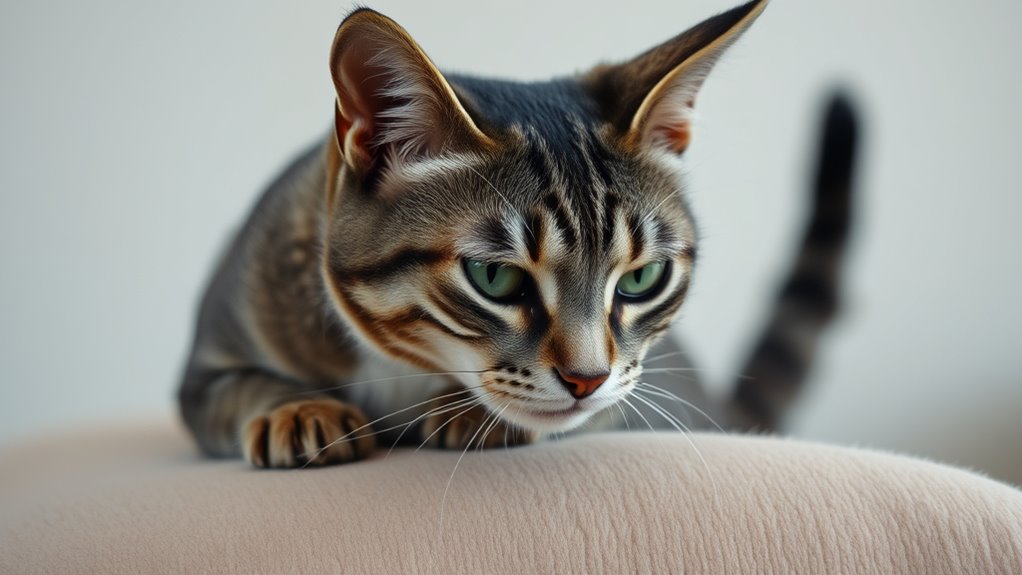
Why Does My Cat Get Mad When I Pet Her?
Many cat owners find themselves puzzled when their furry friends suddenly get mad during petting sessions. You’re not alone—it’s a common issue that can leave you feeling confused about what went wrong.
Your cat might get mad when you pet her because she’s feeling overstimulated, in pain, or has learned that petting causes discomfort.
Look for signs like tail flicks, flattened ears, or pulling away, which indicate she’s uncomfortable.
Your petting technique and environment also matter—gentle, slow strokes in a calm setting can help.
If these signs persist, exploring medical issues or past trauma can reveal underlying causes—stay tuned to learn more about making petting enjoyable for her.
Key Takeaways
- Your cat might get annoyed if you pet her too much or too roughly. Overstimulating her can make her feel irritated or defensive.
- If your cat is in pain from issues like arthritis or dental problems, she might not want to be touched. That discomfort can make petting unwelcome.
- Watch her body language — tail flicks or flattened ears are signs she’s uncomfortable or that her boundaries are being crossed.
- Some cats prefer only certain types of touch or limited petting. Unexpected contact can cause her to get frustrated.
- A stressful environment or sudden movements during petting can overwhelm her, leading to negative reactions.
Why Does My Cat Get Mad When I Pet Her?
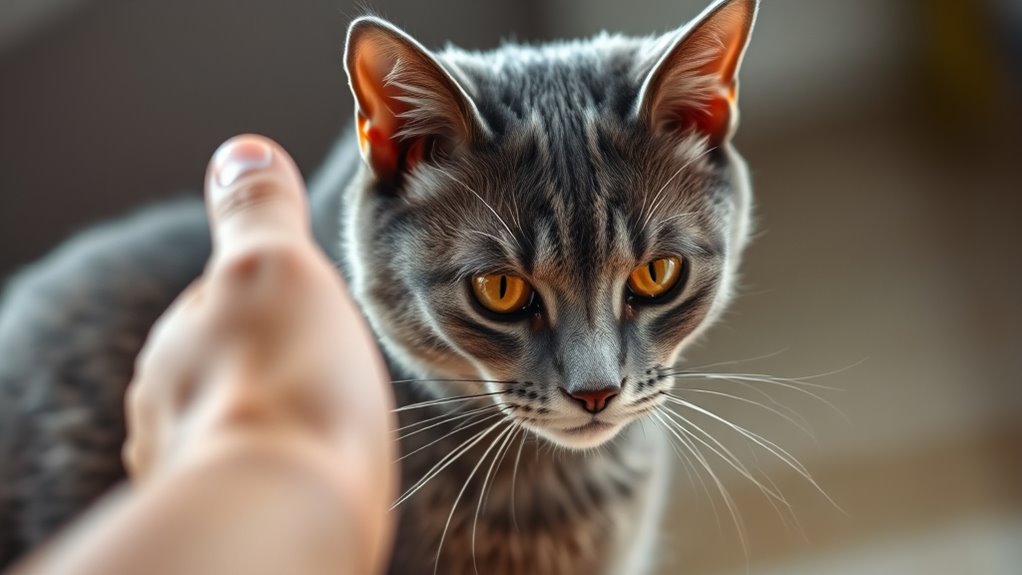
Have you ever wondered why your cat suddenly snaps or pulls away when you try to pet her? It all comes down to cat behavior and petting preferences. Cats communicate a lot through their reactions, which often signal stress or discomfort.
When you ignore her cues or push her comfort zones, she may feel overwhelmed. This can lead to mood changes and a defensive response. Recognizing these signals helps you build trust with your cat.
Instead of forcing affectionate gestures, try observing her reactions and adjusting your approach. Gentle petting, especially in areas she prefers, can strengthen your bond and make her feel secure.
Signs Your Cat Is Uncomfortable During Petting
Noticing when your cat feels uncomfortable during petting is key to keeping your bond positive. Pay close attention to her body language—things like twitching tail, flattened ears, or suddenly stiffening are signs she’s not feeling it.
If she starts pulling away or tries to bite or scratch, she’s signaling that her petting boundaries are being crossed. Watch for dilated pupils or a tense body, which also show she might be overwhelmed.
Clawing at your hand or vocalizing sharply are additional signs she wants the petting to stop. Recognizing these cues early helps you adjust your approach and avoid negative reactions.
Remember, every cat is different and has her own preferences. Respect her boundaries and give her space if she shows signs of discomfort.
Understanding these signals helps keep her comfortable and builds trust in your interactions.
Understanding Why Cats Get Overstimulated and How to Prevent It
Even when your cat seems comfortable at first, she can quickly become overstimulated, which might cause sudden aggression or withdrawal. Overstimulation triggers vary, but common ones include too much handling, petting in sensitive spots, or quick movements. Recognizing her stress signals is key to preventing things from escalating.
To help avoid overstimulation, pay attention to her body language, like tail flicks or flattened ears. Keep petting sessions short and focus on areas she enjoys, such as behind the ears or under the chin.
Watch for signs of fatigue or agitation and give her space when needed. Understanding what causes overstimulation and recognizing stress signals helps create a calmer environment.
Medical Conditions That Can Make Cats React Aggressively
Medical issues can often be behind sudden or unexplained aggressive behavior in cats, and recognizing these signs is crucial for their well-being. If your cat reacts aggressively during petting, it could be due to pain or discomfort from underlying health problems.
Conducting a thorough pain assessment helps identify issues like arthritis, dental disease, or injuries that might make touch uncomfortable. Feline anxiety can also contribute to aggressive responses, especially if your cat feels stressed or insecure.
Medical conditions causing discomfort can increase irritability, making even gentle petting unwelcome. Pay attention to subtle signs like flinching, growling, or biting, which may indicate your cat is in pain.
If you notice sudden aggression, consulting a veterinarian for a complete health evaluation is important. Addressing the root cause helps improve your cat’s quality of life and reduces aggressive reactions during petting or handling.
How Your Petting Technique Affects Your Cat’s Mood
The way you pet your cat can really influence how she feels and how comfortable she is. Your petting method affects how your cat perceives your touch, especially since every cat has its own preferences and sensitivities. Ignoring these cues might make her feel overwhelmed or annoyed.
To keep things positive, pay close attention to her body language. If she stiffens or pulls away, that’s her way of signaling discomfort. Use gentle, slow strokes, especially around sensitive spots like the belly or tail.
Respect her preferences—some cats love head scratches, while others dislike being touched there. Avoid sudden movements or pressing too hard, as these can cause stress or irritability.
Where Are the Best Spots to Pet Your Cat Comfortably?
Want to make your cat happy while petting? It’s best to stick to their favorite spots, like behind the ears or along the back, where gentle strokes feel really soothing. But be careful around sensitive areas like the belly or tail — those can make your kitty uncomfortable.
And don’t forget, watching your cat’s reactions is key. If they start to squirm or seem upset, it’s a good idea to pause or move to a different spot. Keeping an eye on their cues helps make sure that petting stays a fun and relaxing experience for both of you.
Preferred Petting Areas
Cats can be quite particular about where they like to be petted, and finding their favorite spots can make interactions more enjoyable for both of you. When exploring preferred petting areas, pay attention to their reactions.
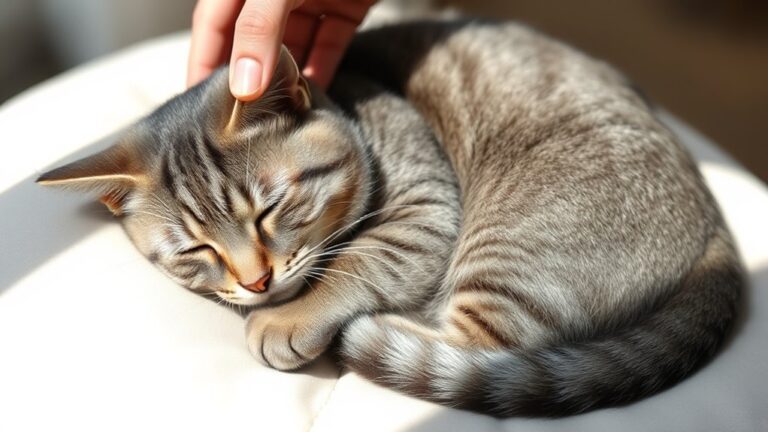
Focus on areas like the top of their head and behind the ears, where gentle strokes feel natural. Many cats also enjoy petting along their cheeks for longer periods.
The base of their chin is often a happy spot, and some cats love being stroked from their shoulders to the tail. Use soft, steady techniques and keep sessions short, about 5 to 10 seconds, unless they indicate they want more.
Always watch for cues to ensure your interactions stay positive and relaxed.
Avoid Sensitive Zones
Although many cats enjoy being petted, certain sensitive zones can cause discomfort or even agitation if touched. These sensitive areas often differ between cats, so it’s important to observe your pet’s preferences.
Avoid areas like the belly, paws, and tail, as these are more vulnerable and can trigger defensive reactions. The face, especially around the eyes and ears, can also be sensitive for some cats.
Instead, focus on areas most cats find comfortable, like the chin, cheeks, and the top of the head. Pay attention to your cat’s body language and respect her boundaries.
If she pulls away or shows signs of discomfort, stop petting immediately. Recognizing and avoiding sensitive zones helps create a positive petting experience for both of you.
How Past Trauma Can Lead to Cat Aggression
Past traumatic experiences can significantly influence a cat’s behavior, often leading to aggression. Trauma history can make cats more anxious and more sensitive to their environment.
Past trauma can lead to increased anxiety and aggression in cats, affecting their responses and trust.
If your cat has faced neglect, abuse, or loud noises suddenly, they might struggle to trust others and become defensive. Recognizing what triggers their reactions is key, since certain actions or touches can set off their aggression.
Think about how past experiences shape your cat’s responses. They might react defensively to what they perceive as threats rooted in trauma.
Fear from socialization issues can make petting feel unsafe for them. An unpredictable environment or lack of safe spaces can increase their anxiety and make aggression worse.
Understanding their past helps you create a more supportive space. Respect their boundaries and work on reducing environmental stressors to help ease their aggression over time.
Tips for Building Trust and Making Petting More Enjoyable
Thinking about building trust and making petting more fun? Well, a good place to start is by respecting her personal space and letting her come to you. Don’t rush it—just be patient and see how she feels about getting close.
Pay close attention to her body language too. If she seems relaxed and happy, you’re on the right track. But if she pulls away or seems tense, it’s a sign to give her some space. Using gentle touches can really help her feel comfortable and safe.
Respect Her Personal Space
Respecting your cat’s personal space is key to building trust and making petting enjoyable instead of stressful. When you honor her boundaries, she feels safe and in control.
Let her come to you first—avoid forcing contact. Pay attention to her signs of discomfort or if she pulls away. Respect those cues.
Be cautious with sensitive areas like her belly or tail, and only pet them if she initiates. Giving her a quiet space to retreat whenever she needs is also important.
These steps help her feel secure and respected, strengthening your bond. Remember, understanding her boundaries isn’t just polite — it’s essential for a happy, mutual relationship.
Recognize Body Language Cues
Recognizing your cat’s body language is key to building trust and making petting a positive experience. Understanding feline behavior helps you pick up on signals that show comfort or discomfort. Look for subtle cues in your cat’s posture and movements to communicate better.
For example, a relaxed tail and soft eyes show your cat is content. But flattened ears and a twitching tail can mean irritation. Use the table below to spot common body language cues and what they mean.
| Signal | Meaning | Action |
|---|---|---|
| Purring | Contentment | Continue petting |
| Tail flicking | Annoyance or agitation | Pause and observe |
| Kneading | Affection and comfort | Keep gentle touch |
| Ears flattened | Fear or aggression | Give space |
| Slow blinking | Trust and relaxation | Maintain gentle contact |
Getting familiar with these cues helps you build trust and makes petting more enjoyable for your cat.
Engage in Gentle Touch
Engaging in gentle touch is key for building trust and making petting enjoyable. When you use soft strokes and calming techniques, your cat starts to link your touch with comfort.
To make petting better, try these tips:
- Start softly: Use light, slow strokes on her head or back.
- Watch her cues: Notice her body language and stop if she looks uncomfortable.
- Use calming techniques: Incorporate gentle, rhythmic strokes that help her relax.
- Respect her boundaries: Let her come to you and retreat when she wants, building trust step by step.
When to Seek Help for Aggressive Behavior in Cats
Knowing when your cat’s aggressive behavior needs professional help can be tricky, but it’s really important for their safety and well-being. If your cat’s aggression gets worse or becomes unpredictable, it’s time to see a veterinarian or feline behaviorist.
They can evaluate your cat’s behavior by understanding feline psychology and help find any underlying issues. Signs to watch for include biting or scratching during petting, sudden attacks, or ongoing aggression that worsens over time.
If your attempts to change the behavior don’t work or if your cat seems scared or stressed, don’t hesitate to seek expert advice. A professional can create a tailored plan, including behavior modification techniques, to address these problems safely.
Creating a Calm Petting Routine for a Happy Cat
Creating a calm petting routine can help your cat feel safe and relaxed during your interactions. A calm environment and routine consistency are key to building trust and reducing stress.
To start, choose quiet times when your cat is naturally more relaxed. Use gentle, slow strokes to avoid overstimulation and show patience.
Limit petting sessions to short durations, gradually increasing as your cat becomes more comfortable. Watch for signs of discomfort, like tail twitching or moving away, and respect her boundaries.
Frequently Asked Questions
Can Certain Cat Breeds Be More Prone to Getting Mad During Petting?
Yes, some cat breeds can be more likely to get upset during petting because of their natural traits and breeding.
For example, breeds like Siamese or Sphynx are very affectionate but can become overstimulated quickly, which might make them irritable.
Other breeds, such as Scottish Fold or Bengal, tend to be more independent and might not tolerate long periods of petting well.
Knowing your cat’s breed and personality can help you avoid upsetting them or causing unwanted reactions.
Does the Time of Day Affect My Cat’s Tolerance for Petting?
Your cat’s tolerance for petting can vary throughout the day. Studies show cats are usually more relaxed in the evening, matching their natural evening winding-down time.
In the morning, their mood might be influenced by how they feel upon waking, making them less open to petting. Environmental factors like noise or activity levels also play a role in their patience.
Playtime habits and their daily routine can greatly affect how your cat responds to being petted at different times.
How Do I Tell if My Cat Is Feigning Aggression or Truly Annoyed?
You can tell if your cat is feigning aggression or truly annoyed by watching her body language. If she flicks her tail, flattens her ears, or hisses, she’s probably genuinely upset.
On the other hand, gentle tail twitching or a quick swat might just be playful or a sign of overstimulation. Pay close attention to her overall stance and movements to get a better idea of how she’s feeling.
Understanding her mood helps you respond better and respect her boundaries, keeping both of you happy and safe.
Can My Cat’s Diet Influence Her Mood During Petting?
They say “you are what you eat,” and this definitely applies to your cat’s mood during petting.
A balanced diet with quality food, a consistent feeding schedule, and proper nutrients can make her generally happier.
Be aware of food allergies that might upset her, leading to irritability.
When her diet supports her well-being, she’s more likely to enjoy cuddles rather than getting annoyed during playtime.
Are There Specific Toys or Activities to Help Calm an Irritable Cat?
You can help calm an irritable cat by providing interactive toys that engage her mentally and physically, reducing stress and irritability.
Incorporate calming scents like lavender or chamomile around her space to promote relaxation. Regular play sessions with these toys and a soothing environment can make her feel more secure.
Conclusion
So, next time your cat snaps or hisses during petting, remember she’s communicating her limits.
By paying attention to her signals, you can better understand what she’s comfortable with. Adjust your approach and make sure she feels safe and relaxed.
This way, petting becomes a positive experience for both of you.
Isn’t building a trusting bond worth the effort?
With patience and understanding, you’ll create a calmer, happier feline who genuinely enjoys your company.
After all, isn’t a peaceful cuddle session what we all want?
And knowing why your cat gets mad when you pet her can help you foster a better, more respectful relationship.