Why Does My Cat Duck When I Pet Him?
Are you frustrated because your cat ducks or pulls away when you try to pet him? You’re not alone—many cat owners struggle with understanding what their feline friends are really telling them.
It can be confusing and even hurtful when your cat suddenly becomes shy or defensive during affection.
When your cat ducks during petting, it usually signals discomfort, stress, or pain. Cats may do this if they’re feeling anxious, have sensitive areas, or are experiencing health issues like arthritis or dental problems.
They might also duck to set boundaries or due to past trauma.
By paying attention to these cues, you can better understand their needs.
If you want to uncover ways to make petting more comfortable, keep exploring the details below.
Key Takeaways
- Cats may duck to show they’re uncomfortable or stressed when you’re petting them.
- If your cat has pain from things like arthritis or dental issues, they might pull away.
- Every cat is different; some just don’t like certain spots being touched.
- Changes in personality or past bad experiences can make your cat more likely to avoid being petted.
- Building trust with gentle, consistent interactions can help reduce the chances of your cat ducking away.
Why Do Cats Duck When You Pet Them?
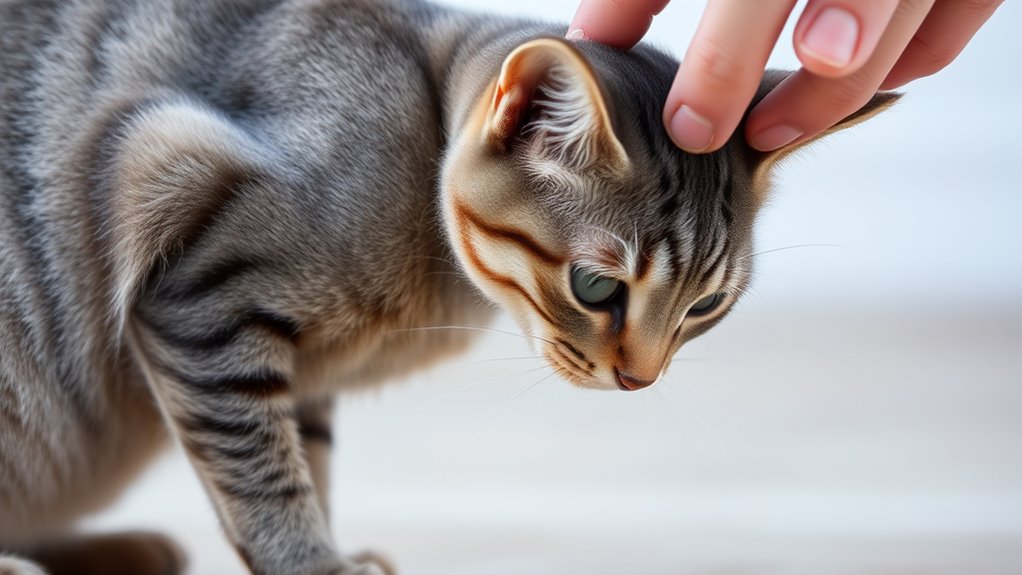
Many cats duck when you pet them because they’re trying to communicate their comfort level or discomfort. This behavior is common and often shows that your cat feels uneasy or overwhelmed.
When a cat ducks, it’s like they’re saying, “I’m not comfortable with this contact.” Petting anxiety can trigger this, especially if your cat isn’t used to being touched or has had negative experiences.
Some cats are more sensitive than others, and their body language can reveal how they’re feeling quickly. If your cat ducks, it’s important to respect their boundaries and give them space.
Pushing them to stay or continue petting can make their petting anxiety worse, which might lead to more stress or even aggression. Recognizing these subtle cues helps you build trust and creates a more positive interaction.
Could Pain Be Making Your Cat Duck?
Could pain be the reason your cat ducks when you pet him? Cats often show discomfort through changes in behavior, and pain is a common cause.
If your cat suddenly pulls away or ducks when you reach out, it might be because touching causes him pain. Conditions like arthritis, injuries, or dental issues can make gentle petting uncomfortable.
Noticing these signs is important because pain can lead to behavioral changes that affect your cat’s happiness and health. If your cat hesitates or avoids contact, consider visiting the vet to rule out underlying health problems.
Addressing pain early can improve your cat’s quality of life and reduce his instinct to duck or withdraw. Remember, what seems like typical feline independence could actually be a sign of discomfort.
Pay close attention to how your cat reacts and seek professional advice when needed.
How Past Experiences Influence Your Cat’s Reactions
Your cat’s past experiences shape how he reacts to being touched today. If he’s had negative encounters, like rough handling or neglect, past trauma can cause him to duck or pull away. Understanding this helps you build trust through positive reinforcement, encouraging him to feel safe.
A cat’s past trauma influences his reactions; patience and positive reinforcement help rebuild trust and comfort.
Consider these key points:
- Previous negative experiences may make your cat wary or fearful, leading to defensive reactions.
- Positive reinforcement, such as gentle petting and treats, helps rebuild his confidence and trust.
- Patience and consistency are essential because past trauma takes time to heal and affects his comfort level during interactions.
Recognizing Your Cat’s Personal Boundaries
How can you tell if your cat is comfortable with your touch? Pay attention to their personality and petting preferences. Every cat has unique comfort zones that influence how much affection they’re willing to give or accept.
Feline communication includes subtle stress signals like twitching tails or ears. These cues show when you might be crossing boundaries. Recognizing them helps you respect their personal space and build trust.
Notice when your cat leans into your touch or purrs. These are signs they’re comfortable and enjoying the affection. On the other hand, if your cat ducks or tries to escape, it’s a sign they’re uncomfortable or need a safe space.
Respecting your cat’s boundaries isn’t just about avoiding stress signals. It’s about creating a relationship based on mutual understanding.
Providing a secure environment where your cat feels in control helps strengthen your bond. It also encourages positive interactions and trust.
Reading Your Cat’s Body Language During Petting
Understanding your cat’s body language while petting is key to making sure both of you feel comfortable and safe. By noticing tiny signals, you can change how you’re petting to match what your cat needs.
Look for these important signs:
- Relaxed posture and slow blinking show they’re happy.
- Tense muscles, a twitching tail, or flattened ears mean they might be uncomfortable or overstimulated.
- If your cat pulls away or tries to escape, it’s a sign they want to stop.
Your cat’s body language shows how they’re feeling, so watch closely and respond accordingly. If they lean into your touch or purr, that’s a good sign. But if they twitch or flatten their ears, it’s time to change your approach or take a break.
Observe your cat’s cues—leaning or purring signals comfort; twitching ears means it’s time to pause or adjust.
Reading these cues helps prevent unwanted scratching or ducking, making petting a positive experience. Adjust your technique based on what you observe, and your cat will enjoy your company even more.
How to Respect Your Cat’s Limits and When to Leave Them Alone
Recognizing when your cat needs space is key to building trust. Watch for signals like turning away, swatting, or flattening their ears. These are signs they’re feeling overstimulated or uncomfortable.
When you see these cues, stop petting immediately and give your cat a break. Gentle petting can help, but always be aware of their limits.
Avoid rough or excessive petting, which can cause your cat to duck or act defensively. Not all cats enjoy the same types or durations of petting.
When your cat shows signs of stress, it’s best to leave them alone until they approach you again willingly. Giving your cat space when needed helps foster trust.
This approach ensures petting stays a positive experience and strengthens your bond over time.
Building Trust and Making Petting More Enjoyable
When you’re petting your cat, taking a gentle approach can really make a difference. It helps your kitty feel safe and relaxed, which is what we all want, right? Pay close attention to their signals—if they seem comfortable, you can keep going, but if they start to pull away or seem tense, it’s best to give them some space.
Respecting their boundaries is key here. Over time, as your cat starts to trust you more, petting can become a really enjoyable experience for both of you. So, just go slow, be gentle, and watch how your furry friend responds. That way, your bond will grow stronger, and petting will always be a happy moment.
Gentle Approach Builds Comfort
Approaching your cat gently shows you respect their boundaries and helps them feel safe. Use soft, soothing tones when you speak, and start with gentle strokes on spots they enjoy, like the chin or behind the ears.
This slow, calming approach encourages trust and comfort. Keep an eye on their reactions—if they lean in or purr, you’re doing well. Adjust your touch based on their cues and avoid sudden movements.
Be consistent with your gentle approach. Over time, this builds positive experiences and strengthens your bond.
Respect Boundaries Enhances Trust
When you respect your cat’s boundaries during petting, you create a sense of safety and respect that builds trust. Respectful interactions show your cat that you understand their comfort levels, making them more willing to engage.
Pay attention to their body language and notice triggers that cause discomfort. This helps you create a positive experience, so your cat feels secure and in control.
By respecting boundaries consistently, you lay a foundation of trust. This makes future petting sessions more enjoyable for both of you.
Over time, your cat learns to associate your touch with safety and care. This strengthens your bond and encourages relaxed, mutual affection.
Creating a Calm Environment for Better Interactions
Creating a calm environment really helps your cat feel safe and comfortable when you’re interacting. You might want to set up some relaxing spots where your cat can go to unwind whenever he needs a break. Also, try to keep loud noises to a minimum because sudden sounds can startle him and make him uneasy. When everything around him is peaceful, those petting sessions tend to be much more enjoyable for both of you.
Design Relaxing Spaces
Designing a calming space for your cat involves thoughtful choices that promote relaxation and reduce stress. Focus on creating cozy corners with soft textures where your cat can retreat comfortably. These spaces should feel safe and inviting, helping your cat feel in control of their environment.
To deepen this sense of security, consider placing soft cushions or blankets in quiet areas. Providing hiding spots like covered beds or boxes can also help your cat feel more secure. Arranging furniture to create secluded nooks offers additional options for privacy and comfort.
Minimize Loud Noises
A calm environment goes hand-in-hand with quiet surroundings, especially when your cat is trying to relax or interact with you. Cats are sensitive to sound, and loud noises can trigger their sound sensitivity or environmental triggers, making them uncomfortable or scared.
To create a more peaceful space, avoid loud appliances, shouting, or sudden noises that can startle your cat. Consider lowering volume levels on TVs or radios, and keep household noise to a minimum during cuddle or playtime.
Providing a quiet, stable environment helps your cat feel secure, reducing stress and anxiety. When your cat isn’t overwhelmed by environmental triggers, they’re more likely to approach you willingly, making your interactions more positive and enjoyable for both of you.
When to Consult a Veterinarian About Your Cat’s Behavior
Wondering if your cat’s behavior needs a vet visit? If you notice persistent changes, it’s definitely time to see a vet. Cats often duck or pull away because of stress signals or health issues.
Be on the lookout for sudden personality shifts or socialization problems, especially if your cat was previously comfortable with petting. Changes in their environment that cause anxiety are also a red flag.
Look for signs of past trauma or unexplained discomfort, like flinching or avoiding certain areas. These behaviors can be linked to health problems or emotional distress.
Getting a professional opinion helps catch issues early before they get worse. If your cat keeps ducking despite your efforts, a vet can help address any physical or psychological concerns.
Tips to Make Petting Stress-Free and Comfortable
If your cat tends to duck or pull away during petting, it might be a sign that the experience is causing discomfort or stress. To make petting stress-free and comfortable, focus on gentle techniques. Start by petting softly and watching your cat’s reactions.
Use slow, smooth strokes along the body, avoiding sensitive areas like the belly or tail until you know your cat is comfortable. Incorporate calming strategies like speaking softly or offering treats to create positive associations. Pay attention to your cat’s body language—if they lean in or purr, they’re probably enjoying it.
If they pull away or twitch, back off and give them space. Consistency helps, so establish a routine that your cat can anticipate. Over time, these gentle petting techniques and calming strategies will help your cat associate human touch with comfort, reducing stress and encouraging relaxed interactions.
Frequently Asked Questions
Can a Cat’s Age Affect Its Reaction to Petting?
Yes, a cat’s age can influence how it reacts to petting. As cats get older, they might become more sensitive to touch or prefer different kinds of interaction.
Health issues or aging can change their comfort levels, making them more reserved or less tolerant of certain touches.
Younger cats usually enjoy a more vigorous petting style, while older cats might appreciate gentler strokes.
Pay attention to their reactions to understand what they prefer.
Knowing these age-related preferences helps you respect your cat’s boundaries and keep them feeling safe and comfortable during play and petting.
Do Certain Breeds Tend to Duck More Than Others?
Some breeds tend to duck more than others because of their behavior and sensory sensitivity. For example, sensitive breeds like Siamese or Oriental cats might duck when touched because they’re more aware of their surroundings and prefer gentle handling.
On the other hand, more tolerant breeds like Ragdolls usually enjoy petting without ducking. Knowing your cat’s breed traits can help you understand their comfort level and adjust how you interact with them.
How Does a Cat’s Health Condition Influence Its Behavior?
A cat’s health condition can really impact how it behaves, especially when it comes to signs of illness or stress. If your cat isn’t feeling well, it might duck or hide to protect sensitive areas or avoid pain.
Illness or discomfort can also make your cat more reactive or withdrawn because it’s stressed. Keeping an eye on things like their appetite, grooming habits, and energy levels can help you spot problems early.
Paying attention to these signs means you can address health issues before they cause more behavioral changes. It’s all about understanding what your cat’s behavior is telling you about their health.
Is It Normal for a Cat to Suddenly Change Its Petting Preferences?
A sudden change in your cat’s petting preferences is quite normal; cats can be unpredictable. Remember, “a change is as good as a rest,” and shifts in behavior often signal new boundaries or feelings.
Your cat’s behavior might change because of mood, health, or environment, all of which can impact how they show affection. Pay attention to subtle cues and respect their limits.
This helps keep your bond positive and makes sure both of you feel comfortable. Changes in behavior are natural—just like people, cats have their own ways of expressing themselves.
Can Environmental Factors Cause a Cat to Be More Defensive?
Yes, environmental factors can make your cat more defensive. Sudden noises or unfamiliar scents can startle him, causing him to duck or retreat.
Changes like new furniture, visitors, or outdoor disturbances can also increase his anxiety. Keeping the environment calm and predictable helps a lot.
Gradually introducing new elements and providing safe spaces makes your cat feel more secure and less reactive to stressors around him.
Conclusion
Understanding why your cat ducks when you pet him helps you build a stronger bond. It’s a sign to listen carefully—sometimes discomfort, past experiences, or boundaries are at play.
Recognize the cues, respect his limits, and create a calm environment. When in doubt, consult a vet. Because patience and awareness turn petting from a stressful encounter into a moment of trust, transforming hesitation into comfort and connection.