Do Cats Like Being Petted While Sleeping?
Many cat owners wonder if it’s okay to pet their furry friends while they’re sleeping. You’re not alone—many people struggle with knowing the best way to respect their cat’s rest while still showing affection.
After all, you want to bond and make your kitty feel loved without disturbing their peaceful naps.
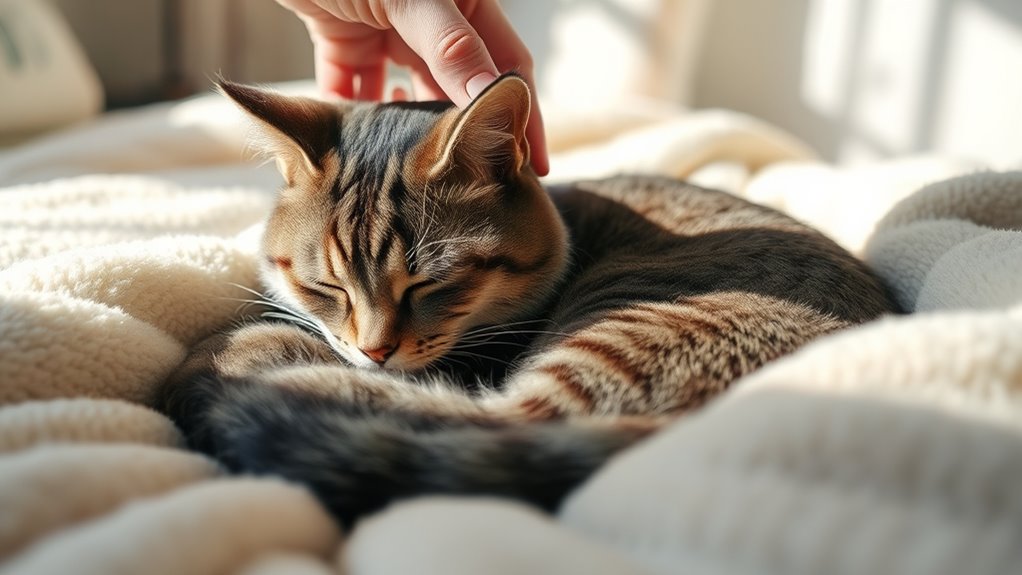
Many cats enjoy gentle petting while sleeping, as it can strengthen your bond and provide comfort. However, not all cats appreciate being disturbed during rest.
Pay attention to body language—relaxed posture and soft purring show they’re enjoying it, while tense muscles or trying to move away indicate discomfort.
If you want to know more about how to pet your cat safely during naps, keep exploring these important tips.
Key Takeaways
- Many cats enjoy gentle petting during sleep if they seem relaxed and like the interaction.
- Look for signs of comfort, like purring and a loose posture, before petting a sleeping cat.
- If the cat shows signs of discomfort, agitation, or tries to move away, it’s best to stop.
- Remember, every cat is different—some prefer minimal contact when resting, while others enjoy gentle affection.
- Light petting can help strengthen your bond, but always be careful not to disturb their sleep.
Is It Okay to Pet Your Sleeping Cat?
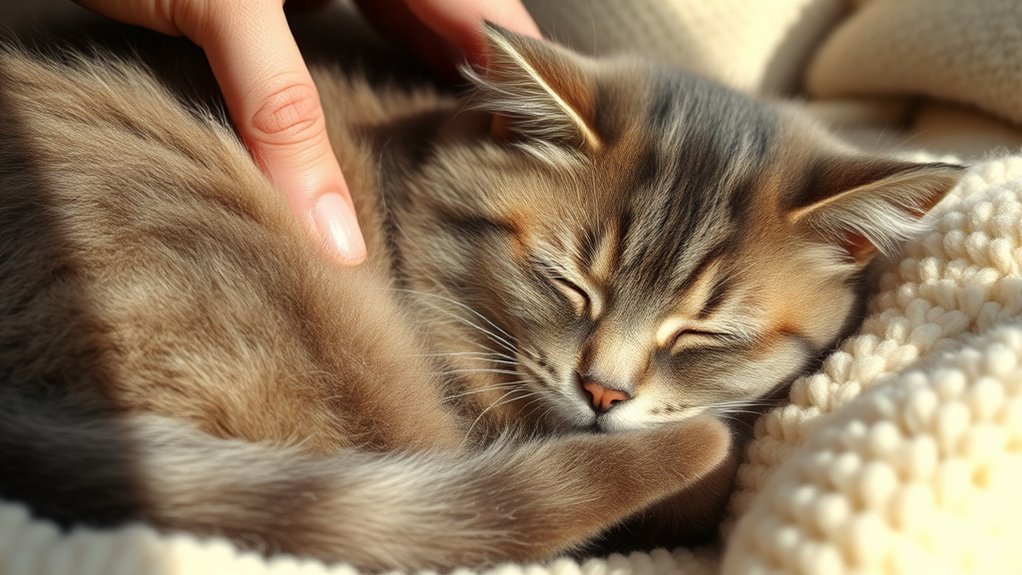
Many cat owners wonder whether it’s okay to pet their feline friends while they’re sleeping. Understanding your cat’s sleeping habits is key. Some cats sleep deeply, while others nap lightly, making them more or less receptive to petting.
When it comes to petting etiquette, it’s best to approach with caution. If your cat is curled up peacefully, it might seem like a good time to pet them, but that doesn’t always mean they want to be disturbed. Watch their body language for signs of comfort or agitation.
Avoid sudden moves or loud noises, as these can startle them out of sleep. If your cat appears relaxed and content, gentle petting might be okay. But if they show signs of discomfort, it’s better to let them sleep undisturbed.
Respecting their sleeping habits and following good petting etiquette helps keep your cat happy and relaxed.
How Can You Tell If Your Cat Enjoys Petting When Sleeping?
When your cat is sleeping, observing their body language can reveal whether they’re enjoying your gentle touch. Cats’ sleeping habits are influenced by their instincts, which prioritize safety and relaxation.
If your cat enjoys petting, you might notice soft purring, gentle kneading, or a relaxed, loose body. Their ears will stay in a neutral position, and their whiskers won’t twitch or flatten, indicating comfort.
Conversely, if they start to twitch or their tail flicks, it’s a sign they’re not fully comfortable. Some cats may slowly blink or yawn, signaling trust and contentment.
Pay attention to their breathing—slow and steady suggests they’re at ease, while rapid breathing indicates discomfort. Over time, you’ll better understand your cat’s signals, recognizing when petting helps them sleep and when it interrupts their natural instincts for safety and relaxation.
Signs Your Cat Is Relaxed or Stressed During Naps
When your cat is napping, keep an eye on their body language. If they seem relaxed, you’ll notice their limbs might be loose and stretched out, and their tail could be softly flicking. They might even be softly purring or making gentle chirping sounds — all signs that they’re feeling comfy and safe.
On the other hand, if you see hissing or growling, that’s a clear sign your cat might be feeling stressed or overwhelmed. It’s good to pay attention to these signs so you can make sure your furry friend feels secure and relaxed during their rest.
Body Language Indicators
Body language gives you clear clues about how your cat is feeling during naps. Relaxed cats often purr, have soft facial expressions, and breathe slowly.
Stressed cats might tense up, puff out or flick their tails, and move their ears sharply or backward. Whisker twitching or flattening also shows discomfort.
Paw flexing can indicate agitation, while relaxed cats keep their paws loosely tucked or gently extended. Watching these signs helps you know if your cat feels safe or stressed.
Use the table below to spot key body language signals during naps:
| Relaxed | Stressed |
|---|---|
| Purring signals | Puffed tail |
| Soft facial expressions | Flattened ears |
| Slow breathing | Rapid, shallow breaths |
| Loose body posture | Tense, stiff body |
| Calm whisker reactions | Twitching or flattened whiskers |
Vocalizations and Sounds
A soft purring usually means your cat is happy and comfortable, especially if they’re slowly blinking. On the other hand, sudden hissing or growling can mean they’re upset or stressed.
Pay attention to your cat’s sound preferences. Some cats prefer silence, while others might chirp or meow when they’re happy or want attention. During naps, gentle sounds or quietness often mean your cat feels safe.
If your cat suddenly changes their sounds or gets louder, it might be a sign of stress. Recognizing these cues can help you know if your cat enjoys being petted while sleeping or if they need some alone time.
Best Practices for Petting Your Cat While They Rest
While it might seem tempting to pet your cat as they nap, it’s important to do so thoughtfully to ensure they feel safe and comfortable. Understanding their sleeping habits and sleep cycles helps you recognize when they’re truly receptive.
Keep your interactions gentle and avoid sudden movements that could trigger their instincts to retreat. Use soft grooming techniques and watch their purring to gauge if they’re comfortable—purring often means contentment, but look for signs of agitation too.
Respect their comfort zones, especially in quiet environments where they feel secure. Remember, building trust is key; some cats prefer minimal contact during rest, while others enjoy gentle strokes.
Be patient and pay attention to their body language, adjusting your approach as needed. By respecting their natural behaviors and creating a calm atmosphere, you foster a positive connection.
This makes your petting sessions during sleep more enjoyable for both of you.
How Much Petting Is Too Much for a Sleeping Cat?
You want to be mindful of how your cat is feeling when you’re petting them, especially when they’re sleeping. Keep an eye out for signs that they’re not comfortable anymore, like twitching or trying to move away. If you notice those, it’s a good idea to stop petting them.
It’s best to keep those petting sessions short, especially if your cat is in a deep sleep. You don’t want to disturb their rest or wake them up feeling annoyed. Paying attention to their cues helps you know when enough is enough, so you don’t overstep and make your kitty uncomfortable.
Signs of Discomfort
A sleeping cat can quickly become uncomfortable if you pet them excessively or in the wrong way. Watch for signs that your cat is uncomfortable, like twitching tail, flattened ears, or sudden movements.
If your cat’s sleeping habits change—such as waking abruptly or trying to move away—it might mean you’re overstimulating them. Pay attention to their body language; if they tense up or flick their tail, they’re signaling discomfort.
Remember, every cat has their own petting preferences, and some tolerate less touch during sleep than others. If you notice these signs, stop petting immediately.
Respecting your cat’s boundaries helps them feel safe and relaxed, even while sleeping. Ignoring these signals can disturb their rest and cause stress.
Duration of Petting
Petting a sleeping cat for too long can quickly lead to discomfort or stress. Each cat has different preferences, so respecting their petting duration is crucial. Some cats enjoy gentle touch, while others have low touch sensitivity and prefer minimal interaction during sleep.
Pay attention to their sleeping habits and comfort zones. If they move away or seem restless, it’s a sign to stop. Over-petting can interrupt nap phases or cause sleep interruptions, which might upset your cat.
Establish clear interaction limits based on their cues. Avoid lingering too long in one spot. Remember, a brief, gentle stroke is often enough to show affection without disturbing their rest.
Understanding your cat’s preferred petting duration helps maintain trust and guarantees their sleep remains peaceful.
Cat’s Sleeping Stage
Understanding a sleeping cat’s stage is key to figuring out how much petting is okay. Cats go through different sleep phases, from light dozing to deep sleep.
During light sleep, your cat might twitch, shift positions, or have irregular purring. If they’re in deep sleep, they’re less responsive and more vulnerable to being disturbed.
Petting during these stages can interrupt their rest or cause stress. If your cat purrs softly and stays relaxed, gentle petting might be fine. But if they show signs of agitation or move away, it’s best to stop.
Respecting their sleeping stage helps keep their comfort and trust intact. Knowing these cues makes bonding with your cat positive and stress-free.
Different Cat Personalities and How They React to Sleep Petting
Every cat’s personality influences how they respond to being petted while sleeping. Playful cats might enjoy gentle strokes, seeing them as part of their fun, but shy cats could get overstimulated and retreat.
Affectionate cats usually welcome petting and may even seek it out during naps, feeling comforted by your touch. Independent cats tend to prefer minimal interaction and might tolerate or dislike sleep petting.
Anxious cats can get more stressed if disturbed, so they might react negatively or avoid being petted altogether. Territorial cats might see sleep petting as an intrusion, leading to defensive behaviors.
Social cats generally enjoy companionship and might purr or lean into your touch. Aloof cats, however, often prefer solitude and may ignore or resist petting during sleep.
Understanding these personalities helps you figure out whether your cat appreciates or prefers to be left undisturbed.
Benefits of Gentle Petting During Your Cat’s Nap
Gentle petting when your cat is napping can really help strengthen your bond. It makes your kitty feel safe and loved, which is always a good thing. Plus, it can encourage your cat to relax even more, helping them stay calm and stress-free.
Just remember to be gentle—you want to create a soothing experience for your feline friend. When you approach with softness, both of you can enjoy a peaceful moment together.
Strengthens Bonding Moments
Petting your cat during their nap can help strengthen your bond. It becomes part of your bonding routine, showing your cat you’re gentle and trustworthy.
Knowing their sleep preferences helps you time your petting just right, making the experience more enjoyable for both of you. Softly stroking them while they rest reinforces feelings of safety and affection.
Sharing these calm moments can deepen your connection and build mutual trust. Plus, your cat learns to associate your touch with comfort, which strengthens your relationship over time.
Regular gentle interactions encourage a sense of routine and closeness that your cat will look forward to. It’s a simple way to nurture your bond while respecting their need for peaceful sleep.
Promotes Relaxation and Calm
The act of softly stroking your sleeping cat can have a calming effect that extends beyond the moment. Gentle petting acts as a relaxation technique, helping your cat release stress and feel secure.
When you pet your cat calmly during naps, you create a soothing environment that promotes tranquility. This quiet interaction can lower their heart rate and reduce anxiety, encouraging deeper relaxation.
Regular gentle petting during sleep fosters a sense of safety, making your cat more comfortable and less prone to stress. By establishing calming environments and practicing patience, you help your feline friend unwind and enjoy peaceful naps.
Your touch becomes a simple yet effective way to support their overall well-being and emotional health.
Common Mistakes to Avoid When Petting Your Sleeping Cat
While it might seem harmless to stroke your cat while it’s asleep, many owners make the mistake of assuming their pet is always receptive. Cats have unique sleeping habits, and their comfort level with petting varies.
Using the wrong petting techniques can disturb their rest or cause stress. Avoid sudden movements or loud noises, which can startle your cat and disrupt their sleep. Also, don’t assume that gentle petting in the same spot is always welcome; some cats prefer different areas and may have sensitive spots.
Here are common mistakes to avoid:
- Ignoring your cat’s body language and cues
- Over-petting or prolonged contact during sleep
- Not respecting your cat’s desire for solitude or quiet rest periods
What Body Language Tells You About Your Cat’s Comfort Level
Paying attention to your cat’s body language gives you valuable insight into how comfortable they are with being touched, especially during rest. If your cat’s sleeping habits include curling up snugly or stretching out, it shows their comfort zones are being respected.
A relaxed posture, such as lying on their side with soft eyes, indicates they feel safe and at ease. Conversely, if they twitch their tail, flatten their ears, or twitch their whiskers, it’s a sign they’re uncomfortable or overstimulated.
Purring while sleeping often signals contentment, but rapid tail flicks or tense muscles suggest they prefer not to be disturbed. Recognizing these cues helps you gauge whether your cat enjoys being petted during rest or needs space.
Alternatives to Petting When Your Cat Is Asleep
If your cat is asleep and you want to show affection without disturbing them, there are gentle alternatives to petting that respect their rest. Understanding your cat’s sleeping habits helps you find appropriate ways to connect without causing stress.
Instead of petting, consider subtle, non-intrusive interactions that keep your cat comfortable. You might softly speak to your cat, letting them hear your voice without waking them.
Another option is to gently blink at them as a sign of trust and affection, which they may interpret as a friendly gesture. You can also sit nearby quietly, allowing your presence to be calming without direct contact.
These approaches honor your cat’s need for uninterrupted sleep while maintaining your bond through gentle, respectful interactions.
Frequently Asked Questions
Can Petting My Cat While Sleeping Cause Stress or Discomfort?
Petting your cat while sleeping can cause stress or discomfort if you don’t pay attention to their body language. Cats communicate how they’re feeling through signals like twitching tails or flattened ears, which can mean they’re uncomfortable.
During sleep, your cat might be extra sensitive. If they suddenly move away or look tense, it’s best to stop petting them. Respect their signals to keep their trust and make sure they rest peacefully.
Does Petting During Sleep Affect My Cat’s Sleep Quality?
Petting your cat during sleep can disrupt their sleep quality, especially if they prefer resting alone. Cats have unique sleeping habits and may get startled or stressed if disturbed.
This can impact their overall behavior and health. Understanding feline behavior helps you recognize when your cat wants to sleep undisturbed.
Respect their boundaries and watch how they react. This way, you won’t accidentally interfere with their restful sleep.
Are Certain Breeds More Receptive to Petting While Asleep?
You might notice that some breeds, like Ragdolls or Siamese, are more receptive to petting during sleep thanks to their relaxed sleeping behaviors and friendly nature.
Coincidentally, these breeds often enjoy human interaction and tend to be more tolerant of petting while resting.
Their breed preferences and natural temperament make them more open to gentle touch during sleep, but always watch for signs of discomfort to keep your cat relaxed and happy.
How Do I Differentiate Between a Relaxed and Stressed Sleeping Cat?
You can tell a relaxed sleeping cat from a stressed one by watching their posture and body language.
A relaxed cat usually sleeps on its side or belly with loose muscles, slow breathing, and a gentle tail flick.
On the other hand, a stressed cat might tense up, keep its ears flat, or breathe rapidly.
Pay attention to these signs to make sure your cat feels safe and comfy while sleeping.
Should I Wake My Cat Before Petting if They Are Sleeping Deeply?
You shouldn’t wake your cat before petting if they’re sleeping deeply. Sleeping behavior varies, and many cats enjoy gentle petting even during deep sleep, especially if they purr in response.
Waking them might startle or stress them, which isn’t ideal. Instead, watch their body language and look for signs of relaxation.
If they’re calm and purring, it’s okay to pet them softly. You’re respecting their comfort and trust.
Conclusion
Remember, “a watched pot never boils,” and your cat’s comfort is key. If your feline friend enjoys your gentle touch during naps, it can strengthen your bond.
But always pay attention to their body language and signals. Respect their boundaries and don’t force petting if they seem stressed.
By being attentive and considerate, you create a safe space for your cat to relax and feel loved.
Because in terms of pets, patience truly is a virtue, especially when it comes to whether cats like being petted while sleeping.