Why Did My Cat Scratch Me While I Pet Her?
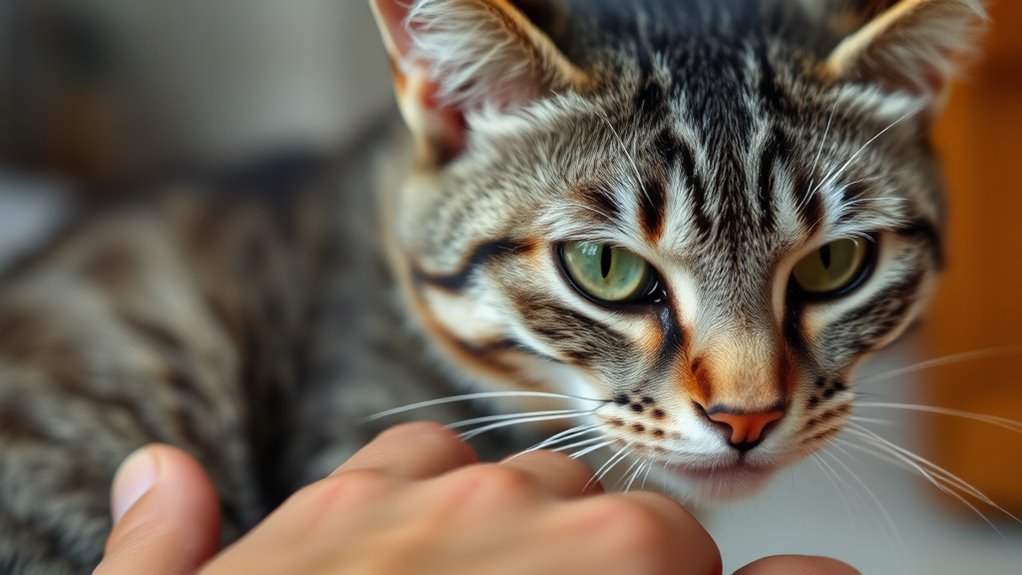
Many cat owners have experienced the surprise of getting scratched while petting their feline friend. If this sounds familiar, you’re not alone—many people struggle with understanding why their cats suddenly lash out.
If your cat scratches while you pet her, it’s often a sign of overstimulation or discomfort. Cats communicate their boundaries with body language like tail flicking, flattened ears, or tense posture.
She might be reacting to skin irritations, allergies, or pain.
To prevent scratches, try gentle strokes and watch for signs she’s reached her limit.
Want to learn more about recognizing her signals and making her feel safe? Keep exploring these tips.
Key Takeaways
- Your cat might have become overstimulated or annoyed while you were petting her.
- Scratchings can be a sign that she’s uncomfortable, irritated, or wants you to stop.
- Quick movements or petting in sensitive spots could make her feel defensive and lead to scratching.
Watch for body language cues like tail flicking or flattened ears, which show she’s getting irritated.
Also, medical issues or skin sensitivities might make petting uncomfortable, causing her to scratch.
Why Do Cats Scratch When Being Pet?
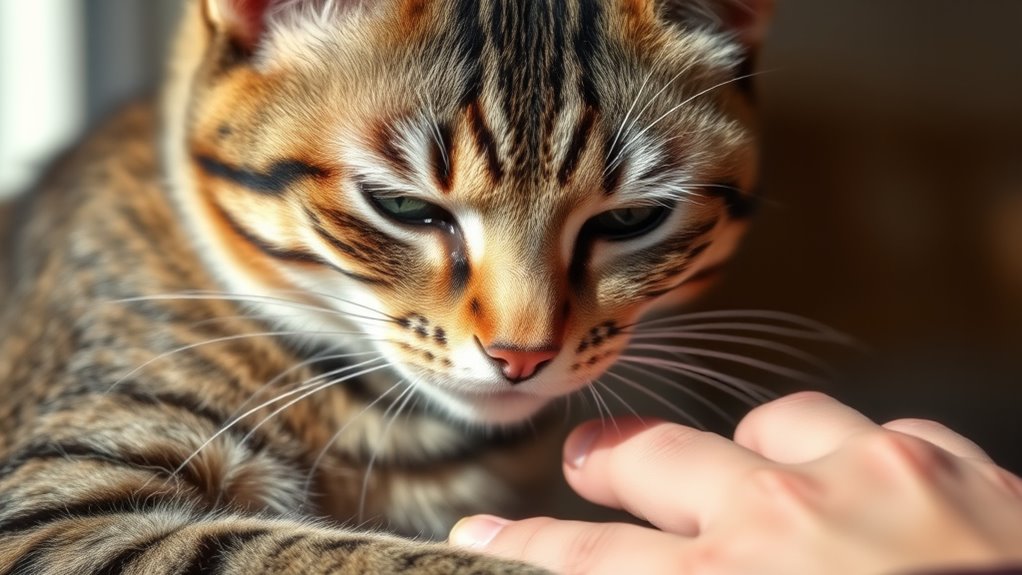
Cats often scratch when being petted because they’re trying to communicate their comfort level or boundaries. This behavior comes from their instincts and helps them control their environment and share how they feel.
When your cat scratches, she might be saying she’s uncomfortable or overstimulated. It’s her way of telling you, “That’s enough” or “Back off.” Scratching can also be instinctive, used to protect herself or mark her territory.
Some cats scratch during petting because they enjoy the sensation. Others do it because they’re overwhelmed by too much handling. Understanding why she scratches helps you respect her limits and avoid causing stress.
How to Recognize When Your Cat Is Overstimulated
You’ll know your cat is overstimulated when it starts to show some clear signs through its body language. For example, watch for its tail flicking back and forth or its ears flattening against its head—that’s often a sign it’s getting a bit overwhelmed.
Sometimes, you might notice sudden puffs of fur or even a quick swat. These are warning signs that your cat has reached its limit and needs a break. Recognizing these cues early on is really helpful because it can prevent scratches and make sure your kitty stays comfortable and happy.
Body Language Signals
Recognizing when your cat is overstimulated is key to preventing sudden scratches or bites. Pay close attention to her body language signals, like purring patterns. Rapid, tense purring can actually mean she’s annoyed rather than happy.
Watch her tail. A flicking or lashing tail often shows she’s irritated or agitated. Her ears may flatten or rotate backward, and her eyes might narrow or dilate with wide pupils.
You might notice her skin tensing or her body stiffening. These are signs she’s reaching her limit. Recognizing these cues helps you know when to stop petting before she feels the need to scratch.
Warning Signs to Watch
When your feline friend starts showing certain physical cues, it’s a clear sign she’s becoming overstimulated. Watch for scratching triggers, like rapid tail twitching, flattened ears, or dilated pupils.
These signs often come before playful aggression, where your cat might swat or bite without warning. You might also notice her tail flicking aggressively or her body tensing up, showing she’s reached her limit.
If she starts nibbling or scratching during petting, it’s time to stop right away. Overstimulation can happen quickly, especially if you pet her for too long or in sensitive areas.
Recognizing these warning signs helps prevent scratches and keeps your cat comfortable. It makes sure your interactions stay positive and stress-free for both of you.
Reading Your Cat’s Body Language During Petting
Understanding your cat’s body language during petting can help prevent scratches and strengthen your bond. Pay close attention to her tail; a relaxed, gently swishing tail signals she’s comfortable, while a puffed-up or thrashing tail shows she’s overstimulated.
Watch her ears; if they’re forward or facing sideways, she’s engaged. But if they flatten or rotate backward, she might be annoyed. Notice her eyes—half-closed or slow blinking suggests she’s relaxed, while wide, dilated pupils can mean she’s overwhelmed.
Your cat’s posture also reveals her mood. Leaning into your touch shows she’s enjoying it, but if she stiffens or pulls away, it’s time to stop. Incorporate playful interactions to keep her happy and engaged.
Use positive reinforcement like gentle words or treats to encourage calm behavior. Recognizing these cues helps you adjust your petting, making the experience enjoyable for both of you and preventing unwanted scratches.
Common Medical Issues That Cause Sudden Scratching
Sudden scratching in your cat can often signal an underlying medical issue rather than normal feline behavior. You might notice her scratching excessively or biting herself during petting sessions.
Common causes include flea infestation, which leads to itching and discomfort, or skin allergies triggered by food or environmental factors. Neurological issues or sensory overload can also cause unpredictable scratching.
Hormonal imbalances or arthritis discomfort may make her sensitive to touch, prompting scratching as a pain response. Anxiety disorders might cause stress-related scratching, especially if her environment changes.
Here’s a quick overview:
| Cause | Description |
|---|---|
| Flea infestation | Causes intense itching and scratching |
| Skin allergies | Triggered by food or environment, leading to irritation |
| Pain response | Due to arthritis or neurological issues, she may scratch to relieve discomfort |
| Anxiety disorders | Stress-induced scratching, often during petting |
| Hormonal imbalances | Can cause skin sensitivity and scratching |
Understanding these issues helps you better address her scratching and seek veterinary care if needed.
Petting Techniques That Prevent Scratching
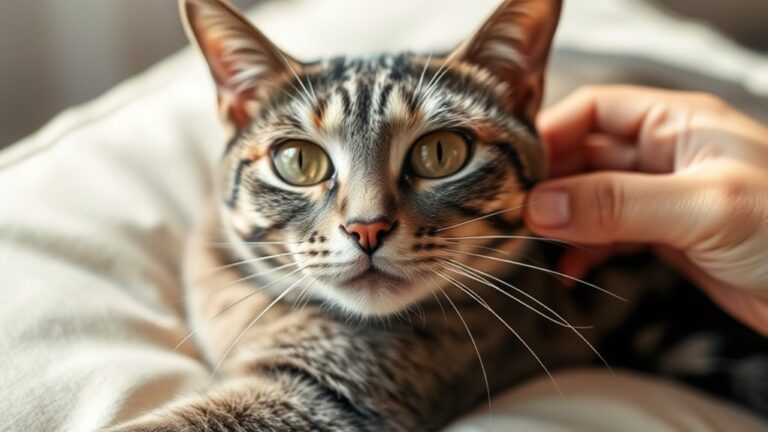
Petting your cat should be a soothing experience for both of you, but improper techniques can lead to scratching and discomfort. To prevent this, use gentle strokes and a gradual approach, paying attention to her body language.
Start by petting her in her favorite spots, like behind the ears or under the chin, and avoid areas that tend to trigger scratching. Keep playtime interactions active to help her release energy, reducing the chance of over-stimulation during petting.
Maintain a quiet environment and provide safe spaces where she feels secure, encouraging relaxation. Use positive reinforcement, like treats or gentle praise, to associate petting with positive experiences.
Also, keep your routine consistent to build trust and understanding. When you follow these techniques, you create a calm, predictable environment that minimizes scratching, making petting enjoyable for both of you.
Why Cats Scratch to Mark Territory and Set Boundaries
Cats scratch to mark their territory and set boundaries, letting other animals know they’re there and establishing control over their space. This behavior comes from their strong instincts to defend their territory.
When your cat scratches, she leaves scent from glands in her paws, signaling her claim to the area. These visual and scent marks help cats communicate and understand where they belong.
Scratching also helps cats define personal boundaries, setting limits on where they’re comfortable. It’s a way for them to feel secure within their territory.
Understanding that scratching is a natural form of communication can help you see it differently. Providing scratching posts and spaces allows your cat to express her instincts safely.
This reduces unwanted scratching on furniture or your body, making everyone happier.
Environmental Factors That Make Cats More Reactive
Environmental factors can really influence a cat’s reactivity, often making their natural behaviors like scratching or defensiveness more intense.
When your cat doesn’t have enough enrichment, she might get bored or anxious, which can lead to more reactive behaviors.
Adding stimulating toys, scratching posts, and cozy hiding spots helps keep her engaged and lowers her stress levels.
Identifying stressors such as loud noises, unfamiliar visitors, or sudden movements can prevent overstimulation.
Cats are very sensitive to changes around them, and these triggers can cause defensive actions like scratching when you pet her.
Creating a calm, predictable environment reduces these triggers and makes her feel safer.
Regularly checking her surroundings for potential stressors and offering enrichment activities can really improve her behavior.
When her environment is secure and interesting, she’ll be less reactive and more comfortable during interactions.
Tips to Calm a Sensitive or Overstimulated Cat
When your cat becomes overstimulated or sensitive, calming her quickly is key to avoiding scratches or reactive behaviors. Use gentle, slow strokes and avoid sudden movements that might increase her stress.
Creating a soothing environment helps too—dim the lights, lower loud noises, and give her space to retreat if needed. Offer a cozy hiding spot or soft bed where she can relax without disturbance.
Speak softly and use a calming voice to reassure her she’s safe. Playing soft music or using pheromone diffusers designed for cats can also reduce her anxiety.
Keep interactions brief and positive, respecting her limits. Remember, patience is crucial—never force her to stay in overwhelming situations, and give her time to settle naturally.
These calming techniques and a peaceful environment can help her regain her composure and feel secure.
Building Trust to Reduce Defensive Scratches
Building trust with your cat can really help reduce her defensive scratching. Activities like gentle petting and offering treats make her feel safe and secure around you.
Pay attention to her body language and give her space if she seems overstimulated. Respect her signals and avoid sudden movements or loud noises that might startle her.
Spend time on activities she enjoys, like playing with toys or sitting quietly nearby. This helps reinforce positive feelings and builds trust.
Being consistent is key. Regular, calm interactions help her see you as a safe presence, which over time reduces her need to scratch defensively when she feels threatened.
Patience is important because trust takes time to develop. Creating a calm, predictable environment will strengthen your bond and help her feel more relaxed during petting and handling.
When to See a Vet or Behaviorist for Your Cat
If your cat is acting stressed out or suddenly behaving differently, it’s a good idea to consider getting some professional advice. Keep an eye on things like excessive scratching, hiding more often, or becoming more aggressive — especially if these changes stick around.
Talking to a vet or a behaviorist can really help uncover what’s going on beneath the surface. They can figure out if there’s a medical issue or if your cat just needs some guidance to feel more comfortable. It’s all about making sure your furry friend gets the care and attention they need to be happy and healthy.
Recognizing Signs of Stress
Cats often hide their stress signals, so it’s important to stay alert for subtle changes in their behavior. Recognizing signs of stress can prevent escalation and help you decide when to see a vet or behaviorist.
Common signs include hiding more often, excessive grooming, or a sudden loss of appetite. Watch for changes like aggression or withdrawal, which may indicate underlying issues.
Use this table to identify stress signs:
| Behavior Change | Possible Cause | Action to Take |
|---|---|---|
| Hiding or avoiding | Anxiety, discomfort | Consult a vet or behaviorist |
| Excessive grooming | Stress, skin issues | Seek professional advice |
| Aggression or biting | Frustration, overstimulation | Monitor triggers, get help |
| Loss of appetite | Illness, stress | Visit the vet promptly |
Early recognition helps ensure your cat gets the support they need.
Identifying Behavioral Changes
Noticing changes in your cat’s behavior can be a strong sign that something isn’t quite right. If she suddenly shifts her usual routines or shows new signs of distress, it’s time to consider professional help. Keep an eye on how she communicates and her emotional state, as these can indicate underlying issues.
You should see a vet or behaviorist if your cat:
- Becomes overly withdrawn or aggressive
- Starts vocalizing more or less than normal
- Shows sudden changes in activity or grooming habits
These behavioral shifts often point to discomfort, stress, or health problems. Acting quickly can stop minor issues from becoming bigger, helping your cat feel safe and secure again. Trust your instincts and seek expert advice whenever you need it.
Frequently Asked Questions
Can Stress Cause My Cat to Scratch Unexpectedly?
Yes, stress can cause your cat to scratch unexpectedly. When cats are stressed, they often show signs through their body language, like flattened ears, dilated pupils, or tense muscles.
These signals show she’s uncomfortable, and scratching might be her way of defending herself. Paying attention to her body language helps you spot when she’s stressed.
This way, you can give her some space and help reduce her anxiety, which can prevent those surprise scratches in the future.
Do Certain Cat Breeds Scratch More Than Others?
Certain cat breeds tend to scratch more than others, influenced by breed traits, cat behavior, and scratching habits.
For example, active breeds like Bengals and Abyssinians often scratch more because they’re energetic. More relaxed breeds like Ragdolls may scratch less.
Scratching is an important part of feline communication. It helps mark territory and stretch muscles.
Knowing these breed differences can help you understand your cat’s behavior better and manage scratching appropriately.
How Can I Tell if My Cat’s Scratching Is Aggressive?
You can tell if your cat’s scratching is aggressive by watching what triggers it and paying attention to her body language.
If her ears flatten, her pupils dilate, or her tail flicks quickly, she might be feeling threatened or overstimulated.
Scratching during petting often means she’s uncomfortable or overwhelmed, especially if she suddenly swats or bites.
Keep an eye out for these signs so you can understand her mood and avoid aggressive scratching.
This way, you can make interactions more positive for both of you.
Does My Cat’s Age Affect Her Scratching Behavior?
Your cat’s age definitely affects her scratching behavior. Kittens are full of curiosity, often scratching during play or exploration.
Senior cats tend to be more sensitive and scratch less, unless they’re overstimulated.
As she gets older, her playfulness might slow down, but she could become more sensitive. This can make her scratch more if she feels uncomfortable.
Knowing her age-related needs can help you prevent unwanted scratches and keep her happy.
Are There Specific Toys That Reduce Scratching During Petting?
Yes, certain toys can help reduce scratching during petting. Interactive toys, like feather wands or laser pointers, keep your cat engaged and distracted from scratching.
Providing catnip alternatives, such as silvervine or valerian, can also help calm her and reduce aggression.
Conclusion
Understanding why your cat scratches while you pet her is like learning her secret language. Paying attention to her body signals can help you understand what she’s comfortable with.
Pet her gently and respect her boundaries to avoid upsetting her. With patience, you can turn scratchy moments into pawsitive bonding experiences.
Remember, patience is your best friend. Think of it as tuning into her unique melody. Over time, your petting sessions will become more like a dance than a clash.