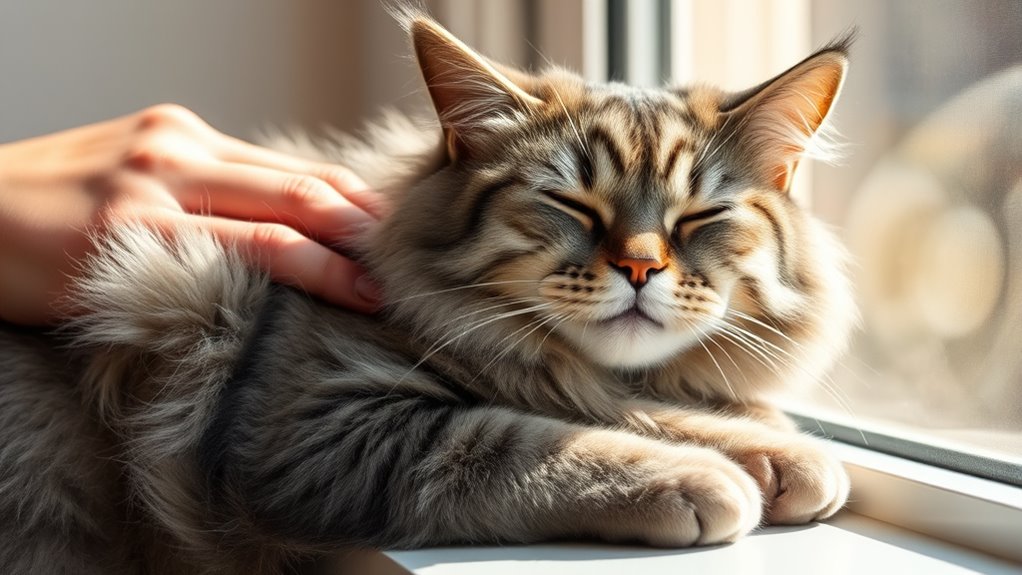
Why Do Cats Like Being Petted on the Bum?
If you’re a cat owner, you’ve probably wondered why your feline friend seems to love being petted on their bum. Many people struggle with understanding what their cats enjoy and how to build trust through touch.
You’re not alone in wanting to deepen that bond and keep your kitty happy.
Cats enjoy being petted on their bum because of the sensitive nerve endings and scent glands located there, which help them relax, trust you, and feel more comfortable. The touch stimulates their nerves and helps build a bond, especially when they associate it with positive experiences.
Understanding your cat’s body language and boundaries is key to a happy relationship.
Keep exploring, and you’ll uncover even more about what makes your feline friend feel safe and loved.
Key Takeaways
- Cats have sensitive nerve endings near their tail that respond well to gentle touch.
- Petting the bum can stimulate scent glands, helping with territory marking and communication.
- Gentle bum petting can help your cat relax and build trust with you.
- Cats often enjoy bum petting because it mimics natural grooming behaviors they find comforting.
- The area around the tail is linked to social bonding, making it a pleasurable spot for some cats.
Why Do Cats Enjoy Being Petted on Their Bum?
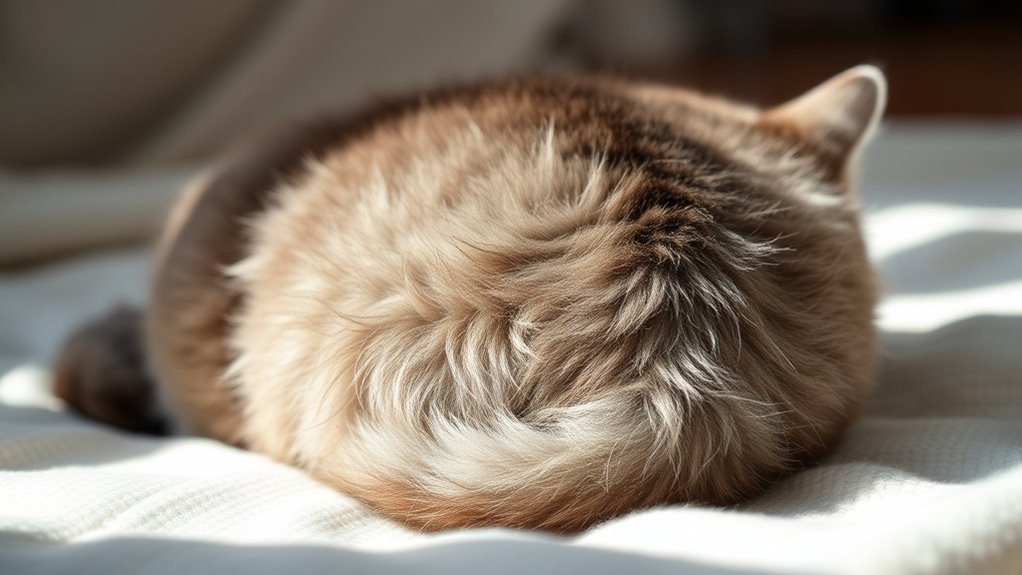
Many cats enjoy being petted on their bum because this area has sensitive nerve endings that respond well to touch.
Petting here can stimulate these nerves, helping your cat relax and trust you more.
When you gently stroke your cat’s rear, it’s a way of showing affection that strengthens your bond.
Cats often find comfort in this touch, especially if they’ve had good experiences with it before.
They also groom or mark this area naturally, so allowing petting can satisfy those instincts.
It’s important to be gentle since some cats may be more sensitive or shy about this spot.
With patience and respect, bum petting over time can help your cat feel safer and more loved.
This kind of touch taps into their natural instincts and can boost their sense of security with you.
Understanding Your Cat’s Natural Instincts and Social Behaviors
To truly understand why your cat behaves the way it does, it’s important to recognize their natural instincts and social behaviors. Feline instincts drive many actions like hunting, grooming, and marking territory. These behaviors help cats navigate their environment and communicate with others.
Cats are also social animals, but their social hierarchy is different from ours. They often establish a pecking order within groups. When interacting with you, your cat might show behaviors rooted in these instincts, like head-butting to show trust or kneading to mark territory with scent glands.
Recognizing these signals can help you better understand what your cat needs and how they respond. Understanding their social hierarchy also sheds light on how they relate to other animals and people, influencing their comfort and interactions.
How Cats Use Scent Glands Around Their Tail
Cats have scent glands located around the base of their tail, which they use to mark their territory and communicate with others. When you pet or rub this area, your cat releases scent, helping with scent communication and territorial marking.
This behavior helps them establish boundaries and send signals to other cats. To understand how they use these glands, picture:
- Rubbing against furniture or humans, leaving their scent to claim the space.
- Lifting or twitching their tail, spreading scent from the glands.
- Sniffing other cats’ tails or areas to gather scent information, learning about territory and social status.
This process is vital for cats to feel secure and communicate without making noise. Their scent glands around the tail are essential tools for marking territory and social interaction, making scent communication a key part of their natural behavior.
How Grooming Builds Trust and Bonding With Your Cat
Grooming your cat is a great way to build trust because it shows that you’re gentle and caring. When you take the time to brush or pat your cat regularly, it helps them feel more comfortable around you.
Plus, those moments of physical contact during grooming can really strengthen your bond. Your cat starts to see these interactions as a safe and positive experience, which makes them feel more secure and relaxed with you.
Grooming Reinforces Trust
When you groom your cat gently, it shows that you’re a trusted and caring presence. This act of trust-building through grooming helps strengthen your bond.
Your cat learns to associate your touch with safety and comfort. To reinforce this, keep these key points in mind:
- Be consistent with grooming so your cat feels secure and knows what to expect.
- Use gentle strokes to show your affection and respect boundaries.
- Offer treats or soothing words as positive reinforcement to help your cat enjoy the process.
Physical Touch Strengthens Bonds
Physical touch acts as a powerful tool for building trust and strengthening the bond between you and your cat. When you engage in gentle petting or grooming, you’re fostering bonding benefits that deepen your connection.
Cats interpret tactile communication as a sign of safety and affection, encouraging them to relax and trust you more. Consistent physical contact helps your cat associate your touch with positive experiences, reinforcing their sense of security.
Over time, these interactions improve mutual understanding and closeness. By respecting your cat’s comfort levels and using touch intentionally, you create a foundation of trust that benefits both of you.
Ultimately, affectionate physical contact not only nurtures your bond but also improves your cat’s overall well-being.
How to Tell When Your Cat Is Comfortable or Communicating
You can tell your cat is comfortable or trying to communicate by paying attention to their body language. For example, a relaxed posture or slow blinking are good signs that your cat feels safe and happy. When your cat purrs or softly meows, they’re often showing contentment and affection.
On the other hand, if your cat is hissing or growling, it’s usually a sign that they’re uncomfortable or feeling threatened. Recognizing these cues helps you understand what your cat is trying to tell you, so you can respond accordingly and make them feel more at ease.
Body Language Signals
Cats communicate their comfort through subtle body language signals that can be easily overlooked if you’re not paying close attention. Recognizing these cues helps you understand when your cat is comfortable or showing feline affection.
- Tail communication: A gently swaying or upright tail indicates happiness and confidence. If the tail is puffed or twitching, it might mean your cat is agitated or overstimulated.
- Relaxed posture: When a cat is lying on its side or stretching out, it’s a sign of contentment. Purring often goes along with this relaxed state.
- Ears and eyes: Forward-facing ears and half-closed eyes show trust and affection. Slow blinking at you can also be a sign of feline love.
Vocalization Cues
Vocalization is a key way cats communicate their comfort and feelings. By paying attention to their vocalization types and tones, you can tell when your cat is happy or stressed.
Gentle purring often indicates contentment, especially when it’s soft and rhythmic. A soft meow might mean curiosity or a request for attention.
A loud or persistent meow can signal frustration or discomfort. Hissing or growling are clear signs of fear or annoyance.
Your cat’s vocal cues help you understand their mood and whether they’re relaxed during petting. Learning these sounds allows you to respond appropriately.
This way, you can ensure your cat feels safe and loved when you’re spending time together.
Safe Tips for Petting Your Cat’s Bum Without Causing Stress
Petting your cat’s bum requires gentle, confident movements to avoid causing stress. To make sure the experience is positive, focus on keeping your cat comfortable and respecting their boundaries. Here are some safe tips:
- Approach slowly and watch your cat’s body language. If they lean in or purr, they probably enjoy it. If they twitch or try to move away, it’s best to back off.
- Use soft, steady strokes with your fingers or palm. Avoid sudden or rough movements and keep your touch light for your cat’s comfort.
- Limit bum petting to short periods. Look for signs of discomfort like tail flicks or tense muscles. Stop right away if your cat shows any stress.
Why Some Cats Dislike Bum Petting: And How to Respect Their Boundaries
Every cat is different, so not all of them are fans of bum petting. Some might really dislike it, and that’s totally okay. It’s important to pay attention to their body language—things like twitching tails or ears flattening can be signals that they’re not comfortable.
If you notice these signs, it’s best to respect their boundaries. Giving them space and letting them decide when they want more affection helps keep your relationship positive and stress-free. Remember, understanding what your cat likes and dislikes is key to a happy, trusting bond.
Individual Cat Preferences
While many cats enjoy gentle bum petting, others instinctively resist it, often due to personal preferences or past experiences. Recognizing these individual preferences is key to respecting your cat’s boundaries.
Each cat’s personality influences how they respond to touch, especially in sensitive areas. For example, some cats are naturally more social and enjoy close contact, including bum petting.
Others have a more independent personality and prefer minimal handling. Past negative experiences can also make certain areas, like the bum, off-limits for some cats.
Understanding these differences helps you tailor your interactions so your cat feels safe and comfortable. Respecting their unique preferences fosters trust and strengthens your bond.
This reminds us that each cat is a distinct individual with their own likes and dislikes.
Recognizing Discomfort Signs
Have you noticed your cat tensing up or pulling away when you try to pet their bum? These are clear signs your cat might be feeling stressed or uncomfortable.
Watch for things like tail flicking, flattened ears, dilated pupils, or a sudden stiffening of the body. Sometimes, your cat may try to escape or scratch.
Recognizing these signals is important because they show your cat isn’t happy with bum petting. Ignoring these cues can increase their stress and damage trust.
If you see any of these signs, it’s best to stop and give your cat some space. Respect their boundaries by paying attention to these subtle signs.
This helps make your interactions positive and stress-free for your feline friend.
Respecting Personal Boundaries
Understanding why some cats dislike bum petting is key to building a trusting relationship. Respecting their personal space and feline autonomy helps prevent discomfort or stress.
To do this, observe your cat’s body language. If they tense up or move away, give them space and don’t push.
Avoid forcing interactions; let your cat decide when they want to engage.
Remember that every cat has their own boundaries, especially around sensitive areas like the rear.
The Difference Between Catnip, Scratching, and Petting Preferences
What makes cats respond differently to catnip, scratching, and petting? It all comes down to their unique preferences and behavioral differences. Catnip effects vary—some cats become playful and energetic, while others show calmness or indifference.
Scratching preferences differ too. Some cats favor scratching posts, while others prefer furniture or trees. Scratching helps them mark territory and keep their claws healthy.
Petting techniques matter as well. Certain areas like the head or chin elicit positive responses, while others might make your cat uncomfortable. Recognizing these preferences helps you understand your cat’s natural tendencies.
For example, some cats enjoy gentle petting, whereas others prefer more vigorous scratching or play. By paying attention to their reactions, you can tailor your interactions to suit each cat’s unique needs.
Understanding these behavioral differences guarantees a happy, healthy relationship based on mutual comfort and respect.
Building Trust and Encouraging Positive Interactions With Your Cat
Building trust with your cat lays the foundation for positive interactions and a stronger bond. Trust building starts with understanding cat communication—reading their body language and responding appropriately.
When your cat approaches calmly, purrs softly, or nuzzles, it shows they’re comfortable and confident. To help build that trust, try these steps:
Respect boundaries. Let your cat decide when to engage, especially when you’re just starting to get to know each other.
Use a soft, calm voice to make them feel safe and reassured.
Offer treats or gentle petting only when your cat initiates contact. This reinforces positive experiences and encourages them to come closer.
When to Talk to Your Veterinarian About Your Cat’s Behavior
Noticing sudden or persistent changes in your cat’s behavior can be a sign that something’s wrong, so it’s important to know when to talk to your vet. If your cat starts acting unusually—like hiding more often, losing interest in food, or becoming aggressive—they might be experiencing discomfort or health issues.
Behavioral changes such as excessive grooming, toileting outside the litter box, or vocalizing more than usual also need attention. Don’t ignore these signals, as they could point to underlying medical problems or emotional stress.
If the behavior continues or gets worse, make an appointment with your vet promptly. They can help figure out if the issue is health-related or behavioral and advise you on the best next steps.
Addressing these changes early can help improve your cat’s well-being and prevent more serious issues later on. Trust your instincts and seek professional advice whenever you’re unsure.
Frequently Asked Questions
Can Petting a Cat’s Bum Cause Health Issues?
Petting your cat’s bum isn’t likely to cause health risks if you practice good bum petting hygiene.
However, excessive or rough bum petting might stress your cat or cause minor skin irritation. Always be gentle and watch how your cat reacts.
If your cat shows signs of discomfort, stop immediately. Keeping your hands clean and respecting your cat’s boundaries helps prevent any potential health issues.
It also ensures a positive experience for both of you.
Is Bum Petting Appropriate for All Cat Breeds?
Bum petting isn’t appropriate for all cat breeds because social behaviors and preferences can vary a lot. Some breeds, like Siamese or Maine Coons, might enjoy it more, while others, such as feral or shy cats, could find it invasive.
Understanding your cat’s anatomy and personality helps you decide if it’s okay. Always watch how your cat reacts and respect their boundaries to keep grooming a positive experience for both of you.
How Does Age Affect a Cat’s Preference for Bum Petting?
Like a wise old sage, your cat’s preferences change with age. Kittens often enjoy bum petting, exploring their boundaries, but as they grow into seniors, sensitivities increase.
You notice that younger cats enthusiastically accept it, while older cats may shy away or react defensively. Age influences comfort levels, so always watch your cat’s responses.
Respect their boundaries and adjust your approach accordingly. This helps build a happy, trusting relationship with your feline friend.
Are There Signs My Cat Is Overstimulated During Bum Petting?
Yes, your cat might show signs of overstimulation during bum petting. Watch for tense body language, flattened ears, or a flicking tail.
Purring can sometimes mean they’re happy, but if your cat suddenly swats or bites, it’s a clear sign they’re overstimulated.
Pay close attention to their body language. When they signal discomfort, stop petting right away to keep your cat calm and comfortable.
Can Bum Petting Help With a Cat’s Behavioral Problems?
Think of bum petting as tuning a delicate instrument—you can help improve your cat’s behavior if done gently. While it might not directly fix all behavioral triggers, it can build trust when paired with positive reinforcement.
This bonding experience encourages your cat to associate touch with comfort, which could help reduce anxiety or aggression. Just remember, patience and paying attention to your cat’s cues are key to making bum petting a helpful tool.
Conclusion
When you pet your cat on their bum, you’re tapping into a secret garden of trust and scent, like opening a treasure chest of their innermost bonds.
By understanding their signals and respecting boundaries, you become the gentle gardener nurturing a blooming friendship.
Remember, every stroke is a whisper of reassurance, turning your cuddles into a melody that echoes trust and love.
This makes your connection as warm and comforting as sunlight on a peaceful afternoon.
Main keyword: Why Do Cats Like Being Petted on the Bum?