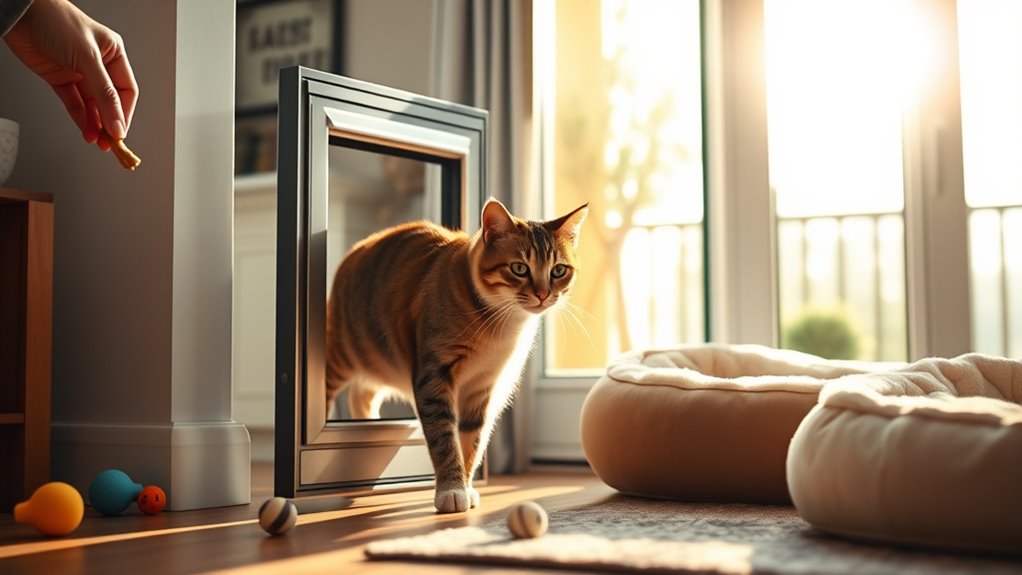
7 Simple Steps to Train Your Cat to Use a Pet Door
Many cat owners know the struggle of encouraging their feline friends to use a pet door. It can feel like a challenge to get your cat comfortable with this new way of coming and going. You’re not alone—many people struggle with training their cats to use pet doors confidently.
To train your cat to use a pet door, start by choosing the right sturdy, properly-sized door that fits your cat’s size and activity level.
Next, introduce your cat to the area calmly, using treats and praise to create a positive experience. Encourage exploration gradually, rewarding each step.
Fix common issues by maintaining the door and creating a safe environment. Keep practicing patience and consistency, and you’ll help your cat feel confident.
If you keep going, you’ll uncover even more helpful tips.
Key Takeaways
- Choose a sturdy, appropriately sized pet door and securely install it in a quiet, familiar spot.
- Gradually introduce the door by letting your cat sniff and explore it without any pressure.
- Use treats, toys, or praise to encourage curiosity and help your cat form positive associations with the door.
- When your cat uses the door successfully, reward them immediately to reinforce the behavior.
- Keep the environment calm and be patient, giving your cat time to get comfortable at their own pace.
Choose the Right Pet Door for Your Cat
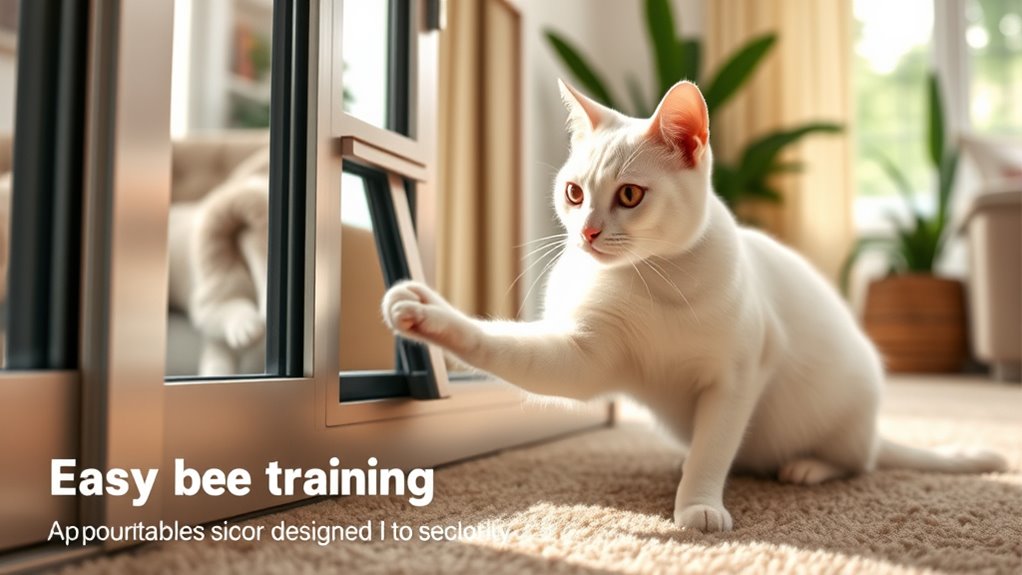
Choosing the right pet door is key to making sure your cat feels comfortable and safe when using it.
There are many types of pet doors out there, so pick one that matches your cat’s size, activity level, and your home setup.
Options include flap doors, electronic doors, or slide-in models. Flap doors are simple and budget-friendly, but make sure they’re sturdy and the right size for your cat.
Choose from flap, electronic, or slide-in pet doors—select sturdy, appropriately sized options for your cat’s comfort and safety.
Electronic doors provide extra security and convenience, especially if you have multiple pets or want to control access.
When installing, measure your cat accurately and choose a quiet, accessible spot.
Make sure the door’s frame is securely mounted to avoid frustration.
Proper installation helps your cat get comfortable with the new access point easily.
Choosing the right pet door and installing it correctly are important for your cat’s smooth transition.
Get Your Cat Ready to Use a Pet Door
Before your cat starts using the pet door regularly, it’s important to help them feel comfortable and confident with the new access point. Consider your cat’s personality—some cats are curious and enthusiastic, while others may be more cautious. Adjust your approach accordingly.
Start by placing the door in a quiet, familiar spot with good door placement so your cat doesn’t feel overwhelmed. Let your cat investigate the area around the door at their own pace, without forcing them. Use positive reinforcement, like treats or praise, to create a positive association with the new access point.
Keep the environment calm and predictable, especially if your cat is shy or easily stressed. By tailoring your approach to your cat’s personality and choosing the right door placement, you’ll help build their confidence and make the change smoother.
Introduce Your Cat to the Pet Door
How can you effectively introduce your cat to the new pet door? Start by observing your cat’s natural behavior and curiosity. Some cats are more door curious than others, so get to know their individual tendencies.
Begin by placing treats or toys near the door to encourage exploration without putting pressure on your cat. Gently encourage them to approach the door, using a calm voice to reassure them.
If your cat shows interest, let them sniff and investigate at their own pace. Avoid forcing them through the door, as that can create negative associations. Instead, reward any exploration or small steps toward using the door.
Remember, patience is key. Your cat might need some time to get used to this new object. Stay consistent with positive reinforcement and keep interactions calm and encouraging.
Help Your Cat Feel Comfortable Exploring the Door
First, take things slow and introduce your cat to the pet door gradually. Don’t rush—allow them to get used to it at their own pace. You can make the area more inviting by placing some treats or their favorite toys nearby. This helps encourage their curiosity and makes the experience more positive.
With a little patience and plenty of praise, your cat will start feeling more comfortable exploring the door confidently. Remember, every cat is different, so give them time and lots of encouragement!
Gradual Familiarization Process
To help your cat feel comfortable exploring the pet door, start by placing familiar items like their favorite blanket or toys near the entrance. Use familiarization techniques to make the area feel safe and inviting.
Begin with gradual exposure by letting your cat observe the door at their own pace. Encourage curiosity without forcing movement, maybe by gently shifting the door or offering treats nearby.
Let your cat explore the door at their own speed, rewarding any interest or progress. Over time, slowly open and close the door, always making sure they feel secure.
Patience is key. This gradual process builds confidence and helps your cat associate the door with positive experiences.
Create Inviting Environment
Creating an inviting environment around the pet door encourages your cat to feel safe and excited to explore. Set up a cozy space nearby with soft bedding and familiar toys so your cat links the area with comfort.
Use positive reinforcement by offering treats or praise whenever your cat approaches or investigates the door. Keep the area calm and quiet to avoid making your cat feel intimidated.
Avoid forcing your cat; instead, let their curiosity lead naturally. A welcoming environment helps reduce anxiety and builds confidence, making your cat more eager to use the door.
Use Rewards to Train Your Cat to Use the Pet Door
Using rewards is a super effective way to encourage your cat to use the pet door. Treat motivation and positive reinforcement work together to make training successful. When your cat approaches or goes through the door, reward them immediately to create a positive feeling.
Here are four ways to use rewards the right way:
- Give a tasty treat right after your cat uses the door to reinforce the behavior.
- Say “Good job!” out loud to boost their confidence.
- Pair treats with gentle petting to make the experience even more positive.
- Be consistent—reward every successful attempt to help your cat learn the habit.
Fix Common Problems When Training Your Cat
Training your cat to use a pet door can sometimes be tricky, but understanding common problems can help you troubleshoot better. One issue is distractions like loud noises or other pets, which may make your cat hesitant or avoid the door.
To help with this, create a calm environment during training and slowly introduce distractions once your cat seems confident. Behavioral adjustments might be needed if your cat feels unsure; try reinforcing positive associations more often or using treats to encourage exploration.
If your cat appears scared or resistant, give it some time and avoid forcing the issue. Patience is really important as your feline friend gets used to the new routine. By recognizing these common problems and using gentle, positive reinforcement, you’ll help your cat become comfortable with the pet door faster and more smoothly.
Ensure Long-Term Success With Your Pet Door
To ensure your pet door stays a dependable part of your daily routine, regular maintenance and reinforcement are key. The long-term benefits include better cat behavior, fewer accidents, and your pet’s continued independence.
Check the door regularly for any wear or damage and replace parts if needed. Keep the sensor or flap clean to avoid malfunctions.
Praise and give treats when your cat uses the door correctly to encourage positive habits. Keep an eye on your cat’s comfort and confidence, gradually allowing more time for door use.
Frequently Asked Questions
How Long Does It Typically Take to Train a Cat to Use a Pet Door?
Training your cat to use a pet door usually takes about a week to a few weeks, depending on your cat’s behavior and comfort level.
Consistent encouragement and positive reinforcement help speed up the process.
Some cats adapt quickly, while others need more time to feel confident.
Be patient, stay persistent, and use treats or praise to motivate your cat.
This makes the training smoother and faster.
Can Different Types of Pet Doors Affect Training Success?
Imagine a gateway to independence. Different pet door types can really impact your training success.
Some, like magnetic or electronic doors, might feel like a secret handshake your cat needs to master. They often require specific training techniques.
Others, like flap-style doors, are more intuitive but may need patience to overcome initial hesitation.
Choosing the right pet door type and applying tailored training techniques helps your feline friend learn smoothly and confidently.
What Safety Features Should I Look for in a Pet Door?
When choosing a pet door, look for safety features like security sensors that activate only when your cat is nearby. This helps prevent intruders from entering and keeps your home secure.
Also, check that it has good weather insulation to keep drafts out and maintain indoor comfort. These features help make your home more energy-efficient and cozy.
Prioritize durable materials and a user-friendly design for the best experience. This way, your pet door is safe, reliable, and easy to use.
Is It Possible to Train Multiple Cats to Use the Same Pet Door?
Yes, you can train multiple cats to use the same pet door. Studies show most cats adapt quickly to shared access when using proper training techniques.
To make this work, observe their behavior and introduce the door gradually. Use positive reinforcement and consistent cues, rewarding each cat when they use the door.
Patience is key, and with persistence, your cats will learn to share the pet door comfortably and safely.
How Do I Prevent My Cat From Damaging the Pet Door During Training?
To prevent your cat from damaging the pet door during training, use positive reinforcement and patience. Redirect any destructive behavior with toys or scratching posts to satisfy their natural instincts.
Try gentle training techniques, like offering treats when they use the door correctly. Keep training sessions short to hold their interest and avoid frustration.
This way, you can manage their natural behaviors while encouraging good habits. It also helps protect your door and makes training more successful.
Conclusion
With patience and gentle guidance, you’ll watch your feline friend glide effortlessly through the pet door, like a whisper of movement in a sunlit room.
As you both share the quiet satisfaction of mastering this simple skill, the world outside becomes an inviting adventure.
Your bond deepens, built on trust and understanding.
Soon, the pet door isn’t just a passage; it’s a symbol of your shared independence, opening new horizons for both of you to discover together.