10 Safe Human Medications for Cats – A Quick Guide
Many cat owners worry about the health and well-being of their feline friends, especially when it comes to managing minor health issues at home. You’re not alone—navigating which human medications are safe for cats can be confusing and stressful.
Some human medications can be safe for cats when a veterinarian approves and oversees their use. Common options include aspirin, diphenhydramine (Benadryl), and hydrocortisone cream for skin issues.
However, drugs like acetaminophen (Tylenol) are highly toxic, so never give them without vet guidance. Misusing medications can cause serious harm, so always store them securely and watch for signs of toxicity.
Stay with us to uncover which medications are safest and how to protect your feline friend.
Key Takeaways
- Always check with a veterinarian before giving any human medication to your cat.
- Use only vet-approved meds like diphenhydramine, aspirin, and hydrocortisone cream, and follow the proper dosage.
- Stay away from dangerous drugs like acetaminophen (Tylenol) because they can be very toxic to cats.
- Store medications properly and watch for signs of toxicity so you can act quickly if needed.
- Human medications can be risky for cats, so it’s best to get professional advice before use.
Are Human Medications Safe for Cats?
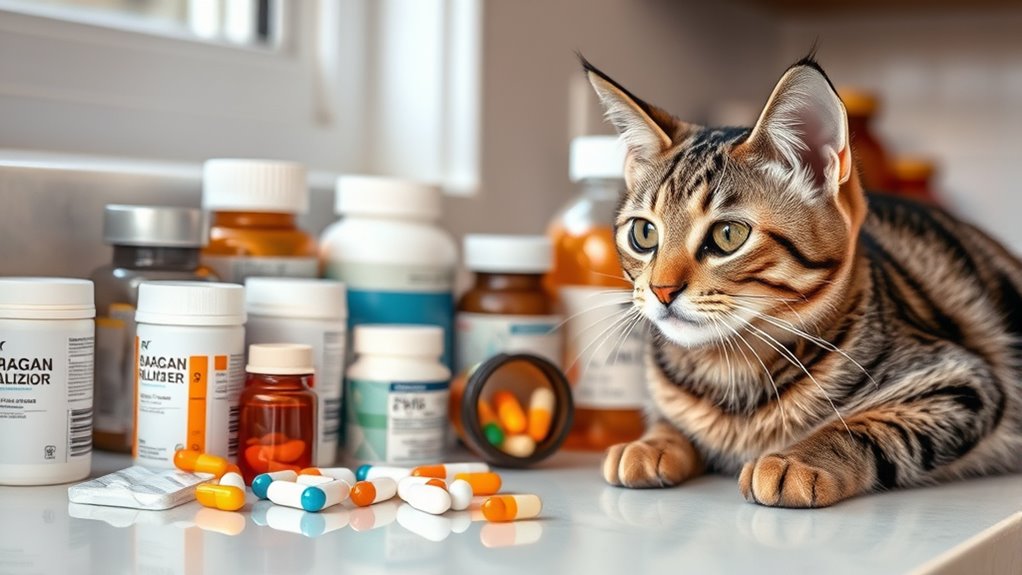
Many pet owners wonder if they can give their cats medications meant for humans, but the answer is almost always no. Human medication alternatives are not safe for cats because their bodies process chemicals differently.
While some medications might seem harmless, even small doses of human drugs can cause serious health issues or toxicity in felines. For example, medications used for feline pain relief require precise dosing and formulation, which human medications don’t provide.
Even small doses of human drugs can harm cats; always use veterinarian-approved medications for their pain relief.
Relying on human medications for cats can lead to adverse reactions, including gastrointestinal issues, organ damage, or worse. Always consult your veterinarian before considering any medication.
They can recommend safe options tailored specifically for your cat’s health needs. Never assume that what works for humans will be safe for your pet.
Regarding feline pain relief, using vet-approved medications is the only way to guarantee your cat’s safety and well-being.
How Can I Tell Which Human Medications Are Safe for My Cat?
Determining whether a human medication is safe for your cat requires careful research and guidance from a veterinarian. Always ask your vet before giving any human meds.
To help you identify safe options, follow these steps based on cat medication guidelines:
- Check trusted sources: Use reputable veterinary websites or official pet health resources for info on human medications and their safety for cats.
- Consult your vet: Always ask your veterinarian about safe alternatives before giving any human medication. They can recommend approved treatments suited to your cat’s needs.
- Avoid self-medicating: Never assume a medication is safe just because it’s common for humans. Even seemingly harmless drugs can be dangerous for cats. Stick to vet-approved safe options.
Why Is Acetaminophen (Tylenol) Dangerous for Cats?
Acetaminophen, which is the active ingredient in Tylenol, is really dangerous for cats. It can cause serious damage to their liver and even lead to breathing issues. So, it’s definitely not something you want to give your feline friend.
If your cat starts showing signs like vomiting, trouble breathing, or just seems unusually tired or lethargic, they could be poisoned. It’s always better to be safe and consult your vet right away if you notice these symptoms. Knowing how risky certain medications can be helps you keep your cat safe and avoid giving them something that could harm them.
Toxic Effects on Liver
Because acetaminophen is processed mainly by the liver, giving it to cats can cause serious damage to this vital organ. The drug interferes with liver function and disrupts medication metabolism, leading to toxic buildup.
This can cause liver failure because the hepatocytes get damaged, impairing detoxification. The liver also struggles to process the drug, which can cause systemic toxicity.
In addition, hemolytic anemia can occur, where red blood cells break down and further stress the liver. Cats have a limited ability to metabolize acetaminophen, making their livers especially vulnerable.
Even small doses can cause irreversible damage. Never give this medication to your cat without veterinary approval. Protect your feline friend’s liver by avoiding unsafe human medications.
Risk of Breathing Issues
Since acetaminophen can cause swelling and inflammation in the respiratory tissues, giving it to cats can lead to serious breathing problems. Cats are especially sensitive to this medication because it can trigger breathing difficulties by affecting their respiratory system.
The swelling in the nasal passages and airways can block airflow, making it hard for your cat to breathe comfortably. Sometimes, this inflammation gets worse quickly, leading to labored or rapid breathing.
If you notice your cat struggling to breathe or showing signs of respiratory distress after exposure to acetaminophen, seek veterinary help immediately. Because of the risk of severe breathing issues, never give your cat human medications like Tylenol without veterinary guidance.
Protect your feline’s respiratory health by avoiding unsafe drugs.
Symptoms of Poisoning
If your cat shows signs of breathing difficulty after exposure to certain medications, it may be experiencing poisoning. Recognizing poisoning signs quickly is essential. Use this symptoms checklist to stay alert:
- Sudden lethargy or weakness
- Pale or yellowish gums
- Vomiting or diarrhea, sometimes bloody
These symptoms indicate your cat might be suffering from toxicity. Acetaminophen (Tylenol) is especially dangerous because it can cause severe liver damage and red blood cell destruction. If you notice any of these poisoning signs, seek veterinary care immediately. Early intervention can make a big difference.
When Is It Okay to Use Human Medications Like Gabapentin for Your Cat?
Wondering when it’s safe to give your cat human medications like gabapentin? It’s important to know that gabapentin can help cats with certain issues, like nerve pain or anxiety, but only when your vet says it’s okay.
You shouldn’t give gabapentin or any human medication without your vet’s approval. Misusing these drugs can be dangerous for your cat. Sometimes, your veterinarian might prescribe gabapentin as a safer alternative to other pain meds or sedatives.
But remember, dosage and timing are crucial. What works for humans isn’t automatically safe for cats. Always talk to your vet first to see if gabapentin is right for your pet’s specific needs.
Never rely on over-the-counter options or advice from the internet. While gabapentin can be helpful, only a professional can determine if it’s safe and appropriate for your cat’s health.
Why You Should Consult a Vet Before Giving Human Medications to Your Cat
Giving human medications to your cat without talking to a vet first can be really risky. It might cause poisoning or an overdose, which can be life-threatening for your furry friend. Plus, giving the wrong dosage could make existing health problems worse or lead to new issues.
It’s always best to check with a veterinarian before giving your cat any human medicine. They can make sure the medication is safe and suitable for your cat’s specific health needs. Better to be safe than sorry when it comes to their health!
Potential Toxicity Risks
Administering human medications to your cat without consulting a veterinarian can be very risky, as many drugs are toxic to cats. Cats have a unique metabolism that processes medications differently, making them more vulnerable to adverse effects.
Unapproved drugs can lead to medication interactions that increase toxicity or reduce effectiveness, which can harm your cat. They can also cause unexpected side effects, like liver or kidney damage, because of their sensitive systems.
Even small dosage mistakes can be deadly for cats, increasing the risk of overdose. Without proper guidance, you might accidentally expose your cat to dangerous reactions.
Always talk to a veterinarian before giving any medication. This helps ensure the drug is safe, the dose is correct, and it reduces the risk of potentially life-threatening toxicity.
Incorrect Dosage Dangers
Using the wrong dosage of medication can be just as dangerous as giving the wrong drug altogether. Incorrect dosage calculations can lead to insufficient treatment or overdose, both of which pose serious risks to your cat’s health.
Even a small miscalculation can cause adverse effects, especially if the medication interacts negatively with your cat’s current health status. It’s vital to understand that human medications are not always scaled for feline physiology.
Consulting a vet guarantees proper dosage and helps avoid dangerous medication interactions. Never guess or rely on online sources for dosing instructions.
Your veterinarian considers your cat’s weight, age, and health conditions before recommending a safe, effective dose. This minimizes the risk of harm from improper medication use.
Underlying Health Conditions
Because your cat’s underlying health conditions can greatly influence how they respond to medications, it’s important to talk to a vet before giving any human drugs. Chronic issues like kidney or liver problems can change how medications are processed, increasing the risk of side effects.
Medication interactions might also make existing health problems worse or cause new reactions. To stay safe, consider these steps:
- Have your vet review your cat’s medical history, including any chronic diseases.
- Ask about possible interactions with treatments your cat is already on.
- Follow your vet’s advice exactly, especially if your cat has underlying health issues.
Knowing your cat’s health status helps prevent dangerous reactions and ensures they get the right treatment. Never assume human medications are safe without professional guidance, especially when health issues are involved.
How to Properly Dose and Administer Human Medications to Your Cat
Giving your cat human medications requires careful attention to detail, as many drugs safe for people can be dangerous or even toxic to felines. First, understand that medication types vary, and not all are suitable for cats. Always consult a veterinarian before administering any human drug.
Regarding dosage guidelines, never guess or use human dosages for your feline. Cats metabolize medications differently, so precise dosing is critical. Use a proper syringe or dropper to measure the medication accurately, and consider dividing pills into smaller doses if recommended by a vet.
Administer the medication slowly and gently, making sure your cat swallows it completely. If your cat resists, try disguising the medication in a small amount of tasty food or a treat. Never force a pill into your cat’s mouth, as this can cause stress or injury.
Always follow the veterinarian’s instructions carefully to guarantee safe and effective treatment.
Common Human Medications That Are Safe for Cats and Their Uses
While not all human medications are safe for cats, some common drugs can be used safely under veterinary supervision. They can help with pain relief, allergies, and minor issues.
Here are three examples:
- Aspirin – Sometimes used for pain relief, but only with your vet’s guidance to avoid overdose.
- Diphenhydramine (Benadryl) – Effective for allergies and allergic reactions.
- Hydrocortisone cream – Can be applied topically to reduce itching and inflammation in certain skin conditions.
Always remember, never give your cat any medication without consulting your veterinarian first. Proper dosing and supervision are key to preventing health problems. These medications can help when used correctly, but misuse can cause serious issues.
What Are the Risks of Giving Human Medications to Cats?
Giving human medications to your cat can be really risky and might cause serious health issues. It’s not just about giving the wrong dose — even a small mistake can lead to toxicity or bad reactions. That’s why self-medicating your cat with human meds is pretty dangerous.
If your cat is sick, the best thing to do is always check with your veterinarian first. They know what’s safe and what’s not, and they can give you the right guidance to keep your furry friend safe and healthy.
Toxicity Risks for Cats
Human medications can pose serious health risks to cats because their bodies process drugs differently than humans do. Giving the wrong medication can lead to harmful outcomes, including toxicity. The risks include:
- Medication interactions that can cause unexpected side effects or worsen existing conditions.
- Toxic reactions where even small doses can be lethal, affecting organs like the liver or kidneys.
- Delayed or ineffective treatment if you rely on human drugs instead of proven alternative treatments for cats.
Always remember, what’s safe for humans isn’t necessarily safe for cats. If your pet needs medication, consult a veterinarian to avoid toxicity risks and explore safe alternatives. Never self-medicate your cat with human drugs.
Incorrect Dosage Dangers
Incorrect dosages of human medications can be dangerous for cats because their smaller size and unique physiology make them much more sensitive to drug levels. Medication errors, like giving too much or too little, can lead to serious health problems.
Precise dosage calculations are essential; even a tiny mistake can cause toxicity or make the medication useless. Cats metabolize drugs differently than humans, so what’s safe for people might be harmful to them if dosed incorrectly.
Overdose risks include organ damage, neurological issues, or even death. Always double-check dosage instructions and talk to a vet before giving any medication. Never estimate or guess doses—mistakes can be life-threatening for your feline friend.
How to Store Human Medications Safely Away From Your Pets
To keep your pets safe, it’s essential to store medications out of their reach. Proper medication storage prevents accidental ingestion and protects pet safety. Here’s how to do it:
- Use high, locked cabinets or shelves that pets can’t access. Make sure these storage areas are secure and out of sight.
- Keep medications in their original containers with labels intact. This helps prevent confusion and accidental misuse.
- Avoid leaving medicines on countertops or tables, especially during busy times. Always put them away immediately after use.
What To Do If Your Cat Shows Signs of Medication Toxicity
If your cat shows signs of medication toxicity, quick action is essential to keep them safe. Watch for symptoms like vomiting, diarrhea, tremors, or trouble breathing. Acting fast can help prevent serious problems.
First, take away any remaining medication from your cat’s reach. Then, contact your veterinarian or an emergency animal poison control center immediately. Keep their contact info somewhere accessible.
| Symptom Recognition | Emergency Actions |
|---|---|
| Vomiting, diarrhea | Call your vet right away |
| Seizures or tremors | Get your cat to the vet without delay |
| Difficulty breathing | Seek emergency veterinary care immediately |
| Lethargy or weakness | Follow your vet’s instructions promptly |
Frequently Asked Questions
Are There Any Natural Human Remedies Safe for Cats?
You should be cautious with natural human remedies for cats, as many aren’t safe. Some herbal remedies, like small amounts of chamomile or ginger, might help with digestion or calming, but always check with your vet first.
Homeopathy options can sometimes be safe if prescribed by a professional. Never give your cat any herbal or homeopathic treatments without veterinary approval, as improper use can be harmful.
How Quickly Do Medication Toxicities Show Symptoms in Cats?
Symptom onset from medication toxicity in cats can vary. Usually, signs appear within a few hours but can sometimes take up to a day.
How quickly symptoms show depends on the level of toxicity and the type of substance ingested. Keep an eye out for early signs like vomiting, drooling, or lethargy.
If you suspect your cat has been poisoned, seek veterinary help immediately. Acting fast can prevent serious health issues or even death.
Can Human Medications Interact With My Cat’s Existing Treatments?
Yes, human medications can cause complications by clashing with your cat’s current treatments.
You need to carefully consider drug interactions to prevent potential problems. Always check with your veterinarian before giving any human medicine, as they can assess treatment compatibility and avoid adverse effects.
Don’t guess or gamble—professional advice guarantees medications won’t interfere and keeps your feline friend safe and sound.
Are Over-The-Counter Human Medications Safer Than Prescribed Ones?
Over-the-counter human medications aren’t necessarily safer than prescribed ones for cats, as both can have serious risks if misused. You should always follow human medication guidelines but never give your cat any medication without consulting a vet.
Even common side effects, like upset stomach or allergic reactions, can be dangerous for cats. Always seek professional advice to guarantee your feline’s safety and health.
What Signs Indicate My Cat Needs Emergency Veterinary Care?
Imagine your cat’s sleek fur suddenly ruffled, eyes wide and unblinking—these are signs you need emergency vet care.
Watch for difficulty breathing, persistent vomiting, seizures, or severe lethargy.
Sudden collapse, bleeding, or inability to stand also signal urgent issues.
Recognizing these emergency signs is vital for your cat’s health, prompting immediate action to guarantee they get the life-saving care they need.
Conclusion
Remember, giving your cat human medications is like playing roulette, except the wheel’s loaded.
Always double-check and ask your vet before giving any meds. Store them out of reach because your feline friend isn’t a tiny doctor’s assistant.
If your kitty shows signs of toxicity, don’t try to be a hero.
Get to the vet faster than you can say “aspirin” on a cat’s diet.
After all, your pet’s health isn’t a DIY project—unless you enjoy emergency vet visits!