What Risks Do You Face If You Put Flea Medicine on a Pregnant Cat?
If you’re a cat owner, you know how stressful it can be to keep your furry friend free of fleas, especially when she’s pregnant. Many people struggle with finding safe solutions that won’t harm her or her kittens. You’re not alone in this worry—navigating flea treatments during pregnancy can be tricky.
Applying flea medicine to a pregnant cat can pose serious health risks, including toxicity and adverse reactions. Harmful chemicals may cross the placenta and affect fetal development, potentially leading to birth defects or genetic issues.
Incorrect dosages or interactions with other medications can worsen the risks, causing symptoms like vomiting, lethargy, or tremors. To keep both mother and kittens safe, it’s essential to understand your options and consult a vet—more important considerations await if you want to guarantee safety.
Key Takeaways
- Harmful chemicals in flea medicines can cross the placental barrier, affecting fetal development.
- Incorrect dosages may cause toxicity, leading to vomiting, lethargy, or tremors in the mother and kittens.
- Certain active ingredients may cause birth defects or genetic mutations.
- Chemical exposure can interfere with fetal growth and increase the risk of birth abnormalities.
- Misuse or interactions with other medications can cause long-term health issues for both mother and kittens.
Are Flea Treatments Safe for Pregnant Cats?
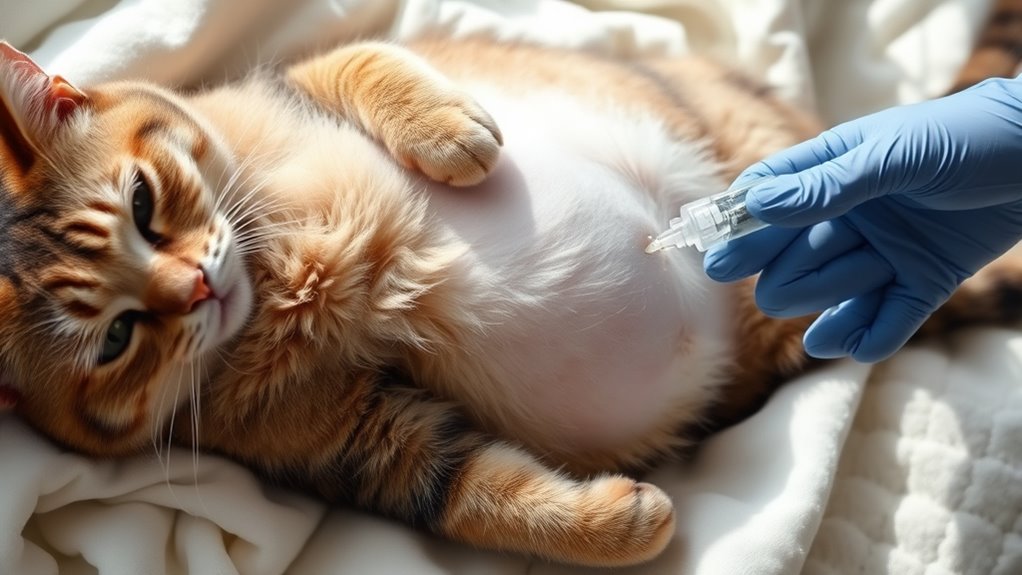
Many over-the-counter options contain chemicals that could affect a developing fetus, so always consult your veterinarian first. They can recommend safe, vet-approved treatments designed for pregnant cats or suggest alternative methods to control fleas.
Always consult your veterinarian before using flea treatments on pregnant cats to ensure safety.
It’s crucial to weigh the potential risks of flea infestations against the safety of your cat and her kittens. In general, avoiding unnecessary medication during pregnancy is best unless prescribed by a professional.
Your vet can help you understand which products are safe and when to administer them. Remember, protecting your pregnant cat’s health isn’t just about fighting fleas. It’s about making informed choices that support her well-being and her kittens’ development.
What Are the Most Common Flea Treatments for Cats?
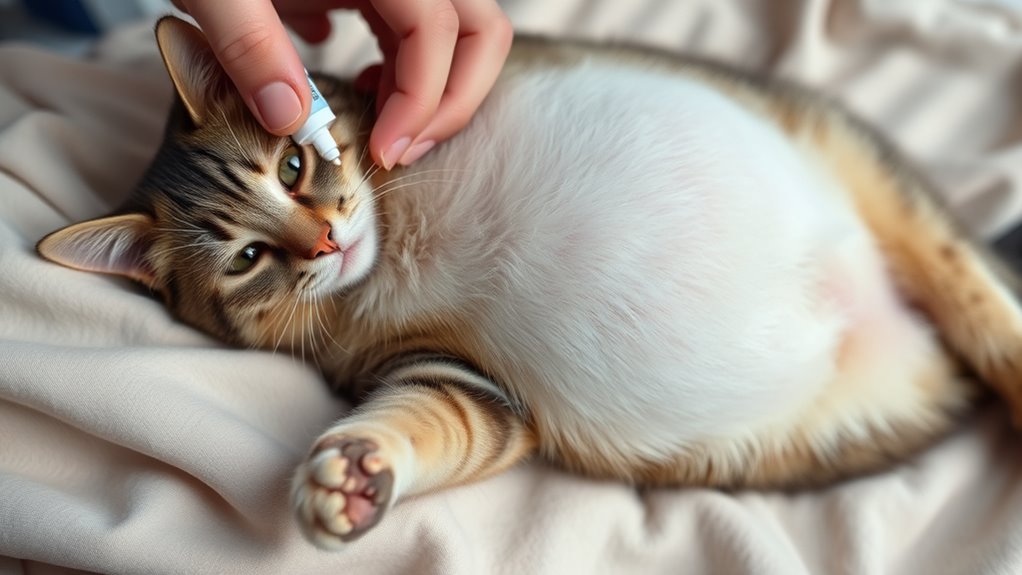
You’ll find that the most common flea treatments for cats are usually either topical medications or oral options. Topical treatments are applied directly onto your cat’s skin, often between the shoulder blades, and they work by killing fleas on contact. Oral medications, on the other hand, are given by mouth and can be very effective in controlling fleas quickly.
When it comes to choosing the right treatment, especially for a pregnant cat, it’s really important to understand these options and discuss them with your veterinarian. They can help you pick the safest and most effective solution to keep your cat flea-free and healthy.
Topical Flea Medications
| Medication Type | Key Benefits |
|---|---|
| Spot-on | Easy to apply, quick results |
| Topical Gel | Longer-lasting protection |
| Shampoo | Immediate relief, easy to use |
Oral Flea Treatments
Some common options include tablets and chewables that target fleas quickly. Always check with your veterinarian before giving any medication, especially if your cat is pregnant.
They often need to be given once a month to keep your cat protected. Proper use depends on following the dosage instructions carefully.
Not all products are safe for pregnant cats, so getting professional guidance is really important.
How Do Flea Medications Affect a Pregnant Cat’s Health?
Flea medications can be a bit tricky when it comes to pregnant cats. They might carry some risks, like causing toxicity that could affect her health. It’s important to be cautious because some treatments could potentially impact her developing kittens too.
Before giving your pregnant cat any flea control products, it’s a good idea to do some research or talk to your vet. They can help you find safe options to keep her and her babies healthy without unnecessary risks.
Toxicity Risks During Pregnancy
Pregnant cats are especially sensitive to flea medications, which can be dangerous during this time. Using the wrong dose can lead to high toxicity levels that harm both the mother and her kittens.
These medications might also interact badly with other drugs your cat is taking, increasing the chance of side effects. Watch out for signs like vomiting, lethargy, or tremors, which could mean toxicity.
Always check with your veterinarian before giving any flea treatment to a pregnant cat. Mistakes in dosage can lead to overdose and serious health issues.
Increased toxicity can damage your cat’s organs, and medication interactions might make side effects worse. Be cautious to keep your cat and her kittens safe.
Potential Birth Defects
When a cat is pregnant, her developing kittens are especially vulnerable to certain medications. Flea medicines, especially those with chemicals like permethrin or organophosphates, can cause birth defects in kittens.
These defects might include cleft palates, limb deformities, or neurological issues. Some medications can also trigger genetic mutations, which can change how fetal cells develop.
Such mutations might lead to lifelong health problems or disabilities. Because of these risks, giving flea medicine without a vet’s guidance can threaten the health of both mom and her kittens.
Protecting your pregnant cat means understanding these dangers and choosing safe, vet-approved treatments to reduce the risk of birth defects.
Can Flea Treatments Harm Developing Kittens?
Although flea treatments are effective at controlling infestations, they can pose risks to developing kittens inside a pregnant cat. Some medications may interfere with kitten development or affect maternal health, especially if used improperly. The active ingredients in certain flea treatments can potentially cross the placental barrier, exposing unborn kittens to chemicals that could disrupt their growth. This risk is higher with oral or spot-on medications not specifically labeled for use during pregnancy.
Flea treatments may harm developing kittens; consult your vet for safe options during pregnancy.
To protect both your cat and her kittens, consider these points:
- Some flea treatments contain ingredients that may harm fetal development.
- The timing of treatment during pregnancy influences potential risks.
- Consulting your veterinarian helps guarantee safe options for maternal health and kitten development.
Always prioritize professional guidance before giving any flea medication to a pregnant cat to minimize risks to her developing kittens.
What Are the Signs of Adverse Reactions in Pregnant Cats?
Recognizing adverse reactions in pregnant cats is crucial for their safety and the health of their developing kittens. If something’s wrong, you’ll notice certain signs that indicate a problem.
Common symptoms include excessive scratching, drooling, vomiting, or diarrhea. You might also see behavioral changes like lethargy, restlessness, or agitation.
Some cats may appear weak or have difficulty walking. Unusual vocalizations or hiding could also signal discomfort or pain.
It’s especially important to monitor your cat closely after applying flea medicine, as pregnancy can make her more sensitive.
Any sudden change in behavior or physical condition should prompt a visit to the vet right away.
Quickly recognizing these symptoms can prevent more serious health issues and make sure your cat gets the care she needs.
Staying vigilant helps protect her well-being and the health of her kittens.
What Safe Alternatives Are Available for Flea Control During Pregnancy?
If you’re looking for safe ways to control fleas during pregnancy, there are some natural options you might want to consider. For example, citrus or lavender are often mentioned as natural flea repellents. They can help keep fleas away without introducing harsh chemicals that might be risky for your cat or your pregnancy.
That said, it’s always a good idea to check in with your veterinarian before trying any new flea control methods. They can recommend specific products or strategies that are proven safe for pregnant cats. It’s better to be cautious and ensure your pet’s safety during this special time!
Natural Flea Repellents
During pregnancy, many pet owners look for safe alternatives to chemical flea treatments to protect their cats and unborn kittens. Natural flea repellents like herbal solutions and essential oils can work well when used carefully.
You might consider options such as diluted lavender or cedarwood oils, which are known for their repellent properties. Herbal solutions like rosemary or neem oil can also help keep fleas away without harmful chemicals.
Always remember to dilute essential oils properly and use them in moderation, as some can be toxic. These options can be a safer choice during pregnancy, but it’s important to do thorough research.
Be sure to consult your veterinarian before applying any natural remedies. Using natural repellents can give you peace of mind while keeping your cat and her kittens safe.
Veterinary-Recommended Products
Regarding flea control during pregnancy, veterinary-approved products are your safest bet. They’ve been tested to ensure safety and effectiveness.
These products are specifically designed for pregnant cats, helping to reduce health risks. They often include topical treatments with ingredients known to be safe during pregnancy or oral medications prescribed by your vet.
When choosing a flea prevention method, it’s really important to follow your veterinarian’s advice closely. They can help you pick the best options for your cat’s needs.
Using products recommended by veterinary professionals ensures you’re prioritizing your cat’s health while effectively managing fleas. Always check with your vet before starting any flea prevention plan during pregnancy.
How Can You Prevent Flea Infestations in Pregnant Cats Without Medication?
Wondering how to keep a pregnant cat flea-free without resorting to medication? You can try several natural prevention methods. Start by keeping your home clean—vacuum often and wash bedding regularly to get rid of flea eggs and larvae.
Keep your pregnant cat flea-free with regular cleaning and natural repellents like cedarwood or lavender.
You can also use natural repellents like cedarwood or lavender, which help deter fleas without any chemicals. Regular grooming is key too; it helps you spot and remove fleas early before they spread.
Another safe option is sprinkling non-toxic diatomaceous earth on carpets and furniture. It dehydrates fleas safely without harming your cat.
Some easy flea prevention tips include keeping your home and your cat’s bedding clean and vacuumed regularly. Using natural repellents like cedarwood or lavender can also help.
And don’t forget to groom your cat often and check for fleas. These simple methods can help reduce flea numbers without risking your pregnant cat’s health.
When Should You Consult the Vet About Flea Treatment Options?
Knowing when to consult the vet about flea treatment options is vital for your pregnant cat’s safety. You should seek veterinary guidance promptly if you notice fleas on your cat or her kittens, or if she shows signs of discomfort.
Flea treatment consultations are important before starting any medication during pregnancy, as some products can be harmful. Contact your vet early in the pregnancy to discuss safe options and when to apply treatments.
If you’re unsure whether a flea product is safe, don’t guess—get professional advice. Also, consult the vet if you’ve used a flea medication previously and notice adverse reactions.
The veterinarian can recommend the safest approach tailored to your cat’s pregnancy stage. Remember, avoiding unnecessary risks guarantees both your cat’s health and her kittens’ well-being.
What Are the Long-Term Risks of Using Flea Medications on Pregnant Cats?
While talking to your vet about when to give flea treatments helps protect your pregnant cat in the short term, it’s also important to think about possible long-term effects. Using flea medications the wrong way or ignoring instructions can lead to problems that affect her health over time.
Some long-term risks include developing sensitivities or allergies to certain chemicals, which might cause skin or other health issues later on. Repeated exposure to certain flea medications could also impact her liver or kidney functions.
Plus, using strong chemicals unnecessarily might affect her reproductive health or future pregnancies. To avoid these risks, always follow your vet’s instructions carefully and discuss any worries you have. Proper, cautious use of flea medications helps keep your pregnant cat healthy now and in the future.
How Can You Protect Your Pregnant Cat and Her Kittens From Fleas Safely?
Regularly clean your home, vacuum carpets, and wash bedding to remove flea eggs and larvae. Incorporate gentle grooming, like brushing, to check for fleas and catch any pests early.
Keep your cat indoors during peak flea season to reduce her exposure. You might consider natural options like diatomaceous earth, but always check with your vet before using anything.
Be careful with over-the-counter treatments, as many aren’t safe for pregnant cats. Keep an eye on your cat’s health and watch for signs of fleas.
Frequently Asked Questions
Can Flea Medication Cause Allergies in Pregnant Cats?
Flea medication can cause allergies in pregnant cats, leading to reactions like itching, swelling, or skin irritation. Some flea treatments have chemicals that might trigger allergic responses or adverse effects.
To keep your cat safe, always choose vet-approved products and watch her for any unusual symptoms. If you notice any reactions, contact your veterinarian promptly to protect her health and her kittens.
Are Natural Flea Remedies Safer for Pregnant Cats?
Natural flea remedies, like herbal options and essential oils, might seem gentle, but they aren’t always safer for pregnant cats.
Some essential oils can be toxic and cause adverse reactions. Herbal treatments could be less harsh, but they still carry risks if not used properly.
Always check with your vet before trying any natural remedies. Your cat’s safety should always come first.
How Quickly Can Flea Medication Impact a Pregnant Cat’s Health?
Flea medication can affect your pregnant cat’s health within hours because it gets absorbed quickly through her skin.
You might notice signs like vomiting, lethargy, or skin irritation, which could mean she’s having an adverse reaction.
It’s really important to watch her closely after applying it and contact your vet right away if you see anything unusual.
Choosing the right product at the right time can help reduce risks for both her and her kittens.
What Are the Potential Risks to Kittens if the Mother Is Treated With Flea Medicine?
Treating a pregnant cat with flea medicine could harm her kittens’ development, potentially causing birth defects or developmental delays.
You might also risk compromising her maternal health, which can lead to complications during delivery or breastfeeding.
While some medications are safer than others, it’s essential to consult your vet before applying any flea treatment.
Protecting both her health and her kittens’ growth depends on choosing the right, vet-approved options.
Is It Safe to Use Flea Medication During Early Pregnancy?
Using flea medication during early pregnancy isn’t entirely safe, as certain flea treatments can pose risks to your cat and her developing kittens.
During different stages of pregnancy, your cat’s sensitivity varies, and some treatments might cause adverse effects or harm the fetus.
It’s best to check with your veterinarian before applying any flea medication, so you can choose a safe option suited for her pregnancy stage.
Conclusion
While tending to your pregnant cat, it’s natural to worry about fleas and their impact. Flea medicine can pose risks during pregnancy, including potential toxicity to both the mother and her developing kittens.
With gentle care and expert guidance, you can navigate this delicate time without stirring unnecessary storms. It’s important to consult your veterinarian before applying any flea treatment to a pregnant cat. They can recommend safe options or alternatives that won’t jeopardize her health.
By choosing the safest options and staying vigilant, you help guarantee a peaceful journey for both mother and kittens. Remember, sometimes the quietest steps lead to the most harmonious outcomes, allowing love and protection to softly weave their way through this tender chapter.
When it comes to flea medicine for a pregnant cat, caution is key. Always seek professional advice to avoid risks and ensure the wellbeing of everyone involved.