How to Stop Shocking My Cat When Petting Her
If you’ve ever been shocked by your cat while petting her, you’re not alone. Many cat owners struggle with this surprising and uncomfortable issue. It can make bonding with your feline friend frustrating and even painful.
To stop shocking your cat when petting, pay attention to her body language and avoid overstimulating her. Pet only in comfortable areas like cheeks or chin, with gentle, rhythmic strokes.
Keep sessions short and watch for signals like tail flicks or flattened ears that indicate discomfort.
Make her environment calm and predictable. If you keep these tips in mind, you’ll create a more positive interaction.
Discover more ways to build trust and avoid shocks as you go along.
Key Takeaways
- Pay attention to your cat’s body language so you can avoid overstimulation and discomfort while petting.
- Pet gently in rhythmic motions, focusing on areas she likes, like her cheeks and chin.
- Keep your petting sessions short and slowly increase the time as she gets more comfortable.
- Use treats or praise to reward her for relaxed and positive interactions.
- Steer clear of sensitive spots like her paws or belly to prevent negative reactions.
Why Do Cats React Strongly When You Pet Them?
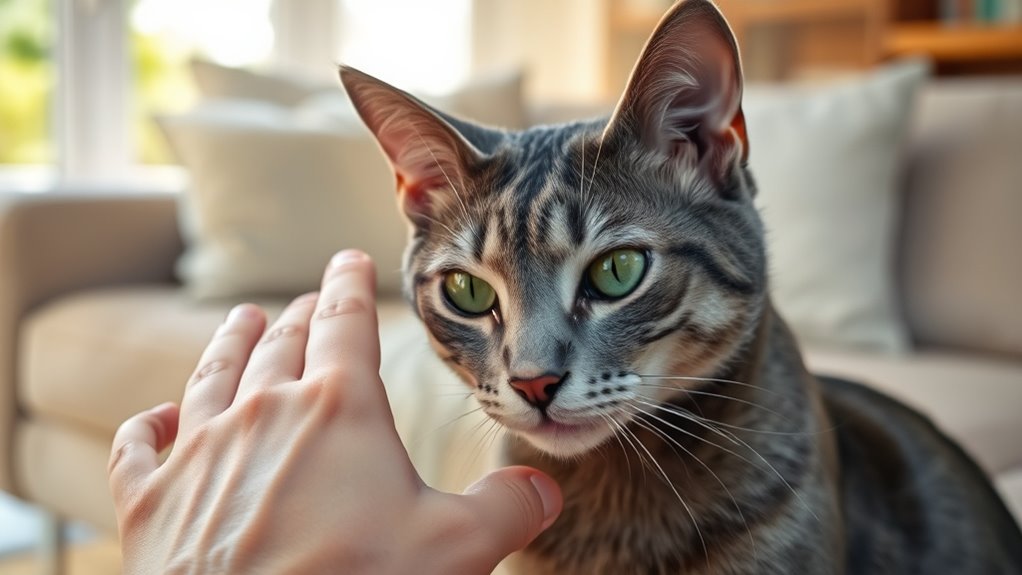
Cats often react strongly when you pet them because they have sensitive nerve endings and a heightened sense of touch. This makes their reactions closely tied to their individual behavior and petting preferences.
Cats’ strong reactions to petting stem from sensitive nerves and their unique preferences, making understanding their signals essential.
Some cats enjoy gentle strokes along their back or head, while others might find certain areas overstimulating. If you pet a cat in a way they don’t like, they might twitch their tail, swat, or even bite.
Their responses aren’t random. They’re signals that they’re uncomfortable or overwhelmed. Paying attention to subtle cues like twitching whiskers or flattened ears can help you understand how they feel.
Each cat has unique petting preferences based on their personality and past experiences. Respecting these helps build trust and makes petting a positive experience for both of you.
How to Tell When Your Cat Is Overstimulated During Petting
Pay close attention to how your cat is acting while you’re petting them. If you notice their tail flicking, their ears flattening, or their pupils dilating, those are pretty good signs they might be getting overstimulated. Sometimes, you’ll see sudden changes in their behavior too, like trying to pull away or becoming more agitated.
Being able to pick up on these cues is really helpful because it tells you when to stop petting before your cat gets overwhelmed. It’s all about tuning into their body language so you can keep things comfortable and enjoyable for both of you.
Recognize Body Language Signs
Body language gives clear clues that your feline friend might be reaching their limit during petting sessions. Learning to read these cues is key to understanding how cats communicate and avoiding overstimulation.
Watch for signs like a twitching tail, flattened ears, or dilated pupils, which show discomfort or agitation. A sudden flick of the tail or a quick head turn can also mean your cat wants to stop.
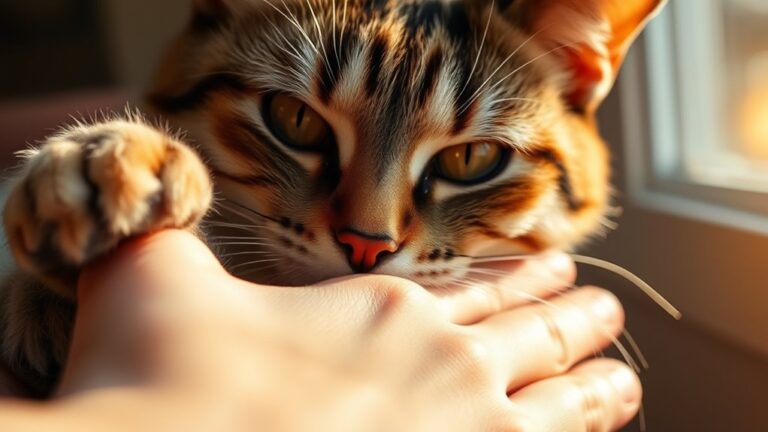
Sometimes, your cat might try to move away or gently bite your hand, showing they’ve had enough. Paying close attention to these signals helps you recognize when your cat is becoming overstimulated.
Responding quickly to these cues builds trust and keeps your bonding experience positive and stress-free.
Notice Sudden Behavior Changes
While recognizing subtle body language cues is important, sudden changes in behavior often signal that your cat has reached their limit. If she suddenly shows aggression or snaps at you, it’s a clear sign she’s overstimulated.
Watch for signs like swatting, biting, or rapidly flicking her tail, which indicate she’s becoming overwhelmed. Anxiety triggers like loud noises or too much touching can also cause abrupt mood shifts.
When you notice these behavior changes, stop petting immediately and give her space to calm down. Ignoring these signals may escalate her stress, leading to more aggressive or fearful responses.
Being attentive to these sudden shifts helps prevent shocking reactions and makes sure your cat feels safe and comfortable during interactions.
How to Create a Calm, Stress-Free Environment for Your Cat
Creating a calm, stress-free environment for your cat starts with understanding that she needs safety and predictability. Provide a quiet spot where she can retreat and feel secure. Use soft lighting to create a soothing vibe, avoiding harsh or bright lights that can stress her out.
Playing calm music can help reduce her anxiety and help her relax. Keep her environment predictable by sticking to a consistent routine for feeding, playtime, and rest. Avoid loud noises and sudden movements that might startle her.
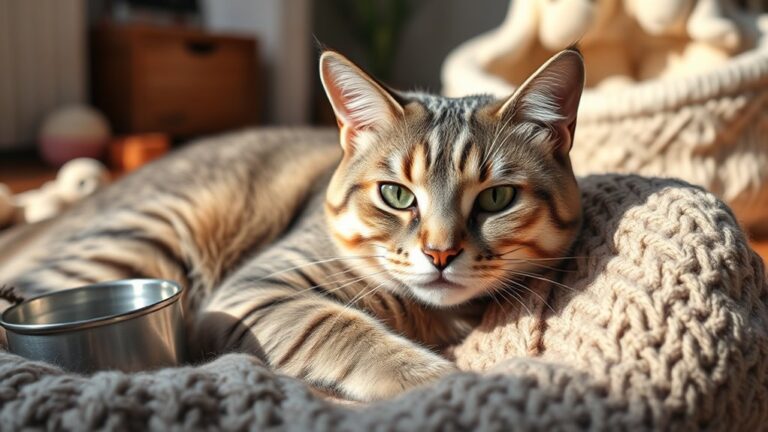
Make sure her space is free of clutter and hazards. Adding cozy spots like soft beds or blankets encourages her to relax and feel comfortable. These small changes create a peaceful setting that lowers her stress levels and prevents overexcitement during petting.
In the end, a calm environment helps your cat feel safe. This makes social interactions more positive and comfortable for both of you.
How to Adjust Your Petting Technique to Avoid Overloading Your Cat
Keep an eye on your cat’s body language so you can catch any signs of discomfort early on. It’s all about being attentive and gentle. When you’re petting, try to use soft touches and avoid pressing too hard or making quick, jerky movements—that can really overwhelm them.
Also, it’s best to keep those petting sessions short and sweet. Pay attention to their cues—if they start to squirm or move away, it’s a good sign to stop. That way, your cat stays relaxed and happy during your time together.
Observe Cat’s Body Language
Noticing your cat’s body language is key to avoiding overstimulation or shocking her. Cats share their comfort levels through subtle cues, so watching their body language helps you understand how they like to be pet. Keep an eye out for relaxed ears, slow blinking, and a gentle tail—that usually means she’s comfortable.
On the other hand, if her ears flatten, her tail flicks, or she tenses up, she might be overstimulated or annoyed. Notice her overall posture—if she’s relaxed and leaning into your hand, she’s enjoying it. But if she’s stiff or pulling away, she’s probably uncomfortable. Adjust your petting style accordingly, either stopping or switching the area you’re touching.
Use Gentle Touch Techniques
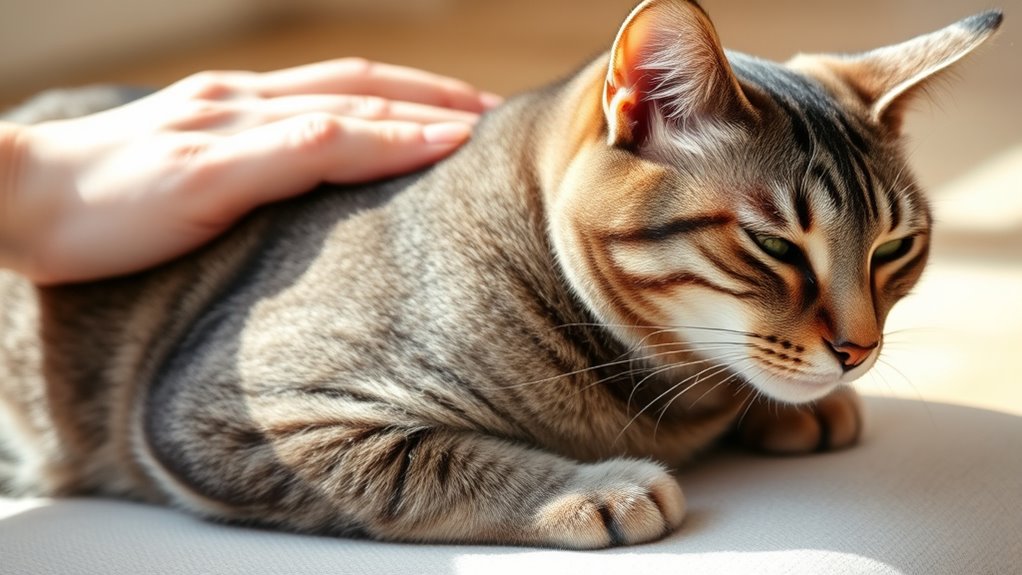
To prevent overwhelming your cat, it’s important to adjust your petting technique with gentle, deliberate touches. Use soft strokes instead of heavy or rapid ones, which can be unsettling. Keep your hand relaxed and avoid pressing too hard, focusing on areas your cat prefers.
Incorporate calming techniques like slow, rhythmic motions to help your cat feel safe and secure. Pay attention to her reactions—if she tilts her ears back or pulls away, soften your touch or stop altogether.
Consistently using gentle, controlled strokes creates a soothing experience that reduces the chance of shocking her. Over time, this approach helps build trust and encourages positive associations with petting, making her more receptive and less likely to become overwhelmed.
Limit Petting Duration
Keeping your petting sessions brief helps prevent your cat from becoming overwhelmed. Limiting petting duration allows you to control how often you pet her, which directly affects her comfort. Pay close attention to her body language—if she starts to squirm or flick her tail, it’s time to stop.
Short, focused sessions help her stay relaxed and prevent overstimulation. To make the most of your time together, keep each session under a few minutes. Watch for signs of discomfort or agitation, and if you notice any, gently stop.
As she gets more comfortable, you can gradually increase the duration. Always aim to end on a positive note to reinforce calm behavior and keep her feeling safe and happy.
How to Read Your Cat’s Body Language During Petting
Pay close attention to your cat’s body language during petting to make sure she’s comfortable and happy. Recognizing these cues helps you understand her petting preferences and avoid overstimulation.
Look for relaxed features like slow blinking, soft eyes, and a gently wagging tail. If her ears tilt back or flatten, or her body tenses, she might be feeling uncomfortable or overstimulated.
Relaxed signs include slow blinking, soft eyes, and a gently wagging tail; tense ears or body may indicate discomfort.
Purring can mean she’s content, but if she starts biting or scratching, it’s a clear sign to stop. Notice if she leans into your touch, showing she enjoys it, or pulls away, signaling she’s reached her limit.
Paying attention to these signals allows you to adjust your approach. This way, petting stays a positive experience and helps build trust.
How Positive Reinforcement Builds Trust and Comfort
Positive reinforcement is a powerful way to help your cat feel safe and confident around you. When you reward calm behavior and gentle petting, you build trust and encourage her to stay within her comfort zones.
This approach helps her associate your touch with positive experiences, which reduces stress and fear. To strengthen your bond, try offering treats or praise right after she responds calmly to petting.
Use gentle, slow movements to avoid overwhelming her. Creating predictable routines can also foster a sense of security. Always respect her signals and stop if she shows signs of discomfort.
The Best Areas to Pet Your Cat Based on Her Preferences
To make petting your cat enjoyable, try focusing on the spots she loves the most, like her cheeks, chin, and shoulders. These are usually safe bets and tend to make her feel happy and relaxed.
On the other hand, avoid areas that might be sensitive for her, like her belly or paws. Cats can be pretty particular about those spots, and petting there might make her uncomfortable or even make her want to swat you away.
Pay close attention to her signals while you’re petting her. If she leans into your hand or starts purring, you’re doing a great job! But if she pulls away, flattens her ears, or seems tense, it’s best to give her some space and respect her boundaries.
Preferred Petting Zones
Understanding where your cat enjoys being petted can make a big difference in preventing unwanted reactions. Knowing her favorite spots helps you respect her petting preferences and avoid triggering discomfort.
Generally, cats prefer gentle strokes on areas like the head and cheeks, which are often her favorite petting zones.
- Base of the ears
- Under the chin
- Along the cheeks
- Top of the head
These zones tend to be less sensitive and match most cats’ preferences. Pay attention to her reactions—if she leans in or purrs, you’re in the right spot.
If she pulls away or becomes tense, it’s time to stop or switch zones. Respecting her favorite spots keeps her comfortable and reduces the chance of shocking reactions.
Avoid Sensitive Areas
While it’s tempting to pet every part of your cat’s body, avoiding certain sensitive areas can prevent discomfort and shocking reactions. Sensitive areas like the belly, tail base, and paws often cause overstimulation or pain if touched improperly. Using gentle petting near these zones helps keep your cat comfortable.
| Sensitive Areas | Recommended Petting Techniques |
|---|---|
| Belly | Avoid unless she invites it |
| Tail Base | Gentle strokes, avoid tugging |
| Paws | Only touch with calm, gentle petting |
Understanding these zones helps you tailor your petting style so she feels safe and relaxed. Always watch her reactions to refine how you pet around sensitive areas.
Recognize Her Signals
Paying close attention to your cat’s signals is key to uncovering her favorite spots to be petted. Watch for purring signals, which often mean she’s comfortable, and observe her tail language—relaxed tails suggest she’s happy, while flicking or puffing tails signal discomfort.
Notice her body posture; she may lean into your touch or gently nudge you to continue. When she’s ready to stop, she might pull away or flick her tail quickly. Look for subtle cues like her ears flattening or her whiskers twitching, which can show irritation.
Short and Gentle Petting Tips for Sensitive Cats
When petting sensitive cats, keep your touches short and gentle. Use light, slow strokes, focusing on areas she enjoys like her cheeks or the base of her ears.
Avoid vigorous or prolonged petting because it can overwhelm her. Incorporate gentle brushes to make the experience more soothing, but always watch her body language for signs of discomfort.
Adding calming scents like lavender or chamomile diffused nearby can help her relax before and during petting sessions. Keep your hand relaxed and avoid sudden movements to prevent startling her.
If she seems receptive, gradually increase the duration of gentle strokes. Always stay attentive to her cues and remember, patience builds trust.
Short, gentle petting shows your cat you respect her boundaries and helps reduce her sensitivity during interactions. Over time, this approach can make her feel more comfortable and less startled when touched.
When to Seek Veterinary Advice for Behavior or Health Concerns
Noticing subtle changes in your cat’s behavior during gentle petting sessions can sometimes indicate underlying health or emotional issues. If your cat shows signs like excessive scratching, withdrawal, aggression, or unusual vocalizations, it’s time to consult a veterinarian.
Recognizing veterinary signs early helps address potential problems before they worsen. Behavioral changes such as avoiding contact, sudden aggression, or increased hiding may signal discomfort or illness.
You should seek veterinary advice if you observe persistent or worsening signs of pain or discomfort. Also, watch for sudden changes in appetite or activity levels.
Physical symptoms like swelling, limping, or skin issues should not be ignored. Responding promptly to these cues guarantees your cat’s wellbeing and helps differentiate between behavioral and health-related concerns.
When in doubt, a vet can provide a proper diagnosis and recommend appropriate treatment. This can prevent minor issues from escalating into bigger problems.
Effective Petting Techniques for a Happier Bond
A gentle, attentive approach to petting can really strengthen your bond with your cat and make your interactions more enjoyable for both of you. To do this, establish calm routines that help your cat feel safe and relaxed before petting.
Use slow, gentle strokes and pay attention to her body language. If she leans in or purrs, you’re on the right track. Avoid sudden movements or overstimulating her, which can cause discomfort.
Incorporate interactive play into your daily routine to build trust and positive associations with your touch. Playing with toys or using a wand can tire her out and make her more receptive to petting afterward.
Frequently Asked Questions
Can Certain Breeds Be More Prone to Being Shocked During Petting?
Yes, some breeds can be more prone to getting shocked during petting because of their coat and skin type. Cats with short, fine fur or sensitive skin, like Siamese or Sphynx, tend to experience more static electricity.
Their coat type can increase static buildup, making shocks more likely. To help reduce this, try using a humidifier or brushing your cat with a damp cloth to dissipate static charges.
Are There Specific Times of Day When Cats Are More Sensitive to Petting?
You’ll notice your cat is most sensitive to petting during the morning and evening—like she’s a tiny, delicate superhero on a schedule!
In the morning, she’s waking up from her nap of the century, and in the evening, she’s winding down from her day of world domination.
During these times, she’s more likely to get twitchy or shock-prone, so keep interactions gentle and brief to avoid turning her into a static-filled superhero.
How Does My Cat’s Age Affect Her Reaction to Petting?
Your cat’s age really shapes how she reacts to petting. As she gets older, she might become more sensitive, especially if she’s a senior cat.
She may also get a bit irritable or prefer gentler touches. This reflects her changing comfort levels as she ages.
Pay close attention to her cues and adjust how you pet her. With patience, you’ll help her feel safe and loved, no matter her age or sensitivities.
Can My Cat Develop a Tolerance to Petting Over Time?
Yes, your cat can develop a tolerance to petting over time. Using gentle petting techniques and gradually increasing contact helps her get used to your touch.
Be mindful of static electricity, which causes shocks. Rubbing a dryer sheet on your hands or using a humidifier can help reduce static.
Over time, she’ll probably become more comfortable with petting. That makes your interactions more enjoyable for both of you.
What Are Common Signs That My Cat Is Uncomfortable but Not Overstimulated?
You’ll notice discomfort in your cat through subtle body language cues. She may tense up, flatten her ears, or flick her tail sharply.
Watch for changes in facial expressions like narrowed eyes or a tense mouth. Purring signals might become less frequent, or she may stop grooming altogether.
If she shifts away or avoids your touch, these are signs she’s uncomfortable, even if she’s not overstimulated.
Conclusion
Think of petting your cat as tending a delicate garden. You need to nurture, read the signs, and give her space to flourish.
By understanding her reactions and respecting her boundaries, you’ll cultivate a bond that’s gentle and rewarding.
With patience and care, you’ll turn each interaction into a peaceful, sunny day for her.
Remember, the key to stopping your cat from shocking you when petting her is to listen closely.
Your cat’s happiness blooms when you adapt your touch with love and awareness.