
What Causes Cat Allergies to Go Away Over Time?
Many people who love cats struggle with allergies that can make moments with their furry friends uncomfortable or even impossible. If you’re tired of constantly battling sneezing, itchy eyes, or congestion, you’re not alone.
Luckily, some people find relief over time as their allergies seem to improve. Your immune system can gradually adapt to cat allergens through repeated exposure, which may lead to increased tolerance over time.
As you get used to the allergens like dander, saliva, and urine, your immune response weakens and symptoms decrease. Changes in antibody production and immune cell activity also help calm reactions.
Keep in mind, consistent exposure and proper management are key. If you want to understand more about how this process works, there’s more to uncover.
Key Takeaways
- Repeated exposure to cat allergens can help your immune system build tolerance, which may reduce allergy symptoms over time.
- Your immune system might adapt by increasing regulatory T cells and lowering inflammatory responses, making reactions less severe.
- Keeping your environment clean and managing allergens consistently can lower your overall exposure and help symptoms improve.
- Allergy immunotherapy helps train your immune system to ignore cat allergens, offering long-term relief.
- Your genetic makeup plays a role in how your immune system responds, which can influence whether your allergies get better.
Can Cat Allergies Go Away Over Time?
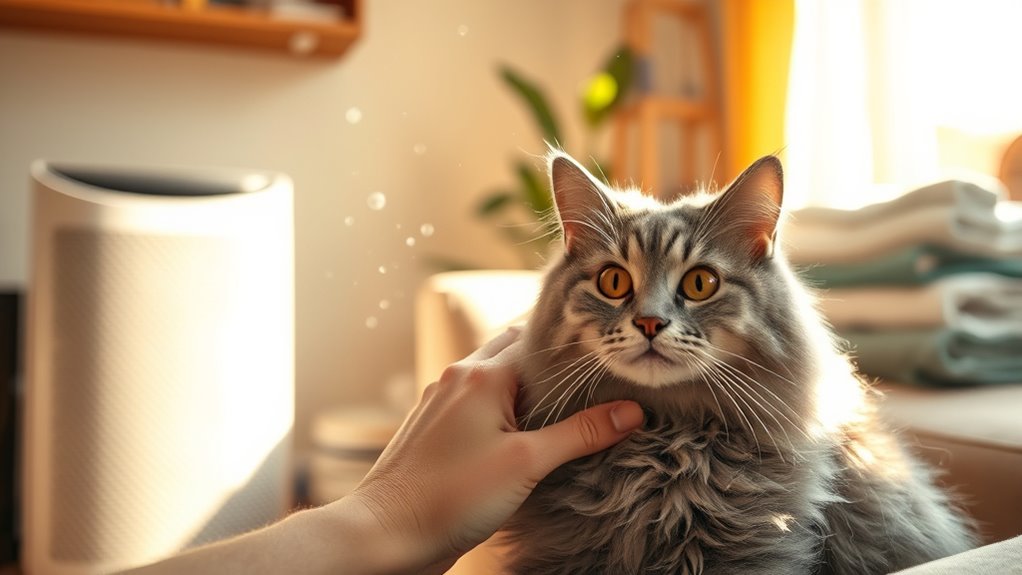
Many people wonder if cat allergies can disappear over time. The answer depends on individual factors like genetics and environment.
Your immune response is key; sometimes, it becomes less reactive to allergens, which can reduce symptoms. Longer exposure might lead to increased sensitivity or, in some cases, tolerance.
Your immune response may weaken or strengthen over time, affecting allergy symptoms with prolonged exposure.
Allergic reactions are caused by pet dander, saliva, or urine. If you’re exposed repeatedly, your body might adapt, either decreasing or worsening symptoms.
Your genetics influence how your immune system reacts, while environmental factors like cleaning habits and air quality can also affect allergy severity.
In the end, whether cat allergies go away over time depends on a mix of these factors, making each person’s experience unique.
What Causes Cat Allergies to Persist or Improve?
The persistence or improvement of cat allergies depends on how your immune system reacts and your environment. Your allergy triggers, like dander or saliva, can keep causing symptoms if your immune system sees them as threats.
Genetics play a big role — if allergy-prone genes run in your family, you’re more likely to have ongoing symptoms. Some people’s immune systems overreact to minor triggers, making allergies last longer.
Environmental factors, like how much you’re exposed and how clean your space is, also matter. Being around cats often can reinforce your sensitivity, while less contact might help reduce symptoms over time.
In the end, both your body’s response and your environment influence whether your allergies stick around or get better. Knowing these factors can help you manage your triggers better and pick the right treatment options.
How Does Your Immune System Change With Exposure?
As you’re around cat allergens more and more, your immune system starts to get used to them. Over time, it can actually become less sensitive, which is pretty interesting! This process is called building tolerance, and it’s what helps your allergy symptoms gradually get better.
Basically, as your body gets more familiar with the allergens, it doesn’t react as strongly anymore. That’s why some people notice their allergies improving the longer they’re exposed. Understanding how your immune system changes like this can really help explain why continued exposure might actually be beneficial in reducing allergy symptoms.
Immune System Adaptation
When you’re repeatedly exposed to cat allergens, your immune system can start changing how it responds over time. This process, called immune system adaptation, involves your body adjusting its reactions to allergens.
Your immune response may become less aggressive, which can lead to fewer allergy symptoms. Specifically, your immune system:
- Changes how it makes antibodies, reducing the amount of IgE antibodies that cause allergic reactions.
- Improves regulatory T cell activity, helping to calm down overreactive immune responses.
- Alters mast cell activity, lowering the release of inflammatory chemicals when exposed to allergens.
These changes help your body tolerate allergens better and gradually lessen allergy severity. The ability of the immune system to adapt is a key reason some people find relief over time with continued allergen exposure.
Building Tolerance Over Time
Repeated exposure to cat allergens can gradually train your immune system to respond differently, leading to increased tolerance over time. This process involves activating mechanisms that reduce your allergic response.
When your immune system encounters allergens repeatedly, it can shift from an exaggerated reaction to a more regulated response. This is known as allergy desensitization.
During this process, your immune cells learn to ignore or tolerate the allergens instead of attacking them aggressively. Over time, this can lessen allergy symptoms and improve your overall reaction to cats.
Building tolerance through controlled exposure is a key part of allergy management. It helps your immune system adapt naturally while minimizing allergic reactions.
This gradual process can make living with cats more comfortable as your immune response becomes less reactive.
Can Spending Time Around Cats Help Your Body Tolerate Allergens?
Spending time around cats can sometimes help your body build a tolerance to their allergens, but it’s not a guaranteed fix. This idea is based on exposure benefits, where gradual contact might strengthen your immune response over time. Still, how well it works can vary from person to person.
To get the most out of this approach, think about these factors:
- Gradual Exposure: Slowly increasing your time around cats can help your immune system adapt without overwhelming it.
- Consistency: Regular, moderate exposure might support a stronger immune response, which could lessen allergy symptoms over time.
- Environment Control: Keeping your space clean and reducing allergen levels can make it easier for your body to adjust and benefit from exposure.
While some people find this method helpful, it’s important to keep track of your symptoms and talk to a healthcare professional. They can help you develop a safe, personalized plan.
Do Cat Allergens Change and Affect Your Symptoms?
Cat allergens aren’t fixed; they can change over time, which can affect how severe your symptoms are. Factors like the cat’s age, health, or how much it sheds can cause these variations. As these change, the amount of allergen in your environment can go up or down.
This means your allergy symptoms might get worse or better unexpectedly. Sometimes, you might notice fewer symptoms even if you’re still around cats because the allergen levels have dropped. Other times, your symptoms could worsen if the allergen levels spike.
Changes in allergen production can also happen due to grooming habits, stress, or health issues in the cat. Knowing that cat allergens can change helps explain why your symptoms aren’t always the same and why they might improve over time even if you keep being around cats.
How Age and Immune Development Impact Allergy Relief
As you grow older, your immune system changes, which can affect how your body reacts to cat allergens. Age factors play a big role in shaping immune responses and often lead to less sensitivity over time. Your immune system becomes less reactive, possibly reducing allergy symptoms.
Think about these key points:
- Immune tolerance development – As you age, your body may become more tolerant of certain allergens, including cat dander.
- Reduced immune hyperreactivity – Your immune responses might weaken, leading to fewer allergic reactions.
- Changes in immune cell activity – The activity and distribution of immune cells change, affecting how your body perceives allergens.
These changes suggest that as your immune system matures, it may naturally become less responsive to cat allergens. This can help explain why allergy symptoms might decrease over time. Understanding these age-related factors can help you anticipate shifts in your allergies.
Are There Treatments That Help Reduce Cat Allergies Long-Term?
There are a few options that can help reduce your cat allergy symptoms over the long run. One of them is immunotherapy treatments, which basically work by gradually building up your tolerance to the allergens. It’s like training your immune system to not overreact as much.
You might also want to focus on controlling your environment. Simple things like keeping your home clean, using air purifiers, and washing your hands and clothes after petting your cat can make a big difference.
And of course, medications can provide ongoing relief too. The key is often to combine these approaches — using environmental controls, medications, and possibly immunotherapy — to get the best long-term results.
Immunotherapy Options Available
Immunotherapy offers a promising long-term solution for reducing allergy symptoms caused by cats. It works by gradually exposing your immune system to allergens, leading to allergen desensitization and a more balanced immune response. This treatment can decrease sensitivity over time and lessen symptoms.
Here are your options:
- Allergy Shots: Regular injections of small allergen amounts help build tolerance.
- Sublingual Immunotherapy (SLIT): Daily tablets placed under the tongue to desensitize your immune response.
- Targeted Immunotherapy: Emerging treatments focus on specific immune pathways to reduce allergic reactions effectively.
These options aim to modify your immune response and offer long-term relief from cat allergies.
Environmental Control Strategies
While medication can help manage allergy symptoms temporarily, long-term relief often depends on making changes to your environment. You can reduce allergens through consistent cleaning routines, including vacuuming carpets and furniture frequently to prevent dander buildup. Using air filtration systems helps trap airborne particles and improves indoor air quality.
Pet management is essential; consider hypoallergenic products and regular bathing to minimize dander. Controlling humidity levels prevents mold growth and dust mites, which can worsen allergies. Limiting outdoor exposure during high pollen seasons and establishing designated pet-free zones also help.
Environmental modifications, such as washable covers and strategic placement of allergen reduction tools, support dander prevention. These strategies work together to create a less allergenic environment, providing long-term relief from cat allergies.
Medications for Long-Term Relief
Medications can play a big role in providing long-term relief from cat allergies, especially when environmental strategies alone aren’t enough. While they don’t cure allergies, certain medications can help you manage symptoms more effectively over time.
Antihistamines reduce allergic reactions and offer quick relief from symptoms.
Nasal corticosteroids decrease inflammation and help control symptoms when used regularly.
Immunotherapy, or allergy shots, is a long-term treatment that involves regular injections to build immunity and lessen allergy severity.
Using these medications under your doctor’s guidance can improve your quality of life by reducing allergy symptoms and helping you better manage your reactions to cats.
What Lifestyle Changes Can Help Manage Cat Allergies Naturally?
Making simple lifestyle adjustments can greatly reduce your exposure to cat allergens and help manage your symptoms naturally. Start with regular pet grooming, like bathing and brushing your cat, to decrease dander.
Simple lifestyle changes can significantly reduce cat allergen exposure and ease your symptoms naturally.
Incorporate thorough home cleaning, including vacuuming with a HEPA filter and dusting frequently, to remove allergens from surfaces. Use air purification systems to filter airborne particles and improve indoor air quality.
Consider allergy testing to identify specific triggers and tailor your approach. Dietary adjustments, such as including anti-inflammatory foods, can support your immune health.
Stress management techniques like meditation or exercise may also help reduce allergy symptoms. Natural remedies like herbal supplements can provide additional relief, but check with a healthcare provider first.
Why Do Some People Still Suffer From Allergies Despite Exposure?
Even with frequent grooming, cleaning, and air filtration, some people still suffer from allergy symptoms. This persistence often comes down to individual differences in immune responses, making exposure less effective over time. You might wonder why your efforts don’t fully reduce your symptoms. Here are three reasons:
- Genetic Factors: Your genetic makeup influences how your immune system reacts to allergens. Sometimes, this means symptoms stick around despite repeated exposure.
- Immune Sensitization: Continuous exposure can actually make you more sensitive over time, which can worsen allergy symptoms instead of helping.
- Allergen Reservoirs: Allergens can hide in places like upholstery, carpets, or HVAC systems. These hidden spots lead to ongoing exposure and keep symptoms alive.
Understanding these factors helps explain why allergies can persist even with regular efforts. It shows the importance of tailored strategies rather than just relying on exposure for relief.
What Does Current Research Say About Long-Term Cat Allergy Solutions?
Recent research suggests that long-term solutions for cat allergies are increasingly focusing on immunotherapy and other innovative approaches. These methods aim to modify your immune response to allergy triggers, reducing symptoms over time.
Immunotherapy, like allergy shots or tablets, gradually exposes you to small amounts of allergens, helping your immune system build tolerance. Researchers are also exploring gene therapy and biologics to target specific immune pathways involved in allergy responses.
These advancements could offer more permanent relief for allergy sufferers.
| Approach | How It Works | Expected Outcome |
|---|---|---|
| Allergy Shots | Gradual allergen exposure | Reduced immune response |
| Sublingual Tablets | Under-the-tongue allergen intake | Tolerance development |
| Biologics | Target immune system proteins | Symptom relief |
| Gene Therapy | Modify immune cell behavior | Long-term allergy reduction |
| Lifestyle Changes | Minimize allergen exposure | Symptom management |
Frequently Asked Questions
Can Genetics Influence the Likelihood of Allergies Improving Over Time?
Your genetics can influence whether allergies improve over time, thanks to your genetic predisposition. Some people have immune systems that adapt better, which can reduce their allergy mechanisms as they age.
If your genes favor a stronger immune response or less sensitivity, you’re more likely to see a decrease in allergy symptoms over time. While genetics play a role, environmental factors also impact how your body reacts to cat allergens.
Are There Specific Breeds Less Likely to Cause Persistent Allergies?
Yes, some hypoallergenic breeds are less likely to cause persistent allergies. Breeds like Siamese, Balinese, and Russian Blue tend to produce fewer allergenic proteins in their saliva and dander.
By choosing these hypoallergenic breeds, you might experience fewer allergy symptoms over time. But keep in mind, everyone’s reactions are different.
Spending time with a breed before adopting is a good idea to see if it’s a good fit for your allergies.
How Do Environmental Factors Affect Allergy Development and Resolution?
Environmental factors greatly influence allergy development and resolution. Pollutant exposure can worsen symptoms and extend allergic reactions by irritating your respiratory system.
Climate changes, like increased humidity, can raise allergen levels around you, making allergies more severe. On the flip side, reducing pollution and managing climate conditions can help your body adapt.
Over time, these adjustments may decrease allergy symptoms and promote better tolerance, potentially leading to allergy resolution.
Does Stress Impact the Severity or Improvement of Cat Allergies?
Stress can worsen your allergy symptoms, making you feel more uncomfortable around cats.
For example, if you’re already anxious about exposure, stress management techniques like deep breathing or meditation can help reduce your reaction.
When you lower your stress levels, your immune system works better, and allergy symptoms often improve.
Can Nutritional Changes Support Allergy Relief or Immune Health?
Nutritional changes can support allergy relief and boost your immune health. Incorporate supplements like omega-3 fatty acids, probiotics, and vitamin C, which act as immune boosters.
These nutrients help reduce inflammation and strengthen your body’s defenses, potentially lessening allergy symptoms over time. Eating a balanced diet with fresh fruits, vegetables, and lean proteins also supports your overall immune function.
This helps your body better cope with allergens and stay healthier in the long run.
Conclusion
As you navigate the maze of cat allergies, keep in mind that your immune system is like a garden. It can be cultivated to tolerate and thrive despite the weeds of allergens.
With patience, smart treatments, and lifestyle tweaks, you can turn the tide. This can help make your allergy struggles more manageable and even fade over time.
Keep exploring, stay persistent, and let your resilience be the gentle breeze guiding you toward relief. Understanding what causes cat allergies to go away over time can help you find effective ways to live comfortably with your feline friends.