
Can Cat Allergies Kill You?
Many people who love cats also worry about allergies, and for good reason. Cat allergies can be more than just sneezing—they can sometimes pose serious health risks. If you’re one of the many who struggle with allergy symptoms, you’re not alone.
Cat allergies can be life-threatening, especially if you have asthma, a history of severe reactions, or spend a lot of time around cats.
In rare cases, allergic reactions can escalate to anaphylaxis, leading to difficulty breathing, swelling, or a drop in blood pressure.
Quick action, like administering epinephrine and calling emergency services, can save your life.
If you’d like to know how to recognize and manage these dangerous responses, keep exploring how to stay safe.
Key Takeaways
- Severe allergic reactions like anaphylaxis can be life-threatening and need immediate emergency treatment.
- People with asthma or previous allergies are at higher risk of having dangerous reactions.
- Cat allergens can trigger immune responses that cause breathing issues and swelling, which can become critical.
- Giving epinephrine quickly and calling emergency services are essential during serious allergic episodes.
- Long-term exposure might make allergies worse, so managing allergies and seeking medical advice is really important.
Can Cat Allergies Be Life-Threatening?
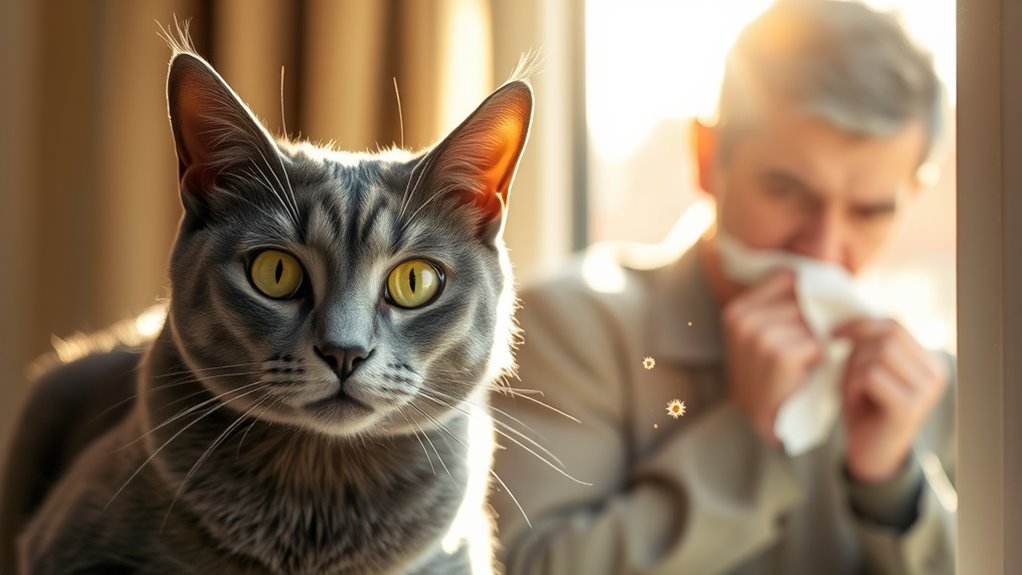
Have you ever wondered if cat allergies can pose a serious threat? While most people manage allergy symptoms with various strategies, in rare cases, reactions can become life-threatening.
Severe reactions like anaphylaxis can cause trouble breathing, swelling, and a sudden drop in blood pressure. Recognizing these symptoms is really important; if you notice swelling of your face or throat, a rapid heartbeat, or dizziness after exposure, seek emergency help immediately.
Severe allergic reactions require immediate emergency care—watch for swelling, trouble breathing, or dizziness.
Though death from cat allergies is uncommon, it’s good to understand the potential risks. For those with known allergies, avoiding cats or taking medications as prescribed can help prevent serious issues.
If your allergy symptoms get worse or you’re unsure about how severe your reaction is, talk to a healthcare professional right away. Being prepared and aware can make all the difference in managing your allergy safely and avoiding emergencies.
What Are Cat Allergies and How Do They Affect Your Body?
Cat allergies happen when your immune system overreacts to proteins in a cat’s skin cells, saliva, or urine. When you’re exposed, your body thinks these proteins are threats, triggering a response.
This response releases chemicals like histamine, which cause allergy symptoms. You might sneeze, have a runny nose, itchy eyes, or develop skin rashes.
Histamine makes blood flow increase and tissues swell, leading to discomfort and inflammation. Sometimes, it can even cause breathing problems like wheezing or coughing.
Your immune system mistakes harmless proteins for dangerous invaders, causing these reactions. The severity varies from person to person, but the process is always the same: an immune response leading to histamine release and allergy symptoms.
Understanding how this works can help you see how cat allergies affect your body and why symptoms happen.
Who Is Most at Risk of Severe Allergic Reactions?
If you have asthma, you’re actually at a higher risk of having a severe allergic reaction to cats. It’s something to keep in mind, especially if you’re already dealing with respiratory issues. Also, if you’ve had allergic reactions in the past, that can give you a clue about how your body might respond again in the future.
And did you know that children tend to be more vulnerable to stronger allergic responses? So, they might be more likely to experience intense reactions compared to adults. It’s important to be aware of these factors to better understand your own risk.
Asthma Patients At Greater Risk
People with asthma are at a higher risk of having severe allergic reactions to cats because their airways are already sensitive and inflamed. Exposure to cats can make their condition worse and trigger asthma attacks.
To understand this risk better, keep these points in mind:
- Increased sensitivity to asthma triggers like pet dander can worsen symptoms.
- Poor allergy management might lead to uncontrolled inflammation.
- Frequent exposure increases the chance of severe reactions.
- Pre-existing airway inflammation makes your respiratory system more vulnerable.
Because of this, managing your allergies carefully is really important. Avoiding cat exposure, using air purifiers, and following your allergy plan can help lower your risk and keep your asthma under control.
Previous Allergic Reactions Matter
Individuals who have previously experienced severe allergic reactions are at a higher risk of having them again when exposed to cats. Your allergy history is key in figuring out your risk level.
If you’ve had strong reactions before, you’re more likely to face severe symptoms like trouble breathing, swelling, or even anaphylaxis. Knowing your past reactions helps you understand the danger.
Here’s a quick overview:
| Past Reaction Severity | Risk Level | Recommended Action |
|---|---|---|
| Mild (sneezing) | Low | Keep an eye on things, limit exposure |
| Moderate (wheezing) | Moderate | See an allergist, consider medication |
| Severe (anaphylaxis) | High | Avoid cats, carry an epipen |
| No previous reactions | Low | Be cautious but less at risk |
| Uncertain | Moderate | Get allergy testing |
Your allergy history is essential for planning your precautions.
Children Are More Vulnerable
Children tend to be more vulnerable to severe allergic reactions from cats because their immune systems are still developing and may respond more aggressively to allergens. This means exposure can sometimes lead to more serious health issues.
To better protect your child, focus on these key points:
- Early allergy education helps children recognize symptoms and seek help quickly.
- Limit exposure to cats if your child shows signs of sensitivity.
- Consult allergy specialists for testing and personalized advice.
- Monitor reactions closely, especially during initial interactions with cats.
Understanding that children are at higher risk highlights the importance of allergy education and proactive prevention. This way, you can keep your child safe and healthy around cats.
How Common Are Serious Reactions to Cat Allergies?
However, some might encounter more severe issues, especially if they have underlying respiratory conditions like asthma. Serious reactions include difficulty breathing, swelling of the throat or face, or anaphylaxis, which can be life-threatening if not treated promptly.
Severe reactions, like difficulty breathing or swelling, are rare but require immediate medical attention.
Despite the potential for severe reactions, they are uncommon compared to mild responses. The majority of those allergic to cats manage symptoms with antihistamines, avoiding exposure, or other treatments.
If you’ve had mild reactions before, it doesn’t necessarily mean you’ll experience serious health problems, but it’s important to recognize your risk. Knowing how common serious reactions are helps you stay prepared and seek medical help if symptoms escalate.
Recognizing the Symptoms of a Severe Allergic Reaction
While most people with cat allergies have mild symptoms, it’s crucial to know when reactions become severe. Recognizing these signs can help prevent serious complications.
Severe reactions like anaphylaxis need immediate attention. Watch for these warning signs:
- Difficulty breathing or shortness of breath
- Swelling of the face, lips, or throat
- Rapid or weak pulse
- Dizziness or loss of consciousness
If you notice any of these, don’t wait—call emergency services right away. Early recognition of severe symptoms can save your life.
Remember, symptoms can escalate quickly, so stay alert. Knowing what to look for helps you react fast and get urgent care.
Never ignore signs of a severe allergic reaction. Acting quickly makes all the difference. Make sure to review these warning signs regularly so you’re prepared if an emergency happens.
How Fast Can a Cat Allergy Reaction Become Critical?
Have you ever wondered how quickly a cat allergy reaction can turn critical? The timeline varies depending on your sensitivity, but it can escalate fast.
Mild symptoms like sneezing or an itchy throat might show up in just minutes. But if you’re highly allergic, serious symptoms can develop in less than 30 minutes.
Severe reactions, such as trouble breathing, swelling of the face or throat, or chest tightness, show that your allergy is becoming life-threatening. These symptoms need immediate medical attention because they can block your airway and cause anaphylaxis.
Knowing how fast these symptoms can get worse highlights the importance of acting quickly. If you see signs of a severe allergic response, don’t wait—get medical help right away. The faster you respond, the better your chances of avoiding serious health problems.
Emergency Treatments for Anaphylaxis and Severe Allergic Reactions
When someone has a severe allergic reaction, quick action is crucial to prevent life-threatening complications. Recognizing the signs of anaphylaxis early helps you give the right emergency medications and get help fast.
Quick action and early recognition are vital to prevent life-threatening allergic reactions.
Here are four key steps to treat anaphylaxis:
- Administer epinephrine immediately. This is the main emergency medicine that can reverse serious symptoms.
- Call emergency services. Don’t wait to see if things improve—professional help is essential.
- Position the person properly. Lay them down with their legs raised, unless they’re having trouble breathing, then sit them up.
- Watch their breathing and consciousness. Be ready to perform CPR if needed until help arrives.
These steps highlight how important it is to act quickly, use emergency meds correctly, and stay calm. Acting fast can save a life during a severe allergic reaction.
How Can Cat Owners Reduce Allergy Risks Safely?
Looking to reduce allergy risks from your cat? One simple way is to clean your home regularly. It helps get rid of those tiny pet dander and dust particles that can trigger allergies.
You might also want to set up designated allergy-free zones, like certain bedrooms or cozy corners, where your cat isn’t allowed. This way, you can enjoy a break from allergens when you need it most.
And don’t forget about air quality! Using air purifiers with HEPA filters can really make a difference by filtering out allergens from the air, making breathing a lot easier and helping to lessen allergy symptoms.
Regular Cleaning Practices
Regular cleaning is one of the best ways for cat owners to lower allergy risks at home. Make daily routines that include dusting, vacuuming, and wiping surfaces to get rid of pet dander.
Use cleaning products made specifically to trap allergens, and avoid harsh chemicals that can make symptoms worse. To get the best results:
- Vacuum carpets, furniture, and curtains at least twice a week with a HEPA filter.
- Wash cat bedding and throws weekly in hot water.
- Dust surfaces with damp cloths to stop allergens from spreading.
- Regularly clean air filters and think about using air purifiers with HEPA filters.
Creating Allergy-Free Zones
Creating designated allergy-free zones in your home is one of the most effective ways to reduce allergen exposure while still allowing your cat to be part of your life. These allergy-free spaces should be off-limits to your pet, such as bedrooms or specific corners, to minimize allergen buildup.
Use pet management strategies like regularly cleaning these areas and avoiding carpets or fabric furniture that trap dander. Encourage your cat to stay in common areas rather than private rooms, helping you control where allergens accumulate.
Keep doors closed and consider using washable covers on furniture. Creating these zones allows you to enjoy your cat’s company without compromising your health, making allergy management more manageable and sustainable.
Using Air Purifiers
- Place purifiers in common areas where your cat spends the most time.
- Keep them running continuously to maintain good air quality.
- Remember to regularly replace filters so they keep removing allergens effectively.
- Combine the use of air purifiers with regular cleaning to deal with both airborne and surface allergens.
When Should You See a Doctor About Cat Allergies?
Wondering when it’s time to see a doctor about your cat allergy? If your allergy triggers cause persistent symptoms like wheezing, difficulty breathing, or swelling, it’s important to get professional help.
Even if you notice frequent sneezing, itchy eyes, or a stuffy nose that doesn’t improve with home remedies, seeing a doctor is a good idea. Severe reactions like chest tightness or hives need immediate medical attention.
Don’t ignore symptoms that interfere with your daily life or get worse over time. A healthcare professional can review your allergy history, run tests, and suggest effective treatments, including medications or allergy shots.
Recognizing the signs that require medical advice helps you manage your allergy safely and avoid serious complications. If your symptoms become unmanageable or you’re unsure about how serious they are, consult a doctor promptly.
They can help you develop a personalized plan to reduce triggers and keep you safe.
Does Long-Term Exposure to Cats Increase the Risk of Severe Allergic Reactions?
Long-term exposure to cats can influence how severe your allergic reactions become over time. Repeated contact might make your immune system more reactive, increasing the chance of serious reactions.
Over time, your body could produce more antibodies to cat allergens, which makes you more sensitive. This can lead to worse symptoms or even severe allergic responses.
Long-term exposure can increase antibody production, heightening sensitivity and risk of severe allergic reactions.
Here are some key points to keep in mind:
- Your immune system may overreact after long-term exposure, making allergies worse.
- Constant contact can cause ongoing inflammation in your airways.
- The risk of severe reactions like anaphylaxis goes up with prolonged exposure.
- Managing your exposure levels is important to prevent your immune response from getting worse.
Basically, long-term exposure doesn’t just keep allergies going—it can make your body react more strongly, raising the risk of serious health issues. Staying aware and controlling your environment can help lower this risk.
Frequently Asked Questions
Can Cat Allergies Cause Asthma Attacks?
Yes, cat allergies can trigger asthma attacks in some people. When you’re exposed to allergens like cat dander, your allergy symptoms may get worse, leading to wheezing, shortness of breath, and coughing.
This can make managing asthma more difficult. To lower your risks, try to avoid exposure, use air purifiers, and follow your doctor’s advice.
Recognizing early signs is important to prevent severe attacks and keep your asthma under control.
Are Certain Cat Breeds Less Allergenic?
Some cat breeds are like gentle whispers in a noisy room—less allergenic and easier on allergy sufferers. Hypoallergenic breeds, such as the Siberian or Balinese, produce fewer allergy triggers, making them better companions for sensitive noses.
While no cat is completely allergy-free, choosing these breeds can reduce sneezing fits and itchy eyes. This way, you can enjoy feline friendship without the storm of allergy symptoms.
Do Antihistamines Prevent Severe Reactions?
Antihistamines can help prevent severe allergic reactions by blocking histamine release. This reduces symptoms like swelling, sneezing, and difficulty breathing.
However, their effectiveness varies from person to person, and they might not fully prevent all reactions.
For the best allergy management, use antihistamines as part of a plan that also includes minimizing exposure to cat allergens.
It’s also a good idea to talk to your healthcare provider for personalized advice.
Can Cat Allergies Develop Later in Life?
Yes, cat allergies can develop later in life. You might notice new symptoms popping up, even if you’ve never had allergies before.
Changes in your immune system or environment can make you sensitive to cats unexpectedly. Things like more exposure or different living conditions can trigger allergy symptoms suddenly.
If you start noticing allergy signs, it’s important to see a healthcare professional. They can help confirm what’s causing it and discuss the best ways to manage it.
Is There a Cure for Cat Allergies?
There’s no outright cure for cat allergies, but you can manage symptoms effectively. Immunotherapy options like allergy shots gradually build your tolerance and offer long-term relief.
Additionally, lifestyle changes can make a difference. Keeping your home clean, using HEPA filters, and reducing contact with cats can help lessen allergic reactions.
While these strategies won’t completely eliminate the allergy, they can help you live more comfortably around cats and improve your quality of life.
Conclusion
While cat allergies can be tough, they rarely turn deadly. Imagine you’re visiting a friend’s house, and suddenly your throat tightens. Quick action can save you.
If you recognize the signs early and follow safety tips, you can enjoy feline companionship without risking your life. Always have emergency medication handy, and don’t hesitate to see a doctor if symptoms worsen.
With proper precautions, you can live safely around cats and keep allergy risks in check. Cat allergies might not be deadly for most, but taking them seriously is always a good idea.