
Best Ear Mite Medicines for Cats: Top 7 Picks for Relief
Dealing with ear mites in your cat can be really frustrating. You’re not alone—many pet owners struggle with this common issue. If your feline friend is scratching their ears, shaking their head, or has dark discharge, it’s a sign you need to act fast.
If your cat shows signs of ear mites like scratching, head shaking, or dark discharge, it’s time to find the best treatment. Top options include medicated ear drops, topical solutions, and oral treatments that effectively eliminate mites.
Always choose products safe for your cat and follow application instructions carefully.
Regular cleaning and vet guidance are essential for proper relief.
Keep going to uncover the most recommended ear mite medications to restore your cat’s comfort and health.
Key Takeaways
Effective ear mite medicines include both topical treatments and oral medications recommended by veterinarians.
Look for products with ingredients like selamectin, moxidectin, or pyrethrins to get the best results in eradicating mites.
Choose treatments that are suitable for your cat’s age, health, and any allergies they might have.
Proper application and sticking to the treatment schedule are key to successfully eliminating mites.
Regular visits to the vet are important for diagnosis, guidance on treatment, and prevention.
What Are Ear Mites and How Do They Affect Cats?
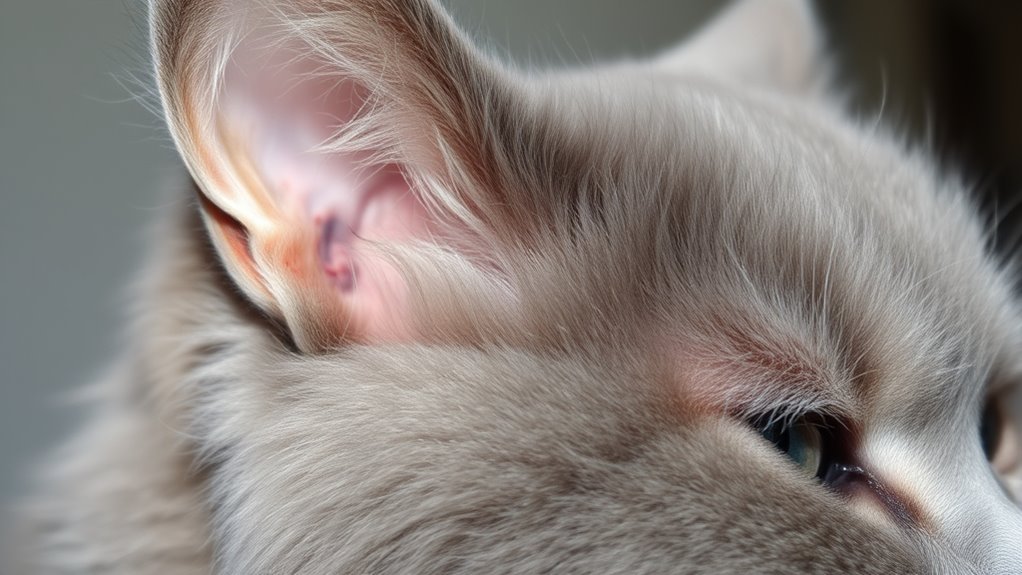
Ear mites are tiny parasites that live in your cat’s ear canal, feeding on skin debris and oils. They go through a life cycle that includes eggs, larvae, nymphs, and adults, which can multiply quickly if not treated.
As these mites burrow deeper, they cause irritation and discomfort. You might notice your cat scratching at its ears, shaking its head, or having a dark discharge that looks like coffee grounds.
These signs mean your cat is fighting an infestation. Ear mites are highly contagious and can spread easily between cats, especially in households with multiple pets.
If left untreated, they can cause inflammation, secondary infections, and even hearing problems. Recognizing the mites’ life cycle and symptoms helps you catch the problem early.
This way, you can seek effective treatments to give your cat relief and prevent more serious issues.
Signs Your Cat Has Ear Mites
If your cat has been scratching its ears a lot more than usual, that could be a sign something’s up, like ear mites. Sometimes, they’ll also have some weird ear discharges—maybe dark or crusty stuff—that just doesn’t seem right. It’s a good idea to keep an eye on these signs so you can catch any problems early on.
Excessive Scratching Behavior
Cats often scratch their ears more frequently and vigorously when they’re dealing with ear mites. This can be mistaken for simple irritation or allergies at first. Excessive scratching is a clear sign that something’s bothering your cat, often caused by mites.
Pay attention to these signs:
- Persistent, vigorous scratching that doesn’t stop
- Head shaking or tilting, which usually signals irritation
- Hair loss around the ears from constant scratching
- Redness or swelling inside the ear canal
These behaviors come from discomfort caused by mites. Recognizing the causes of scratching helps you figure out whether your cat needs treatment. Acting quickly can prevent further irritation or infection.
Unusual Ear Discharges
Unusual discharges from your cat’s ears are a clear sign that something’s not right, often pointing to ear mites. You might see different types of discharge, like dark, crusty debris that looks like coffee grounds or thick, yellowish fluid.
These discharges usually come with a bad smell, which can mean infection or irritation. If your cat is shaking its head a lot or scratching its ears more than usual, it’s time to check for these signs.
The presence of strange odors along with abnormal discharge suggests mites are causing inflammation. Acting quickly is important to avoid more discomfort or complications.
Recognizing these signs early helps you get effective treatment fast, so your cat’s ear health can be restored quickly.
How to Choose the Best Ear Mite Treatment for Cats
Deciding on the best ear mite treatment requires careful consideration of several key factors. First, assess your cat’s specific needs—some cats may respond better to natural treatments, while others require medication.
Choose the best ear mite treatment based on your cat’s individual needs and response to natural or medicated options.
Second, check the product’s safety profile, especially if your cat has allergies or sensitivities. It’s important to be cautious and choose a safe option.
Third, consider whether home remedies or natural treatments are effective options. Keep in mind they may not always be enough for severe infestations.
Fourth, consult your veterinarian for guidance to ensure the treatment is appropriate and effective.
Here are four important points to keep in mind:
- Effectiveness of the treatment
- Safety for your cat’s health
- Ease of application
- Compatibility with home remedies or natural treatments
Top 7 Ear Mite Treatments for Cats
When you’re looking for the best ear mite treatments for your cat, it’s all about finding options that get the job done fast and effectively. Nobody wants to wait around forever for results, right? Ease of use is also a big deal — you don’t want to be fumbling with messy or complicated applications that make the whole process stressful for both you and your kitty.
And of course, safety is key. You’ll want to pick treatments that are gentle and have minimal side effects, so your cat stays comfortable and healthy throughout the treatment. Choosing the right product means thinking about what works quickly, is easy to apply, and keeps your furry friend safe and happy.
Effectiveness and Speed
Among the top ear mite treatments for cats, some work faster and more effectively than others, making quick relief a priority for pet owners. The effectiveness and speed depend on factors like how often you give the treatment and how long you use it.
Some products start reducing mites within 24 to 48 hours, giving your cat quick relief. Others might need a longer treatment period but still provide lasting results. To gauge how well a treatment works, consider these points:
- Rapid mite eradication within 48 hours
- Consistent dosage frequency to prevent re-infestation
- Shorter treatment duration for quicker recovery
- Prompt symptom relief to keep your cat comfortable
Choosing a treatment with proven speed and effectiveness ensures your cat gets relief faster and reduces ongoing discomfort.
Ease of Application
| Product | Application Technique | Accessibility |
|---|---|---|
| A | Dropper | Easy to administer. |
| B | Wipes | Convenient for quick use. |
| C | Syringe | Precise dosing. |
| D | Gel | Minimal fuss. |
| E | Spray | Fast coverage. |
Choosing a product with accessible application methods makes things easier for both you and your cat.
Safety and Side Effects
Safety is really important when choosing an ear mite treatment for your cat, since some products can cause side effects or adverse reactions. Always read labels carefully and talk to your vet before trying alternative treatments or home remedies. Some options like mineral oil or olive oil can soothe ears but might not get rid of mites on their own.
To keep your cat safe, remember these tips:
- Follow the dosage instructions closely to prevent toxicity.
- Watch for allergic reactions like redness, swelling, or itching.
- Don’t use human medications unless your vet says it’s okay.
- Consider vet-approved treatments first, especially if your cat has health issues.
Balancing effective treatment with safety helps your cat recover comfortably and reduces the risk of side effects.
How to Properly Apply Ear Mite Medications
Applying ear mite medication properly is key to making sure your cat gets effective treatment and avoids more irritation. Start by gently restraining your cat to keep them calm.
Use clean hands or gloves to handle the medication. Carefully follow the application instructions for the specific medication type, whether it’s drops, ointments, or sprays.
Tilt your cat’s head slightly and gently pull back the ear flap to expose the ear canal. Administer the prescribed number of drops or apply the ointment directly into the ear canal, avoiding the outer ear.
Massage the base of the ear lightly to help spread the medication and ensure it reaches deep inside. Be gentle to prevent causing discomfort.
Afterward, wipe away any excess medication or debris with a clean cloth. Always follow the instructions on the label for dosage and frequency.
If you’re unsure about how to apply the medication, don’t hesitate to consult your veterinarian for guidance.
Preventing Ear Mite Reinfestation in Cats
To prevent ear mite reinfestation in your cat, it’s important to tackle both the environment and your pet’s health. Doing so helps break the cycle of re-infestation and keeps your cat feeling good.
Start by regularly cleaning your cat’s bedding, toys, and living areas to get rid of mites and eggs. Using proper cleaning techniques makes a big difference.
Avoid contact with infected animals, especially outside or in communal spaces. This helps prevent the mites from spreading back to your cat.
Keep your cat’s immune system strong with good nutrition and regular vet visits. A healthy cat is better equipped to fight off mites.
Consider using vet-approved preventive treatments, like topical or oral medications, to protect your cat from future infestations. Consistency is key.
Staying proactive with environmental cleaning and preventive measures reduces the risk of ear mite re-infestation. This way, your cat stays comfortable and free from mites over time.
When to See the Vet About Ear Mites
Recognizing when to seek veterinary help is key, especially if your efforts to prevent re-infestation aren’t working or if your cat’s symptoms get worse. If home remedies or alternative treatments aren’t easing the problem after a few days, it’s time to see the vet.
Persistent itching, head shaking, or swelling could mean a deeper issue that needs professional attention. Also, if your cat shows signs of pain or has a foul odor from the ears, don’t wait too long to get help.
Here’s a quick guide:
| Symptoms | Possible Concerns |
|---|---|
| Continuous scratching or head shaking | Ear infection or severe infestation |
| Discharge or foul smell | Ear mites resistant to treatment |
| Redness or swelling | Allergic reaction or secondary infection |
| Worsening symptoms despite home remedies | Need for prescription medication |
If you notice any of these signs, visit your vet promptly. Self-treating with home remedies or alternative methods might not be enough, so professional help is often necessary.
Frequently Asked Questions
Are Over-The-Counter Ear Mite Medications Safe for Kittens?
Over-the-counter ear mite medications can be unsafe for kittens if not used properly. It’s best to check with your vet before trying any treatment options.
Many OTC products are made for adult cats and might contain ingredients that are harmful to young kittens. Always follow your vet’s advice for safe and effective treatment.
This way, your tiny feline gets the right care without risking their health.
How Long Does It Take for Ear Mite Treatments to Work?
Ear mite treatments usually start showing results within a week, but full relief can take up to 2-3 weeks depending on how bad the symptoms are.
You’ll notice improvements like less scratching, less ear discharge, and clearer ears. The treatment duration varies, so it’s important to follow your vet’s instructions carefully.
Consistent application is key to making sure the mites are fully eradicated. This leads to healthier ears and relief for your cat.
Can Ear Mites Transfer From Cats to Humans?
Imagine catching a cold from someone close. Ear mites can transfer from cats to humans, but it’s pretty rare.
They mainly target feline ears, but if prevention is poor, it can cause skin irritation in humans.
To keep yourself safe, make sure your cat’s ears stay clean and avoid direct contact with mites.
If you notice any discomfort, it’s a good idea to see a healthcare professional. Proper treatment is important for both your cat and your health.
Are Natural Remedies Effective Against Ear Mites?
Natural treatment options can sometimes help with ear mites, but their effectiveness varies.
Essential oils like tea tree or neem oil are popular, but there’s limited scientific evidence to support their use.
Be cautious because some oils can irritate your cat’s skin or ears. Always check with your veterinarian before trying natural remedies.
Professional treatments are usually more reliable for eliminating ear mites effectively.
How Often Should I Re-Treat My Cat for Ear Mites?
You should re-treat your cat for ear mites every 7 to 10 days until the symptoms disappear. Then, continue with prevention for a few weeks to avoid reinfestation.
Regularly check for signs like scratching, head shaking, or ear discharge to catch problems early.
Following your vet’s instructions ensures the treatment is effective. Routine checks help you spot symptoms quickly, keeping your cat comfortable and healthy.
Conclusion
Dealing with ear mites is essential since they affect over 25% of cats at some point, causing discomfort and potential infections. Choosing the right treatment and applying it correctly can effectively eliminate these pests and prevent reinfestation.
Regular checks and prompt vet visits help keep your feline friend healthy and comfortable. Early intervention makes all the difference, so don’t wait when you notice signs.
Your swift action can keep your cat happy and mite-free. Remember, using the best ear mite medicines for cats is key to ensuring their well-being.