How Do Hairless Cats Cause Allergies for Sufferers?
Are you a cat lover who’s been hesitant to bring one into your home because of allergies? You’re not alone—many people struggle with allergy symptoms but still want the joy a feline friend can bring.
Hairless cats have become popular as a possible solution, but the truth is, they still can cause allergies for sufferers.
Hairless cats still produce allergens through their saliva, skin oils, and dander, which can trigger allergies despite their lack of fur. When they groom, these proteins spread onto their skin and surroundings, becoming airborne or settling on surfaces.
Factors like airflow and cleaning habits can influence allergen levels in your home. Although some assume hairless cats are hypoallergenic, they still pose allergy risks.
If you’re curious about managing these allergens effectively, you’ll find useful tips ahead.
Key Takeaways
- Hairless cats produce skin oils and dander that contain allergenic proteins, which can trigger reactions.
- Allergens come from saliva, skin oils, and urine, not just fur, and are present in hairless cats too.
- The concentrated skin oils and dandruff from hairless cats can increase allergen levels in your home.
- These allergenic proteins can stick to surfaces, furniture, and bedding, spreading allergens even without fur.
- Airflow and ventilation can carry airborne allergens from hairless cats throughout your house.
Do Hairless Cats Truly Cause Fewer Allergies?
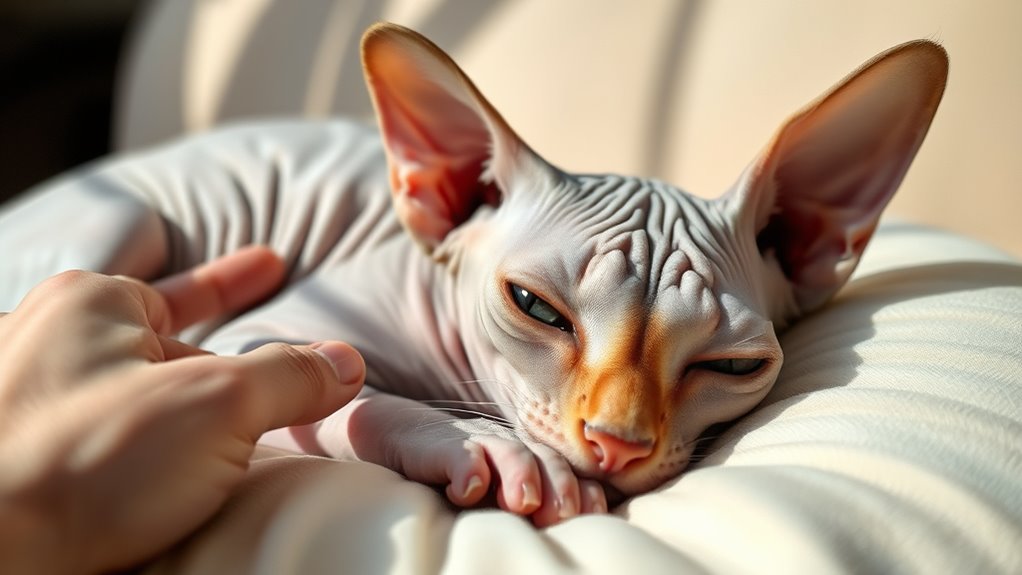
Many people wonder whether hairless cats really cause fewer allergies. The truth is, the idea of hairless cat benefits is often misunderstood. Many believe that because these cats lack fur, they won’t trigger allergies. However, this is a misconception.
Allergens are primarily found in a cat’s saliva, skin oils, and dander, not just in fur. Since hairless cats still produce dander and shed skin cells, they can still cause allergic reactions. Some allergy sufferers find hairless cats better tolerated, but it’s not a guarantee.
Allergens come from saliva, skin oils, and dander, not just fur, so hairless cats can still trigger allergies.
The main difference is less fur, which means less hair to carry dander around your home. Still, if you’re highly allergic, it’s a good idea to spend time with a hairless cat first. While some may experience fewer allergy symptoms, no cat breed is completely hypoallergenic.
Understanding this helps set realistic expectations when considering a hairless feline companion.
What Allergens Do Hairless Cats Produce?
While hairlessness reduces the amount of fur and loose dander in your environment, it doesn’t eliminate the allergens that can trigger reactions. Hairless cats still produce allergen sources like skin oils, saliva, and urine, which contain proteins known to cause allergies.
These proteins cling to their skin and any surfaces they contact, making allergen exposure still possible. The benefits of having a hairless cat might include less fur around your home, but they don’t prevent allergen production.
In fact, because hairless cats often have more exposed skin, their skin oils can be more concentrated. This could potentially increase allergen levels in your environment. Their saliva, which contains allergenic proteins, is spread when they groom themselves.
How Saliva, Skin Oils, and Urine Trigger Allergic Reactions
Saliva, skin oils, and urine contain proteins that can trigger allergic reactions in sensitive individuals. When your hairless cat licks itself, saliva proteins spread over its skin and fur, then transfer to your hands or furniture.
Skin secretions like oils and sweat also carry allergenic proteins. These stick to surfaces and can become airborne, making it easier for allergens to spread around your home.
Urine, although less obvious, contains proteins that can become airborne during cleaning or accidents. This can spread allergens further and affect those with sensitivities.
| Protein Source | How It Spreads | Effect on Allergies |
|---|---|---|
| Saliva proteins | When cats lick themselves | Dispersed on skin and objects |
| Skin secretions | Through skin contact | Remain on surfaces, airborne |
| Urine | During cleaning or accidents | Contaminates environment |
Can Hairless Cats Still Spread Allergens in Your Home?
Even though hairless cats don’t have a thick coat, they can still spread allergens around your home. It’s not just about fur—these cats can produce allergens through their skin oils, dander, and saliva.
These tiny particles can settle on furniture, bedding, and other surfaces, sticking around long after your cat has gone. So, even if your cat is hairless, you might still experience allergic reactions. It’s something to keep in mind if you’re sensitive to cat allergens.
Allergen Transfer Through Skin
Despite their hairless appearance, these cats can still transfer allergens through their skin. Allergen sources aren’t limited to fur; they can be found on their skin as well. Hairless cats produce fewer allergens related to dander, but their skin shedding can still spread allergenic proteins.
When they lick or come into contact with surfaces, these proteins can transfer onto furniture, bedding, and your belongings. You might think that without fur, they pose less allergy risk, but allergens trapped in their skin’s oils and secretions can still circulate in your home environment.
Regular cleaning and bathing can help reduce allergen transfer through skin, but it won’t eliminate it entirely. So, even with a hairless cat, allergens can still spread through skin contact and shedding.
Dander and Saliva Spread
Hairless cats can still spread allergens through their dander and saliva, even without fur. Although they produce less dander, tiny skin flakes that contain allergenic proteins are still released. These flakes can become airborne and settle on surfaces, increasing exposure.
Their saliva contains allergenic proteins that stick to their skin and any nearby objects. When they lick and groom themselves, these proteins transfer to their skin and surroundings. As the saliva dries or gets spread around, it releases allergens into the environment.
Even without fur, these allergenic particles can easily become airborne or settle on furniture, clothing, and other surfaces. This means allergy sufferers can still experience symptoms despite the cat’s hairless appearance.
Bedding and Surfaces Contamination
Since hairless cats produce fewer fur particles, many assume they pose less of an allergy risk. However, allergens can still contaminate your home surfaces.
Bedding cleanliness is essential. Choose washable fabrics and wash them regularly to reduce allergen buildup. Surface maintenance, including dusting and wiping, helps remove lingering allergens.
Implementing effective allergen removal techniques, like using HEPA filters in your air filtration system, can improve air quality. Vacuuming tips include using a vacuum with a HEPA filter and cleaning carpets and upholstery often.
Adjust your washing routines to include allergen-neutralizing detergents. By maintaining a consistent cleaning schedule and paying attention to fabric choice and surface maintenance, you can minimize allergen spread.
This helps create a healthier environment for allergy sufferers.
How Do Hairless Cat Allergens Distribute Beyond Their Skin?
While hairless cat allergens mainly come from their skin, these proteins don’t stay put. They spread through the environment, making it easier for allergy sufferers to be exposed.
Allergen dispersion happens when tiny particles become airborne or settle on surfaces, spreading beyond the cat’s skin. Environmental factors like airflow, ventilation, and cleaning habits influence this process.
Allergen spread is affected by airflow, ventilation, and cleaning, allowing particles to travel beyond the source.
For example, fans and open windows can help circulate allergens throughout a room, increasing exposure. But regular cleaning, vacuuming with HEPA filters, and air purifiers can reduce allergen levels by removing particles from the air and surfaces.
Since hairless cats produce fewer allergens than furred cats, you might think exposure is limited. But allergen dispersion shows proteins can travel far from the source.
Understanding how allergens spread can help you manage your environment better and reduce allergy symptoms.
Are Hairless Cats Less Allergenic Than Furred Cats?
Are hairless cats truly less allergenic than their furry counterparts? Many people think that choosing hairless breeds automatically means fewer allergy symptoms, but that’s a common misconception.
While hairless cats like the Sphynx and Peterbald don’t have fur, they still produce allergens on their skin, saliva, and urine. These proteins, especially Fel d 1, are the main triggers for allergic reactions and are present regardless of shedding.
Some allergy sufferers might notice fewer symptoms around hairless cats, but others may react just as strongly or even more. That’s because hairless cats tend to have more skin oils and dandruff, which can carry allergens.
What Factors Make Allergic Reactions to Hairless Cats Worse?
Even though hairless cats don’t have fur, certain factors can still make allergic reactions worse. Your immune response plays a big role in how strongly you react to their allergens. If you’re highly sensitive, even small amounts of dander or skin oils can trigger strong symptoms.
Hairless cats produce fewer allergens in their fur, but they still shed skin cells and oils that contain proteins causing allergies. Things like more exposure or poor ventilation can make your symptoms worse.
Skin oils from hairless cats tend to stick more to surfaces, spreading allergens throughout your environment. If your immune system is particularly reactive, these allergens can lead to more severe reactions like sneezing, watery eyes, or asthma attacks.
Tips to Minimize Allergens When Living With a Hairless Cat
Living with a hairless cat means taking some specific steps to cut down on allergens in your home. Focus on regular cleaning: vacuum carpets and furniture often using a HEPA filter, and wipe down surfaces to get rid of dander.
Use air purifiers to trap airborne allergens and breathe easier. When it comes to grooming, try using damp cloths or special wipes instead of traditional grooming tools, which can kick up dander.
Use damp cloths or wipes for grooming to reduce airborne dander and breathe easier.
Controlling the environment is really important. Keep your cat out of bedrooms and other key areas, and consider adding indoor plants that help clean the air. Taking allergy meds as your doctor recommends can also help.
Don’t forget to wash your hands after handling your cat to limit allergen transfer. These simple steps can make your living space much more comfortable, even with a hairless cat around.
Is It Possible to Live Comfortably With a Hairless Cat Despite Allergies?
Is it truly possible to live comfortably with a hairless cat despite allergies? Yes, but it depends on your living arrangements and how committed you are to managing allergies. With the right strategies, you can reduce allergen exposure and enjoy your pet.
Here’s what helps:
- Designate pet-free zones – Keep bedrooms and other personal spaces off-limits to minimize allergen buildup.
- Optimize cleaning routines – Regularly vacuum, dust, and wash bedding to remove hair and dander.
- Use air purifiers – HEPA filters can greatly reduce airborne allergens, making your environment more comfortable.
Living with a hairless cat might present some challenges, but these steps can help you manage allergy symptoms effectively. Success depends on your dedication to keeping your space clean and creating allergy-friendly areas.
With the right approach, you can enjoy your pet without sacrificing comfort.
Myth or Fact: Are Hairless Cats Completely Hypoallergenic?
Many people think that hairless cats are completely hypoallergenic, but that’s not really the case. Allergies can still happen because allergen levels vary from one cat to another. It’s not just about the fur — your body’s reaction depends a lot on skin oils and dander, which hairless cats produce differently. So, it’s a myth that they’re totally allergy-free.
Allergen Levels Vary
While hairless cats are often marketed as hypoallergenic, their allergen levels can vary quite a bit from one cat to another. This depends on several factors that affect how much allergen you might be exposed to and how your immune system reacts.
For example, the amount of allergen proteins produced by the cat’s skin and saliva can differ between individual cats. Some cats naturally shed fewer allergen particles, which can mean less exposure for you.
How you handle and groom the cat also plays a role in how much allergen you’re exposed to. Because allergen levels aren’t consistent, some people might have fewer symptoms around certain hairless cats, while others react strongly.
The bottom line is that allergen exposure isn’t the same for everyone, so you can’t predict your immune response just based on how the cat looks.
Skin Oils Contribute
Even though hairless cats don’t have fur, which many believe causes allergies, their skin still produces oils and proteins that can trigger reactions. These skin oils contain allergens that affect those sensitive to them.
Unlike fur, which is often blamed, the oils from the skin can carry allergenic proteins. This means hairless cats aren’t completely hypoallergenic.
The composition of skin oils includes allergenic proteins that contribute to allergy risk. But allergen sensitivity varies among individuals, so not everyone reacts the same way.
Since hairless cats still produce oils, they’re not entirely free of allergens. These oils can transfer to surfaces, potentially causing reactions even without fur.
Frequently Asked Questions
Do Hairless Cats Produce Fewer Allergenic Proteins Than Furry Cats?
Yes, hairless cats tend to produce fewer allergenic proteins than furry cats, but they don’t eliminate allergen production entirely. The main allergens come from skin oils and saliva, which contain proteins that cause allergic reactions.
Since hairless cats shed less hair and dander, they usually release fewer allergens into the environment. However, individual responses vary, so some allergy sufferers might still react around hairless cats.
Can Grooming Habits Influence Allergy Severity in Hairless Cats?
Yes, grooming habits can influence allergy severity in hairless cats. Regular grooming helps remove skin oils, dander, and potential allergens that build up on their skin.
Proper skin care, like gentle baths and moisturizers, can reduce skin irritation and allergen release. Maintaining a consistent grooming and skin care routine makes it easier to tolerate a hairless cat if you have allergies.
Are Certain Hairless Cat Breeds More Allergenic Than Others?
Certain hairless cat breeds are more allergenic than others because of their breed and protein levels. For example, Sphynx cats tend to produce higher levels of allergenic proteins like Fel d 1, even without fur.
Other breeds like Peterbald or Bambino may vary in how much allergens they produce.
You should think about these factors when choosing a breed, especially if you’re allergic. This can help minimize your reactions.
How Does a Hairless Cat’s Environment Impact Allergen Levels?
Imagine your home as a delicate ecosystem, where allergen sources like dander build up on surfaces, much like dust on a forgotten shelf.
Environmental factors like humidity levels and cleaning routines act as gatekeepers, either controlling or allowing allergen accumulation.
Higher humidity can boost dander levels, making things worse for allergy sufferers, while regular cleaning keeps these allergens in check.
Pollen exposure also plays a role, turning your space into a battleground for allergy symptoms.
Do Hairless Cats Shed or Release Allergens Differently Than Furred Cats?
Hairless cats shed less because they lack fur, but they still release allergens through sweat and skin oils. These oils can contain proteins that trigger allergies, and with more exposed skin, their allergen levels may be higher on their bodies and around them.
You might find that their allergens stay airborne longer or cling to surfaces. This can make allergic reactions just as common or even more intense than with furred cats.
Conclusion
While it might seem that hairless cats are the allergy-free answer, they still carry and spread allergens through saliva, skin oils, and urine—like whispers of a past life. Living with them requires understanding these hidden triggers and taking steps to minimize exposure.
Remember, no feline is entirely hypoallergenic, but with effort, you can create a harmonious coexistence. Hairless cats can be a symbol of hope and adaptation for allergy sufferers willing to take the necessary precautions.