Do Allergy Shots Work for Cat Allergies?
If you love cats but struggle with allergy symptoms, you’re not alone. Many people deal with sneezing, itchy eyes, or congestion whenever they’re around their feline friends.
Fortunately, there’s hope—especially with allergy shots.
Yes, allergy shots can effectively reduce cat allergy symptoms by gradually desensitizing your immune system to cat allergens. This treatment involves injecting small, controlled doses of allergens, which helps your body develop tolerance over time.
Most people notice improvement within three to six months, with success rates ranging from 60-80%. If you stick with the process and follow your healthcare provider’s guidance, you might find long-term relief.
Keep exploring to learn more about how allergy shots could help you.
Key Takeaways
- Allergy shots can reduce cat allergy symptoms in 60-80% of patients.
- They work by gradually desensitizing your immune system to cat allergens.
- You usually start noticing improvements within three to six months of consistent treatment.
- How effective they are depends on proper administration and your commitment to regular injections.
- For some people, long-term immunotherapy can lead to almost complete allergy relief.
How Do Allergy Shots Help Reduce Cat Allergies?
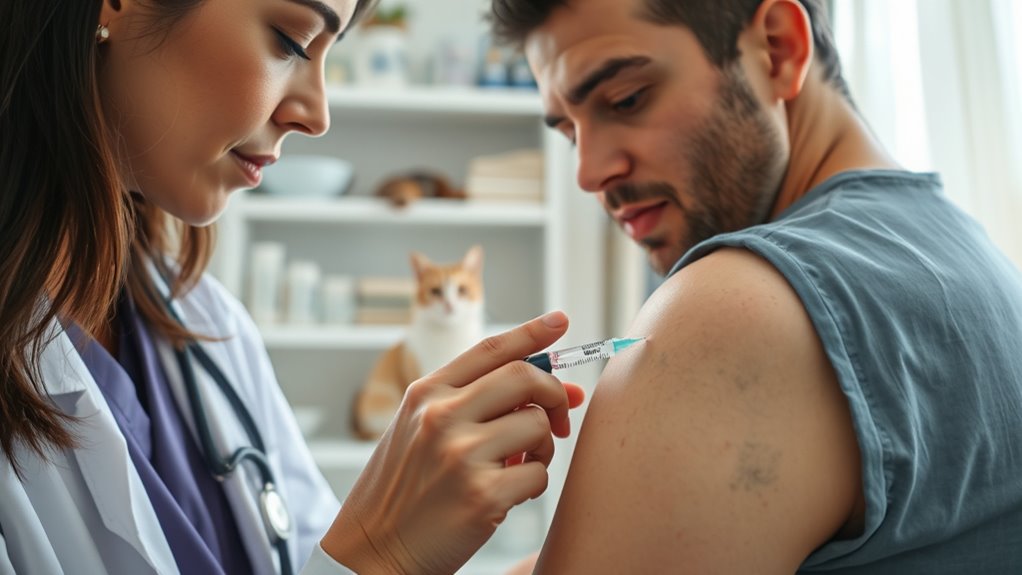
Have you ever wondered how allergy shots actually work to reduce your cat allergy symptoms? They operate based on key immunology principles that gradually change how your immune system reacts to cat allergens.
When you get allergy shots, you’re exposed to small, controlled amounts of the allergen, which helps your immune system build tolerance over time. This process, called tolerance development, means your body becomes less reactive, reducing allergy symptoms.
Instead of overreacting to cat proteins, your immune system learns to see them as harmless. The goal is to shift your immune response from producing allergy-causing antibodies like IgE to creating more regulatory responses, which calm down allergic reactions.
Your immune system learns to see cat proteins as harmless, reducing allergic reactions over time.
This adjustment takes patience, but it ultimately helps you avoid the intense symptoms that cats can trigger, making daily life more manageable. Understanding these immunology principles highlights how allergy shots can offer lasting relief by retraining your immune system.
What Is the Process for Getting Cat Allergy Shots?
First off, your doctor will do some allergy testing to make sure you’re actually allergic to cats. Once they confirm it, they’ll set up a plan for allergy shots. You’ll start with small doses during your immunotherapy sessions, and over time, these doses will gradually get bigger. The goal is to help your body get used to the allergens so you can breathe easier around cats.
Allergy Testing Procedures
Wondering how allergy testing works before starting cat allergy shots? Usually, your doctor will do skin testing or blood tests to find out what you’re allergic to.
During skin testing, tiny amounts of allergens are applied to your skin, and you watch for a reaction. Blood tests measure allergen-specific antibodies, which helps identify your triggers.
Your doctor will also review your allergy history as part of symptom assessment. This helps give a complete picture of your allergies.
Here’s a quick overview:
| Test Type | What It Involves | Benefits |
|---|---|---|
| Skin Testing | Pricking your skin with allergens | Fast results and you can see reactions directly |
| Blood Tests | Drawing blood to analyze antibodies | Good for people with sensitive skin |
| Symptom Assessment | Medical history review | Complements test results and gives more context |
All of this helps your doctor decide the best approach for allergy shots.
Immunotherapy Administration Steps
Getting cat allergy shots involves a series of carefully planned steps that your healthcare provider will guide you through. First, you’ll start with a small dose of allergen extract, administered via injection.
Your provider uses immunotherapy techniques to gradually increase the dosage over time, allowing your immune system to build tolerance. During each session, they will adjust the dosage based on your response and any side effects.
The initial phase typically involves frequent injections, often weekly, until you reach a maintenance dose. Once stabilized, the frequency decreases to monthly shots.
Throughout the process, your provider monitors your reactions closely to ensure safe and effective immunotherapy. This structured approach helps maximize the benefits of allergy shots while minimizing discomfort.
How Long Does It Take to See Results From Allergy Shots?
Many people ask how quickly allergy shots start working for cat allergies. The timeline varies depending on your response, but most notice some improvement within three to six months. During this time, you’ll get regular injections that gradually increase in dose.
Some people might see symptoms improve sooner, while others need more time. Remember, allergy shots work by desensitizing your immune system, so results aren’t immediate. How quickly you see progress depends on factors like your allergy severity and how your body reacts.
Consistency is key—skipping doses can slow down your progress. Keep track of your symptoms to see how you’re doing, but be patient. With time and proper adherence, many people experience significant relief, though everyone’s timeline is different.
Are Allergy Shots Effective for Long-Term Relief?
Are allergy shots a good option if you’re looking for long-term relief from cat allergies? Many folks try them out because they’ve heard that allergy shots can help reduce symptoms over time and even build up your resistance to allergens. It’s pretty common for people to wonder if they really work in the long run and if the results are consistent.
Well, the truth is, allergy shots can be quite effective for many people. They’ve been shown to lessen allergy symptoms and sometimes even lead to lasting relief after a series of treatments. But, of course, how well they work can vary from person to person, and it usually takes some patience to see the full benefits.
Long-Term Symptom Reduction
While allergy shots are mainly known for providing quick symptom relief, their true benefit is in offering long-term reduction of allergy symptoms. Over time, allergy shots help your body build immunity against allergy triggers.
This process diminishes your overall sensitivity and can greatly decrease how often and how severely you experience symptoms, even when exposed to cat allergens. Many people notice lasting relief months or even years after finishing treatment.
As a result, they often rely less on medications. By addressing the root cause of allergies, allergy shots can lead to meaningful, lasting improvements in your quality of life. Although results can vary, many find that sticking with treatment helps manage symptoms better over the long run.
Sustained Allergy Resilience
Because allergy shots target the underlying immune response, they can provide lasting resilience against cat allergens. This means you may experience long-term benefits like reduced sensitivity and fewer allergy symptoms even after finishing treatment.
By gradually retraining your immune system to tolerate allergens, your body learns to react less intensely over time. This sustained allergy resilience can greatly improve your quality of life, letting you enjoy time with cats without constant discomfort.
The effectiveness of allergy shots depends on consistent treatment, which helps establish a new, less reactive immune response. Overall, if you’re looking for long-lasting relief, allergy shots can be a great way to build resilience against cat allergens.
What Are the Success Rates of Cat Allergy Immunotherapy?
Are allergy shots effective in reducing cat allergy symptoms? The success rates of cat allergy immunotherapy vary depending on several success factors, including your commitment to treatment duration. Typically, many people experience significant symptom relief after completing a full course, which often lasts three to five years.
The treatment’s effectiveness depends on consistent injections and individualized dosing. Studies show that about 60-80% of patients notice a reduction in allergy symptoms, with some achieving near-complete relief.
However, the timeline for noticeable improvement can differ. Some see benefits within a few months, while others may take longer. Your immune system’s response plays an important role in success, making it essential to follow your allergist’s recommendations closely.
While not everyone responds similarly, understanding these success factors can help you set realistic expectations and stay committed to the treatment duration necessary for the best results.
What Are the Common Side Effects and Risks?
Although allergy shots are generally safe, they can cause side effects and carry certain risks. The most common side effects are localized, like redness, swelling, or itching at the injection site. These are usually mild and go away quickly.
Less often, you might experience systemic effects such as sneezing, nasal congestion, or a mild asthma flare. In rare cases, more serious reactions can happen, like hives or difficulty breathing.
Risk factors include having previous allergic sensitivities and uncontrolled asthma. These can raise the chances of adverse effects. Your healthcare provider will monitor you during and after injections and adjust the treatment as needed.
While most people tolerate allergy shots well, understanding potential side effects and risks helps you stay alert. Seek medical help promptly if you notice anything unusual.
Am I a Good Candidate for Cat Allergy Shots?
Determining if you’re a good candidate for cat allergy shots starts with evaluating your overall allergy profile and health status.
If you experience frequent or severe cat allergy symptoms like sneezing, itchy eyes, or asthma, allergy shots might help.
But not everyone with cat allergy symptoms qualifies for allergy shots. Your age, overall health, and ability to commit to regular injections matter.
People with uncontrolled asthma or certain immune conditions should talk to their doctor before starting treatment.
Consult your doctor first if you have uncontrolled asthma or immune system issues before considering allergy shots.
An allergy specialist will do tests to confirm your allergy to cats and check your health.
If your symptoms significantly affect your quality of life and other treatments haven’t worked, you could be a good candidate.
In the end, a thorough medical evaluation will help decide if allergy shots are a safe, effective way to manage your cat allergy symptoms.
How Do Allergy Shots Compare to Other Treatments?
When comparing allergy shots to other treatments for cat allergies, it’s important to look at how effective they are, how convenient they are, and possible side effects.
Allergy shots tend to be more effective for long-term relief than antihistamines or nasal sprays, but they do require regular visits to the clinic and a commitment over months or even years.
Other options like herbal supplements or acupuncture might seem tempting, but there’s limited evidence that they actually work.
Lifestyle changes, such as keeping cats out of bedrooms or using air purifiers, can help reduce symptoms without side effects but might not fully eliminate allergies.
Allergy shots work by desensitizing your immune system, which may provide lasting relief, while other treatments mainly focus on managing symptoms.
Think about your lifestyle, whether you prefer medication or immunotherapy, and how much time you’re willing to invest when choosing the best option for you.
Factors That Affect How Well Allergy Shots Work
Your allergy severity plays a role in how effective allergy shots will be for you. If you have more intense reactions, you might need longer or more frequent treatments to see good results. It’s pretty common, so don’t worry, just keep in mind that your specific situation can affect how quickly you notice improvements.
Sticking to your treatment plan consistently is really important. Skipping doses or not following through can make the shots less effective and slow down your progress. By understanding these factors, you can set realistic expectations and stay motivated to stick with your allergy management.
Allergy Severity Levels
The severity of your allergy symptoms plays a big role in how well allergy shots work. If your triggers cause mild symptoms, you might see quicker improvements and better overall relief.
But if your symptoms are severe, the shots may take longer to build immunity, and you might not get immediate relief. The level of allergy severity can influence how your body responds to treatment.
That’s why it’s important to manage your expectations. Knowing how severe your symptoms are helps your healthcare provider customize your treatment plan for the best results.
Treatment Adherence Importance
Consistent treatment adherence is key for allergy shots to work effectively. Skipping or delaying doses can stop your body from building the right immunity.
Your motivation and commitment to following the treatment plan directly impact its success. Staying on schedule helps your immune system adapt and reduces allergy symptoms over time.
To stay motivated, remind yourself of the benefits, like fewer allergic reactions and a better quality of life. Here’s a quick guide to factors that affect your adherence:
| Factor | Impact | Tip |
|---|---|---|
| Treatment motivation | Boosts commitment to schedule | Focus on long-term health benefits |
| Patient compliance | Ensures consistent dosing | Use reminders or support systems |
| Side effects | May cause hesitation | Talk with your doctor about any concerns |
| Schedule flexibility | Affects your ability to follow plan | Plan appointments during free times |
Things to Consider Before Starting Cat Allergy Immunotherapy
Before starting cat allergy immunotherapy, it’s important to see if this treatment fits your health needs and lifestyle. Think about how your daily routines and environment might impact your ability to stay committed. Consider:
- Your schedule—can you attend regular appointments and stick with the injections?
- Your home environment—are you able to add air purifiers and keep your space clean?
- Your willingness to make lifestyle changes, like reducing exposure to cat dander and keeping dust levels low.
Immunotherapy needs consistency, so ask yourself if you’re ready for a long-term commitment. Environmental controls can help lower allergen levels and make the treatment more effective. Also, consider how lifestyle changes might fit into your routine and if you’re comfortable with ongoing adjustments. If you’re prepared to make these changes, immunotherapy could be a helpful step toward managing your cat allergies.
Frequently Asked Questions
Can Allergy Shots Be Combined With Other Allergy Treatments?
Yes, allergy shots can be combined with other allergy treatments to make your overall management more effective.
Combining therapies like antihistamines, nasal sprays, or decongestants with allergy shots often helps you find better relief from symptoms.
You should talk to your healthcare provider about this option to create a plan that works best for you.
This approach can help control your allergy symptoms more effectively, especially if one treatment alone isn’t enough.
Are Allergy Shots Suitable for Children With Cat Allergies?
Yes, allergy shots can be suitable for children with cat allergies, but you should talk to your child’s doctor about safety and how long the treatment might take.
Allergy shots usually take a few months to show results, and your doctor will monitor safety closely during this time.
If your child’s doctor agrees, allergy shots might help lessen their allergic reactions over time, making everyday life easier.
Always follow your doctor’s advice to make sure the treatment fits your child’s specific needs.
What Is the Cost of Allergy Shots for Cat Allergies?
The cost of allergy shots for cat allergies varies, usually between $20 and $50 per injection. The treatment can last several months or even years.
Factors that influence the cost include the number of injections needed, how severe your allergy is, and the fees charged by your clinic.
Insurance can significantly lower your out-of-pocket expenses, so it’s worth checking with your provider. Some plans cover allergy shots fully or partly, making ongoing allergy management more affordable.
How Long Do Allergy Shot Appointments Typically Last?
Your allergy shot appointments usually last about 30 minutes, giving you enough time for the injection and observation afterward. During this appointment, you’ll discuss your symptoms and get the shot. Then, you’ll stay for a short period to monitor any reactions.
The patient experience is generally smooth, with professionals guiding you through the process and making sure you’re comfortable. Over time, your appointments may become quicker as your allergy improves.
Do Allergy Shots Provide Instant Relief From Cat Allergy Symptoms?
Imagine someone with severe cat allergies expecting quick relief. Usually, allergy shots don’t provide instant relief; they are meant for long-term symptom control.
It might take months of regular injections to build immunity, so you probably won’t see immediate changes. Some people do notice early improvements, but for most, allergy shots are a gradual process.
They help reduce symptoms over time rather than offering instant relief.
Conclusion
Just like finally finding that missing puzzle piece, allergy shots can fit perfectly into your allergy relief plan, especially if you love cats but hate the symptoms. With patience and consistency, you might see the picture of a more comfortable, allergy-free life come into focus.
Think of it as planting seeds today. Over time, they grow into a healthier, happier you, enjoying your feline friends without the sneezing or itchy eyes.
So, do allergy shots work for cat allergies? Many people find that they do, helping reduce symptoms and improve quality of life.