Why Do Cats Lick Themselves After You Pet Them?
Are you curious about why your cat licks themselves after you pet them? Many pet owners notice this behavior and wonder what it means. You’re not alone—understanding your cat’s actions can help you build a stronger bond.
When you pet your cat, they often lick themselves afterward because it’s a natural way to process social contact and feel secure. Licking helps them self-soothe and reinforces grooming routines, which strengthens their connection to you.
It also indicates comfort, but if they lick excessively, it could be a sign of stress or irritation.
To understand more about your cat’s behavior and how to keep them happy, keep exploring these insights.
Key Takeaways
- Cats lick themselves after petting to soothe themselves and process the emotional comfort they feel from being petted.
- Licking also helps reinforce their grooming routines and social bonds, showing they’re happy and trusting.
- Gentle petting can trigger a calming licking response, making cats feel safe and relaxed.
- But if they lick excessively, it could mean they’re stressed or uncomfortable, maybe from rough petting or other environmental factors.
- Keeping an eye on how much they lick helps you understand their emotional state and whether they’re feeling comfortable and healthy.
Why Do Cats Lick Themselves After Petting?
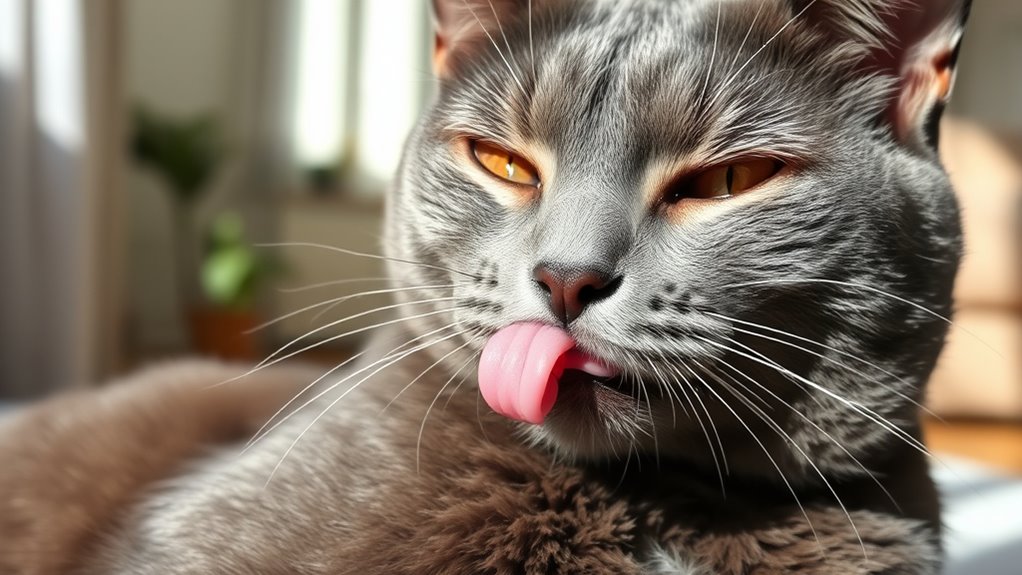
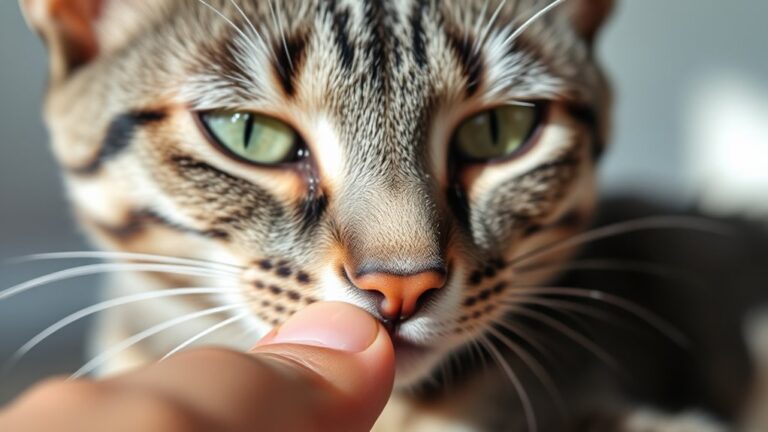
After you’ve pet your cat, you might notice it licking itself more than usual. This licking is a natural response that helps your cat feel more comfortable and secure after human interaction.
Petting can make your cat lick itself more, helping it feel safe and calm afterward.
When your cat starts licking, it’s often a way to respond to the stimulation from petting, which can sometimes be a bit overwhelming or exciting. Cats use licking as a self-soothing behavior, especially after social contact that might cause slight stress or excitement.
This behavior helps your cat regain a sense of calm and control. Licking can also be a way for cats to clean themselves, but in this context, it’s more about managing their emotions.
These licking responses are instinctive and show that your cat is processing its feelings after being petted. Keep an eye on how often your cat licks itself to better understand its comfort level and ensure it’s not a sign of stress or irritation.
What Does Licking Say About Your Cat’s Grooming and Stress?
When your cat licks itself, it’s usually just grooming — keeping its coat clean and healthy. It’s a normal part of their routine and a way for them to feel comfortable.
But if you notice your cat licking a lot more than usual, it might be a sign of stress or discomfort. Sometimes, excessive licking can mean something’s bothering them, like an itch or pain.
Keeping an eye on these behaviors can really help you understand what your cat’s going through. Whether they’re grooming normally or licking excessively, paying attention lets you better support your feline friend.
Grooming Significance and Behavior
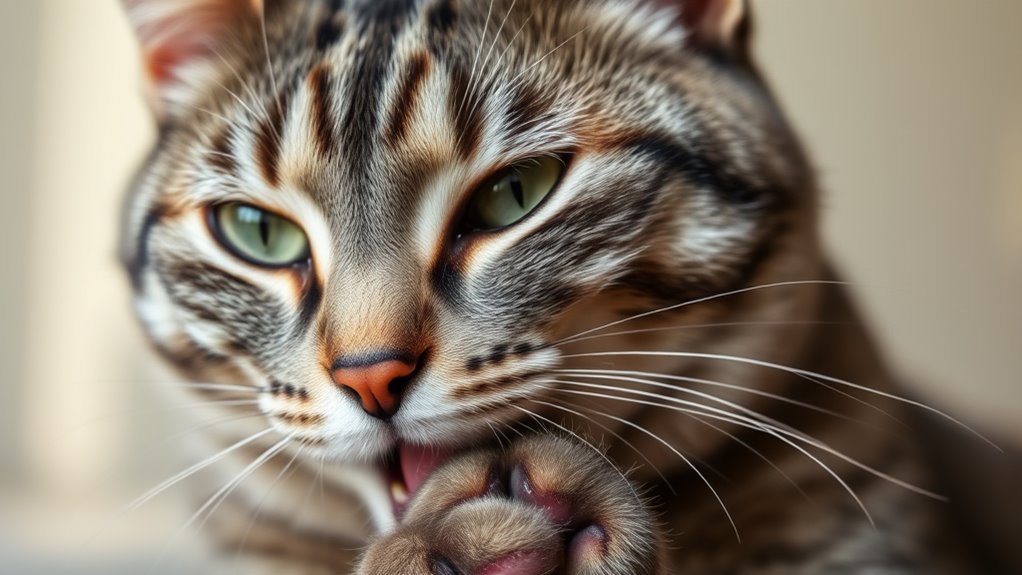
A cat’s licking behavior often reflects its grooming habits and emotional state. When your cat licks itself after you pet it, it’s not just cleaning; it’s also reinforcing its grooming routine and social bonds. Licking can indicate contentment, but excessive grooming might signal stress or discomfort.
You’ll notice that cats groom themselves to stay clean and healthy. Licking can be a sign of relaxation or reassurance. Over-grooming might suggest anxiety or stress.
Grooming after social interactions helps strengthen bonds. Cats often lick to mark territory or show trust. Understanding these cues helps you interpret your cat’s behavior.
A calm, relaxed cat engaging in grooming shows comfort, while repetitive licking may reveal underlying stress. Recognizing this behavior helps you respond appropriately.
Stress Indicators and Comfort
Licking is a key indicator of your cat’s emotional state, revealing whether it feels relaxed or stressed. When your cat licks itself after you pet it, it could be a stress signal or a comfort behavior.
Frequent or frantic licking might mean your cat is anxious or overwhelmed and seeking self-soothing. On the other hand, gentle licking can show your cat feels safe and relaxed.
Pay attention to the context: if your cat starts licking excessively during or after stressful situations, it’s a way to cope. Recognizing these signals helps you understand your cat’s emotional needs.
Providing a calm environment and consistent routines can promote comfort behaviors and reduce stress. This encourages healthier grooming habits and helps your cat feel more secure.
How Can You Tell If Your Cat’s Licking Is Excessive or Normal?
Ever wonder how to tell the difference between normal grooming and your cat over-licking? Usually, normal grooming involves quick, purposeful sessions that don’t bother your cat or cause skin issues. But if your cat’s licking a lot more than usual, it might be a problem.
Excessive licking can lead to skin irritation, hair loss, or even ulcers. To figure out if your cat’s licking is normal or excessive, watch their habits and overall health. Pay attention to how often and where they’re licking.
Signs of over-licking include persistent grooming even when the skin looks irritated, bald patches, redness, hair loss, scabs, or constant licking in the same spot. You might also notice behavioral changes like irritability or restlessness.
If your cat seems obsessed with licking or if it’s causing skin problems, it’s probably excessive. Normal grooming is just part of how cats stay clean, but too much licking suggests something’s off.
Keeping an eye on these signs can help you decide when it’s time to see the vet. Early detection means your cat can get the help they need before things get worse.
Signs That Licking May Indicate Skin Problems or Illness
When your cat repeatedly licks the same area, it might be a sign that something’s wrong beyond normal grooming. Skin sensitivity from allergies or irritants can cause cats to lick more than usual, leading to redness, swelling, or hair loss.
Keep an eye out for repeated licking along with visible signs like sores, scabs, or inflamed skin. These could point to underlying health issues that need attention. Excessive licking may also indicate skin infections or parasites like fleas or mites.
If your cat seems uncomfortable or the skin looks irritated, it’s a good idea to consult a vet. Persistent licking can make skin problems worse, so catching it early is important.
Watch for any changes in your cat’s skin or licking habits. They’re often warning signs that something isn’t right and might need medical care.
What Different Licking Patterns Reveal About Your Cat’s Mood
Noticing how your cat licks itself can give you clues about how they’re feeling. Different licking patterns can show if your cat is relaxed, anxious, or overstimulated.
Calm, gentle licking usually means your cat is comfortable, especially after petting. But if they lick quickly and frantically, it might be a sign of stress or irritation.
Calm licking shows comfort; frantic licking signals stress or irritation.
If your cat is obsessively licking certain areas, it could be a sign they’re uncomfortable or annoyed. Watch for these signs:
- Slow, deliberate licking shows relaxation
- Quick, repetitive licking indicates anxiety
- Excessive licking in one spot points to discomfort
- Less overall licking might mean withdrawal or sadness
- Suddenly licking more often could be stress or irritation
How To Calm Your Cat and Reduce Excessive Licking
If your cat is excessively licking itself, calming the behavior involves a combination of environmental adjustments and attention to their needs. Start by creating a calm environment, reducing loud noises and sudden movements that may stress your cat. Provide a cozy, quiet space where they feel safe and secure.
Using a gentle touch during interactions can help soothe them and build trust, which may reduce compulsive licking. Keep their routine consistent to minimize stress, and offer stimulating toys to redirect their attention.
Regular playtime helps burn off excess energy and relieves anxiety. Make sure they have a comfortable area for resting, and consider pheromone diffusers, which can promote relaxation.
When Should You Take Your Cat to the Vet for Licking Issues?
Determining when to visit the vet for your cat’s licking issues is really important, especially if the behavior sticks around or gets worse. Excessive licking can be a sign of underlying health problems like allergies, skin infections, or parasites that need a vet’s attention.
Keep an eye out for signs like hair loss, redness, swelling, or open sores, which suggest you should seek professional help. If your cat keeps licking beyond a few days, it’s time to consider a visit.
Notice if your cat seems uncomfortable or in pain, or if there are open wounds or sores from all the licking. Any sudden change or worsening behavior also warrants a vet visit.
Getting your cat checked out quickly helps with proper diagnosis and treatment. Ignoring persistent licking can lead to infections or other complications, so trust your vet’s advice to get to the root of the issue and help your feline friend feel better.
How Your Petting Style Affects Your Cat’s Grooming and Licking
Your petting style plays a big role in how your cat grooms itself and manages its licking behavior. Gentle, steady petting can help your cat feel safe and less stressed, which reduces unnecessary grooming or over-licking.
If you pet your cat too roughly or in a way that’s uncomfortable, it might respond by licking more to soothe itself. Understanding what your cat prefers is important—some like long strokes along their back, while others enjoy gentle scratches behind the ears.
Your petting habits can influence how often your cat grooms or licks itself afterward. When you adjust your technique to match your cat’s comfort level, you encourage calm behavior and healthier grooming routines.
Paying attention to your cat’s responses helps build trust and prevents it from developing compulsive licking habits caused by discomfort or irritation.
Recognizing Stress and Anxiety Signs in Cats
Cats often hide their stress signals, so it’s important to pay close attention to subtle behavioral changes. Recognizing signs of stress and anxiety in cats can help you address issues early.
Look for clues like excessive grooming or licking, especially in specific areas. You might notice your cat suddenly hiding or avoiding interaction.
Changes in appetite or sleeping patterns are common signs too. Overly alert pupils or dilated eyes can indicate stress.
Vocalizations or restlessness are also signs that your cat is feeling anxious. These behaviors often happen in response to triggers like unfamiliar people, loud noises, or environmental changes.
Your cat’s behavior might become more withdrawn or hyperactive, signaling distress. Keep an eye out for these signs—they show your cat is experiencing stress.
Understanding these cues helps you step in and create a calmer environment. This promotes your cat’s well-being and can reduce unnecessary licking caused by anxiety.
Tips for Supporting Your Cat’s Comfort and Health
Creating a comfortable environment is key to supporting your cat’s overall health and well-being. Set up cozy resting spots in quiet areas where your feline can relax undisturbed.
Make sure to regularly clean their litter box and always have fresh water and nutritious food available. Routine vet visits, vaccinations, and parasite prevention are important to keep your cat in top shape.
Watch for changes in your cat’s behavior and grooming habits, as these can signal discomfort or health issues. Include enrichment activities like toys and scratching posts to reduce stress and keep their mind active.
Maintain a consistent routine for feeding, play, and rest. This helps your cat feel secure and happy. By creating a calm, clean, and engaging environment, you support their comfort and health.
Encouraging natural grooming behaviors and reducing stress-related licking become easier in a well-maintained space. Your attentiveness makes a real difference in your cat’s happiness and longevity.
Frequently Asked Questions
Do Cats Remember Being Petted and Lick Themselves Out of Comfort?
Yes, cats remember being petted and often lick themselves out of comfort. When you pet them, they might purr, which shows they’re feeling good. That purring can reinforce positive feelings.
Licking is part of their grooming instinct, helping them relax and feel safe. It shows they associate your touch with safety, and grooming afterward helps them settle down.
This behavior means that your cat feels more at ease after your interaction. It’s their way of calming themselves and feeling secure.
Can Licking After Petting Be a Sign of Affection or Stress?
Licking after petting can be both a sign of affection and stress relief. When your cat licks itself, it might be showing you love and contentment, using grooming as a bonding signal.
Alternatively, it could be a way to soothe itself if it feels overwhelmed or stressed. Pay attention to your cat’s body language—relaxed posture suggests affection, while tense muscles may indicate stress.
Why Do Some Cats Lick More Than Others After Petting?
Some cats lick more than others after petting because of behavioral differences and their grooming habits. You might notice that certain cats use licking as a way to self-soothe or to clean the area, especially if they’re more anxious or sensitive.
Individual personalities and past experiences influence how often your cat engages in grooming. Understanding these differences can help you better interpret their licking and respond accordingly.
Does the Texture of My Hand Influence My Cat’s Licking Behavior?
Yes, the texture of your hand can influence your cat’s licking behavior. Cats might prefer softer fur textures or be sensitive to rough surfaces, which can affect how comfortable they feel and their grooming instinct.
Plus, the scent transfer from your skin can make them feel more relaxed. They might lick to clean themselves or to re-establish familiar scents, which helps them feel safe.
How Does a Cat’s Environment Affect Its Licking Habits?
Surprisingly, your cat’s environment shapes its licking habits more than you’d think. Environmental stressors like loud noises or chaos can make them lick more to soothe themselves.
A clean habitat promotes calm, reducing excessive licking. Lack of sensory stimulation might lead to repetitive grooming. Social interactions also influence behavior—more positive contact can decrease stress-induced licking.
This shows that even in a tidy home, your cat’s habits depend on the environment’s harmony.
Conclusion
Remember, a cat’s licking is their way of communicating and comforting themselves. When they lick after you pet them, it’s often a sign they’re feeling relaxed or marking you as part of their social group.
By paying attention to their grooming habits, you’ll better understand their mood and health. If you notice excessive licking or signs of discomfort, don’t hesitate to consult your vet.
Keep in mind, “A stitch in time saves nine.” Addressing issues early helps ensure your feline friend stays happy and healthy. Your attentive care makes all the difference in their well-being.