What Triggers Cats to Bite and Scratch When You Pet Them?
Are you tired of getting scratched or bitten every time you try to pet your cat? You’re not alone—many cat owners struggle with understanding why their feline friends react this way. It can be frustrating trying to enjoy some cuddles without the risk of scratches.
Cats often bite or scratch when you pet them because they become overstimulated, uncomfortable, or are acting on natural hunting instincts. Signs like tail flicking, flattened ears, or turning away indicate they’re reaching their limit.
Loud noises or a cluttered environment can also trigger defensive reactions. Recognizing these signals helps you prevent bites.
To find out more tips on keeping your cat calm and happy, keep exploring situations that lead to these behaviors.
Key Takeaways
- Overstimulation from too much petting can make cats bite or scratch to say enough.
- Signs like tail flicking or flattened ears show they’re getting irritated.
- Loud noises or other pets in the environment can make a cat more defensive.
- Play-biting is normal hunting behavior but can happen if boundaries aren’t clear.
- Moving suddenly or not respecting their space can cause scratching or biting as a defense.
Why Do Cats Bite or Scratch When You Pet Them?
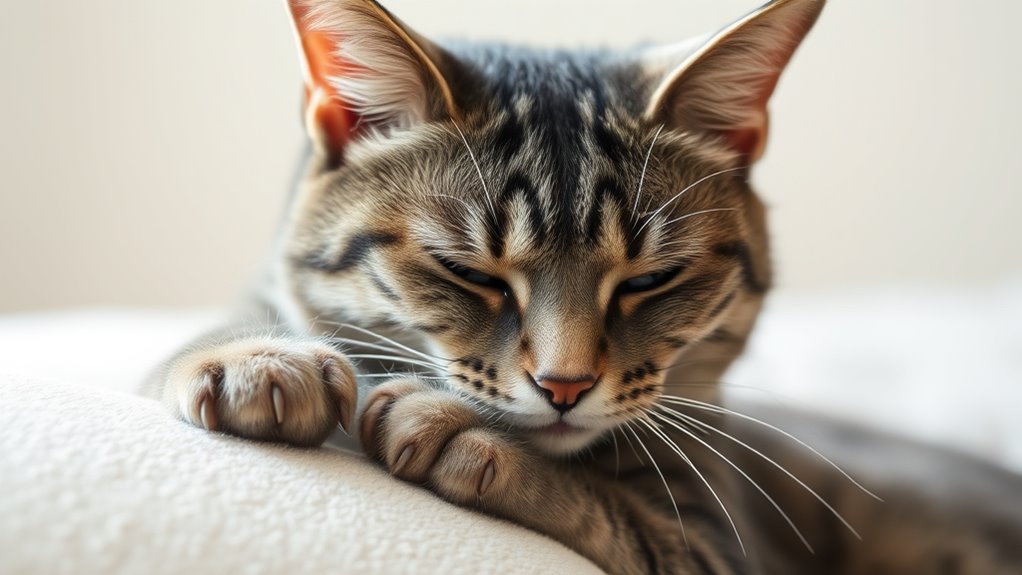
Cats often bite or scratch during petting because they’re trying to communicate their limits or discomfort. They might be telling you they’ve had enough or that certain petting techniques aren’t comfortable.
Understanding feline behavior helps you recognize these signals early. For example, your cat may twitch her tail, flatten her ears, or suddenly pull away—clear signs she’s feeling overstimulated.
Recognizing signs like tail twitching and ear flattening helps prevent overstimulation and unwanted bites.
When you pet her in a way that ignores these cues, she may resort to biting or scratching to set boundaries. Cats have sensitive spots, and if you don’t respect their personal space, they’ll react defensively.
Learning how to read her body language allows you to adjust your petting style. Using gentle, slow strokes and stopping when she shows signs of discomfort can prevent bites and scratches.
Recognizing Signs Your Cat Is Overstimulated or Discomforted
When your cat starts to show signs of discomfort, it’s a clear signal that she’s become overstimulated. Recognizing these signs is key for understanding cat communication and preventing biting or scratching.
Common indicators include her tail flicking, ears flattening, or her body stiffening. You might notice her turning her head away or suddenly pulling back from your hand. These are signs she’s reached her petting limit.
Other subtle cues include her pupils dilating or a sudden change in her facial expression. If she’s grooming excessively or begins to nibble or swipe at your hand, she’s likely trying to tell you she’s overwhelmed.
Paying close attention to these signals helps you respond before she becomes reactive. Knowing how to read her body language ensures you respect her boundaries and keeps petting enjoyable for both of you.
How to Read Your Cat’s Body Language During Petting
Paying close attention to your cat’s body language during petting can help you understand her comfort level and avoid overstimulation. Recognizing these cues allows you to adjust your approach and respect her petting preferences.
Here are four key signs to watch for:
Relaxed posture: Her body feels loose, ears are forward or neutral, and her tail remains steady. These signs show she’s enjoying the affection.
Purring or kneading: These are clear signals she’s comfortable and content with the petting.
Slow blinking: When she blinks slowly at you, it’s a sign of trust and relaxation.
Tense muscles or swatting: These indicate she may be overstimulated or annoyed, so it’s best to stop petting.
What Environmental Factors Make Cats More Likely to Bite
Loud noises can really ramp up your cat’s anxiety, and that might make them more likely to bite. Imagine how unsettling it is for them when there’s a lot of noise around — it can make them feel threatened or scared.
Then, there’s cluttered or chaotic spaces. If your home is messy or noisy, it can overwhelm your cat and make them more irritable. They might not be able to relax, which can lead to biting or scratching as a way to defend themselves.
Having other pets around can also add to their stress. When your cat feels crowded or threatened by other animals, they might bite or scratch to protect themselves. It’s all about their feeling safe and comfortable in their environment.
Loud Noises Increase Anxiety
Sudden loud noises can trigger anxiety in cats, making them more likely to bite or scratch as a defensive response. These triggers can overwhelm your cat, especially if they’re sensitive to sound.
When your cat’s anxiety spikes, they may become less receptive to petting and more prone to defending themselves. To prevent this, try to recognize the noise sources that disturb your cat’s peace.
Examples include sirens or car horns outside your window, loud appliances or machinery, thunderstorms or fireworks, and unexpected loud voices or music. These environmental factors can push your cat past their petting boundaries.
This increases the chance of bites or scratches. Being aware of these triggers helps you create a calmer space, reducing your cat’s anxiety and making your interactions more enjoyable.
Cluttered Spaces Overwhelm Cats
When a space gets cluttered and chaotic, it can overwhelm your cat and make biting or scratching more likely. Cats do best in calm environments with clear pathways and safe zones where they can feel secure.
Overcrowded spaces can cause stress, making your cat more irritable and defensive. To help, focus on decluttering and creating quiet areas where your cat can retreat and relax.
Providing high perches or hidden spots gives them refuge and a sense of control. Organizing belongings and keeping walkways clear also helps reduce their anxiety and improves their comfort.
| Cluttered Space Impact | Solution |
|---|---|
| Overstimulation | Declutter, create safe zones |
| Increased stress | Establish quiet areas |
| Reduced sense of control | Keep pathways clear, organize |
| Higher biting risk | Provide calm, secure environment |
Presence of Other Pets
Having other pets in the home can really influence your cat’s behavior, especially if they feel overwhelmed or threatened. Your cat might react with biting or scratching to protect its territory or establish its place in the social hierarchy.
Think about things like competition for resources like food, toys, or attention, which can fuel territorial behavior. Dominance struggles between pets can also trigger defensive biting.
Limited space makes cats feel crowded, increasing the chances of aggression. Unfamiliar pets or sudden introductions can upset their sense of security and hierarchy.
When multiple pets live together, your cat may see others as threats, leading to defensive biting or scratching during petting or interactions. Recognizing these triggers can help you manage their environment better.
How Play and Hunting Instincts Cause Aggression During Petting
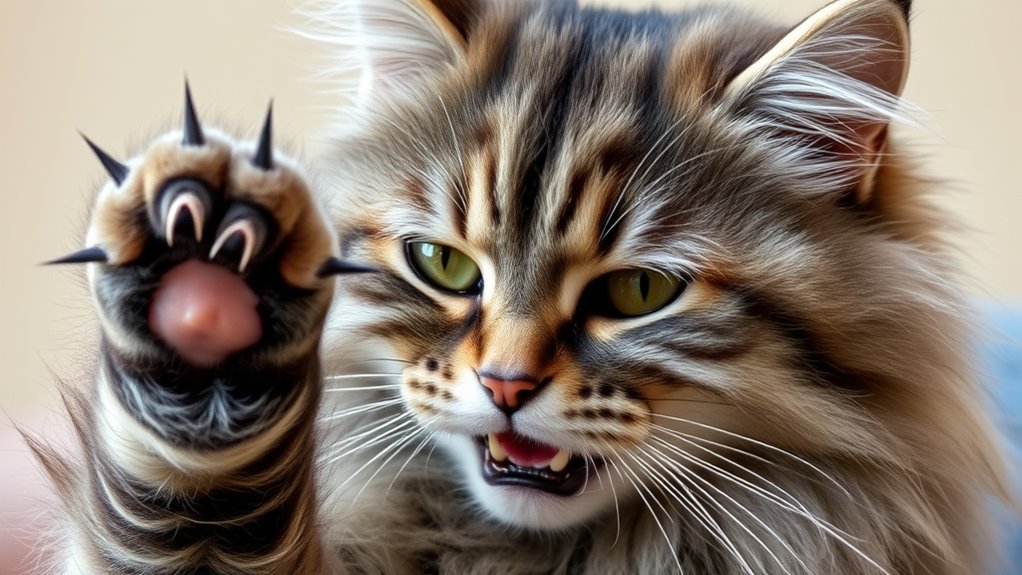
Your cat’s natural hunting instincts can sometimes make playtime a bit unpredictable. When you’re petting them, they might suddenly become aggressive, especially if they get overstimulated. It’s like their instincts kick in, and they start biting or scratching because they see your hand as prey.
Sometimes, your cat might misread your signals too. They might think you’re trying to play or even attack, which can lead to defensive or aggressive reactions. It’s pretty normal, but it’s good to keep an eye on their body language so you can tell when they’re getting overwhelmed.
Natural Hunting Behaviors
Cats have natural hunting instincts that can show up during play or petting, leading to unexpected bites and scratches. These behaviors come from their instinct to stalk, chase, and catch prey.
When you pet a cat, you might unknowingly trigger these instincts, causing them to react defensively or aggressively. To picture this, think of:
- The sudden pounce, like stalking prey
- Quick bites as if capturing a moving target
- Swatting with paws, mimicking hunting strikes
- Frantic scratching when they feel overstimulated or threatened
These actions are rooted in their hunting instincts and aren’t meant to be aggressive. Recognizing these signs helps you understand that it’s part of feline behavior, not personal aggression.
Overstimulation During Play
While petting your cat might seem relaxing, it can sometimes lead to overstimulation. This can trigger their hunting instincts, causing bites or scratches.
Cats have playtime boundaries that, when crossed, lead to sensory overload. This can make them react aggressively if they’re petted too intensely or for too long.
Watching for signs like tail flicking, flattened ears, or sudden jerks helps you know when to stop before aggression happens.
Balancing gentle petting with respecting your cat’s limits is key. It prevents triggering their natural hunting drive in a way that’s unhealthy.
Short, frequent sessions and paying attention to their cues can help reduce overstimulation. This keeps playtime fun for both of you.
Misinterpreted Play Signals
Here are some signs to watch for:
- Puffed-up tail indicating overstimulation or agitation.
- Flattened ears signaling discomfort or warning.
- Rapid tail flicking showing irritation.
- Play-biting that mimics hunting instincts but crosses boundaries.
Understanding these signals helps you tell the difference between playful exploration and signs of frustration. Recognizing your cat’s communication can prevent overstepping boundaries and reduce aggressive reactions during petting.
Tips for Gradually Building Trust and Reducing Biting
Building trust with a cat takes patience and consistency, especially when they tend to bite or scratch. Focus on trust-building techniques that promote comfort and safety.
Start with gradual exposure by letting your cat approach you at their own pace. Use calm, gentle movements and avoid sudden gestures that might scare them.
Allow your cat to approach naturally, using gentle movements to build trust without causing fear.
Offer treats or toys to create positive associations during your interactions. Keep sessions short and frequent, ending on a positive note.
Respect their boundaries—if they pull away or show signs of discomfort, give them space. Over time, these small, consistent steps help your cat feel secure.
This reduces fear and defensive behaviors. Remember, building trust isn’t about rushing, but creating a safe environment where your cat can relax around you.
Patience and understanding are key to turning wary, biting behaviors into confidence and connection.
Common Triggers That Make Your Cat Scratch or Bite
Understanding what triggers your cat to scratch or bite can help you prevent these behaviors before they escalate. Certain situations or stimuli can provoke your cat’s natural feline communication, leading to aggressive responses.
Here are four common triggers:
- Overstimulation – Too much petting can overwhelm your cat, causing it to react defensively.
- Fear or Anxiety – Sudden movements or unfamiliar environments can trigger a defensive bite or scratch.
- Play Aggression – Rough play or using your hands as toys can encourage biting as part of natural cat behavior.
- Pain or Discomfort – If your cat is hurt or unwell, it might scratch or bite when touched in sensitive areas.
Recognizing these triggers helps you interpret your cat’s signals and modify interactions to prevent negative responses. Understanding feline communication is key to maintaining a harmonious relationship and reducing biting and scratching incidents.
When to Seek Help for Persistent Petting Aggression
Persistent petting aggression that doesn’t improve despite your efforts may indicate underlying issues that need professional help. If your cat keeps biting or scratching during petting, even with gentle approaches, it’s time to see a veterinarian or animal behaviorist.
Persistent petting aggression may signal underlying issues needing professional help. Seek expert advice for your cat’s well-being.
They can check if medical problems, anxiety, or stress are causing the aggression. Behavioral therapy can help change your cat’s responses and make interactions more comfortable for both of you.
Look out for signs like increased agitation, quick tail flicking, or direct eye contact during petting. These can help you decide when to seek professional help. Ignoring persistent aggression might make things worse or cause injuries.
Getting expert guidance ensures you address the root issues properly. It can help your cat feel safe and secure while building healthier ways to communicate and bond.
Creating a Calm Space to Prevent Biting and Scratching
Creating a calm space can really help reduce your cat’s chances of biting or scratching during interactions. A peaceful environment makes your cat feel safe and relaxed, which in turn lowers stress and defensive behaviors.
To set up this space, choose a quiet area where your cat can retreat, away from loud noises and sudden movements. Using soothing scents like lavender or chamomile in diffusers or sprays can also help promote relaxation.
Keep the environment clutter-free so your cat isn’t overwhelmed by too many stimuli. Adding cozy resting spots, like soft beds or blankets, encourages calmness and comfort.
Quick Fixes: What To Do When Your Cat Bites During Petting
When your cat bites during petting, acting quickly can help prevent more incidents and keep both of you comfortable. Gently stop petting right away to show that the interaction is over. Avoid yelling or punishing your cat, as this can make them more stressed.
Instead, calmly redirect their attention. Use positive reinforcement by praising and rewarding your cat when they tolerate petting without biting. If your cat tends to bite, try short petting sessions and gradually increase them as they get more comfortable.
Calmly redirect and reward your cat for gentle behavior to encourage positive petting experiences.
Watch for signs of overstimulation, like twitching tails or flattened ears, and stop petting before biting happens. Consistency is key; over time, your cat will learn that gentle behavior leads to positive outcomes.
Patience and calmness help build trust, so your cat associates petting with good experiences and is less likely to bite in the future.
Frequently Asked Questions
Can Certain Breeds Be More Prone to Biting and Scratching?
Yes, certain breeds can be more prone to biting and scratching because of their temperament and socialization needs.
Some breeds, like Siamese or Bengal cats, are naturally more energetic or sensitive, which might lead to biting if they get overstimulated.
Proper socialization from a young age helps reduce aggressive behaviors.
Understanding your cat’s breed traits and social needs can help you manage their behavior better.
This way, you can enjoy a more harmonious relationship with your feline friend.
How Does My Cat’s Age Influence Its Biting Behavior?
Your cat’s age really affects how it might bite. Kittens often bite during play as part of their natural behavior, exploring their surroundings and learning boundaries.
As cats get older, their personality can change. Senior cats might become more irritable or less patient, which can lead to biting or scratching.
Knowing these age-related shifts helps you understand what your cat is trying to tell you. It also allows you to adjust how you interact to make both of you more comfortable.
Do Diet or Nutrition Affect a Cat’s Aggression Levels?
Your cat’s diet can have a big impact—poor nutrition might make them irritable or aggressive.
If they’re missing essential nutrients, they could become more reactive or prone to biting and scratching.
Feeding them a balanced, high-quality diet helps keep their mood stable.
Good nutrition influences their energy levels and temperament, making your feline friend calmer.
A well-fed cat is less likely to act out when you pet them, leading to a happier relationship.
Can Medical Issues Cause Increased Biting During Petting?
Yes, medical issues can cause increased biting during petting. If your cat feels pain from conditions like arthritis or dental problems, they might bite to protect themselves.
Also, territorial behavior can lead to aggression if they feel threatened or uncomfortable. Always watch your cat’s behavior closely.
If biting happens often, it’s a good idea to check with a vet. Treating any underlying health issues can help make them more comfortable and less likely to bite.
How Do I Differentiate Between Playful Biting and Aggressive Biting?
You can tell playful biting from aggressive behavior by observing your cat’s body language. Playful bites are gentle, and your cat’s ears are forward, with a relaxed posture and whiskers.
Aggressive biting involves a tense body, flattened ears, dilated pupils, and possibly hissing or growling. Playful behavior is usually quick, with no signs of fear or anger.
In contrast, aggression shows a clear warning sign to stop petting, so it’s best to give your cat some space if you notice these signs.
Conclusion
So, the next time your cat suddenly turns into a tiny tiger when you’re just trying to show some love, remember you’re not just dealing with a pet. You’re facing a full-blown feline rebellion! Recognize their signals, respect their boundaries, and create a peaceful environment.
With patience, you’ll tame the wildest scratch monster and turn those biting days into cuddly, purring paradise. Because, honestly, a happy cat makes the universe a better place—one gentle pet at a time.
Understanding what triggers cats to bite and scratch when you pet them is key. It’s all about reading their cues and knowing when they’ve had enough.