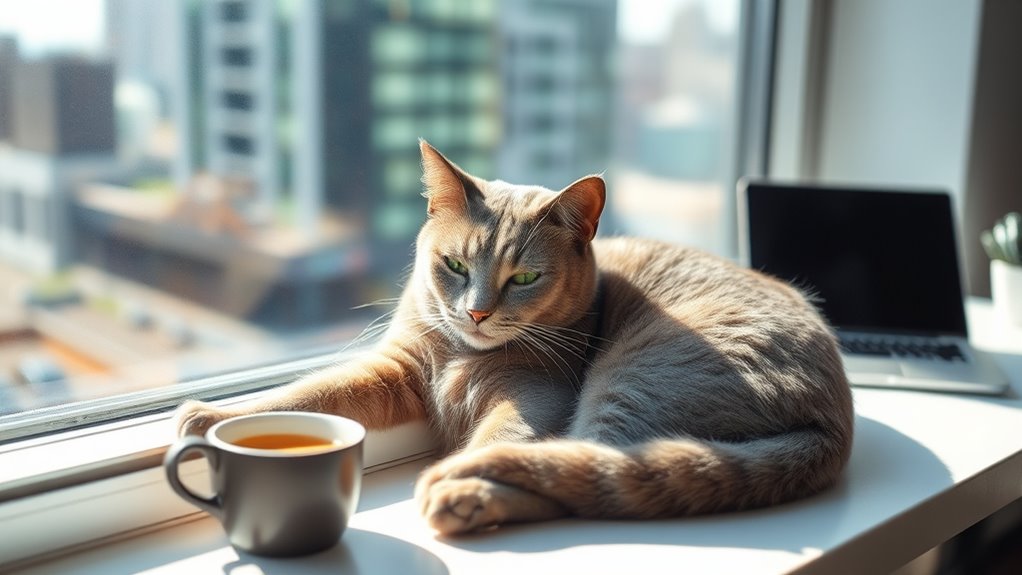
Why Are Cats the Best Pets for Busy Lives?
Balancing a busy life can be tough, and finding a pet that fits into your hectic schedule is a challenge many people face. You’re not alone—lots of pet lovers struggle with how much time their furry friends need.
That’s why cats have become the go-to choice for busy individuals.
If you have a busy schedule, cats make perfect pets because they’re low-maintenance and highly independent, meaning you don’t need to spend as much time caring for them. They handle their own needs, don’t require daily walks, and thrive with minimal supervision.
Their calm, quiet presence can reduce your stress and bring emotional comfort without demanding attention.
Keep going to uncover more tips on how to make life with your cat even easier.
Key Takeaways
- Cats require minimal daily care, fitting easily into busy schedules without demanding constant attention.
- Their independence allows them to self-entertain and manage basic needs, reducing owner involvement.
- They don’t need daily walks or extensive grooming, saving time and effort.
- Quiet and peaceful, cats help create a calming home environment, which is great for reducing stress.
- Their cost-effective and low-maintenance needs make them practical for busy individuals.
Are Cats the Best Low-Maintenance Pet for Busy People?
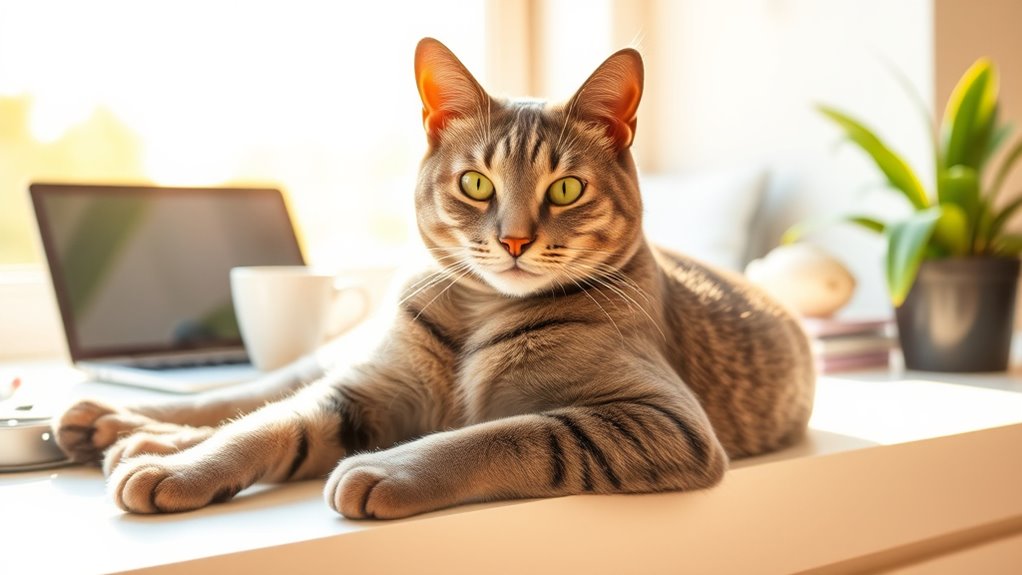
If you have a busy schedule, cats often prove to be one of the most convenient pets to care for. Their unique personalities make them well-suited for busy lifestyles since they’re generally low-maintenance and independent.
Feline habits mean they don’t require constant attention or daily walks, unlike dogs, which helps you manage your time better. Pet compatibility is high with cats, especially if you’re looking for stress relief and emotional support.
Many cats thrive on quiet companionship and offer comfort without demanding too much of your focus. Their self-sufficient nature allows you to leave them alone for hours, fitting into your daily routines easily.
Whether you need a calming presence after a long day or a gentle companion during busy moments, cats meet your companionship needs without overwhelming your schedule. Overall, their low-maintenance traits make them an ideal choice for anyone juggling a hectic life.
Why Are Cats Independent and Self-Sufficient?
Cats are naturally independent animals because they’ve evolved to handle things on their own. Their behavior reflects their feline instincts, which focus on hunting, exploring, and grooming without much help.
Unlike dogs, cats don’t need constant attention or reassurance. They’re comfortable spending time alone and managing their own needs.
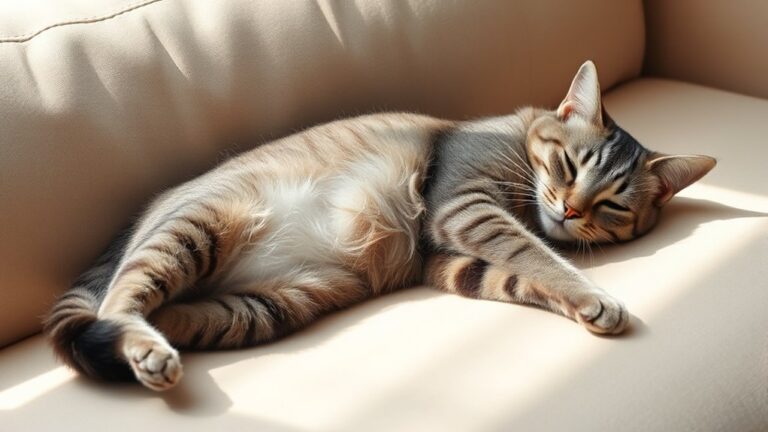
Cats are perfectly content on their own, requiring little attention or reassurance.
This independence comes from centuries of survival skills, making them pretty self-sufficient. You’ll notice your cat can find food, entertain itself, and clean up after itself without much help.
Their instincts also make them cautious and selective about social interactions, so they handle most things on their own.
Because of this self-reliance, you don’t have to worry about constant supervision or extensive training. Your cat naturally takes care of most needs.
That’s why cats are such great pets for busy people who want companionship without a lot of commitment.
How Do Cats Fit Into a Hectic Schedule Without Stress?
Ever
What Are the Minimal Care Needs of Low-Maintenance Cats?
Low-maintenance cats are pretty easy-going when it comes to their basic needs. They don’t require fancy diets or complicated feeding routines, so mealtime stays simple even if you have a busy schedule.
When it comes to grooming, these cats don’t need much either. They usually don’t require frequent baths or long brushing sessions, which makes caring for them less time-consuming.
Plus, they’re pretty chill about playtime. They don’t demand constant attention, so you can relax knowing they’re happy with just a little interaction and some basic toys.
Simple Feeding Requirements
Feeding a low-maintenance cat is simple because their dietary needs are straightforward and don’t require special attention. They do well on consistent, balanced meals that give all the nutrients they need without any fuss.
You just need to pick high-quality commercial cat food suited to their age and health. No need for complicated diets or frequent changes—just follow the feeding guidelines on the package or ask your vet.
Always make sure fresh water is available. Portion sizes should match your cat’s activity level to keep them happy and healthy.
These cats are flexible with their routine feeding schedule, making it easy to fit into a busy life. Overall, simple feeding helps keep your cat healthy without the hassle of elaborate diets.
Low Grooming Needs
Most low-maintenance cats need minimal grooming because their coats are naturally short or sparse, so they don’t require regular brushing. Their grooming habits are low, which makes them perfect for busy lifestyles.
Fur types can vary, but these cats usually have:
- Short, sleek coats that shed little
- Sparse fur that doesn’t tangle easily
- Smooth textures needing only occasional brushing
- Limited hair around paws and ears
Thanks to these features, you won’t have to spend much time grooming your cat. A quick brush once a week is enough to keep their coat healthy and free of loose fur.
Their low grooming needs also mean less hair around your home and fewer trips to the groomer, making them ideal for busy people.
Limited Playtime Needed
Since busy schedules leave little time for extensive play, these cats are naturally suited to minimal entertainment needs. They don’t require constant attention or hours of play.
Instead, you can rely on simple playtime options like short sessions with interactive toys that keep them engaged without taking up much of your time. Low-maintenance cats are often happy with a cozy spot by the window or a few quick, stimulating interactions during the day.
They’re independent enough to entertain themselves and don’t need fancy toys or outdoor activities. This makes them perfect for people with hectic routines.
Their minimal playtime needs fit well into busy lives, giving you a relaxed companion without added responsibilities.
What Are the Benefits of Owning a Calm, Quiet Cat?
Owning a calm, quiet cat can really bring a sense of peace to your home. They’re not the type to meow loudly or cause a lot of noise, so your space stays peaceful and relaxing. It’s perfect if you prefer a quieter environment or just want a pet that won’t add to the noise level.
These gentle cats also help create a lower-stress atmosphere. Their calm presence can help you feel more relaxed, whether you’re winding down after a busy day or just enjoying some downtime. Plus, their quiet nature makes them great companions for both busy households and quieter, more relaxed lifestyles.
Reduced Noise Levels
A calm, quiet cat can really improve your living space by reducing noise-related stress. Their peaceful presence offers quiet companionship that’s perfect for busy schedules.
Imagine soft purring that soothes your mind after a long day. Gentle footsteps instead of loud thuds or banging sounds can make a big difference.
Minimal meowing means your sleep isn’t disturbed, and calm moments of silent companionship give you a chance to unwind during downtime.
These subtle sounds create a peaceful atmosphere, helping you relax and de-stress. Owning a quiet cat makes your home a tranquil refuge.
With their serenity, you can focus better, relax more, and enjoy the calming benefits of a still, quiet environment.
Lower Stress Environment
Having a calm, quiet cat can really help lower your stress levels by creating a peaceful home environment. Their soothing presence makes it easier to relax after busy days and offers a gentle distraction when life feels overwhelming.
These cats tend to be less anxious themselves, so they often have fewer disruptive behaviors that can add to your stress. Their gentle nature encourages relaxation, making your home feel more like a sanctuary than a source of tension.
The quiet companionship they offer allows you to unwind without constant noise or chaos. As a result, you’ll experience better stress relief and a more balanced state of mind.
A calm, quiet cat not only enriches your life but also helps you maintain a more serene and harmonious home atmosphere.
Gentle, Relaxing Companions
Because calm, quiet cats tend to be gentle and patient, they create a soothing presence that instantly helps you feel more relaxed. Their gentle purring provides a constant calming presence, transforming your space into a serene atmosphere.
With soft companionship, they offer affectionate moments that bring comfort and reduce stress. Imagine quiet cuddles during your evening unwind, fostering a comforting routine.
Their gentle head nudges encourage mindful interaction, while soft paw rests invite peaceful, soothing rituals. Subtle, calming movements promote stress relief after hectic days.
Their quiet nature makes them perfect for busy lives, offering consistent comfort without overwhelming noise. These affectionate moments and soothing rituals help you unwind, making your home a sanctuary of tranquility.
Key Factors to Consider When Choosing a Low-Maintenance Cat
Choosing a low-maintenance cat involves focusing on traits that need less time and effort to care for. First, consider the breed, since some cats are naturally more independent and require less grooming or attention.
For example, breeds like the British Shorthair or Russian Blue are known for being easygoing and needing minimal grooming. Next, think about how your lifestyle fits with the cat’s needs.
If you’re busy, look for cats that are more adaptable and less demanding. These cats are happy with short, routine interactions and don’t mind being left alone for a few hours.
Matching the right breed traits with your lifestyle helps you find a cat that fits seamlessly into your routine, offering companionship without adding stress.
Time-Saving Tips for Caring for Your Cat
To save time on your daily cat care routine, focus on establishing simple, efficient habits that keep your cat happy and healthy without taking up too much of your day. Prioritize tasks that maximize time efficiency and reduce unnecessary effort. Here are four tips to streamline your routine:
- Set up a self-cleaning litter box to cut down on cleaning time and keep your cat’s environment fresh.
- Use pre-portioned, high-quality cat food to make feeding easier and ensure your cat gets proper nutrition.
- Schedule quick daily play sessions to keep your cat stimulated without taking up too much time.
- Keep essential supplies like toys, grooming tools, and treats within easy reach so you don’t have to search for them when needed.
Are Cats a Cost-Effective Pet for Busy Professionals?
Maintaining a simple routine with self-cleaning litter boxes and pre-portioned food not only saves time but can also help keep costs manageable. When considering expenses, cats are generally affordable compared to many other pets. Their essential costs—food, litter, and routine vet visits—are predictable, making budgeting easier.
Spaying or neutering can reduce future health costs and prevent unexpected litters. Regular preventive care also helps avoid costly emergencies down the line. Plus, cats tend to be low-maintenance, which means fewer expenses for grooming or specialized care.
While initial costs like adoption fees and basic supplies can vary, ongoing expenses stay fairly stable. Overall, cats are a budget-friendly option for busy professionals who want a pet without breaking the bank. Proper planning allows you to care for your feline friend without risking your financial stability.
How Can Cats Provide Emotional Comfort Without Demanding Attention?
Cats are pretty good at giving us emotional comfort, even if they don’t always demand a lot of attention. Their independent nature and calm presence can be really soothing, especially when you need a quiet companion. Just having them nearby can help ease stress, especially on busy days.
What’s nice is that their low-maintenance vibe means you don’t have to worry about constantly entertaining or caring for them. They offer a steady, calming presence that’s there when you need it, without adding extra demands to your schedule. It’s like having a gentle, supportive friend who’s always just a purr away.
Independent Yet Affectionate
Even though cats are known for their independence, they can also offer heartfelt companionship without demanding constant attention. You’ll find their quiet presence comforting, especially after a long day.
Cats show affection in subtle ways:
- Purring softly on your lap during cozy evenings
- Nudging your hand gently for petting during quiet moments
- Watching you with curious, loving eyes
- Engaging in playful interactions that don’t require constant engagement
Their balance of independence and affection makes them perfect for busy lives. They enjoy observing from a distance but can be incredibly loving when you need comfort.
This ability to blend playful interactions with quiet companionship means you get emotional support without the pressure of constant attention.
Gentle Presence During Stress
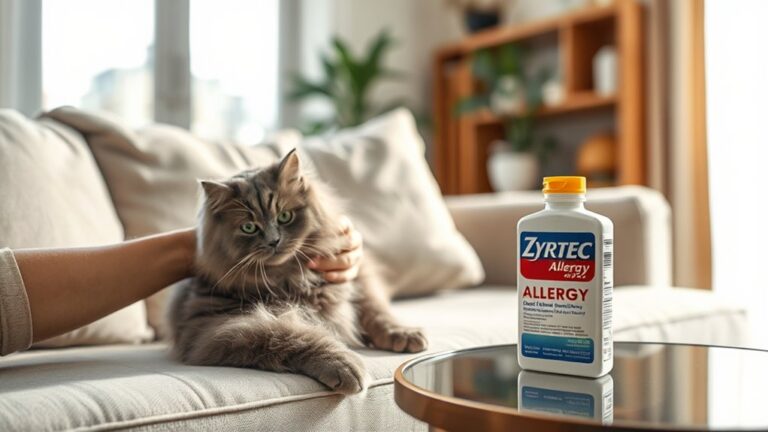
During stressful moments, a cat’s gentle presence can be surprisingly soothing, offering comfort without taking up much space. When you need to unwind, just petting or sitting quietly nearby lets their calming presence settle your nerves.
Cats often seek out your company without demanding attention, providing a subtle form of emotional support. Their quiet companionship acts like a natural balm, helping you relax and reset during busy days.
You don’t need to engage in active play; simply being near them can ease tension. Their peaceful presence alone is enough to remind you to breathe and regain focus.
This unobtrusive comfort makes cats perfect for those quiet moments when you need a gentle reminder to slow down. In those calm times, your feline friend becomes a soothing anchor amid life’s chaos.
Low Maintenance Comfort
Because they tend to be independent by nature, cats offer emotional comfort without requiring constant attention. Their relaxed behavior lets you enjoy stress relief and companionship on your schedule.
Imagine sitting quietly as your cat curls up on your lap during your daily interactions. You can also watch your cat investigate play alternatives like a simple toy mouse, asking for attention only sparingly.
Maintaining manageable feeding routines fits easily into your busy home environment. And you can savor the calm when your cat’s health and well-being are supported through minimal but consistent care.
This low-maintenance comfort helps you manage your time effectively while still fostering a strong bond. Cats provide emotional support without demanding your attention, making them perfect for busy lives.
Common Mistakes to Avoid When Caring for a Cat in a Busy Life
Juggling a busy schedule while caring for a cat can lead to common mistakes that might harm your pet’s well-being. One major issue is neglecting regular feeding or having inconsistent feeding times, which can cause health problems.
Busy lifestyles might tempt you to skip routine vet visits or overlook subtle health signs. It’s easy to forget the importance of playtime and mental stimulation, which can lead to boredom and behavioral issues.
Ignoring the need to clean the litter box regularly can put your cat at risk for infections or unpleasant odors. Also, neglecting enrichment or scratching posts can cause destructive behavior.
Relying only on automated feeders or missing out on daily interaction can make your cat feel isolated. To avoid these pitfalls, set simple routines, stay attentive to your cat’s needs, and carve out time for daily engagement.
These small efforts help ensure your busy life doesn’t compromise your cat’s happiness and health.
Frequently Asked Questions
Can Cats Adapt Well to a Changing Daily Schedule?
Yes, cats adapt well to changing daily schedules because of their independent nature. They don’t rely heavily on strict routines and can entertain themselves when you’re busy.
You’ll find that cats are flexible, often adjusting their activities around your unpredictable timetable. Their self-sufficient attitude makes them ideal for busy lives.
This allows you to enjoy their companionship without the pressure of maintaining rigid routines.
What Are Signs of Stress in a Busy Cat Owner?
You might notice signs of stress in yourself, like irritability, fatigue, or difficulty relaxing, which could indicate owner burnout.
Cat anxiety can show up as increased vocalization, hiding, or scratching furniture. These signs suggest your busy schedule is affecting both your well-being and your cat’s comfort.
Recognizing these signs helps you take steps to manage stress. This way, you can keep both yourself and your feline friend healthy, relaxed, and happy despite your hectic lifestyle.
How Do Cats Help Reduce Stress for Busy Individuals?
Imagine a tiny, purring therapist in your lap—cats offer purring therapy that melts away stress after a hectic day.
Their feline companionship provides comfort and a calming presence, helping you unwind and refocus.
By simply stroking their soft fur or sharing quiet moments, you tap into their natural ability to ease anxiety.
Cats turn your busy life into a more peaceful one, making every moment with them a soothing escape.
Are Certain Cat Breeds Better Suited for Hectic Lifestyles?
Certain cat breeds are better suited for hectic lifestyles because they often have a low-maintenance nature, making them easy to care for. Breeds like the British Shorthair and Russian Blue are independent, so they don’t require constant attention.
Others, like the Bengal or Siamese, have playful personalities that keep them active and engaged. Many also display affectionate traits, allowing you to bond without demanding excessive time.
How Quickly Can a Busy Person Train a New Cat?
You can start training your new cat quickly with effective reward systems and quick training techniques. Most cats respond within a few days to a week, especially when you reward good behavior consistently.
Keep training sessions short and positive, using treats or play as incentives. Your busy schedule doesn’t have to delay progress—patience and consistency are key.
Soon, your cat will understand what you expect, fitting smoothly into your hectic lifestyle.
Conclusion
Like a trusty sidekick in your busy life, a cat offers quiet companionship without the fuss. They’re the Robin to your Batman—independent yet always there when you need a gentle nuzzle or a calming purr.
Welcome their self-sufficient nature, and you’ll find that, just like a good novel you can pick up anytime, cats seamlessly fit into your hectic days. They make life a little brighter and a lot more manageable, proving why cats are the best pets for busy lives.