What Factors Make Me Get Shocked When I Pet My Cat?
Are you tired of getting shocked every time you pet your cat? You’re not alone—many pet owners struggle with static electricity that sparks unexpectedly. It can be frustrating and even uncomfortable for both you and your furry friend.
You’re likely getting shocked when petting your cat because of static electricity that builds up from environmental factors, your clothing, and your cat’s fur.
Dry air, synthetic fabrics, and your flooring choices can increase static charge. Your pet’s fur type and petting style also influence how much static you generate.
To reduce shocks, consider moisture or natural fibers.
Keep exploring to uncover more ways to keep both you and your cat comfortable and static-free.
Key Takeaways
Dry air and low humidity can cause static charge to build up on your body when you’re petting your cat. This makes shocks more likely.
Synthetic fabrics or carpets tend to generate more static electricity, so touching them after petting your cat might give you a shock.
If you pet your cat with quick or firm strokes, it increases friction and static charge transfer, making shocks more common.
Wearing synthetic clothing materials can also boost static buildup on your skin, leading to those surprises.
Finally, a lack of moisture in the environment prevents static electricity from dissipating naturally, so shocks become more frequent.
What Causes Static Shocks When Petting Your Cat?
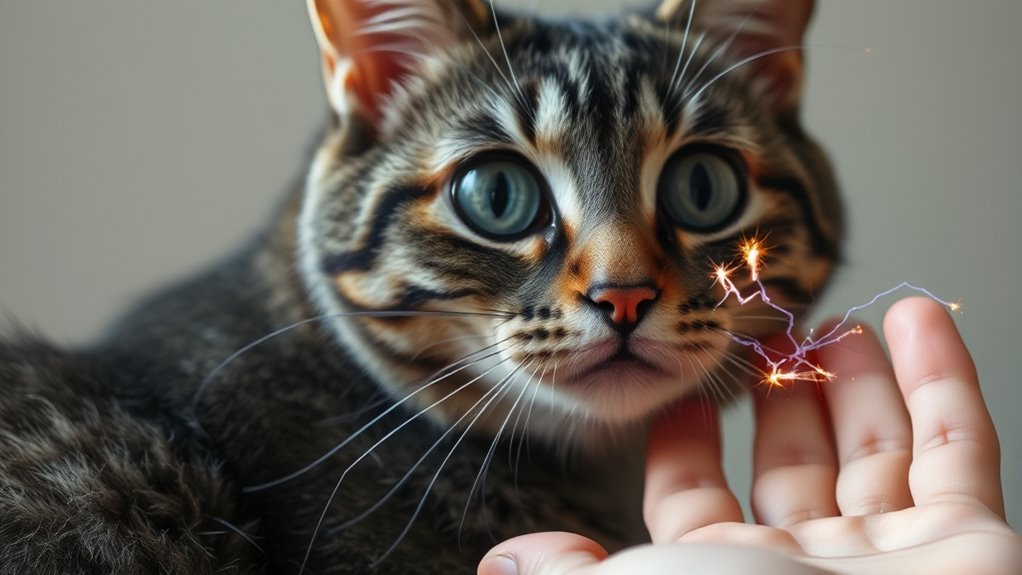
Static shocks happen when you pet your cat because of an imbalance of electrical charge between your body and your pet’s fur. As you stroke your cat, static discharge occurs due to fur friction, which creates electrons and builds up an electrical charge.
When your body and your cat’s fur have different charges, touching triggers a sudden static shock. This often happens in dry environments where moisture isn’t around to help dissipate static electricity.
The friction between your hand and your cat’s fur causes electrons to transfer, giving a negative charge to your skin or your cat’s coat. When you reach out again or touch a conductive surface, the static charge is released all at once, causing that surprising shock.
Understanding that fur friction and the buildup of static charge are behind static shocks can help you take steps to reduce these shocks. This is especially useful during dry seasons or in places with low humidity.
How Do Humidity and Flooring Contribute to Static Electricity?
Low humidity levels and certain types of flooring can greatly increase the chances of static electricity building up when you pet your cat. When the air is dry, moisture helps dissipate static, making it harder for charges to build up.
Without enough humidity, electrons transfer more easily from your cat’s fur to your hand, causing shocks. Flooring also plays a big role. Carpets, especially synthetic ones, tend to generate more static because they insulate and trap electrons.
On the other hand, hard surfaces like tile or wood are less likely to cause static buildup, but dry conditions can still make shocks more common. To cut down on shocks, try increasing humidity with a humidifier and opt for flooring like hardwood or tile that’s less static-prone.
Making these changes helps prevent static buildup and makes petting your cat a more comfortable experience.
Does Your Cat’s Fur Type Affect Static Buildup?
Your cat’s fur type can really affect how much static builds up when you pet them. Cats with fine, silky fur tend to generate less static because their fur is smoother, letting electrons transfer more evenly.
On the other hand, cats with coarse or wiry fur usually produce more static sparks since their rougher fur traps more charge. Short-haired cats generally build up less static compared to long-haired breeds, which have more fur to hold static electricity.
Regular grooming also helps. Brushing your cat often reduces loose fur and prevents static buildup. Using grooming tools suited for your cat’s fur type can make petting more comfortable and cut down on shocks.
How Does Your Clothing Influence Static Shocks With Cats?
Clothing choices can really affect how often you get static shocks when petting your cat. Certain fabrics create more friction, leading to more static buildup and shocks.
Synthetic fabrics like polyester, nylon, and acrylic tend to generate more static because they rub against your cat’s fur more. Natural fibers such as cotton, wool, or silk produce less static and help prevent shocks.
To keep static shocks away, opt for clothing made from these natural materials, especially in dry environments.
Here’s a quick comparison:
| Clothing Material | Fabric Friction Level | Static Shock Likelihood |
|---|---|---|
| Polyester | High | High |
| Cotton | Low | Low |
| Wool | Moderate | Moderate |
| Nylon | High | High |
| Silk | Low | Low |
Choosing natural fabrics can make petting your cat more comfortable and shock-free.
Why Rubbing or Petting Technique Matters for Static Buildup
The way you pet or rub your cat can really affect static buildup, no matter what you’re wearing. How you handle your cat’s fur and the pressure you use can either increase or reduce static electricity.
For example, using firm or quick strokes creates more fur friction, which builds up static charge. To help prevent shocks, here are some tips:
- Use gentle, slow strokes to reduce fur friction.
- Avoid rubbing against the grain of your cat’s fur, as it can increase static.
- Focus on areas with less dense fur to decrease static buildup.
- Keep your hands moisturized because dry skin can boost static transfer.
Adjusting how you pet your cat can help manage static better. Being mindful of your touch makes petting safer and more pleasant for both of you.
What Household Items Make Static Shocks Worse?
Certain household items can greatly increase static shocks when petting your cat. Items that act as static electricity sources, like synthetic rugs, carpets, or upholstery, can boost static buildup.
Walking across these surfaces transfers electrons to your body, creating a charge that discharges when you touch your cat. Dry air from heaters or air conditioning units also worsens static shocks by reducing moisture, making static electricity more likely.
Wearing clothing made from synthetic fibers, such as polyester or nylon, can intensify static buildup during petting sessions. Your petting techniques matter too; rapid or vigorous strokes can increase friction and static.
To minimize shocks, avoid these static electricity sources and opt for natural fibers and humidifiers. Being mindful of these household items and your petting style helps reduce static charges and makes petting your cat a more comfortable experience.
How to Reduce Static Electricity Before Petting Your Cat
Want to make petting your cat a lot more comfortable and less shocking? One easy trick is to increase the humidity in your home a bit. When the air is more humid, it helps prevent static electricity from building up, so you won’t get zapped every time you reach out.
You can also try spritzing some anti-static spray on your clothes and furniture. It’s a quick fix that can really make a difference. And if you’re picking out what to wear, opt for natural fiber clothes like cotton—they tend to generate less static than synthetic fabrics.
Just these simple steps can help keep your cuddles static-free and much more pleasant for both you and your furry friend!
Increase Humidity Levels
Boosting the humidity in your home can help reduce static electricity buildup before petting your cat. When humidity levels are higher, moisture in the air helps dissipate static charges more effectively.
To do this, consider using a humidifier to keep the moisture levels just right. You can also place bowls of water around your home or keep indoor plants that naturally release moisture into the air.
Venting rooms regularly helps balance humidity and prevents the air from becoming too dry. With proper humidity, static buildup is minimized, making petting safer and more comfortable for your cat.
When moisture levels are adequate, static shocks are less likely, creating a more pleasant experience for both of you.
Use Anti-Static Sprays
Using anti-static sprays is a quick and effective way to reduce static electricity just before petting your cat. These solutions work by neutralizing the electrical charge on your clothing and your cat’s fur.
Spray lightly on your hands, clothing, or your cat’s coat to minimize shocks. After applying, incorporate gentle petting techniques to avoid increasing static build-up.
It’s best to wait a few moments for the spray to settle before touching your feline friend. Regular use of anti-static sprays can help prevent surprise shocks and make grooming or petting more comfortable.
Wear Natural Fiber Clothing
Wearing natural fiber clothing, like cotton or wool, can really cut down on static electricity when petting your cat. Natural fibers absorb moisture better and don’t build up static as much as synthetic materials do.
To keep shocks at bay, try these tips:
- Pick clothing made from natural fibers such as cotton or wool.
- Steer clear of synthetic fabrics like polyester, which tend to increase static.
- Layer your clothes; this helps discharge static electricity.
- Keep your skin moisturized because dry skin makes static worse.
These simple steps can make petting your cat safer and more comfortable. Natural fiber clothing naturally resists static, giving you and your feline friend a gentler, shock-free experience.
Tips for Handling Static Shocks Safely During Playtime
To handle static shocks safely during playtime, it’s important to take proactive steps that reduce their occurrence and protect both you and your cat. First, increase your static awareness by grounding yourself before interacting. Touch a metal object or wear an anti-static wristband to discharge any built-up static electricity.
Use humidifiers in your home, especially during dry seasons, to keep the air moist and minimize static buildup. When playing with your cat, opt for natural fiber toys and materials, as they generate less static. Avoid overly synthetic clothing or surfaces that promote static electricity.
Consider applying feline-safe moisturizing sprays to your cat’s fur to reduce static buildup on their coat. During play, take short breaks to touch a metal object, discharging static from your body. These simple steps improve playtime safety, lessen static shocks, and create a more comfortable experience for both you and your feline friend.
When Should You Talk to a Vet About Excessive Static Buildup?
If your cat suddenly flinches or tries to avoid being petted, it might be a sign of excessive static buildup. Keep an eye on how often this happens and see if there are specific triggers, like certain fabrics or environments, that seem to cause those shocks.
If these static shocks happen frequently or seem to be bothering your kitty more and more, it’s a good idea to talk to a vet. They can help figure out what’s going on and suggest ways to make your cat more comfortable.
Signs of Discomfort
Excessive static buildup can cause noticeable discomfort for your cat during petting. Recognizing feline signals is essential to avoid causing them stress. If your cat shows any of these signs, it’s a good idea to talk to a vet:
- Tensing or pulling away – your cat stiffens or tries to escape when you pet them.
- Vocalizing loudly – sudden yowling or hissing means they’re uncomfortable.
- Uneasy grooming or scratching – constant licking or scratching at the skin can be a sign.
- Excessive grooming or biting – biting at specific areas, especially if related to static shocks.
These behaviors suggest your cat might be uncomfortable from static or other issues. Pay close attention to their signals. If these signs keep happening, seek professional advice to keep your feline friend happy and healthy.
Frequency and Triggers
Three or more episodes of static shocks during petting sessions should prompt a visit to your vet. Keep an eye on how often they happen; if static shocks occur repeatedly or suddenly increase, it might be a sign of an underlying issue.
Think about triggers like dry environments, certain fabrics, or specific areas of your cat’s body. If static buildup happens frequently or gets worse with minimal contact, it’s time to seek professional advice.
Sometimes, excessive static can point to skin conditions, dry skin, or other health problems that need attention. Your vet can help identify the cause and suggest ways to reduce static shocks, so both you and your cat stay comfortable during petting.
Simple Ways to Keep Your Cat Comfortable and Static-Free
Keeping your cat comfortable and static-free involves simple, consistent practices that reduce static buildup and discomfort. To improve your cat’s comfort and help prevent static, try these easy tips:
- Use a humidifier in dry environments to keep the air moist. This helps reduce static electricity and keeps your cat comfortable.
- Brush your cat regularly with a natural bristle brush. It spreads natural oils and minimizes static buildup on their fur.
- Switch to grooming tools made from anti-static materials like rubber or silicone. These prevent static shocks during petting.
- Keep your cat’s bedding and furniture smooth and clean. Rough or dirty surfaces can increase static and make your cat uncomfortable.
Frequently Asked Questions
Can My Cat’s Health Affect How Much Static Electricity They Generate?
Yes, your cat’s health can affect how much static electricity they generate. If their fur is dry or flaky, they’re more likely to build up static.
Low environmental humidity also makes static buildup more common, leading to more shocks. Regular grooming can help improve their fur’s health.
Using a humidifier can keep humidity levels steady, which reduces static electricity. That way, petting your cat won’t give you as many shocks.
Are Certain Breeds More Prone to Static Shocks Than Others?
Yes, some breeds are more prone to static shocks, especially those with short-haired or fine fur, which tend to generate more static electricity.
Environmental humidity also affects static buildup; low humidity levels make shocks more likely. Breeds with thick or plush coats may also hold more static.
To help reduce shocks, try increasing the humidity and brushing your cat regularly to lessen static buildup.
How Often Should I Replace My Cat’s Bedding to Reduce Static?
You should replace your cat’s bedding every 4 to 6 months to help reduce static buildup. Choosing materials like cotton or fleece can also make a difference because they’re less prone to static.
To keep static at bay, wash the bedding regularly—about once a week—using fabric softener or dryer sheets. These help reduce static electricity and keep your cat comfortable.
Proper washing frequency and selecting the right materials really do make a noticeable difference in preventing shocks when petting your cat.
Do Indoor Plants Influence Static Electricity in My Home?
Indoor plants can influence static electricity in your home because their humidity levels, soil type, and placement affect electrical buildup. Higher humidity from plants helps reduce static shocks, while dry air makes static more likely.
Soil type matters too. Moist soil retains more moisture, which helps lower static, whereas dry, sandy soil can contribute to static buildup. Choosing plants with good humidity and appropriate soil can help minimize static shocks when petting your cat.
Can Using Air Purifiers Help Decrease Static Shocks When Petting My Cat?
Yes, using air purifiers can help decrease static shocks when petting your cat. They improve air quality by filtering out particles that contribute to static buildup.
Also, maintaining ideal humidity levels with an air purifier or humidifier can reduce static electricity. This makes shocks less likely and keeps things more comfortable.
Conclusion
So, next time your static shocks turn petting into a mini fireworks show, remember it’s not your cat’s fault or yours. Ironically, all those cozy sweaters and slick flooring you love might be the culprits.
Instead of avoiding your feline friend, try some simple fixes. After all, what better way to bond than with a little less zap and a lot more purrs?
Stay static-free and keep those paws soft and shock-free.