Do Dogs and Cats Like Being Petted?
Many pet owners wonder if their dogs and cats actually enjoy being petted. You’re not alone—figuring out what your furry friends like can be tricky. Every pet is different, and understanding their preferences takes some observation.
Most dogs and cats have their own preferences about petting. Some love gentle strokes along their back or head, while others prefer less contact or shorter interactions.
Pay attention to body language—relaxed muscles, purring, or wagging tails show enjoyment, whereas pulling away or tense muscles indicate discomfort. Understanding their signals helps you provide positive experiences.
If you want to uncover more about how to tell if your pet is happy or unhappy, keep exploring.
Key Takeaways
Pets have individual preferences; some enjoy long, gentle strokes, while others prefer brief or less frequent contact.
Signs of comfort include relaxed posture, purring, wagging tail, and leaning in, which show they enjoy the petting.
Body language cues like tense muscles, flattened ears, or pulling away indicate discomfort or overstimulation.
Recognizing and respecting these boundaries helps ensure positive experiences and builds trust between pets and owners.
A pet’s socialization and temperament also influence how much they enjoy being petted and their response to it.
Do Dogs and Cats Really Like Being Petted?
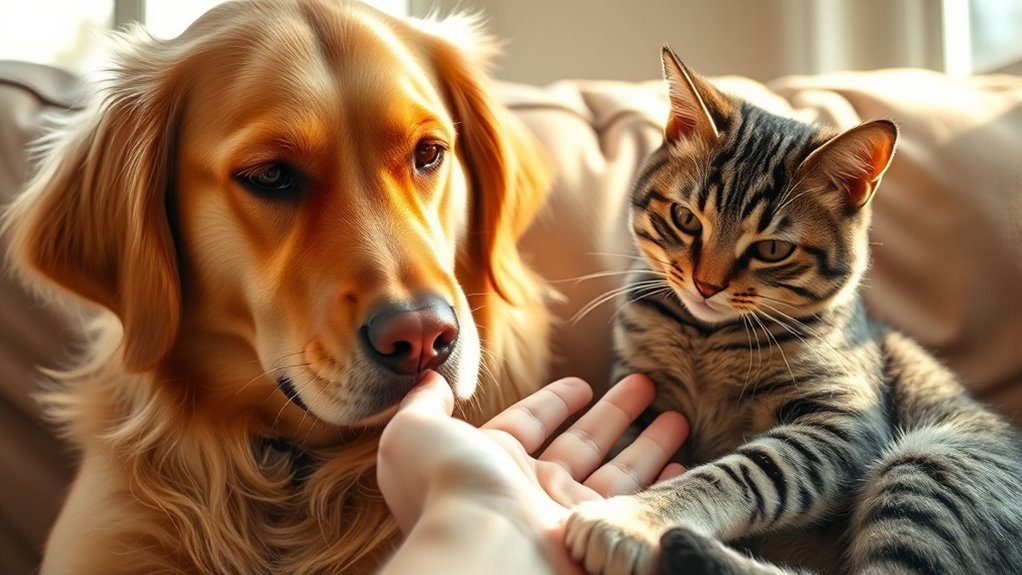
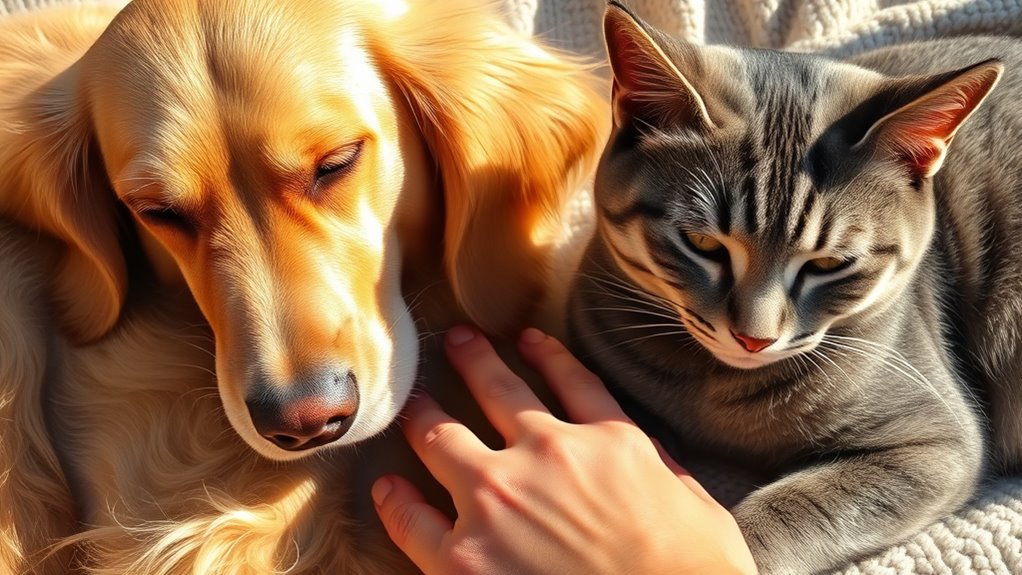
Many pet owners wonder if their dogs and cats truly enjoy being petted, and the answer isn’t always clear. Animal psychology shows that pets have individual preferences, so it’s important to watch their reactions to different petting styles.
Some animals thrive on gentle strokes along the back or behind the ears, while others prefer less contact. Paying attention to their body language helps you figure out what they like.
Look for signals like relaxed muscles, purring, or wagging tails, which show they’re happy. On the flip side, tense muscles, turned-away ears, or swatting mean they’re uncomfortable.
Using the right petting techniques based on their responses can help strengthen your bond. Remember, not all dogs and cats enjoy being petted the same way, so respecting their boundaries is key.
Being aware of animal psychology helps you create positive experiences, making sure your pet feels safe and loved during your interactions.
How Can You Tell If Your Pet Is Comfortable When You Pet Them?
How can you tell if your pet feels comfortable when you pet them? Observing their body language is key. Signs of comfort include a relaxed posture, gentle tail wagging, or soft eyes. If they lean into your touch or nuzzle you, they’re enjoying the petting.
Conversely, if your pet pulls away, tenses up, or shows signs of agitation, it’s time to stop or adjust your petting techniques. Respect their comfort zones by starting slow and paying attention to their reactions.
| Behavior | Interpretation |
|---|---|
| Relaxed body | Indicates comfort and enjoyment |
| Tense muscles | Shows discomfort or overstimulation |
| Tail position | Wagging loosely suggests happiness; stiff indicates unease |
| Eye contact or blinking | Soft, slow blinking signals trust and relaxation |
Signs Your Pet Enjoys Being Petted
When your pet truly enjoys being petted, their body language clearly shows their happiness. Look for relaxed posture, soft eyes, and a gentle tail wag or purring.
They may lean into your touch or nuzzle you as a sign of comfort. Using gentle strokes along their favorite spots can make the experience even better.
Pay attention to their preferences—some pets like slow, gentle petting, while others prefer more vigorous strokes. Their positive reactions, like purring, relaxed muscles, or rolling over to expose their belly, show they’re happy with your petting.
Keep an eye on their ears and facial expressions too; a relaxed face and soft eyes are good signs. When you notice these signs, you can be confident that your pet is truly enjoying your affection and your petting techniques are hitting the right spot.
Signs Your Pet Dislikes Being Petted
Pets often communicate their discomfort through subtle cues, so it’s important to pay close attention to their reactions. If your pet shows signs of discomfort, it probably means they don’t like being petted at that moment.
Common signals include pulling away, tensing their body, or flattening their ears. You might also notice them licking their lips, yawning excessively, or even growling or hissing. These behaviors come from their natural instincts to protect themselves.
Respecting their petting preferences is key to building trust and keeping them happy. If your pet suddenly becomes stiff or tries to escape, these are clear signs they’re uncomfortable. Avoid forcing contact, as this can damage your bond and cause stress.
How Dogs and Cats Show Different Petting Preferences
Understanding that animals have unique ways of expressing their comfort or discomfort helps you better interpret their reactions to petting. Dogs and cats often prefer different petting techniques based on their individual behavior.
Dogs usually enjoy being stroked along their backs, chest, and shoulders. They show trust through relaxed body language and may nuzzle or lean into your hand, signaling they’re comfortable.
Cats, on the other hand, often favor gentle touches on their head, cheeks, or behind the ears. They might knead or purr when happy but can become overstimulated if petting continues in certain areas.
Recognizing these differences is key to respecting their petting preferences. Adjust your techniques accordingly and pay close attention to subtle cues.
This approach helps foster a positive interaction, making sure your pet feels safe and appreciated. Understanding their behavior allows you to build stronger bonds with both dogs and cats.
What Body Language and Sounds Reveal About Your Pet’s Feelings
Your pet’s body language and sounds can really give you a lot of clues about how they’re feeling when you’re petting them. For example, if they look relaxed and start purring, that’s usually a good sign—they’re comfortable and enjoying the moment.
On the flip side, if you notice tense muscles or hear growling, it might mean they’re feeling uncomfortable or even annoyed. Paying close attention to these cues can help you figure out when to keep going and when it’s time to give them some space.
Body Language Signals
Body language and sounds are key clues that show how dogs and cats feel when you’re interacting with them.
For dogs, tail wagging often means happiness or excitement, but the speed and height tell you more. A relaxed, sweeping wag shows contentment, while a stiff, high wag might mean alertness or overstimulation.
Ear positions also reveal emotions: relaxed ears show comfort, but ears pulled back can signal fear or irritation.
For cats, a slow blink or soft purring suggests they’re enjoying your company. On the other hand, flattened ears or a tense body show discomfort or stress.
Vocalization Cues
Have you ever noticed the different sounds your pet makes and wondered what they mean? Recognizing vocalization types helps you interpret your pet’s feelings.
A soft purring or gentle meow often indicates contentment and relaxation, especially when petting. Conversely, a loud, persistent meow or growl can signal discomfort or annoyance.
Dogs may bark softly when happy or excited, but a high-pitched yip might mean they’re anxious or enthusiastic. Sound interpretations reveal your pet’s emotional state, so pay attention to the tone, pitch, and context.
If your cat’s meow becomes more insistent or your dog’s bark turns aggressive, it’s a cue to pause. Understanding vocalization cues allows you to respond appropriately, ensuring your pet feels safe and appreciated during petting sessions.
Tips for Petting Your Dog or Cat So They Enjoy It
How can you guarantee that petting your dog or cat is a positive experience for both of you? Start with gentle petting techniques, paying attention to their reactions.
Use slow, deliberate strokes and avoid sudden movements that might startle them. Observe their body language—if they lean into your touch or purr, you’re on the right track.
Incorporate positive reinforcement by offering treats or praise when your pet relaxes or enjoys the petting. This helps them associate your touch with good things.
Be mindful of sensitive areas like the face or belly, and respect their boundaries if they move away. Consistency is key—establish a routine that your pet finds comforting.
When Should You Stop Petting Your Pet?
Paying attention to your pet’s signals is key to knowing when to stop petting. The petting duration should match your pet’s comfort level, which varies based on individual preferences. Watch for signs like turning away, tail flicks, or tense muscles—they indicate your pet might want a break.
Pay attention to your pet’s signals to ensure comfortable, positive petting experiences.
If they start to yawn or shake, it’s a cue they’ve had enough. It’s important to stop before your pet becomes overwhelmed or stressed. Remember, every pet is different; some enjoy longer sessions, while others prefer brief interactions.
Respect their boundaries and avoid pushing them to stay engaged if they show discomfort. By staying attentive to their signals, you guarantee petting remains a positive experience. Knowing when to stop helps maintain your pet’s trust and prevents accidental discomfort or irritation.
Always err on the side of caution and prioritize your pet’s individual preferences.
Why Some Pets Love Petting While Others Don’t
Your pet’s reaction to being petted really depends on their own personality and what they’ve experienced before. Some animals absolutely love the affection because they’ve had good, positive experiences with it. Others might not be as big fans because they’ve had negative encounters in the past.
Getting to know what your pet is comfortable with is key. Paying attention to their body language and respecting their boundaries can help build a stronger bond and trust between you. It’s all about understanding what makes them feel safe and happy.
Personal Comfort Levels
Pets have their own comfort levels when it comes to being petted, which often depends on their personalities, past experiences, and how they’re feeling right now. Respecting their boundaries is key to having a positive interaction.
Some pets have clear preferences about where and how they like to be touched, while others might be more tolerant or less receptive. You might notice signs like leaning in or purring, which show they’re comfortable, or pulling away and avoiding eye contact, indicating they’re not.
It’s really important to pay attention to these cues and never push beyond their limits. Recognizing each pet’s personal boundaries helps build trust and makes petting a pleasant experience for them.
Always approach with patience and understanding of their unique comfort levels.
Past Experiences Influence
Past experiences play a big role in how pets respond to being petted. If your pet has had positive interactions and early socialization, they’re more likely to enjoy petting and find it comforting.
On the other hand, past trauma or negative encounters can make your pet wary or even afraid. Their reactions are also influenced by their individual temperament and breed tendencies—some breeds are naturally more tolerant, while others are more sensitive.
Environmental factors matter too, like a calm setting or a history of rough handling, which can affect how comfortable they feel.
Your influence as an owner is important—gentle, consistent petting combined with positive reinforcement helps build trust.
What Science Says About Pets’ Comfort With Touch
Science has provided valuable insights into how dogs and cats perceive touch, revealing that their comfort with being petted depends on various factors. Your pet’s touch preference varies based on their sensory response; some animals enjoy gentle stroking, while others prefer firmer pressure.
Their reactions also reflect emotional bonding and attachment styles, showing how securely they feel with you. Individual temperament plays a big role, with some pets naturally more receptive to touch than others.
Breed differences influence comfort levels too—certain breeds are more tactile, while others may be more reserved. Environmental factors like past experiences and socialization shape how they respond, making consistency and positive interactions key.
Knowing these elements helps you understand your pet’s boundaries and build trust. Recognizing that each pet is unique allows you to tailor your approach, ensuring that touch remains a source of comfort and emotional connection rather than stress.
Frequently Asked Questions
How Often Should I Pet My Dog or Cat?
You should pet your dog or cat based on their individual preferences and comfort levels.
Generally, a few gentle petting sessions daily are enough, but pay attention to their reactions so you can adjust how often you do it.
Some animals love frequent affection, while others prefer less.
Watch their body language to make sure they’re enjoying the interactions.
Respect their boundaries, and you’ll strengthen your bond while keeping them happy and relaxed.
Does Age Affect a Pet’s Enjoyment of Being Petted?
As your pet ages, their preferences for being petted can change like the seasons.
Young animals often want more interaction, while older ones might prefer gentle strokes or less touch.
Age can influence how pets behave, making some more tolerant or sensitive to petting.
Watch their cues closely and adjust your approach so they stay comfortable.
The key is to keep every petting session a positive, nurturing experience for your furry friend.
Are There Specific Areas Pets Prefer to Be Touched?
Your pets often have preferred petting zones, which vary based on individual animal preferences. For dogs, many enjoy gentle strokes along the chest, shoulders, and base of the tail.
Cats typically prefer being petted on their head, cheeks, and along the back. Pay attention to their reactions and respect their boundaries to guarantee positive interactions.
Each pet’s comfort zone can differ greatly, so observing their cues is key to a good bond.
Can Petting Help Reduce My Pet’s Stress?
You might notice that petting naturally reduces your pet’s stress, as it’s a powerful calming technique. The benefits of petting include lowering cortisol levels and increasing oxytocin, which helps your pet feel safe and relaxed.
Coincidentally, gentle touch mimics social bonding signals, making it even more effective. Regular petting sessions can strengthen your bond while providing comfort.
What Are Common Signs of Overstimulation During Petting?
You’ll notice signs of overstimulation during petting when your pet shows cues like twitching tails, flattened ears, or suddenly pulling away.
They might also yawn, lick their lips, or become restless. Recognizing these overstimulation signals helps you respect their petting preferences and prevents discomfort or stress.
Pay close attention to these cues to ensure petting stays a positive experience and avoid overwhelming your four-legged friend.
Conclusion
Understanding your pet’s preferences helps you build a stronger bond. Did you know that about 85% of dogs and cats enjoy being petted? But their reactions can be quite different.
By paying attention to their signals, you can make sure your pet feels safe and loved. If they show signs of discomfort, it’s best to stop and give them space.
With patience and observation, you’ll make petting a positive experience for both of you. Remember, knowing whether dogs and cats like being petted is key to a happy, healthy relationship.