Symptoms of Cat Allergies That Cause Hives
Many people who love cats also struggle with allergy symptoms that can really impact their daily lives. If you’re dealing with this, you’re not alone—cat allergies are more common than you might think.
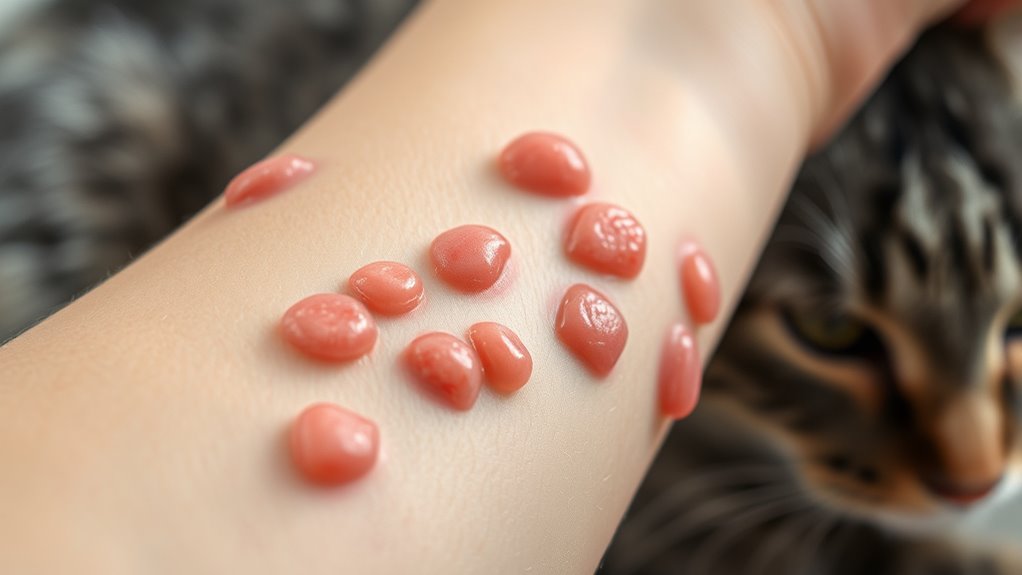
One of the most frustrating reactions are hives, which can suddenly appear and cause discomfort. Symptoms of cat allergies that cause hives include raised, red, itchy bumps on your skin soon after exposure.
These hives can spread or change shape and are often found on your arms, face, or neck. They usually happen within minutes to hours and can cause a burning or stinging sensation.
The amount of dander you’re exposed to and your sensitivity can make symptoms worse. Keep going to discover how to better identify and manage these reactions.
Key Takeaways
- Raised, red, itchy bumps show up on your skin shortly after you’re around cats, usually within minutes to a few hours.
- These hives can be different sizes and shapes, often popping up on exposed areas like your arms, face, or neck.
- You’ll probably feel intense itching and burning along with the bumps, which can be pretty uncomfortable.
- The immune system releases histamine, which causes swelling and redness in the affected skin.
- Things like dust, pollen, or smoke in the environment can make the hives worse.
What Are the Common Signs of Cat Allergy Hives?
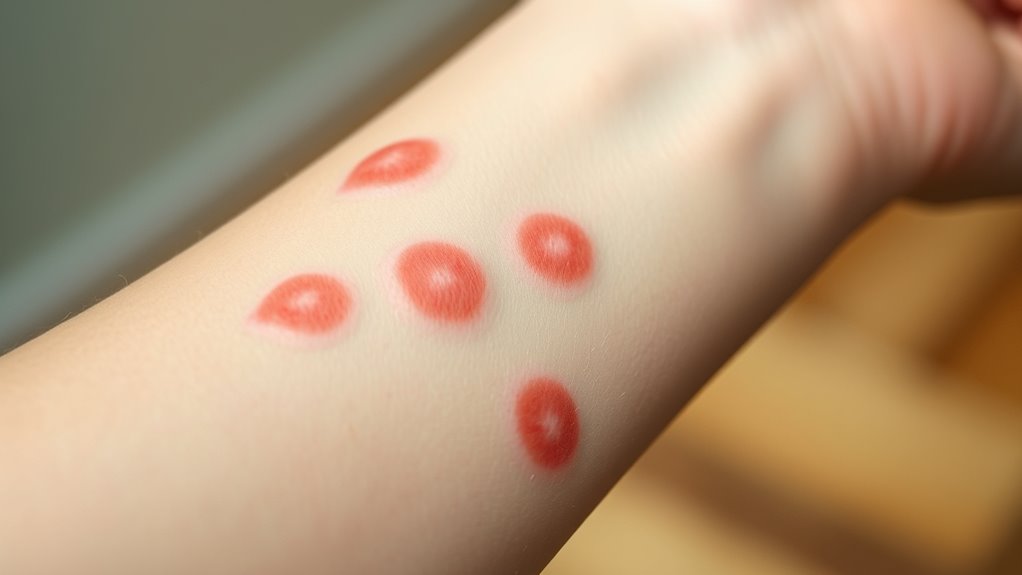
Have you noticed raised, red, and itchy bumps on your skin after spending time around cats? These are common signs of cat allergy hives, which can appear suddenly.
Raised, red, itchy bumps after cat exposure may indicate allergy hives. Seek testing for proper diagnosis.
If you experience these bumps, it’s important to consider allergy testing to confirm if cats are the trigger. Hives usually show up within minutes to hours of exposure and may spread or change shape.
They often feel itchy and uncomfortable, making daily activities harder. Managing these symptoms involves avoiding contact with cats and their dander, but allergy testing helps identify the cause accurately.
Once you know what’s causing the reaction, you can work on effective strategies like antihistamines or topical treatments. Recognizing the signs early helps you take control and reduce reactions.
If your hives are persistent or severe, it’s a good idea to consult a healthcare professional for personalized advice and tailored treatment options.
How Do Cat Dander Allergies Cause Skin Reactions?
When you’re exposed to cat dander, tiny allergen particles become airborne and settle on your skin, triggering an immune response. Dander transmission happens when these microscopic particles transfer from the cat to your environment and contact your skin.
Your immune system sees these harmless proteins as threats, releasing chemicals like histamine. This release causes skin reactions such as hives, redness, and itching.
The immune response is immediate, as your body tries to defend itself against what it perceives as a harmful invader. The more dander that settles on your skin or is inhaled, the more intense these reactions can get.
Frequent contact with cats increases the chances of dander transfer and skin symptoms. Understanding how dander triggers your immune system helps explain why skin reactions happen and highlights the importance of minimizing exposure to manage symptoms effectively.
Recognizing Hives: What Signs Should You Look For?
How can you tell if you’ve developed hives from a cat allergy? Look for raised, red, and itchy skin reactions that pop up suddenly. Hives, or wheals, are usually a quick response to triggers like cat dander or contact with pet fur.
These skin reactions can be small bumps or large patches, and they tend to come and go fast. You might notice they’re itchy, uncomfortable, or even burning or stinging. Hives often have a clear border and might look swollen.
Small bumps or large patches that come and go quickly, itchy, burning, or stinging with clear borders.
Keep an eye out for clusters of these skin issues on exposed areas like your arms, face, or neck. Recognizing these signs early can help you tell apart hives caused by a cat allergy from other skin problems.
If you think you have hives, try reducing contact with cats and watch your symptoms. Doing so can help prevent more skin reactions and keep you more comfortable.
Why Do Hives Itch and Swell During a Cat Allergy Reaction?
During a cat allergy reaction, your immune system overreacts to allergens like cat dander, releasing chemicals that cause hives to itch and swell. The main culprit is histamine, a chemical your body releases during an allergic response.
When your immune system detects the allergen, it triggers an itch response, leading to sensations of itching on the skin. Histamine causes the blood vessels beneath the skin to dilate and become more permeable, which results in swelling or edema.
This combination of swelling and itchiness creates the characteristic look of hives. The itching is your body’s way of signaling that something is wrong, while the swelling happens because more blood flow is rushing to the affected area.
This process helps your immune system respond to the allergen but can also cause discomfort. Understanding how histamine release drives these symptoms can help you better manage your allergic reactions.
How Quickly Do Hives Usually Appear After Exposure?
Hives can appear quickly after you’ve been exposed to a cat allergen, often within minutes. The hive onset during an allergic reaction is usually rapid, making it an immediate response to the allergen.
If you’re sensitive, you might notice swelling, redness, and itching almost instantly after contact with cat dander or saliva. These quick reactions show that your immune system is responding fast to the allergen.
The speed at which hives appear varies depending on your sensitivity and how much exposure you’ve had. Some people see hives within five to ten minutes, while others might notice them a bit later.
Recognizing how fast hives develop can help you identify what’s causing your symptoms early. If hives show up soon after being around cats, it’s a clear sign your body is reacting to the allergen.
This can prompt you to take steps to reduce exposure and better manage your allergy symptoms.
How to Tell Hives Apart From Other Cat-Related Skin Issues?
Sure! Here’s a more conversational version of the text:
—
So, figuring out if your cat has hives or something else can be a bit tricky, but paying close attention to the signs can really help. For example, flea bites usually look like small, itchy bumps that pop up all over your cat’s neck and tail. On the other hand, contact dermatitis tends to cause red, inflamed patches on the skin after your cat comes into contact with something irritating.
Getting a good look at these differences can really help you figure out whether your kitty’s skin issue is hives or something different.
Differentiating From Flea Bites
When trying to tell the difference between hives caused by allergies and flea bites, it helps to look closely at how they appear and where they’re located on the skin. Flea identification can be useful—look for tiny, dark specks, which is flea dirt, near the bites.
Flea bites usually look like small, red, itchy bumps that tend to cluster. They’re often found at common flea bite spots like the base of the tail, groin, or abdomen. On the other hand, allergic reactions often cause larger, raised hives that can pop up suddenly and spread over bigger areas of the skin.
The main difference is that flea bites are localized and linked to flea activity, while hives from allergies tend to be more widespread and connected to exposure to allergens. Recognizing these signs can help you target the right treatment and address the root cause effectively.
Recognizing Contact Dermatitis
| Feature | Contact Dermatitis | Hives | Infection |
|---|---|---|---|
| Appearance | Red, inflamed, crusted patches. | Raised, itchy welts. | Pus, oozing, or crusting. |
| Duration | Persistent if exposure continues. | Usually short-lived. | May worsen without treatment. |
| Cause | Allergens or irritants. | Allergic reaction to triggers. | Bacterial or fungal infection. |
Spot the differences to better identify your cat’s skin issues and manage allergy triggers effectively.
Are Some Cats More Likely to Trigger Hives Than Others?
Some cats are more likely to trigger hives because of their breed or individual sensitivities. It’s not just about the fur, though—certain cats just seem to bother some people more than others.
For example, cats with dense or long fur can spread more allergens around, which might increase your chances of having a reaction. So, if you’re really sensitive, it’s good to keep that in mind when choosing a cat.
Knowing these differences can help you figure out which cats might cause more allergic responses, and maybe make your experience a little easier.
Breed-Related Allergic Reactions
Certain cat breeds tend to trigger allergies more often than others, so it’s important to consider breed traits if you’re prone to allergic reactions. Some breeds produce higher levels of allergy triggers, like Fel d 1 protein, which is found in saliva, skin, and urine.
Breeds such as Siamese, Sphynx, and Oriental Shorthairs are known for their increased allergenic potential because of their unique breed characteristics. These cats may shed less or have different coat types, but their allergy triggers can still cause reactions.
Knowing which breeds are more likely to provoke sensitivities can help you make better choices. If you’re worried about hives or other allergy symptoms, choosing hypoallergenic breeds or cats with specific traits can reduce your chances of reacting.
Fur Length and Density
- Thick, fluffy coats tend to trap more dander and loose hair, which can increase shedding around your home.
- Short-haired cats usually have sleek coats that shed less, making cleanup easier.
- Regular grooming sessions help remove loose fur before it has a chance to spread everywhere.
Individual Cat Sensitivities
Not all cats are equally likely to trigger allergic reactions like hives; sensitivities can vary a lot from one individual to another. Some cats produce fewer allergy triggers, while others might cause more noticeable reactions. Your immune system’s response depends on how it reacts to specific proteins in a cat’s saliva, skin, or urine.
This means that certain cats might be less likely to cause hives, even if they shed or have fur. Factors like genetics, grooming habits, and the environment also influence these allergy triggers. Knowing that some cats are less allergenic can help you manage your symptoms better.
However, even a less reactive cat can sometimes cause a reaction. So, understanding your individual sensitivities is key to reducing allergy symptoms and avoiding hives.
What Factors Make Cat Allergy Hives Worse?
When exposed to specific triggers, cat allergy hives can become significantly worse. Your reaction gets stronger with certain allergy triggers and environmental factors. These include dust mites, pollen, and cigarette smoke, all of which can make your symptoms more intense.
Environmental factors play a big role in worsening your hives. For example, cluttered spaces with lots of pet dander trap allergens, increasing your chances of exposure. Humid conditions can also promote mold growth, which irritates your skin even more. Poor air circulation allows allergens to stay in the air longer.
To picture this, think of dust settling into thick carpets and upholstery, or pollen drifting through open windows and doors. Smoke can linger in rooms that don’t have good ventilation. These elements create a perfect storm that heightens your sensitivity and makes hives worse.
Managing these factors can help reduce the severity of your allergy symptoms and prevent flare-ups.
When Should You See a Doctor About Cat Allergy Hives?
Knowing when to see a doctor about your cat allergy hives is important for managing your symptoms. If your hives stick around despite home remedies or get worse over time, it’s a good idea to seek professional help.
You might need allergy testing to confirm the allergy and find out what’s triggering it. If you have trouble breathing, swelling of your face or throat, or feel dizzy, seek emergency care right away.
A healthcare provider can discuss medication options like antihistamines or corticosteroids to help control your reactions.
| Symptom Severity | When to Seek Medical Attention |
|---|---|
| Mild, occasional hives | Consider allergy testing and over-the-counter meds |
| Persistent hives | Talk to your doctor for ongoing management |
| Breathing difficulties | Seek emergency care immediately |
| Swelling of face/throat | Go to the ER right away |
| Dizziness or fainting | Immediate medical attention required |
Tips to Manage and Prevent Hives From Your Cat?
To effectively manage and prevent hives caused by your cat, start by minimizing your exposure to allergens. Regularly cleaning your home, using HEPA filters, and washing your hands after handling your cat can greatly reduce allergen buildup.
Creating designated cat-free zones, especially in your bedroom, can help provide allergy relief. Consider grooming your cat frequently to reduce shedding and dander.
Using allergy-proof bedding and avoiding touching your face after contact with your cat can further minimize reactions. Visualize these actions: keeping your cat out of your bedroom, using allergen-reducing air purifiers, and washing your hands and clothes regularly.
These steps help decrease allergen levels and lessen hive outbreaks, making allergy management more effective. Consistently applying these strategies can make a noticeable difference in controlling your symptoms.
Frequently Asked Questions
Can Cat Allergy Hives Be Life-Threatening?
Cat allergy hives can sometimes be life-threatening if they lead to a severe allergic reaction like anaphylaxis.
If you’re exposed to cat allergy triggers and have trouble breathing, swelling, or dizziness, get emergency help right away.
For milder reactions, antihistamines and avoiding contact with cats can help treat hives.
Always talk to a healthcare professional to find the best plan, especially if you have a history of severe allergies.
Are Children More Prone to Cat Allergy Hives?
Yes, children are more prone to cat allergy hives because their immune systems are still developing, making childhood sensitivity common.
You might notice hives after exposure, especially if they haven’t undergone allergy testing to confirm sensitivities.
Imagine your child scratching at itchy, raised skin patches—this is a typical reaction.
Early allergy testing can help identify triggers so you can manage exposure and reduce discomfort effectively.
Do Certain Breeds Cause More Hives Than Others?
Some breeds are more likely to trigger hives than others. Hypoallergenic breeds like Siamese or Russian Blue tend to produce fewer allergens, which can lower your risk of hives.
In a breed comparison, you’ll see that long-haired cats generally shed more, spreading more allergens around. If you’re prone to hives, choosing hypoallergenic breeds might help.
But keep in mind, individual reactions vary. It’s a good idea to spend time with different cats first to see how your body responds.
Can Antihistamines Prevent Hives From Cat Allergies?
Antihistamines can be effective in preventing hives caused by cat allergies by blocking histamine release. However, how well they work can vary from person to person.
You might want to consider other allergy treatments like corticosteroids or allergy shots to better manage your symptoms. Always check with your healthcare provider for personalized advice and proper diagnosis.
This way, you can choose the best approach to prevent hives and reduce allergy symptoms effectively.
How Long Do Cat Allergy Hives Typically Last?
Cat allergy hives usually last anywhere from a few hours to a couple of days, depending on your allergy severity and how quickly you treat the reaction.
If you take antihistamines promptly, you might notice quicker relief and shorter hive duration.
But if your allergy is severe or untreated, hives could stick around longer.
Monitoring your symptoms and talking to a healthcare professional can help you manage and reduce how long they last.
Conclusion
Dealing with cat allergy hives can feel overwhelming, but understanding your triggers and managing symptoms can help you regain control of your space.
Recognizing the signs early and taking preventive steps can keep those pesky hives at bay. Don’t hesitate to consult a doctor if needed—your comfort is worth it.
Stay proactive, and you can enjoy living happily ever after in your own peaceful home, free from the worries of cat allergy hives.