Best Worm Medicines for Cats: Top 7 Options Reviewed
If your cat has ever been diagnosed with worms, you know how stressful it can be to find the right treatment. Many pet owners struggle to choose effective and safe options that work quickly and fit their cat’s needs.
You’re not alone in this—finding the best worm medicines for cats can feel overwhelming.
If you’re searching for the best worm medicines for cats, you should consider options like fenbendazole, praziquantel, and pyrantel pamoate, which are vet-approved and effective against common worms like roundworms and tapeworms.
Make sure to choose treatments that suit your cat’s age and health, and always follow your veterinarian’s guidance for dosing and administration.
Want to find out which products stand out and how to give them safely? Keep going to learn more.
Key Takeaways
The top recommended worm medications for cats include fenbendazole, praziquantel, and pyrantel pamoate, approved by vets.
Proper diagnosis and targeted treatment are key for effective worm removal and preventing reinfestation.
Administer medications safely with correct dosage, gentle handling, and keep an eye out for any adverse reactions.
Natural remedies like pumpkin seeds and garlic might help support recovery, but always talk to your vet first.
Regular deworming every 3-6 months, cleaning up feces, and taking preventive steps help keep worms at bay.
What Are the Most Common Worms in Cats and Their Symptoms
Many cats are affected by common intestinal worms, and recognizing the symptoms can help you catch an infestation early. The most common worms in cats include roundworms, tapeworms, hookworms, and whipworms.
Each has distinct signs, but some common symptoms are diarrhea, vomiting, weight loss, and a dull coat. You might also notice your cat scratching around the anus or seeing small segments in their feces, especially with tapeworms.
Understanding the worm life cycle can help you grasp how these parasites spread and persist. For example, roundworms produce eggs that contaminate your cat’s environment, which they may ingest during grooming.
Tapeworms often come from fleas, which serve as intermediate hosts. Hookworms can cause anemia and are transmitted through skin or ingestion of contaminated material.
Recognizing these symptoms early and understanding the worm life cycle helps you take swift action to protect your cat’s health.
How to Choose the Best Worm Medicine for Your Cat
Choosing the right worm medicine for your cat means understanding what type of worms they have and picking an effective treatment. First, talk to your veterinarian for an accurate diagnosis, since different worms need specific medicines.
Identify your cat’s worms and consult your vet for the best targeted, safe treatment options.
Then, keep these things in mind:
- Effectiveness: Make sure the product targets the specific worms your cat has.
- Safety: Pick medications that are proven safe for your cat’s age and health.
- Natural remedies: Look into options like herbal supplements or diatomaceous earth for natural worm prevention.
- Ease of use: Choose treatments that fit your routine, such as flavored chewables or topical options.
Top 7 Safe and Effective Worm Medications for Cats
Finding the right worm medication for your cat is crucial for their health and safety. While natural remedies can support overall worm prevention, effective medications are often necessary to eliminate existing worms.
The top 7 safe and effective worm medications include products like fenbendazole, praziquantel, and pyrantel pamoate. They target common intestinal worms such as roundworms, hookworms, and tapeworms.
These treatments are vet-approved, easy to administer, and generally well-tolerated. Some medications come in spot-on or oral forms, making the process straightforward.
It’s important to follow your veterinarian’s guidance on dosage and frequency to ensure complete worm eradication. Remember, combining medication with good hygiene and regular vet checkups improves worm prevention.
Always choose medications formulated specifically for cats, as some dewormers designed for other animals can be unsafe. Prioritize your cat’s health by selecting a trusted, effective worm medication from this top list.
How to Safely Give Worm Medicine to Your Cat
Giving your cat worm medicine can feel a bit nerve-wracking, but don’t worry—you just need to be careful to get it right. First things first, make sure you know the correct dosage and follow the instructions on the package or from your vet. It’s super important to get it just right so your kitty gets the right amount without any issues.
When you’re ready to give the medicine, do it gently. Talk to your cat softly and be patient—you might want to have some treats on hand to make the experience a little easier. Keep an eye out for any signs of reactions, like vomiting, diarrhea, or signs of discomfort. Staying attentive like this will help you catch any problems early and keep your furry friend healthy throughout the treatment.
Proper Dosage Administration
Administering worm medicine safely means paying close attention to dosage instructions and your cat’s behavior. To get it right, follow these simple steps:
- Carefully read the label for exact timing and dosage instructions.
- Measure the right amount precisely—no guessing needed.
- Give the medication at the recommended intervals, sticking to the schedule.
- Watch your cat closely afterward for any reactions or changes in behavior.
Always follow the manufacturer’s instructions and check with your vet if you’re unsure. Proper dosing helps reduce risks and keeps your cat healthy. Remember, getting the dose right is key to effective treatment and avoiding problems like overdosing or underdosing.
Being attentive to dosage guidelines and medication timing makes the process safe and successful for your feline friend.
Administering Medication Safely
Giving worm medicine to your cat can be straightforward if you approach it carefully and calmly. The key is to guarantee proper medication timing so the treatment is effective.
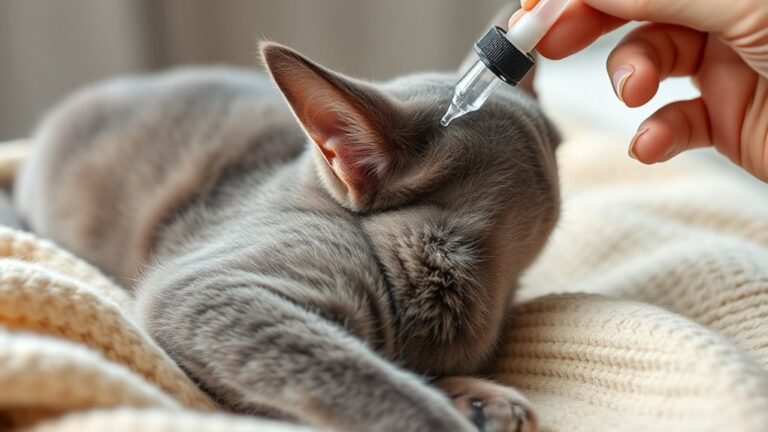
Choose a quiet moment when your cat is relaxed, and have everything ready beforehand. To improve cooperation, gently cradle your cat and speak softly to keep them calm.
Use treats or a favorite toy to encourage cooperation during administration. Hold the medication steady and follow the instructions precisely, whether it’s a pill, liquid, or paste.
Avoid rushing, as stress can make your cat more resistant. Patience and a gentle approach help ensure the medication is given safely and effectively, reducing stress for both you and your feline friend.
Recognizing Adverse Reactions
Even with careful administration, your cat may have adverse reactions to worm medicine, so it’s important to stay alert. Watch for symptoms like vomiting, diarrhea, excessive salivation, or lethargy. These could be signs of an allergic reaction or sensitivity.
To stay safe:
- Keep an eye on your cat for the first 24 hours after giving the medication.
- Look out for trouble breathing or swelling around the face or paws.
- Note any unusual behavior or physical changes.
- Reach out to your vet immediately if you see any adverse symptoms or allergic reactions.
Taking quick action can help prevent serious problems. Knowing what to watch for means you can respond fast and keep your cat safe.
Signs Your Cat Is Recovering After Worm Treatment
You’ll probably notice your cat starting to bounce back once it begins eating more and getting more active around the house. It’s always a good sign when your feline friend seems more energetic and playful again.
You might also see their coat looking shinier and clearer—that’s often a sign that the worms are leaving their system. And don’t forget to keep an eye out for worms in their stool; seeing fewer or no worms at all usually means the treatment is doing its job.
Increased Appetite and Activity
As your cat begins to recover from worm treatment, you’ll likely notice an increase in appetite and activity levels. This is a good sign that your cat is regaining strength and overall health. Expect to see:
- Increased energy as your cat becomes more playful and active around the house.
- A better mood, with your cat more engaged and less lethargic.
- A rise in appetite, leading to improved nutritional intake and weight stabilization.
- Improved overall vitality, making your cat more responsive and alert.
These signs show that your cat’s body is healing and that the medication is working effectively. Keep an eye on their behavior to ensure they continue on this healthy recovery path.
Clearer Coat Appearance
With your cat’s increased energy and improved mood, you might also notice a noticeable change in their coat. A healthier, shinier coat signals better coat health and shows they’re recovering well.
You’ll see their fur become softer, more vibrant, and less dull or patchy. As their coat improves, grooming becomes easier and more effective, helping to remove loose hair and spread natural oils for added shine.
Try gentle brushing and using a suitable comb to keep their coat in top condition. A clearer coat not only makes your cat look better but also reflects their overall health improvements after worm treatment.
Keep up with regular grooming to support their recovery and help maintain a beautiful, healthy coat.
Reduced Worm Expulsion
After your cat has undergone worm treatment, you’ll notice fewer worms in the stool or around the litter box. A decrease in worm expulsion is a clear sign of recovery.
To support ongoing healing, consider natural remedies like pumpkin seeds or small amounts of garlic. These can help boost your cat’s health.
Preventive measures are key, such as sticking to regular deworming schedules and keeping the living area clean. These habits help prevent future infestations.
You might also see some other signs of improvement, like fewer worms in the stool, better appetite, and more energy. Your cat may scratch or irritate itself less.
A healthier coat and skin condition are also signs that your cat is healing. Keep monitoring your cat’s progress and follow your veterinarian’s advice.
Integrating natural remedies and preventive steps can help ensure your cat stays healthy and worm-free long-term.
Preventing Worms: Tips to Keep Your Cat Parasite-Free
Preventing worms in your cat starts with regular preventative care and vigilant attention. Scheduling consistent vet check-ups allows your veterinarian to monitor your cat’s health and catch any signs of infection early.
Preventative measures include keeping your cat indoors or limiting outdoor access to reduce exposure to contaminated soil or prey animals that may carry worms. Make certain your cat’s environment is clean, removing feces promptly from litter boxes and outdoor areas.
Feeding your cat high-quality, cooked, or well-handled raw food minimizes the risk of ingesting parasite eggs. Using veterinarian-approved flea and tick preventatives can also reduce the chances of worms, especially tapeworms that are transmitted via fleas.
Finally, maintain your cat’s overall health with a balanced diet and regular grooming. By practicing preventative care and staying attentive to your cat’s health through routine check-ups, you greatly decrease the likelihood of worm infestations and keep your feline friend healthy and parasite-free.
Frequently Asked Questions About Cat Worm Treatments
Are you curious about the most effective ways to treat worms in your cat? Many pet owners wonder about options beyond traditional medicines. Here are some common questions:
- Are natural remedies effective? Natural remedies like pumpkin seeds or garlic are popular, but always check with your vet to ensure they are safe and work well.
- How often should I deworm my cat? The best schedule depends on your cat’s lifestyle, but usually, every 3 to 6 months is recommended.
- Can I use over-the-counter medicines? Yes, but make sure to follow the dosage instructions and talk to your vet to avoid giving too much or causing side effects.
- Are there ways to prevent worms naturally? Absolutely. Keeping your home clean, controlling fleas, and using natural prevention methods can help lower the risk of worms.
Knowing these answers can help you choose the best treatment and prevention plan to keep your cat healthy.
Frequently Asked Questions
Are Worm Medicines Safe for Kittens and Senior Cats?
Worm medicines can be safe for kittens and senior cats when you choose the right product and follow dosage instructions carefully.
You should prioritize kitten safety by selecting medications specifically formulated for young cats, and consider senior considerations for older cats with health issues.
Always talk to your vet before giving any worm medicine, as they can recommend the safest options based on your cat’s age and health.
Can Over-The-Counter Worm Treatments Be as Effective as Prescription Ones?
Think over-the-counter worm treatments are as mighty as prescription options? Think again! While OTC remedies might seem tempting for quick fixes, they often aren’t as effective as prescription medications.
Prescription treatments go through rigorous testing and are tailored to your cat’s needs, which means better results. So, if you care about your feline’s health and want to avoid wasting money on mediocre cures, it’s smarter to consult your vet for the best prescription options.
How Often Should I Worm My Outdoor Versus Indoor Cat?
You should worm your outdoor cat every 1 to 3 months, depending on how much they go outside. They’re more likely to pick up parasites, so frequent treatment helps keep them healthy.
For indoor cats, worming every 6 to 12 months is usually enough. Since they’re protected inside, their risk of catching parasites is lower.
Regular check-ups and advice from your veterinarian can help you set the best schedule. This way, your cat stays parasite-free and healthy no matter where they spend their time.
Are There Natural or Home Remedies for Cat Worms?
Can nature’s whispers be enough to combat cat worms? You might consider herbal remedies like wormwood, garlic, or pumpkin seed powder, which some pet owners find helpful.
Dietary changes, such as adding fiber-rich foods, can also support your cat’s digestion and help expel worms.
However, always consult your veterinarian before trying home remedies to guarantee your cat’s safety and effective treatment.
What Are the Potential Side Effects of Worm Medications in Cats?
Worm medications in cats can cause side effects like vomiting, diarrhea, or lethargy, especially if they have sensitivities.
Some medications might interact with other treatments or underlying health conditions, so it’s important to keep a close eye on your cat.
Always follow your vet’s instructions and report any unusual behavior right away.
Conclusion
Taking the right worm medicine is essential to keeping your cat healthy and free from parasites. Did you know that up to 60% of cats might carry intestinal worms at some point? That’s why choosing the proper treatment is so important.
By selecting the best worm medicine for cats and following proper administration tips, you can help ensure a quick recovery and prevent reinfection. Monitoring your cat’s progress and staying vigilant makes a big difference.
Always consult your vet if you notice any issues or have questions. With the right worm medicine for cats, you’re on your way to a happier, healthier feline friend.