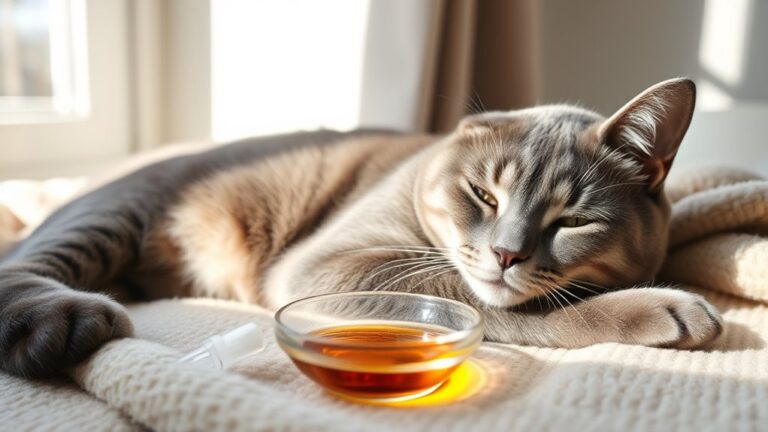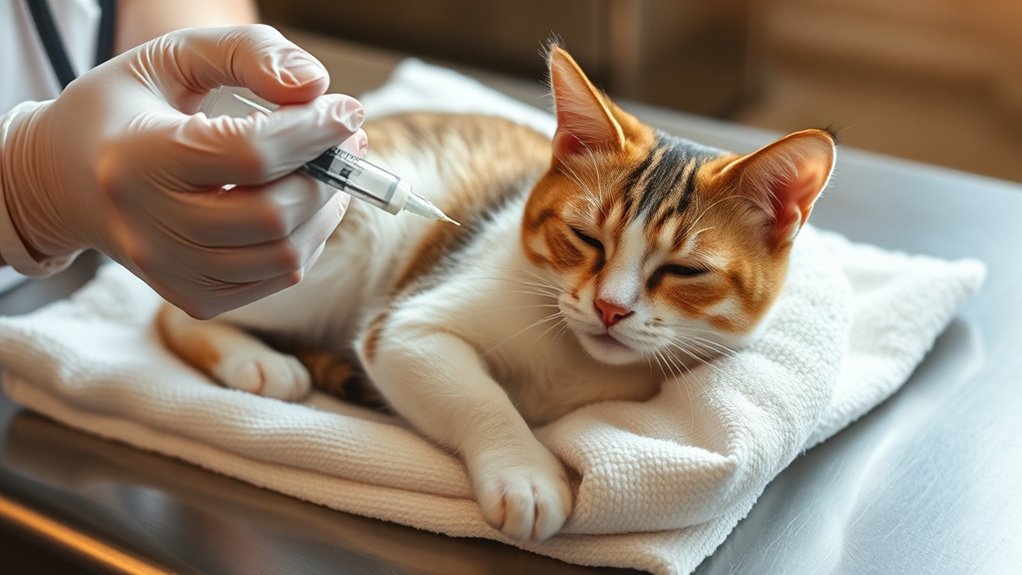
Ensuring Cats Are Given Pain Medicine After Neutering
Many cat owners worry about managing their pets’ pain after neutering, and you’re not alone in feeling this way. Ensuring your cat stays comfortable can be stressful, especially if you’re unsure about giving the right medication at the right time.
To guarantee your cat gets pain medicine after neutering, follow your vet’s instructions carefully, including the dosage and timing. Watch for signs of pain or discomfort, like vocalizing or limping, and monitor your cat’s behavior closely.
Use tools like pill pockets or syringes for easy administration and create a calm environment to reduce stress.
If you want to learn more about safe administration and managing side effects, keep exploring helpful tips for a smooth recovery.
Key Takeaways
- Follow the veterinarian’s prescribed medication schedule carefully to make sure your cat gets effective pain relief.
- Keep a close eye on your cat for signs of pain, side effects, or changes in behavior after giving medication.
- Use proper tools like pill pockets or syringes to give medication accurately and in a way that’s less stressful for your cat.
- Create a calm, cozy environment to help your cat recover and feel less stressed during this time.
- Check in regularly on your cat’s comfort and contact the vet if you notice ongoing pain or if the medication doesn’t seem to be working.
Benefits of Pain Relief After Cat Neutering
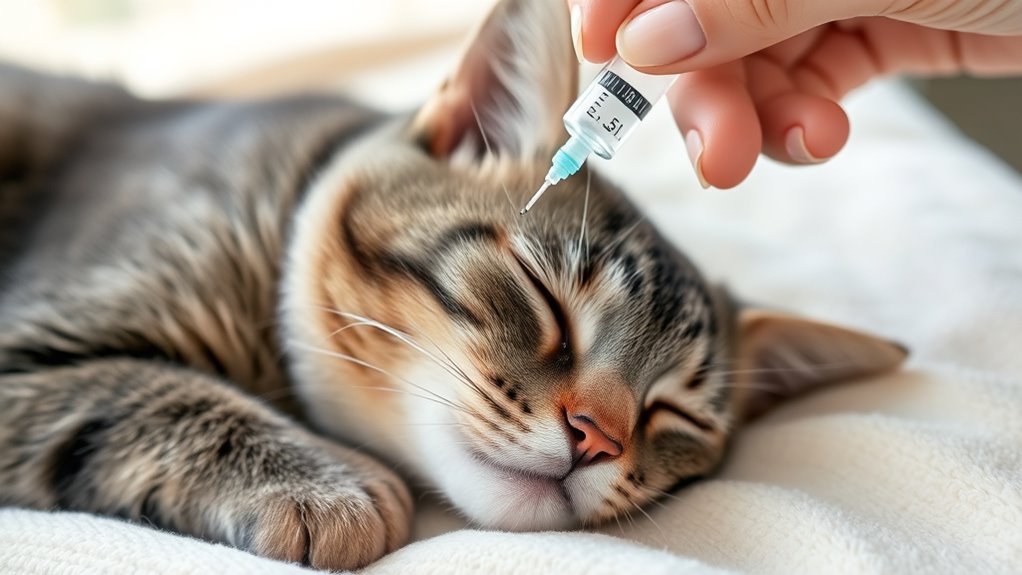
Pain relief after cat neutering is essential because it helps your cat recover comfortably and reduces stress. By using effective pain management strategies, you ensure your feline friend feels less discomfort during recovery.
Proper pain control also minimizes inflammation and prevents complications, which leads to quicker healing. Gentle handling and a quiet, cozy space promote a smoother transition back to normal.
When your cat isn’t in pain, they’re less likely to hide or become aggressive, making post-operative care easier for you. Plus, pain relief encourages normal activity sooner, helping prevent issues like lethargy or depression.
It also reduces anxiety in your cat, making the whole recovery process less stressful for both of you. Overall, prioritizing pain management shows you care about your cat’s well-being and helps them recover faster and happier.
How Vets Choose the Right Pain Medications for Cats
When vets decide on the right pain medication for your cat, they start by checking how much pain your kitty is in. It’s important because different cats might need different types of relief. Once they understand the level of discomfort, they look at your cat’s overall health to pick the best medication that suits their specific needs.
After giving your cat the medication, the vet doesn’t just sit back and wait. They keep a close eye on how your cat responds to the treatment. This helps ensure your feline friend stays comfortable and safe throughout the process.
Assessing Pain Levels
When determining the right pain medication for a cat after neutering, start by carefully assessing their pain levels. This involves observing your cat’s behavior and physical responses, like vocalizing, limping, or hesitating to move.
Vets often use pain scales—simple tools that rate how severe the pain is based on specific signs. These scales help measure discomfort, making it easier to decide how much pain relief your cat needs.
It’s important to stay attentive during recovery and notice any changes in activity or comfort. Accurate pain assessment ensures your cat gets just the right amount of medication, avoiding both under-treatment and unnecessary dosing.
This process is key to effective pain management and helps your cat recover faster and more comfortably.
Selecting Appropriate Drugs
After assessing your cat’s pain levels, the next step is choosing the right medications to manage their discomfort effectively. Vets focus on pain management strategies tailored to your cat’s specific needs, like age, health, and how severe the pain is.
When selecting drugs, vets look for options that provide good relief while minimizing side effects. They often consider medications such as non-steroidal anti-inflammatory drugs (NSAIDs) or opioids, depending on the situation.
Vets also think about how quickly the medication works, how long it lasts, and any possible interactions with other drugs your cat might be taking. The main goal is to keep your cat comfortable, safe, and able to recover smoothly from surgery.
This careful approach helps ensure your cat stays as comfortable as possible during recovery.
Monitoring Post-Administration
Monitoring your cat after administering pain medication is really important to make sure the treatment is working and safe. Watching how your cat responds helps you see if the pain management is effective and catch any issues early.
To do this well, focus on a few key things. First, look out for signs of pain or discomfort, like vocalizing or being restless.
Next, check for side effects such as vomiting or lethargy. Also, keep an eye on your cat’s eating, drinking, and activity levels.
These steps help you see if the medication is helping or if adjustments are needed. Regular monitoring means you can act quickly to keep your cat comfortable and safe during recovery.
When Is the Best Time to Give Pain Medication After Surgery?
Determining the best time to give pain medication after surgery is key to your cat’s comfort and recovery. The ideal timing is usually just before the surgery ends or right after, so the medication kicks in during the early recovery phase.
This helps manage pain effectively and prevents unnecessary suffering. Follow your vet’s instructions for your cat’s post-surgery care; they’ll tell you when to give the first dose.
Sometimes, pain meds are given before the anesthesia wears off to keep your cat comfortable throughout. If your vet prescribes long-acting or injectable medications, be sure to follow their schedule carefully.
Avoid delaying pain relief, as untreated pain can slow healing and cause stress. Giving medication as recommended supports a smoother, less stressful recovery.
Always check with your vet if you’re unsure about timing or if your cat shows signs of discomfort. Properly timed medication ensures your cat stays comfortable and recovers more quickly.
How to Recognize Pain in Your Neutered Cat
Keep an eye on your cat and watch for any signs that they might be in pain. If you notice your cat limping or favoring a leg, that could be a clue something’s wrong. Sometimes, they might stop eating as much or seem less interested in their food, which can also be a sign they’re feeling uncomfortable.
It’s also important to listen to how they’re vocalizing. Unusual sounds or meowing more than usual might indicate they’re in pain or distress. Being attentive to these little signs can help you catch any issues early and get your feline friend the care they need.
Watch for Limping or Favoring
If your neutered cat is in pain, you might notice it limping or favoring one leg over the other. This is a key sign of issues with post-surgery mobility and a clear feline pain indicator. Keep an eye out for these behaviors:
- Limping or dragging a leg during walks or rest, which shows discomfort.
- Hesitation to jump or climb, indicating pain when using certain muscles.
- Favoring one side when lying down, which can signal ongoing soreness or pain.
These signs often appear within the first few days after surgery. Spotting limping or favoring helps you decide if your cat needs pain medication or a vet check-up to support better recovery.
Monitor Appetite Changes
Changes in your cat’s appetite after neutering can be subtle but important. Keep an eye out for decreased interest in food or reluctance to eat, which might mean pain.
On the flip side, if your cat seems hungrier than usual, it could signal other issues. Adjust feeding as needed to help your cat recover comfortably.
Use this simple table to track what you notice:
| Appetite Change | What It Might Indicate |
|---|---|
| Reduced eating | Pain, discomfort, or nausea |
| Increased hunger | Stress or medication side effects |
| No change or normal appetite | Usually a good sign |
Checking these signs regularly helps ensure your cat gets the pain relief they need to heal comfortably.
Observe Unusual Vocalizations
Unusual vocalizations are often a clear sign that your neutered cat isn’t feeling well. Changes in vocalization triggers can signal pain or discomfort, so paying close attention is essential. Your cat’s communication may shift from normal meows to persistent yowling or crying.
To recognize pain, look for a sudden increase in loud, frequent vocalizations, especially when touched or moved. Unusual sounds like whimpering or howling that aren’t typical of your cat’s usual communication are also signs.
Vocalizations occurring at odd times or in unusual circumstances can indicate distress. These signs help you identify when your cat’s vocalization triggers point to pain.
Respond quickly and consult your vet if these unusual sounds persist, ensuring your cat gets the pain relief they need.
Common Pain Medications for Cats: What You Need to Know
When managing your cat’s pain after neutering, it’s important to know what medications your vet might prescribe. These drugs help control pain and keep your cat comfortable during recovery.
Common options include opioids, NSAIDs, and local anesthetics. Opioids like buprenorphine work well for moderate to severe pain but need careful monitoring.
NSAIDs such as meloxicam are used to reduce inflammation and are often given for mild to moderate pain. Local anesthetics are applied at the surgical site to numb the area temporarily.
Here’s a quick overview:
| Medication Type | Purpose | Notes |
|---|---|---|
| Opioids | Pain relief | Use for severe pain, monitor closely |
| NSAIDs | Reduce inflammation | Watch for side effects like stomach upset |
| Local anesthetics | Numb surgical site | Short-term pain relief |
Knowing these options helps you support your cat’s comfort and recovery.
How to Safely Administer Pain Medications to Your Cat
To make sure your cat gets the right amount of pain relief, it’s important to follow the dosage and schedule your vet has prescribed. Don’t rush—give the medication exactly as directed, and if you’re ever unsure, it’s a good idea to double-check with your vet.
When it comes to giving your cat the medication, try using safe methods like pill pockets or syringes. These tools can help make the process smoother and less stressful for both you and your feline friend. Remember, the goal is to keep your kitty comfortable without causing any unnecessary stress or injury.
Proper Dosage and Frequency
Administering pain medication to your cat requires careful attention to dosage and frequency to ensure safety and effectiveness. Following proper dosage guidelines makes sure your cat gets enough relief without risking an overdose.
Stick to your vet’s instructions for how often to give the medication, as these recommendations can vary depending on the drug. To do this safely, always measure doses precisely using a syringe or dropper.
Do not exceed the recommended dose or frequency unless your vet says it’s okay. Keep a schedule and track each administration to prevent missed or doubled doses.
Using Safe Administration Methods
Making sure you give your cat medication safely is essential to prevent discomfort or accidental injury. To promote effective pain management, choose the correct form of medication—such as pills, liquids, or patches—and follow your vet’s instructions carefully.
Use a calm, quiet environment to help keep your cat still and reduce stress. When administering pills, gently hold your cat’s head, open the mouth, and place the pill at the back of the tongue. Then gently hold the mouth closed until swallowing occurs.
For liquids, use a syringe or dropper to deliver the medication directly into the side of the mouth. Always wash your hands afterward and store medications securely. Prioritizing medication safety guarantees pain relief without causing additional distress or harm.
Side Effects to Watch for When Giving Pain Meds to Cats
While pain medications are essential for your cat’s recovery, it’s important to stay alert for potential side effects. Adverse reactions can vary, so watch closely after giving medication.
Here are three signs to watch for:
- Lethargy or weakness: If your cat seems unusually tired or unresponsive, it could be a sign of a reaction that needs immediate attention.
- Vomiting or diarrhea: These digestive issues might mean the dose is too high or your cat is sensitive to the medication.
- Changes in appetite or behavior: Loss of appetite, excessive drooling, or agitation could mean you need to adjust the dosage or switch medications.
Always follow your vet’s instructions carefully. Don’t hesitate to contact them if you notice any of these symptoms.
Monitoring your cat helps ensure a safe recovery and catches side effects early.
Non-Medication Ways to Comfort Your Cat After Neutering
After your cat’s surgery, gentle, comforting touches can really help them feel safe and relaxed. Creating a cozy space with soft bedding and quiet corners encourages comfort.
Use calming techniques like soothing sounds or gentle handling to ease their anxiety. Distraction methods, such as interactive toys or treats, can redirect their focus and reduce stress.
Providing safe spaces where your cat can retreat and rest helps them recover comfortably. Think cozy hideouts, quiet corners, or raised resting spots where they can feel secure.
| Calming Techniques | Distraction Methods | Safe Spaces |
|---|---|---|
| Soothing sounds | Interactive play | Cozy hideouts |
| Gentle petting | Treat puzzles | Quiet corners |
| Soft music | Feather toys | Raised resting spots |
| Massage | Novel objects | Enclosed beds |
Focusing on these non-medication ways will help your cat feel secure and reduce discomfort during recovery.
Questions to Ask Your Veterinarian About Pain Management
When talking to your vet about pain management, it’s important to ask clear, specific questions. This helps you understand how your cat will stay comfortable during recovery.
Asking the right questions ensures you’re prepared for post-surgery care and your cat’s comfort.
Here are three key questions to consider:
- What pain relief options are available, and which do you recommend for my cat?
- How long will my cat need pain medication, and what are the potential side effects?
- How will I know if my cat is in pain or if the pain management isn’t working effectively?
Tips for a Comfortable Recovery at Home
Creating a comfortable recovery environment at home is key to your cat’s healing. Pick a quiet, cozy spot away from loud noises and busy areas.
Keep the space clean and soft with blankets or bedding to prevent irritation. Limit your cat’s movement to avoid stressing the surgical site; place a litter box nearby to keep activity low.
Handle your cat gently, supporting their body without grabbing or squeezing. Try to minimize unnecessary handling to reduce stress.
Make sure your cat has easy access to fresh water and small, easily digestible meals. This encourages hydration and good nutrition during recovery.
Watch for signs of discomfort or unusual behavior, and follow your veterinarian’s instructions carefully.
Providing a calm, safe environment with gentle handling helps your cat recover more comfortably. It also reduces anxiety, speeds up healing, and keeps your kitty pain-free.
Frequently Asked Questions
Are Over-The-Counter Pain Medications Safe for Cats?
Over-the-counter pain medications aren’t safe for cats, so you shouldn’t use human medicines for pain relief. Instead, talk to your veterinarian for proper postoperative care.
They can prescribe safe and effective pain relief options that are tailored to your cat’s needs, helping ensure a comfortable recovery.
Never give your cat any medication without professional guidance, as improper use can cause serious health issues.
Always rely on veterinary advice for safe postoperative pain management.
How Long Should My Cat Stay on Pain Medication After Surgery?
Imagine your cat wearing a tiny cape, heroically tackling post-surgery recovery. You should keep your feline comfortably medicated for about 48-72 hours after neutering, as part of feline pain management.
During this time, monitor for signs of discomfort or distress. Stick to your vet’s instructions, and don’t rush the process. Your kitty’s swift, pain-free recovery depends on proper post-surgery care and timely medication.
Can I Give Human Pain Medicine to My Neutered Cat?
You should never give your neutered cat human pain medicine, as many are toxic to cats and can cause serious health issues.
For effective pain management, talk to your veterinarian. They can recommend safe medication options or alternatives tailored to your cat’s needs.
Never try to give your cat medication without professional guidance, because improper use can lead to adverse effects.
Always follow your vet’s advice for safe and effective pain relief.
What Signs Indicate My Cat Is in Severe Pain?
When your cat’s in severe pain, it shows through their behavior and discomfort. They might vocalize excessively, hide, or seem very lethargic. Keep an eye out for limping, swelling, or redness around the surgery site.
If your cat suddenly becomes aggressive or seems unable to move comfortably, it’s a sign something’s wrong. Don’t ignore these signs — it’s important to act quickly.
Reach out to your vet promptly to ensure your cat gets the pain relief they need and a smooth recovery.
How Do I Store Pain Medication Safely at Home?
You should store your cat’s pain medication in a secure, out-of-reach place, like a high cabinet or locked drawer, to ensure safety. Keep the medication in its original container with clear labels.
Avoid exposing it to heat, moisture, or sunlight. Always follow the storage instructions provided by your veterinarian.
This helps prevent accidental ingestion and keeps the medication effective until your cat needs it.
Conclusion
Ensuring your cat receives proper pain medication after neutering is essential for a smooth recovery. Studies show that pain management can decrease stress and promote healing, making the process less traumatic for your feline friend.
With about 90% of pet owners recognizing the importance of pain relief, you can confidently advocate for your cat’s comfort.
By following your vet’s advice and monitoring closely, you’ll help your cat heal faster and feel safer during this recovery period. Prioritizing pain relief is key to a comfortable and successful recovery after neutering.