How to Feed Your Cat Medicine Pills: A Step-by-Step Guide
Feeding your cat medicine pills can be a real challenge, especially if your feline friend isn’t a fan of taking meds. You’re not alone—many pet owners struggle with making this process smooth and stress-free.
But don’t worry, with a few simple tips, you can make giving your cat medicine pills easier and less stressful for both of you.
To give your cat medicine pills, start by creating a calm environment and choosing the best method based on your cat’s personality.
Securely hold your cat and gently administer the pill, using treats or treats-filled options to mask the taste.
Be patient and avoid rushing, as this can cause stress. If your cat resists, try hiding the pill in food or using alternative forms.
Keep your approach gentle, and you’ll uncover helpful tips that make the process easier and less stressful.
Key Takeaways
- Create a calm, quiet environment and build trust with positive reinforcement before giving your cat medicine.
- Prepare the pill and consider using pill pockets or treats to mask the taste.
- Gently hold your cat, assess its personality, and use a calm approach to keep stress low.
- Use soft treats or cheese to hide the pill, or consider crushing it if your vet says it’s okay.
- Always reward and praise your cat afterward to help them associate the experience with positive feelings.
Preparing Your Cat to Take Medication: Tips for a Calm and Cooperative Pet
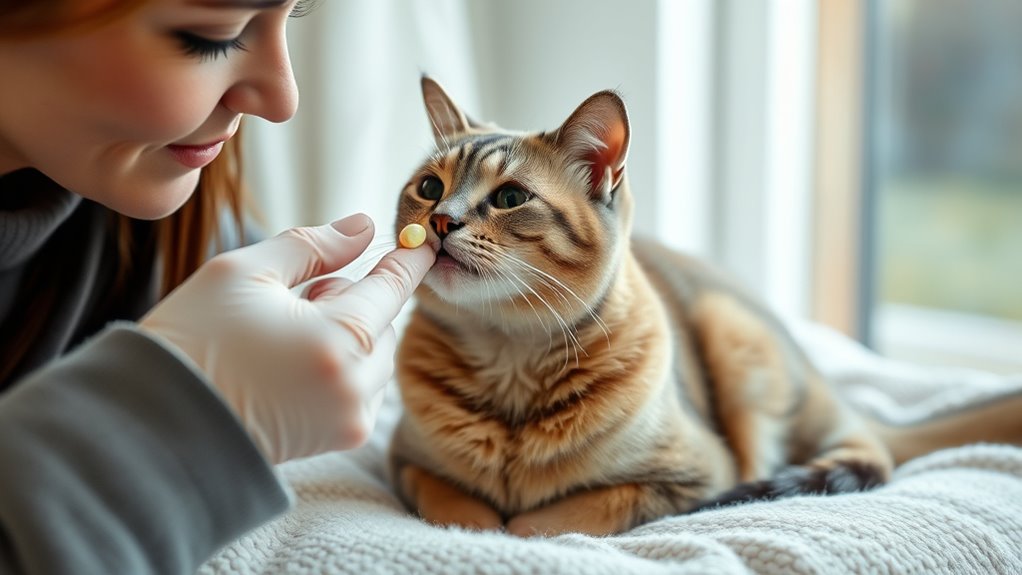
To help your cat take medication smoothly, start by creating a calm environment and establishing a routine. Your cat will feel more relaxed if the space is quiet and free of sudden noises or disruptions. Use soft, gentle voices to speak to your cat, and keep interactions low-key.
Consistency is key, so feed and handle your cat at the same times daily. This helps build trust and familiarity. Incorporate positive reinforcement by rewarding your cat with treats or affection after calm behavior or successful pill intake.
Feeding and handling your cat at consistent times builds trust and makes medication routines smoother.
This encourages cooperation and reduces anxiety around medication time. Avoid rushing or forcing your cat, as this can increase stress and resistance. Instead, stay patient and gentle, making the experience as positive as possible.
Over time, your cat will associate medication routines with comfort and rewards. This makes future medication sessions easier for both of you.
How to Choose the Best Method for Giving Pills to Your Cat
Choosing the right way to give your cat pills depends on your cat’s personality, preferences, and the medication itself. Some cats are easygoing, making it simple to administer pills, while others can be more resistant.
If your cat is cooperative, you might try hiding the pill in food or using flavored pastes or treats designed for pill delivery. For less willing cats, you may need to consider more hands-on techniques or special tools.
Always think about your cat’s temperament and comfort. Forcing a resistant cat can cause stress or injury, so choose a method that’s gentle and suitable. Keep in mind that some medications can be crushed or mixed with food, but check with your vet first.
Your goal is to find a method that minimizes stress for both you and your cat while making sure the medication is given properly.
Techniques to Administer Pills to Your Cat Without Stress
To make giving your cat a pill a bit easier and less stressful, try to handle your kitty gently and calmly. No sudden movements—that can really scare them. It’s all about staying relaxed yourself, so your cat feels safe and not overwhelmed.
You can also use tasty treats to your advantage. Offering a little treat before or after giving the medication can help mask the pill or distract your cat during the process. Just make sure the treat is something they love and can’t resist!
Use Gentle Handling Techniques
Handling your cat gently is key to administering pills without causing stress. Use gentle restraint to keep your cat calm, avoiding force that could increase anxiety. Keep your movements slow and smooth, speaking softly to reassure your pet.
When holding your cat, support their body securely but gently, especially around the head if needed. Incorporate positive reinforcement by offering calm praise or a treat afterward to create a positive association.
Remember, patience is essential. Rushing or applying too much pressure can make your cat fearful or resistant. Consistent, gentle handling builds trust over time, making future pill administrations easier.
Focus on creating a relaxed environment, which will help your cat stay calm and cooperative during medication time.
Employ Tasty Treats Strategically
Using tasty treats strategically can make giving your cat medication much less stressful. Choose treats with strong flavor to mask the pill’s taste and encourage your cat to cooperate.
Pick treats that are soft, easy to mold around the pill, or can be broken apart easily. Trying different textures and flavors helps you find what your cat prefers.
| Treat Type | Flavor Improvement Benefit |
|---|---|
| Soft treats | Easier to mold around the pill |
| Crunchy treats | Distraction and positive association |
| Cheese or tuna-flavored treats | Strong aroma for masking taste |
| Freeze-dried treats | Intense flavor, quick consumption |
| Commercial pill pockets | Designed specifically for medication |
Proper treat selection can turn pill time into a less stressful, more manageable routine.
Maintain Calm and Patience
Remaining calm and patient during pill time can really help reduce your cat’s stress and make the process go more smoothly. Using calming techniques like speaking softly or offering gentle petting beforehand can create a relaxed environment.
Keep your movements slow and deliberate so you don’t startle your cat. If your cat senses your anxiety, it might resist more, so take deep breaths and stay calm. Consistently practicing stress reduction methods builds trust and makes future medication easier.
Using Food and Treats to Make Giving Pills Easier
Using food and treats can really help make giving your cat pills a lot less stressful for both of you. Pick treats that your cat loves — something tasty enough to mask the pill’s flavor or even use food as a cover to hide the medication altogether. When you choose the right treats and approach, giving pills can become a much easier and more manageable task.
Choosing Tasty Treats
Offering your cat a tasty treat can make giving medicine much easier, especially if you choose options they find irresistible. To do this effectively, think about their treat preferences and the flavors they like best.
Some cats prefer savory flavors like chicken or fish, while others might enjoy cheese or liver treats. Knowing what your cat enjoys helps you pick treats that motivate them to take their medicine without fuss.
Keep in mind that some cats are picky and may dislike certain textures or flavors. Use this table to understand how to choose the best treats:
| Treat Preference | Flavor Options |
|---|---|
| Savory or Meaty | Chicken, Fish, Liver |
| Mild or Cheesy | Cheese, Mild Fish |
| Picky Eaters | Try different textures |
Choosing treats that match these preferences makes giving pills smoother and easier.
Masking Pill Flavors
To make giving your cat medication easier, you can mask the pill’s flavor by blending it with appealing foods or treats. There are various pill flavoring options that can help hide the unpleasant taste, making the process less stressful for your cat.
Try crushing the pill and mixing it with a small amount of strong-tasting food like tuna juice or gravy. This can effectively conceal the flavor and make it easier for your cat to swallow.
Alternatively, hide the pill inside a soft treat or a small piece of cheese. Just make sure your cat swallows it without detecting the medication.
The key is to choose foods that your cat loves and that won’t interfere with the medication’s effectiveness, making the whole process smoother and more successful.
Using Food as Cover
In many cases, hiding a pill inside your cat’s favorite food or treat can make the process much easier. You can try different pill pocket options, like special treats designed for hiding medication, to make it more appealing.
Food flavoring techniques also help mask the taste of the pill, making it less noticeable. For example, coat the pill with a small amount of tuna juice or fish-based gravy before wrapping it in a treat.
Some cat owners use small amounts of wet food or cheese to disguise the pill, ensuring your cat eats it without suspicion. The key is to choose foods your cat loves and won’t refuse, which increases the chances of successful medication.
How to Hide Medication in Flavored or Specially Prepared Foods
Hiding medication in flavored or specially prepared foods can be a great way to get your cat to take its medicine without any fuss. Start with pill pockets, which are made to hide pills easily.
Hiding medication in tasty foods helps your cat take medicine without stress or fuss.
You can also try flavored gels or soft cheeses like cream cheese or liver spread, mixed with a small amount of tuna paste or chicken broth to make it more appealing.
Peanut butter works well too—just spread a tiny bit on your finger or hide it inside a meatball.
Another idea is forming small meatballs with the hidden pills inside, making it more natural for your cat to eat.
Yogurt drops and treats infused with flavors your cat loves can also mask the medicine’s taste.
Remember, the goal is to make the food so tasty your cat eats it without suspicion.
Always test a small portion first to make sure your cat enjoys it and the medication stays securely hidden.
How to Give Your Cat a Pill: A Simple Step-by-Step Guide
Giving your cat a pill might seem tricky at first, but with a little prep, it gets easier. First off, make sure you have the right medication, dose, and form as prescribed by your vet. Double-check everything so you’re all set before you start.
Now, it’s important to stay calm and gentle. Cats can pick up on your stress, so try to keep things relaxed. Using calm words and a soothing voice can help keep your kitty at ease during the process. With a little patience and the right technique, pill time can be quick, smooth, and even pain-free for both of you.
Prepare the Medication Properly
Before giving your cat a pill, make sure you have the medication prepared correctly to make the process easier. Proper preparation helps ensure the pill is stored correctly and the dosage is accurate.
Check the medication label for storage instructions, and keep pills in a secure, designated container. Always verify the dosage to avoid giving too little or too much.
Use a pill cutter if needed to split tablets precisely. Have water or a pill pocket ready to make administering the pill smoother. Here’s a quick visual to help:
| Task | Tip |
|---|---|
| Pill storage | Store in a cool, dry place away from children |
| Verifying dosage | Double-check the prescribed amount |
| Splitting tablets | Use a pill cutter for accurate doses |
| Preparing the pill | Remove from packaging just before use |
| Additional supplies | Keep water or treats nearby for easy giving |
Use Gentle Techniques
Gently handling your cat during medication time can make the process much smoother for both of you. Use a gentle approach to avoid stressing your cat, speaking softly and moving slowly.
Hold your cat securely but gently, supporting their body without squeezing too tight. Incorporate positive reinforcement by offering treats or praise before and after giving the pill, helping your cat associate the process with good things.
If your cat struggles, take a break and try again later, remaining calm throughout. Avoid sudden movements or force, as this can heighten anxiety.
What to Do if Your Cat Spits Out the Pill?
If your cat spits out the pill, stay calm and patient. Don’t panic; instead, try these steps to make sure your feline gets the medication they need.
First, consider pill alternatives. You can crush the pill and mix it with tasty food or a small amount of tuna water. Some medications also come in liquid form or as flavored treats, which can make giving them easier.
If your cat keeps refusing the pill, ask your vet about feline supplements or medications in different formats. These might be more appealing and easier to administer.
Sometimes, a different approach helps. Hiding the pill in a favorite treat or a pill pocket can make all the difference in getting your cat to swallow it.
How to Keep Your Cat Calm During Medication Time
Keeping your cat calm during medication time can make the process much smoother for both of you. Create a calm environment by choosing a quiet, comfortable space free of loud noises or distractions.
Speak softly to your cat using a soothing voice, which helps reduce anxiety and reassures them. Gently pet or stroke your cat to provide comfort, but avoid sudden movements that might startle them.
Speak softly and gently pet your cat to soothe and reassure during medication time.
If your cat senses your calmness, they’re more likely to stay relaxed. Keep the medication session brief to prevent stress from building up.
Using treats or favorite toys as positive reinforcement before and after giving the pill can also help your cat associate the experience with something pleasant. Remember, patience is key—staying calm yourself encourages your cat to remain composed.
Common Mistakes to Avoid When Giving Pills to Cats
One common mistake to avoid is rushing the process, as trying to give a pill quickly can cause your cat to panic or swallow improperly. This often increases pill resistance and makes future doses more challenging.
To improve your success, keep these points in mind:
- Don’t force the pill. Forcing can cause stress and make your cat more resistant to pills.
- Avoid skipping alternatives. If your cat consistently resists pills, consider using flavored medications or compounding pharmacies for easier options.
- Don’t ignore signs of frustration. Pushing through can damage trust and make medication time harder later on.
Patience and calmness are key. Rushing might seem faster but often leads to more struggles later.
Being aware of your cat’s behavior and adjusting your approach helps prevent unnecessary stress for both of you.
When to Seek Help From a Veterinarian or Pet Professional
While patience and calmness can often help you successfully give your cat medication, there are times when you should seek professional help. If your cat keeps refusing pills or gets really stressed out, a visit to the vet can offer safer, more effective options.
Your veterinarian might recommend alternatives like liquids or transdermal gels, which are easier to give and less stressful for your pet. If you notice any bad reactions, trouble swallowing, or worsening health, don’t wait—get help quickly.
Also, if giving medication leads to injury or causes severe distress for either of you, a vet can suggest safe, humane methods or even administer the treatment themselves. Remember, professional guidance ensures your cat gets the right dose safely and comfortably.
When you’re unsure, reaching out to your veterinarian is the best way to ensure your cat stays healthy and compliant with treatment.
Frequently Asked Questions
Can I Crush or Split My Cat’s Medication Pills?
You can crush or split your cat’s medication pills only if your vet says it’s safe.
Some pill types and medication forms are designed to be given whole, and crushing or splitting might change how effective they are or cause side effects.
Always check with your veterinarian first, especially with coated or extended-release pills.
They can recommend the best way to give the medication without messing with its potency or your cat’s health.
How Often Should I Give My Cat Medication?
Think of your cat’s medication schedule as tending to a delicate garden, where each plant (medication type) needs just the right watering (dosage frequency).
You should give your cat medication exactly as prescribed by your vet, which varies depending on the medication type and condition.
Stick to the schedule diligently, whether it’s daily, weekly, or as needed, to guarantee your feline friend stays healthy and thriving.
Are There Natural Alternatives to Pills for Medication?
Yes, there are natural alternatives like herbal remedies and liquid supplements that can sometimes replace pills. You might find herbal remedies helpful for mild conditions, but always check with your vet before trying them.
Liquid supplements are easier to give and can be mixed with food or water, making medication less stressful for your cat. Remember, natural options should support veterinary advice and not replace prescribed treatments.
What if My Cat Refuses to Take Medication Altogether?
If your cat refuses medication altogether, try mixing the pill with tasty treats or using a pill pocket to hide the taste. This can make the process more appealing and less stressful for your feline friend.
You can also use gentle encouragement or positive reinforcement to help your cat stay calm during medication time. Making it a positive experience can go a long way.
Consider asking your vet about liquid medications or compounded medicines, which can be easier to give and more palatable for your cat.
How Do I Store Leftover Medication Safely?
You should store leftover medication in its original medication container, tightly sealed, and in a cool, dry place away from sunlight.
Check the pill expiration date before using any leftovers, and discard expired medication properly.
Keep the container out of reach of children and pets, and never transfer pills to another container, as this can cause confusion or misuse.
Proper storage guarantees the medication remains effective and safe for future use.
Conclusion
Giving your cat medication can feel like walking a tightrope, but with patience and the right approach, you can make it a smoother experience. Remember, each successful dose builds trust and strengthens your bond.
Stay calm, gentle, and persistent. Your efforts are like watering a seed; patience helps it grow into a healthy, happy cat.
With time, medicating your feline becomes just another step in caring for your beloved companion.