Why Does My Cat Not Like Being Petted?
Are you frustrated because your cat doesn’t seem to enjoy being petted? You’re not alone—many cat owners struggle with understanding why their feline friends pull away or seem uncomfortable when touched.
Knowing how to navigate your cat’s boundaries can make a big difference in building trust and a stronger bond.
Your cat might not like being petted because certain areas are sensitive, or they have personal boundaries that shouldn’t be crossed. Past negative experiences or health issues, like pain or discomfort, can also make touch unpleasant.
Furthermore, personality traits—whether your cat is shy or social—play a role in how they respond.
Recognizing signs of overstimulation and respecting boundaries can improve your bond.
For more tips on understanding your cat’s preferences, keep exploring.
Key Takeaways
- Sensitive or personal areas can make your cat uncomfortable with being petted.
- Health issues like pain or skin problems might make your cat dislike touch.
- If your cat is shy or anxious, it might prefer less contact or need to get used to being handled.
- Overstimulation during petting can cause discomfort or make your cat react defensively.
- Past negative experiences or not being socialized enough can affect how tolerant your cat is of being touched.
Why Do Cats Dislike Being Petted?
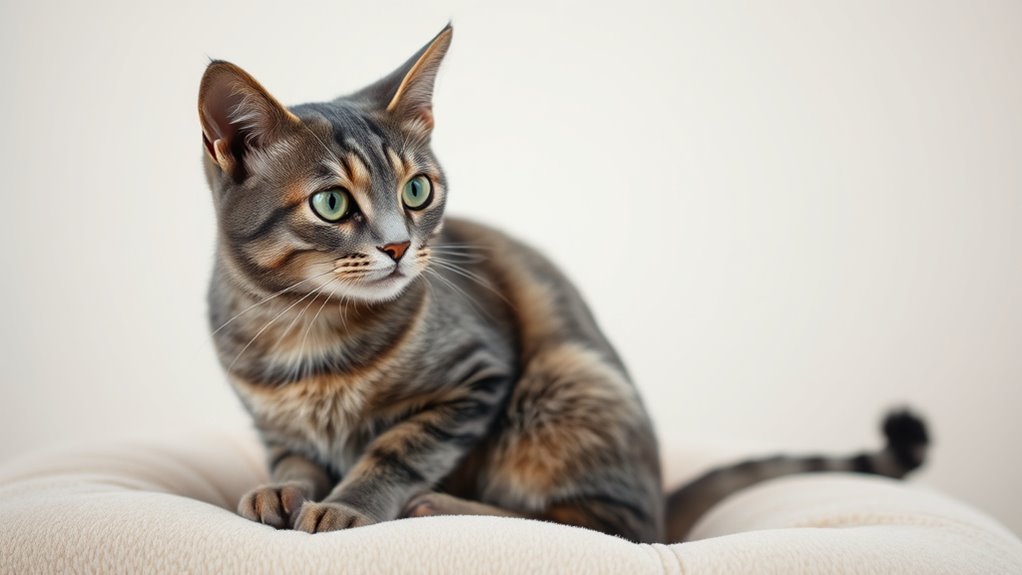
Many cats dislike being petted because they have sensitive areas and personal boundaries they prefer to keep intact. This sensitivity often comes from their grooming habits, which can vary from cat to cat.
Some cats may find certain touching areas uncomfortable, especially if they’re more anxious. When you pet a cat in a way that conflicts with their grooming routines or personal space, they might react defensively or try to move away.
Some cats dislike certain touches, especially if it conflicts with their grooming routines or personal boundaries.
If a cat has had negative experiences during petting or grooming, they tend to be more wary of touch. Understanding their boundaries helps you respect their comfort zones.
Recognizing when your cat feels anxious or overstimulated allows you to adjust your approach. This can help reduce stress for both of you.
Ultimately, respecting their grooming preferences and sensitivity levels builds trust. It makes petting a more positive experience for everyone involved.
Does Your Cat’s Personality Affect How They Like to Be Touched?
A cat’s personality plays a big role in how they respond to petting and touch. Their temperament influences what they enjoy and how they like to interact, shaping their comfort zone.
Understanding their personality traits helps you read their behavior better. Some cats are naturally more social and love being petted, while others prefer minimal contact because they’re shy or independent.
Socialization also makes a difference. Cats with positive social experiences tend to be more receptive, while those with less exposure may be more reserved.
Every cat has their own quirks. For example, some love head scratches but dislike belly rubs. These preferences reflect their unique personalities and comfort levels.
Can Past Trauma Influence Your Cat’s Petting Preferences?
If your cat has gone through abuse or trauma in the past, it can really affect how they respond to being petted. Sometimes, those negative experiences make them more sensitive or anxious when you try to touch them. It’s important to remember that their reactions aren’t just about being moody—they’re often a result of what they’ve been through.
Getting to know their history can help you approach them with more patience and care. Take things slowly, and pay attention to their signals. Over time, with gentle handling and lots of positive experiences, you can help build their trust and make petting a more comfortable experience for them.
Impact of Past Abuse
Past abuse can leave scars that shape how a cat reacts to petting. Instead of being affectionate, they might become wary or scared. Recognizing these behaviors is really important.
They might flinch or pull away when approached, showing they’re uncomfortable or afraid. Some cats avoid being touched altogether, especially in sensitive areas. Others may suddenly growl or become agitated during petting, which signals distress.
Understanding these signs helps you realize their reactions come from past trauma, not dislike. Past abuse can cause deep fear, making gentle petting stressful for them. Being patient and respecting their boundaries shows you understand how their history affects their current behavior.
Trauma-Related Behavior Changes
Trauma from previous negative experiences can greatly change how a cat behaves during petting sessions. You might see signs like flinching, growling, or sudden withdrawal.
Triggers such as being touched unexpectedly or in sensitive areas can cause emotional reactions based on past experiences. To help, focus on rebuilding trust by creating safe spaces where your cat feels secure.
Use gradual exposure and patience to help ease their anxiety. Avoid sudden movements or loud noises that might stress them out.
Recognizing trauma signs allows you to respond calmly, helping your cat associate petting with positive feelings.
Over time, gentle and consistent interactions can change their emotional responses, encouraging a more relaxed and trusting attitude during petting.
Are Health Issues Making Your Cat Uncomfortable During Petting?
Health issues can really affect how comfortable your cat feels during petting. If your cat suddenly gets irritable or pulls away, it might be a sign of an underlying problem. Paying attention to their signals helps you understand what they need.
Think about things like pain or soreness. Conditions such as arthritis or dental problems can make petting in certain areas painful for them.
Skin problems like allergies, infections, or parasites can cause itching and discomfort when touched.
Internal health issues affecting organs or muscles can also make your cat generally uncomfortable, even with gentle petting.
If your cat flinches, grimaces, or avoids contact, it’s time to see a vet. Getting help quickly can ensure your cat feels safe and comfortable during your interactions.
How Do You Recognize When Your Cat Is Overstimulated?
Have you ever noticed your cat suddenly becoming twitchy or agitated during petting? These are often signs your cat is overstimulated and has reached its petting limit.
Common cues include tail twitching, ear flattening, or quick, twitchy movements. You might also see your cat biting or scratching, or they may suddenly pull away.
Their pupils could dilate, and they might become more alert or tense. Recognizing these signs helps prevent upsetting your cat further and avoids aggressive responses.
If you notice these cues, it’s best to stop petting immediately and give your cat some space. Overstimulation can happen quickly, especially if you pet sensitive areas like the belly or tail.
Monitoring your cat’s reactions closely helps you set healthy petting limits. This keeps interactions enjoyable for both of you.
How to Approach Petting to Build Trust With Your Cat
To build trust with your cat, it’s a good idea to start by really paying attention to their body language and signals. Watch how they react to different situations—are their ears relaxed, or do they flatten them? Are they purring softly, or do they seem tense? This gives you a clue about how comfortable they are.
When you go to pet them, use gentle and slow movements. Rushing or making sudden gestures can startle your cat and make them hesitant. Showing calmness and respect through your movements helps your cat feel safe and more willing to accept your affection. Over time, this gentle approach can really help your cat become more comfortable and trusting around you.
Respect Cat’s Body Language
Understanding your cat’s body language is key to building trust and making petting a positive experience. Cats communicate with subtle cues, and recognizing these helps you respect their boundaries.
Look for signs of relaxation, like purring or slow blinking, which mean they’re comfortable and open to being petted.
On the flip side, watch for signs of discomfort such as tail flicking, flattened ears, or tense muscles. These signals mean your cat wants you to stop.
Always respect these cues by adjusting your approach or pausing. Let your cat decide when they’re ready to continue.
Use Gentle, Slow Movements
Approaching your cat with gentle, slow movements helps build trust and makes petting more enjoyable for both of you. Using gentle techniques and slow approaches shows your cat you’re calm and non-threatening, encouraging comfort and relaxation.
Instead of rushing, move your hand slowly and softly, allowing your cat to get used to your touch. Pay attention to their reactions. If they lean in or purr, you’re on the right track.
If they pull away, respect their boundaries and slow down even more. Consistently using gentle, deliberate movements helps your cat feel safe, reducing their stress and making future interactions smoother.
Over time, these slow approaches strengthen your bond and improve your cat’s willingness to be petted.
Where Do Cats Usually Like to Be Petted?
Have you ever wondered where your cat prefers to be petted? Cats have favorite spots where they enjoy gentle contact, and knowing these helps you use the right petting techniques.
Generally, cats love being stroked in these areas:
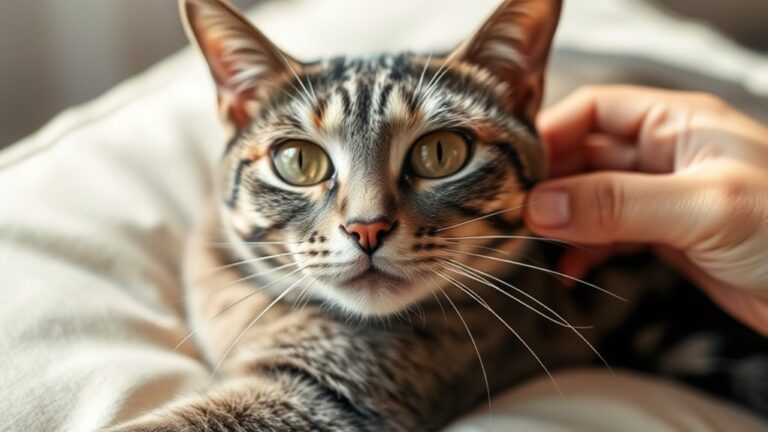
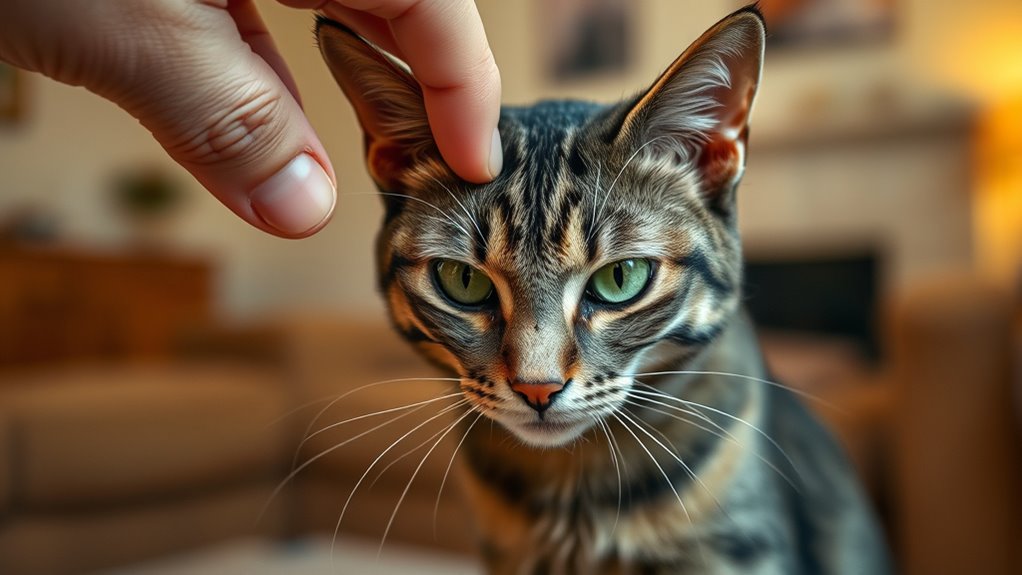
Cats enjoy gentle strokes on their head, cheeks, behind the ears, and along their back.
- Head and cheeks – Most cats enjoy gentle strokes around their cheeks, chin, and the top of their head. Use soft, slow movements to keep them relaxed.
- Behind the ears – Many cats find this area especially soothing, especially if you scratch lightly or rub gently.
- Along the back – From the shoulders to the tail base, a smooth stroke along the spine often feels good. Just avoid the tail unless you’re sure your cat likes it.
Pay attention to your cat’s body language to confirm they’re comfortable. Stick to these favorite spots and use gentle petting techniques for the best experience.
How to Respect Your Cat’s Boundaries and Avoid Reactions
To respect your cat’s boundaries, pay close attention to their signals and reactions during petting. Cats communicate their comfort through body language—ears back, tail flicks, or pulling away signal they want space.
Recognizing these cues helps you adjust your petting techniques to prevent discomfort or reactions like scratching or biting. Keep petting gentle and brief, focusing on areas your cat enjoys, such as the head or chin.
Avoid overstimulation by observing your cat’s response, and stop immediately if they show signs of stress. Respecting boundaries means letting your cat control the interaction and offering them breaks when needed.
This approach improves your cat’s comfort and builds trust. Over time, you’ll learn which petting techniques work best, making each interaction more positive and reducing negative reactions.
What Are Simple Ways to Make Petting More Comfortable for Your Cat?
Making petting more comfortable for your cat can be simple with a few mindful adjustments. First, create a calming environment by reducing loud noises and sudden movements. This helps your cat feel safe and relaxed.
Second, use positive reinforcement—offer treats or gentle praise when your cat tolerates petting. This encourages relaxed behavior and makes the experience more enjoyable.
Third, pay attention to your cat’s signals. Start with short sessions and watch for signs of discomfort. Stop before stress builds to keep things positive.
Gradually increase the petting duration as your cat becomes more comfortable. Always pet gently, focusing on areas like the cheeks or under the chin, which most cats enjoy.
Maintaining a calm environment and reinforcing positive experiences helps your cat associate petting with comfort. This makes future interactions more pleasant for both of you.
When Should You Talk to a Vet About Your Cat’s Behavior?
Wondering when it’s time to talk to a vet about your cat’s behavior? If your cat’s reactions suddenly change or become more aggressive, it’s a good idea to get professional advice.
Persistent signs like excessive hiding, biting, or refusing to be touched might point to underlying health or emotional issues. If your cat shows signs of pain, discomfort, or distress during petting, a vet’s assessment is really important.
Also, if your cat’s behavior gets worse over time or doesn’t improve even after trying to change it, a professional can help identify what’s really going on. Sometimes, behavioral changes can signal medical problems, so ruling out health issues is crucial.
A vet experienced in feline behavior can offer guidance and suggest strategies or treatments tailored for your cat. Don’t hesitate to seek help when your cat’s behavior affects their well-being or your bond.
Frequently Asked Questions
Can Age Affect My Cat’s Tolerance for Petting?
Yes, age differences can affect your cat’s tolerance for petting. As cats get older, their senses change, making them more sensitive to touch.
Older cats might become more irritable or prefer less handling, while kittens are usually more playful and tolerant.
Understanding these age-related changes helps you adjust your petting approach, so your cat feels comfortable and safe, no matter its age.
Do Rescue Cats Have Different Petting Preferences?
Rescue cats often have different petting preferences, like a closed flower waiting to bloom. Their rescue behavior and petting history shape their comfort levels, making some cautious or shy.
You can help them blossom by respecting their boundaries, offering gentle strokes, and giving them time to trust you. Remember, patience turns a hesitant rescue into a loving companion, revealing their true nature over time.
How Does My Body Language Influence My Cat’s Comfort?
Your body language really impacts how comfortable your cat feels when you’re petting them. Approaching calmly, avoiding sudden moves, and keeping your hands relaxed show reassurance through cat communication.
Use gentle, slow petting techniques and watch your cat’s signals. If they lean in or purr, they’re comfortable. If they twitch or back away, it’s time to adjust your approach.
Clear, confident body language helps build trust. It makes petting a positive experience for your feline friend.
Can Dietary Factors Impact My Cat’s Sensitivity?
Think of your cat’s sensitivity as a delicate garden. Poor diet quality or food allergies can act like harsh weather, making the plants—your cat—more irritable and uncomfortable.
When their diet isn’t balanced, they may experience discomfort or skin issues, which can make them more sensitive to touch.
Is There a Specific Time of Day My Cat Prefers to Be Petted?
Your cat probably prefers to be petted during quiet, relaxed times, like late morning or early evening when they’re calm.
Watch for their cat signals, like soft purring and leaning into your touch—that’s a good sign they’re enjoying it.
Try to avoid petting when they’re active or anxious, since cats usually like gentle contact when they feel safe and comfortable.
Conclusion
So, next time your cat gives you the cold shoulder, remember they’re just teaching you boundaries in feline diplomacy. It’s funny how something so small can be so particular—like a tiny, furry diplomat with a veto pen.
Instead of forcing affection, try to see it as a lesson in patience and respect.
After all, in the grand scheme of things, your cat’s rejection might just be their way of saying, “I’m the boss here. Pet me on my terms.”
Understanding why your cat doesn’t like being petted can help build a stronger, more respectful bond between you.