What Care Requirements Do You Have for a Sand Cat Pet?
Are you captivated by the idea of caring for a rare and exotic pet like a sand cat? Many pet lovers feel overwhelmed trying to understand the unique needs of these desert-dwelling creatures. You’re not alone—proper care can seem complicated at first, but with a little guidance, you can create a perfect environment for your sand cat.
To care for a sand cat, you need to understand its desert nature and provide a suitable environment. Keep temperatures between 75-85°F with low humidity, and create a sandy, dry enclosure with hiding spots and varied terrain.
Offer a diet similar to their wild prey, including insects and small rodents. Regular grooming, health checks, and mental enrichment through toys and puzzles are essential. If you want to learn more about caring for this unique feline, keep exploring further.
Key Takeaways
- Build trust with gentle handling, consistent routines, and positive reinforcement to help them feel safe. Since sand cats are shy and solitary, patience is key.
- Offer a diet of high-quality prey like insects, rodents, and reptiles. Make sure to supplement with essential nutrients to keep them healthy.
- Set up a dry, sandy enclosure with shaded areas and varied terrain. Keep it clean and maintained to mimic their natural desert environment.
- Regular grooming, health monitoring, and scheduled vet visits are important. This helps maintain hygiene and catch any issues early.
- Provide mental enrichment with toys and climbing structures. Keep temperatures around 75-85°F with low humidity for their comfort.
Are You Ready to Care for a Sand Cat?
Are you truly prepared to care for a sand cat? Understanding their behavior is key before bringing one home.
These animals are naturally solitary and highly adapted to desert life, which shapes their activity patterns. They’re most active during dawn and dusk, so your schedule needs to fit their nocturnal habits.
Sand cat communication is subtle; they use body language, vocalizations, and scent markings to interact. Recognizing these signals helps you better meet their needs.
Sand cats communicate through body language, vocalizations, and scent markings to express their needs and feelings.
They can be shy around humans at first, requiring patience and gentle handling to build trust. Caring for a sand cat also means creating an environment that mimics their natural habitat.
Make sure to include plenty of hiding spots and a dry, warm space. If you’re ready to learn their unique behaviors and communication methods, you’ll be better equipped to meet their social and physical needs.
This will strengthen your bond and ensure they feel safe and comfortable. So, are you prepared to meet these specific care requirements?
Understanding Sand Cats’ Desert Habitat and Behavior
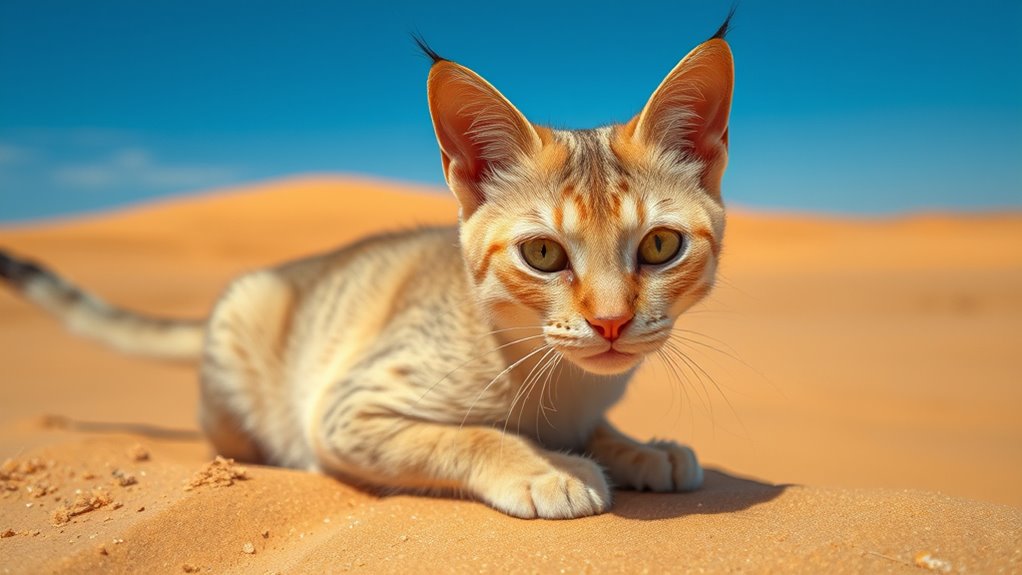
Sand cats are perfectly adapted to thrive in their harsh desert environment, where they navigate extreme temperatures and sparse vegetation with remarkable agility. Their desert adaptation allows them to survive scorching days and freezing nights.
You’ll notice their physical traits: thick fur to insulate against cold nights, large ears for excellent heat dissipation, and padded paws that prevent sinking into the sand. Their nocturnal behavior helps them avoid the daytime heat, so they’re most active after sunset and before dawn.
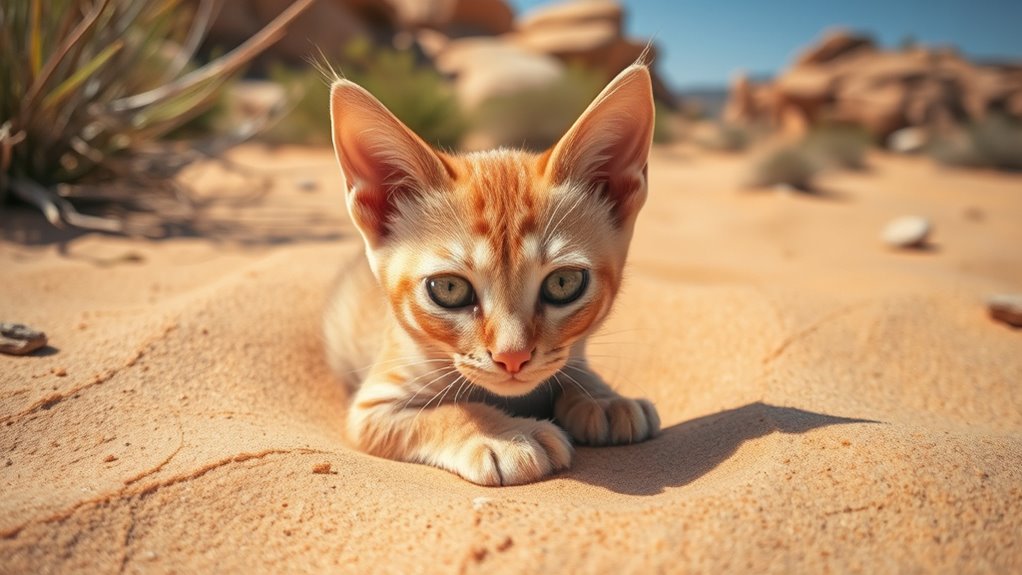
To picture their environment: the vast, open desert landscape with shifting dunes and scarce vegetation. Temperatures soar over 100°F during the day and drop sharply at night.
The quiet, star-filled sky marks their active hours. Understanding these behaviors and habitat features helps you appreciate how adaptable and resilient sand cats are in such extreme conditions.
This knowledge is essential when considering their care needs in captivity.
What Do Sand Cats Eat? Essential Diet Tips
Understanding what sand cats eat is key to providing them with a diet that mimics their natural intake and keeps them healthy. In the wild, they mainly hunt small prey like insects, rodents, birds, and reptiles.
To replicate this at home, offer a varied prey diet that gives them important nutrients. Variety is essential because it supplies a wide range of vitamins and minerals they need to stay well.
You should also supplement their diet with nutritional additives, such as taurine, to prevent deficiencies common in captive cats. Always select high-quality, appropriately sized prey to avoid choking or digestion problems.
Feeding your sand cat a balanced mix of prey helps maintain their natural hunting instincts and overall health. Remember, a good diet isn’t just about prey—nutritional supplements also play a vital role in meeting all their nutritional needs.
How to Set Up a Desert-Like Enclosure
Thinking about setting up a desert-like enclosure? Well, the first thing you want to do is pick sandy substrate materials that really resemble their natural environment. It makes a big difference in how comfortable and happy your sand cat will be.
Next, don’t forget to add shaded spots and shelters. These will give your pet a cozy place to rest and hide away when they need some protection from the sun or just a quiet spot to relax. And, of course, make sure the area stays dry and drains well—this helps prevent moisture from building up, which is super important for keeping your sand cat healthy.
Choose Sandy Substrate Materials
Choosing the right sandy substrate materials is key to creating a desert-like enclosure that resembles a sand cat’s natural habitat. You want to pick sand options that feel good and work well for your cat.
Think about these three things: First, go for fine, loose sand that lets the cat dig and burrow naturally. Second, make sure the materials are non-toxic and dust-free to avoid respiratory problems. Third, choose a well-draining substrate that doesn’t hold onto excess moisture, keeping the environment dry.
The texture should be soft enough for digging but stable enough for your cat to move comfortably. Stay away from coarse or overly compacted sand, as it can cause discomfort or health issues. Picking the right sandy substrate makes for a safe, stimulating environment your sand cat will love.
Incorporate Shade and Shelter
Creating a realistic desert environment for your sand cat involves more than just the right substrate. It also requires providing ample shade and shelter.
Shade options should include natural elements like large rocks, bushes, or purpose-built structures that block direct sunlight during the hottest parts of the day. Shelter types can range from small, shaded hideouts to enclosed dens that protect against wind and temperature fluctuations.
Make sure these shelters are sturdy, well-ventilated, and accessible. They give your sand cat a secure spot to rest and escape the sun.
Proper shading and shelter help mimic their natural habitat, reduce stress, and promote overall well-being. Regularly check that shade options remain effective and shelters stay intact, especially during extreme weather conditions.
Maintain Dry, Well-Drained Area
Maintaining a dry, well-drained area is key to replicating the desert conditions your sand cat thrives in. Proper drainage is essential to prevent water buildup, which can cause health problems.
Use coarse sand or gravel as the substrate to mimic natural desert terrain. Incorporate slight slopes to ensure water drains away quickly.
Add rocks or dry soil patches to create varied terrain and shelter spots. These features help maintain a desert climate within your enclosure.
Building Trust: How to Socialize Your Sand Cat
Building trust with your sand cat is all about being gentle and patient. When you handle them, make sure to do so calmly and softly, so they feel safe rather than threatened. It’s really important to create positive experiences—think of ways to interact that are soothing and enjoyable for your cat, like offering treats or kind words during your time together.
Also, sticking to a consistent routine can do wonders. When your sand cat knows what to expect—meal times, playtime, and quiet moments—it helps them feel secure and relaxed. Over time, these gentle, positive interactions will help build a strong, trusting bond between you.
Gentle Handling Techniques
Building trust with your sand cat starts with gentle handling techniques that respect their natural instincts. Use soft, slow movements to avoid startling them. Incorporate calming techniques like speaking softly and keeping a relaxed posture.
To help them feel comfortable, try gentle petting along their back and cheeks with a light touch to create positive associations. Short, frequent sessions are better than long ones, so they don’t get overwhelmed.
Pay attention to their body language—if they lean in or purr, it shows trust. If they tense up or retreat, give them some space.
Always keep your movements calm and predictable. Gentle petting helps them feel safe, making your sand cat more receptive to handling and strengthening your bond over time.
Creating Positive Experiences
| Activity | Benefit |
|---|---|
| Offering treats | Reinforces trust and positive feelings. |
| Playing with toys | Creates fun, memorable experiences. |
| Gentle petting | Builds comfort and attachment. |
| Verbal praise | Encourages calm, trusting behavior. |
This approach helps your sand cat build confidence and form a strong bond with you.
Consistent Routine Benefits
Establishing a consistent routine is one of the most effective ways to build trust with your sand cat. The routine benefits include creating a sense of security, reducing stress, and encouraging positive behaviors.
When you keep a predictable daily structure, your sand cat knows what to expect, making interactions smoother. To reinforce this, consider feeding your cat at the same times each day to establish stability.
Setting regular play sessions helps develop familiarity and comfort. Consistently offering quiet time in the same spot strengthens trust.
A steady routine helps your sand cat feel safe and confident, making socialization easier. When your actions are predictable, your pet is more likely to respond positively, fostering a strong bond.
What Are the Key Health Checks for Your Sand Cat?
Regular health checks are essential to keep your sand cat in top condition. These visits let your vet do thorough screenings, catching potential issues early before they become serious. Preventive care is a key part of keeping your cat healthy, including vaccinations, parasite control, and dental exams.
During these check-ups, your vet will assess your cat’s weight, coat condition, and overall behavior to spot any signs of illness. It’s also important to monitor your sand cat’s activity levels and appetite between visits, noting any changes.
Blood tests may be recommended periodically to check for underlying health problems, especially if your cat shows unusual symptoms. Regular health checks help ensure your sand cat stays healthy, active, and happy.
Staying proactive with preventive care reduces the risk of costly treatments later and keeps your furry friend thriving with you.
Grooming and Hygiene Tips for Sand Cats
Keeping your sand cat healthy goes beyond regular vet visits; proper grooming and hygiene are essential. Regular brushing with suitable tools helps remove loose fur and dirt, preventing matting and skin problems.
Focus on these key areas: use a gentle brush to keep their coat clean and reduce shedding. Check and clean their ears regularly to prevent infections. Incorporate daily dental care, like brushing their teeth or giving dental treats, to avoid dental issues.
Keeping their environment clean is also important to reduce parasites and bacteria. When grooming, be gentle and patient to make the process stress-free. Regular grooming not only boosts their health but also strengthens your bond.
Enrichment Ideas to Keep Your Sand Cat Mentally Active
To keep your sand cat mentally stimulated and happy, it’s important to offer activities that challenge their natural instincts. Use interactive toys and puzzle feeders daily to boost their mental sharpness.
Engage your sand cat with daily interactive toys and puzzle feeders to enhance their mental agility and happiness.
Create scent trails around their enclosure to tap into their hunting instincts and encourage exploration. Climbing structures provide vertical space for climbing and perching, satisfying their need for height and security.
Set a consistent playtime routine with socialization games to build bonds and spark curiosity. Changing activities regularly prevents boredom and keeps their minds engaged.
Rotating toys and introducing new challenges help create a stimulating environment. These enrichment ideas support your sand cat’s mental and emotional health, making them happier and more active.
Managing Temperature and Humidity for Desert Comfort
Since sand cats are native to desert environments, maintaining the right temperature and humidity levels in their enclosure is essential for their health and comfort. Proper regulation helps prevent stress and health problems.
To do this, consider these steps: Keep the temperature between 75°F and 85°F during the day, and make it slightly cooler at night. Use a thermostat and fans to keep the temperature steady.
Maintain low humidity levels around 20-30%, which mimics desert conditions. You can achieve this with heating systems like heat lamps and dehumidifiers.
Regularly monitor temperature and humidity with reliable gauges. Avoid sudden changes in temperature or high humidity, as these can cause discomfort or illness.
Is Owning a Sand Cat Legal? Responsible Pet Ownership
Owning a sand cat requires careful attention to legal regulations, as their status varies widely depending on where you live. Before bringing one home, you need to research local legal considerations, including whether owning exotic or wild cats is permitted.
Some countries or states impose strict regulations or bans because of conservation efforts and safety concerns. Ignoring these laws can lead to hefty fines or confiscation.
Strict regulations or bans protect wildlife and safety; ignoring them risks fines and confiscation.
Consider the ethical implications of keeping a sand cat as a pet. These animals are adapted to specific desert environments and may not thrive in captivity without proper care.
Responsible pet ownership means ensuring you can meet their unique needs legally and ethically. It’s your duty to respect wildlife laws and prioritize the well-being of the animal.
Proper legal compliance not only protects you but also supports conservation efforts and promotes responsible pet stewardship.
Frequently Asked Questions
How Much Space Does a Sand Cat Need to Thrive?
A sand cat needs plenty of space to thrive, ideally a secure and spacious habitat setup that mimics their natural environment. You should provide enough room for enrichment activities like digging, climbing, and exploring, which keep them mentally and physically stimulated.
Make certain the enclosure is large enough to allow natural behaviors, with hiding spots and varied terrain. This helps your sand cat stay healthy, happy, and active.
Can Sand Cats Live With Other Pets?
Yes, sand cats can live with other pets if you use proper socialization techniques. You should introduce them gradually, making sure both animals feel safe and comfortable.
Observe their play behavior closely, as sand cats are naturally solitary and may prefer independence. Always supervise their interactions, especially at first.
Give each pet their own space to prevent stress or conflicts. This helps create a peaceful multi-pet household where everyone feels secure.
What Are the Signs of Illness in a Sand Cat?
You should watch for behavioral changes like increased hiding or lethargy, which could signal illness. These cats are usually active and curious.
Notice any grooming needs that seem excessive or neglected, as changes might indicate health issues. Sand cats are generally healthy, but early signs like loss of appetite or unusual vocalizations are red flags.
Prompt veterinary care helps keep your sand cat happy and healthy.
How Often Should I Veterinarian-Check My Sand Cat?
You should take your sand cat to the veterinarian for routine check-ups at least once a year to monitor its health. During these visits, make sure they get the necessary vaccinations to protect against common feline diseases.
Regular check-ups help catch any health issues early and keep your sand cat in good condition. If you notice any signs of illness, don’t wait—schedule an appointment sooner for prompt care.
Do Sand Cats Require Special Dietary Supplements?
Do you wonder if your sand cat needs special dietary supplements? Generally, they don’t require extra supplements if their diet includes high-quality meat and specialized feline food.
Use proper feeding techniques, like offering small, frequent meals, to ensure they get all the essential nutrients naturally. Over-supplementing can be harmful, so always check with your vet before adding anything extra.
Conclusion
Caring for a sand cat means dedicating yourself to their unique desert needs, from their specialized diet to their environment. Did you know that sand cats can survive in temperatures exceeding 120°F?
With proper setup, patience, and commitment, you can provide a safe, enriching home for your desert dweller. Remember, responsible ownership isn’t just about laws; it’s about ensuring your sand cat thrives in its natural habitat.