Why Does My Cat Grunt When I Pet Her?
Are you puzzled by your cat’s strange noises when you pet her? You’re not alone—many cat owners wonder what their feline friends are trying to tell them.
Understanding your cat’s sounds can be tricky, especially when she grunts during affection.
If your cat grunts when you pet her, it often signals she’s feeling comfortable or mildly stimulated. She might be expressing contentment, especially if paired with relaxed body language like purring or slow blinking.
However, persistent or unusual grunting can also indicate discomfort or health issues, especially if combined with tense muscles or withdrawal.
Paying attention to her overall behavior helps you understand her better. Keep exploring to uncover what her sounds and signals really mean.
Key Takeaways
- Cats may grunt when you pet them as a sign they’re feeling happy or sometimes a little uncomfortable, depending on their body language and the situation.
- Grunting can also mean they’re overstimulated or have a sensitive spot, so you might need to change your petting style.
- If your cat keeps grunting or if it happens often, it could be a sign of health issues like arthritis or dental pain, and a vet check might be a good idea.
- Look for other clues like tense muscles or flattened ears to tell if your cat is happy or uncomfortable.
- Respect your cat’s boundaries and preferences during petting to help her feel safe and reduce any unwanted grunting.
What Does It Mean When My Cat Grunts During Petting?
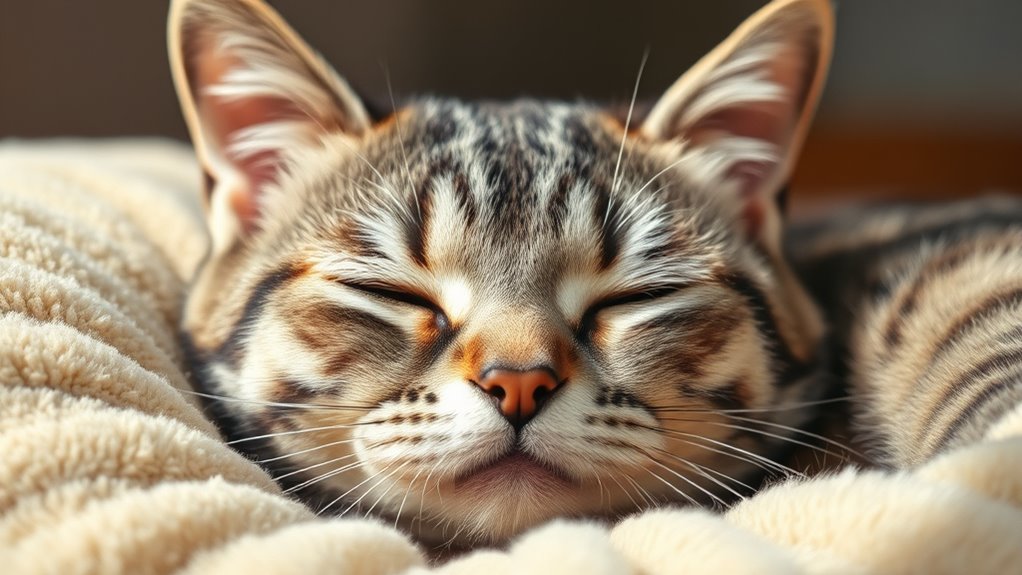
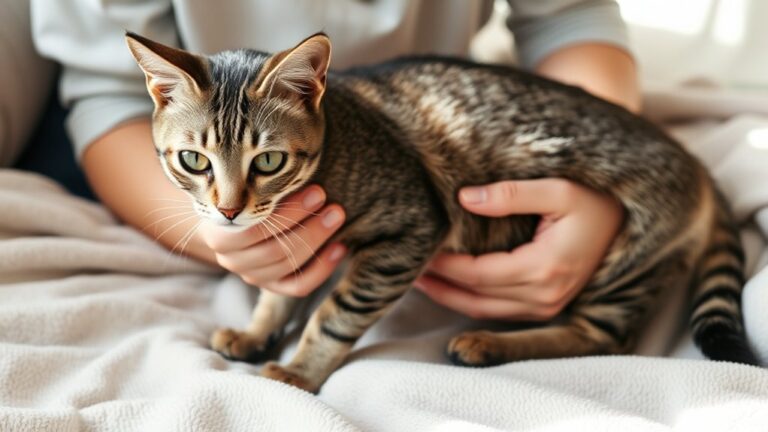
When your cat grunts during petting, it often shows her feelings—some cats find certain touches uncomfortable or too much. This grunting is her way of telling you her petting preferences. She might grunt if she’s reached her limit or feels unsure about the sensation.
It’s not usually a sign of anger or pain but a message that she’s uncomfortable. She may prefer gentle strokes instead of firm pressure or want to be petted in specific areas only. Pay close attention to her body language to understand what she’s comfortable with.
If she grunts, pause and observe her response. Respect her boundaries by adjusting your touch. Over time, she’ll likely become more relaxed and comfortable. Recognizing these cues helps you build trust and keeps your interactions positive.
Is Your Cat’s Grunting a Sign of Happiness or Discomfort?
Paying attention to your cat’s grunts can really help you figure out what they’re trying to tell you. Sometimes, those sounds mean they’re happy and relaxed, especially if you notice their body is loose and at ease. Other times, a grunt might be a sign they’re feeling uncomfortable or stressed—like if their muscles are tense or they’re hiding away.
Recognizing Contentment Signals
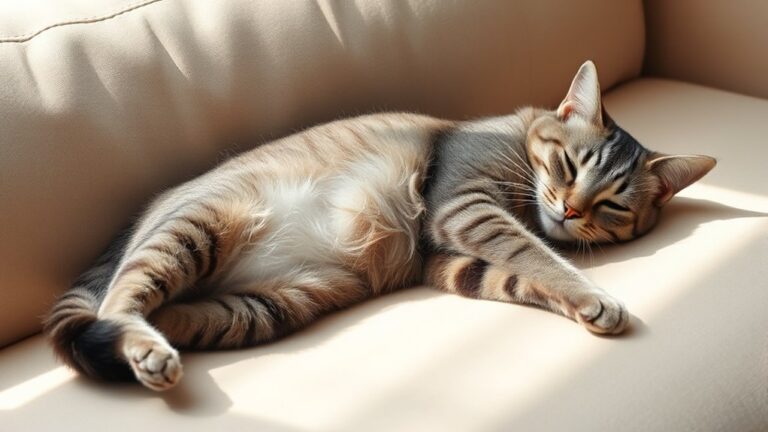
Recognizing whether your cat’s grunting signals contentment or discomfort requires careful observation of their overall behavior and body language. When your cat is happy, you might notice purring signals that go along with her grunts, showing she’s relaxed and enjoying herself.
Look for relaxed body language like slow blinking, soft eyes, and a gentle tail position. Her ears will typically be forward or slightly to the side, not flattened or tense. A content cat often leans into your touch and may even knead with her paws.
These signs show she feels safe and comfortable. If her body stays loose and she responds calmly to your petting, her grunting probably means she’s happy. Always pay attention to the context and her entire demeanor to interpret her signals accurately.
Identifying Discomfort Indicators
Ever wonder if that grunt from your cat might signal discomfort rather than happiness? Recognizing discomfort signs is key to understanding your cat’s behavior.
Pay attention to vocalization types. If your cat’s grunts come with tense body language, flattened ears, or dilated pupils, these could mean your cat isn’t feeling right.
Other signs include scratching or biting when touched in certain spots, hiding, or sudden changes in activity levels. Some cats might also meow more loudly or often if they’re in pain or stressed.
Not all grunts mean distress, but if they come with these cues, it’s worth considering that your cat isn’t comfortable. Understanding the difference helps you respond properly and keep your pet happy and healthy.
Why Do Cats Make Grunting Sounds When You Pet Them?
Have you noticed your cat making grunting sounds while you’re petting them? This behavior often shows what your cat prefers when being petted. Some cats love gentle strokes, while others grunt when touched in certain spots. It’s their way of saying they’re comfortable or a little annoyed.
Here’s a quick look at common reasons for this behavior:
| Reason | Description | Example Behavior |
|---|---|---|
| Contentment | Cats grunt when they’re relaxed | Purring, leaning into your hand |
| Mild Discomfort | Sensitive areas or overstimulation | Tensing up, pulling away |
| Petting Preferences | Favorite zones or spots | Grunting when touched certain areas |
Understanding these cues helps you adjust how you pet your cat. It makes the experience more enjoyable for both of you. Recognizing your cat’s grunting helps you respect her boundaries and build a stronger bond.
What Your Cat’s Body Language Tells You When She Grunts
When your cat lets out a grunt, it’s like she’s sending you a little message about how she’s feeling. So, it’s a good idea to keep an eye on her ears and tail because those are usually the first clues to her mood. For example, if her ears are pointed forward and her tail is relaxed, she’s probably feeling pretty content. But if her ears are flattened or her tail is flicking, she might be annoyed or uneasy.
Also, don’t forget to check her posture. Is she sitting comfortably, or is she tense and ready to dart away? Her body language can tell you whether she’s at ease or feeling a bit stressed. And of course, her facial expressions matter too—whether she looks calm, irritated, or alert can give you a lot of insight into what she’s experiencing at that moment. Paying attention to these little cues can help you understand your feline friend a lot better.
Ears and Tail Clues
Your cat’s ears and tail can tell you a lot about how she’s feeling when she grunts. Pay attention to her ear positions and tail movements to understand her mood.
If her ears are flattened or turned sideways, she might be annoyed or overstimulated. That’s a sign she’s uncomfortable with your petting.
A twitching or flicking tail shows she’s agitated or impatient. It means she’s not fully relaxed right now.
When her ears are forward and her tail is steady or gently swaying, she’s probably happy and enjoying the interaction.
These small cues help you understand your cat’s emotional state, so you can adjust your touch or give her space if needed.
Recognizing these signals helps prevent miscommunication and keeps your bond strong.
Posture and Stance Signals
A cat’s posture and stance give you clear clues about how she’s feeling, especially when she grunts. Pay attention to her body language—whether she’s arching her back, crouching low, or standing tall.
If she’s crouched with tense muscles and her tail tucked tight, she might be feeling uncomfortable or defensive. On the other hand, a relaxed stance with her body upright and paws on the ground usually means she’s content.
Signals like puffed-up fur or a stiff, rigid body can show irritation or overstimulation. When she grunts while being petted, watch her overall posture—tension or sudden stiffening often means she’s reached her limit.
Understanding these body language cues helps you know how she’s feeling and how to respond appropriately.
Facial Expressions Indicators
Facial expressions give you important clues about what your cat’s grunting might mean. By paying attention to her facial cues, you can better understand her feelings. Here are three indicators to watch for:
Ears and eyes: Flattened ears or half-closed eyes suggest relaxation, while pinned-back ears or wide eyes indicate discomfort or agitation.
Muzzle and whiskers: Relaxed whiskers and a soft muzzle show contentment. Tense muscles and pulled-back whiskers hint at stress.
Facial tension: A smooth, soft face signals calmness. A tense, scrunched face reflects annoyance or unease.
These facial cues help you figure out whether her grunting is a sign of pleasure, irritation, or uncertainty.
Can Medical Problems Cause Your Cat to Grunt When She’s Petted?
Could medical issues be making your cat grunt when you pet her? Yes, certain health problems can cause this reaction. Pain or discomfort from conditions like arthritis, dental issues, or respiratory problems may make your cat grunt as a reflex to pain or irritation.
Sometimes, the grunting is a sign she’s feeling overwhelmed or uncomfortable due to an underlying health issue. It’s important to tell the difference between normal behavior and signs of distress. Behavioral issues can also play a role, but if your cat’s grunting happens in specific areas or gets worse over time, medical problems could be involved.
Regular vet visits can help catch hidden health concerns early. If your cat suddenly starts grunting more often when you pet her, especially if she’s hiding or eating less, it’s best to see a vet. Addressing medical issues early can make her more comfortable and improve her overall well-being.
Is Your Cat’s Grunting Normal or a Sign of a Problem?
Paying attention to your cat’s grunting is pretty important — it can tell you a lot about how they’re feeling. Sometimes, a little grunt here and there is totally normal, especially if your kitty is just settling in or being a bit playful. But if you notice the grunting happening more often, or if it sounds different than usual, it might be a sign that something’s up.
It’s a good idea to keep an eye on these sounds and see if they come along with other signs of discomfort, like changes in behavior, appetite, or activity level. If your cat’s grunting seems persistent or unusual, it’s best to chat with your vet. Catching these things early can make a big difference in keeping your furry friend happy and healthy.
Common Cat Vocalizations
Cats communicate in different ways, and vocalizations are a common part of their language. Understanding these sounds helps you figure out what your cat is trying to tell you.
Some common vocalizations include meowing, which is often used to get your attention or show needs. Purring usually means your cat is content, but it can also signal pain or stress.
You might also hear grunting or huffing, which can be signs of annoyance or mild discomfort. Keep an eye on the context—if your cat grunts during petting or play and it happens often, it’s likely just her way of communicating.
However, if the sounds are persistent or unusual, it’s a good idea to check in on her to make sure she’s doing okay.
Signs of Discomfort
While some grunting can be a normal part of your cat’s way of communicating, persistent or unusual sounds often mean discomfort or health problems. Pay attention to signs like growling, hissing, or pulling away when you’re petting them. These may show that your cat’s petting preferences aren’t being met comfortably.
If your cat keeps grunting during contact, it could be a sign of pain or irritation. The table below highlights common signs to watch for:
| Sign | Possible Cause | Action |
|---|---|---|
| Sudden withdrawal | Discomfort or pain | Consult your vet |
| Loud vocalizing | Stress or illness | Observe behavior and seek help |
| Avoiding petting | Sensitive areas or discomfort | Respect boundaries, check health |
| Change in posture | Muscle or joint issues | Schedule a check-up |
| Loss of appetite | Underlying health problems | Visit your veterinarian |
How Can I Make Petting More Comfortable for My Cat?
To make petting more comfortable for your cat, it’s important to pay attention to their body language and preferences. Cats have unique boundaries, so gentle petting helps them feel safe and relaxed. Creating safe spaces where they can retreat if overwhelmed also boosts their comfort.
Here are three ways to improve your petting experience:
- Watch their reactions—if they lean in or purr, they’re enjoying it. If they pull away or grunt, stop right away.
- Use slow, gentle strokes along their favorite areas, like cheeks or chin. Avoid sensitive spots to keep them happy.
- Always let your cat initiate contact and give them access to safe spaces to retreat if needed.
When Should You See a Vet About Your Cat’s Grunting?
If your cat’s grunting becomes frequent or persistent, it’s important to pay attention to their overall health and behavior. Persistent grunting could be a sign of underlying health issues that need veterinary attention.
Frequent or persistent cat grunting signals potential health issues requiring veterinary evaluation.
You should see a vet if you notice additional symptoms like coughing, sneezing, difficulty breathing, or lethargy. A thorough health check can help determine if the grunting is caused by respiratory problems, pain, or other medical conditions.
Also, keep an eye out for changes in appetite, posture, or activity levels, as these can indicate discomfort. If the grunting happens suddenly or gets worse over time, don’t delay seeking professional advice.
Your veterinarian can assess your cat’s health, diagnose any issues, and suggest the right treatment. Addressing these symptoms early can help prevent more serious health problems and keep your cat comfortable and happy.
Different Cat Vocalizations and What They Mean
Cats communicate a lot through vocalizations, and understanding what they mean can help you respond better to their needs. Recognizing different vocalization types gives you insight into their behavior, emotions, and what they might want.
Here are some common sounds and what they usually mean:
- Meowing – Often a way for your cat to ask for attention or food. It’s their way of signaling that they want interaction.
- Purring – Usually a sign that your cat is happy and content. But it can also mean they’re stressed or in pain if other signals are present.
- Grunting or Growling – These sounds generally mean your cat is uncomfortable or irritated. It might be a reaction to petting or a sign they’re feeling stressed.
How Recognizing Your Cat’s Sounds Can Strengthen Your Bond
Understanding your cat’s sounds helps you respond better, which can strengthen your bond and build trust. When you pay attention to her vocal cues, you start to recognize her unique sounds and what they mean.
Listening to your cat’s sounds deepens your bond and fosters mutual understanding.
This awareness allows you to engage in activities that match her needs and preferences. For example, if she purrs softly or makes specific chuffing noises when she’s happy, you can gently pet her or play to make her feel comfortable.
On the other hand, noticing her grunts or huffs might mean she’s annoyed or uncomfortable. That’s your cue to adjust what you’re doing to help her feel better.
By actively listening and responding, you create a two-way communication that helps you understand each other better. Over time, this builds a stronger emotional connection and makes your interactions more positive.
Recognizing and interpreting her sounds ultimately helps develop a trusting, loving relationship.
Frequently Asked Questions
Can a Cat’s Age Affect Her Grunting Behavior?
Yes, your cat’s age can influence her grunting behavior, as it may be part of her age-related communication. Older cats often develop changes in vocalization and behavior, which can include more frequent or different sounds like grunting.
This behavior helps you understand her comfort level or health status. Paying attention to her age-related changes in communication can improve your bond and ensure she gets the care she needs.
Do Certain Breeds Tend to Grunt More Than Others?
Yes, some breeds tend to grunt more than others because of their natural behavior and vocalization styles. For example, Siamese and Maine Coon cats are known for being more vocal and expressive.
They often grunt or make other sounds when touched or engaged. Your cat’s breed influences how she responds vocally; some breeds just communicate more through grunts.
This means her behavior might be more noticeable and frequent compared to quieter breeds.
Is Grunting More Common During Specific Times of Day?
Your cat’s grunting is more likely during morning behavior and evening habits. Cats often grunt when they’re feeling relaxed or content, which can happen after waking up or during winding-down times.
You’ll notice more grunting when you pet her during these periods. These sounds may also serve as communication, signaling comfort or a gentle request for attention.
Pay attention to her cues to better understand her mood.
Can Environmental Changes Influence a Cat’s Grunting?
Environmental changes can definitely influence your cat’s grunting. When there’s stress from changes in her surroundings, she might become more vocal or grunt more often.
Things like increased noise levels or moving to a new place can make her feel anxious or uncomfortable, leading to more grunting. Temperature swings can also affect her mood and behavior.
How Can I Differentiate Between a Grunt and a Cough?
Think of a grunt as a soft, rhythmic drumbeat signaling your cat’s petting response, while a cough is more like a sudden, sharp drum hit.
To tell them apart, pay attention to the sound’s tone and rhythm. A grunt causes a gentle, continuous sound, often with a relaxed body. Coughing, on the other hand, is abrupt and may come with throat clearing or gagging.
Watch her body language to better understand how she’s feeling. This can help you tell if she’s just making a contented noise or if something’s bothering her.
Conclusion
Understanding why your cat grunts during petting helps you better read her signals. For example, if she starts to grunt and leans into your touch, she’s probably enjoying the interaction.
But if she shows signs of discomfort, it’s best to give her some space or maybe even check with a vet. Paying close attention to her sounds and body language is key.
This way, you’ll strengthen your bond and make sure she feels safe and loved. Remember, tuning into her cues makes all the difference, especially if your cat grunts when you pet her.