What Do Cats Know When Another Pet Dies?
Losing a beloved pet is heartbreaking, and it’s common to wonder how your cat is really feeling. Many pet owners struggle with understanding their cat’s emotional world during such difficult times. You’re not alone in wanting to find ways to comfort your furry friend.
Cats may not understand death the way humans do, but they sense significant changes in their environment. They notice the absence of a familiar pet and pick up on scent and routine disruptions.
Your cat’s heightened senses and emotional cues from you help them recognize that something’s changed.
You might see signs of distress, like increased clinginess or withdrawal. If you want to understand more about your cat’s emotional world and how to support them, there’s more to learn.
Key Takeaways
- Cats notice scent changes and environmental shifts when another pet passes away.
- They might behave differently, like becoming more clingy or withdrawing, which shows they’re aware of the loss.
- Cats pick up on their human family members’ emotions related to grief.
- They may look for the missing pet or act confused and distressed.
- Keeping routines consistent and providing a calm environment can help support a grieving cat’s emotional health.
Do Cats Understand When a Pet Passes Away?
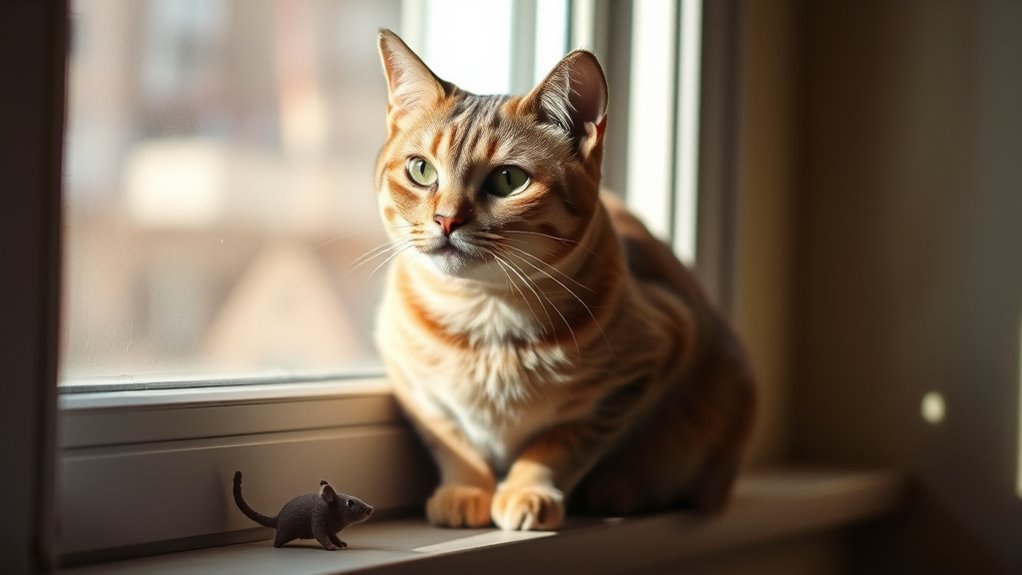
Many pet owners wonder if cats truly understand when another pet passes away. While they may not grasp death the way humans do, cats do have emotional awareness and behavioral understanding that can signal they notice a change.
You might see your cat become more withdrawn or clingy, indicating they sense something’s different. Their heightened senses allow them to pick up on subtle shifts like scent changes or altered routines that come with a pet’s passing.
Cats are often sensitive to emotional cues from their human family members, which can influence their behavior. However, understanding death on a cognitive level isn’t part of their awareness.
Instead, they respond to the emotional atmosphere and behavioral cues around them. So even if they don’t understand death’s finality, your cat’s reactions reflect an innate ability to perceive emotional shifts and behavioral changes in their environment.
How Do Cats Typically React to the Loss of a Pet
The grief of a pet’s loss can really impact your cat’s behavior, often leading to noticeable changes in how they act and interact. Cats might become more withdrawn, seeking quiet spots, or they could become more clingy, wanting extra cuddles and reassurance.
Their feline instincts pick up on your emotions and the new environment, which can make them behave differently to show they sense the loss. You might see them searching for the missing pet or vocalizing more than usual.
Understanding these reactions can help you support your cat through their grieving process. Recognizing their behaviors is key to helping them feel safe and loved during this difficult time.
| Behavior Change | Explanation |
|---|---|
| Increased clinginess | Seeking reassurance and extra petting after loss |
| Withdrawal | Retreating to safe or quiet spaces |
| Vocalizations | Expressing confusion or distress |
| Altered routines | Eating or sleeping differently |
| Searching behaviors | Looking for the absent pet or familiar scent |
What Signs Indicate Your Cat Senses Something Is Wrong
Cats are incredibly perceptive creatures, often noticing subtle changes in their environment and the emotions of people around them. They use scent recognition to pick up on shifts, like new smells from a deceased pet or changes in routines.
You might see your cat becoming more alert or sniffing the air more often, trying to identify unfamiliar scents. Behavioral cues also show they’re aware; they may act more withdrawn, pace nervously, or stay close to you, sensing that something’s off.
Some cats become more vocal or clingy, seeking reassurance from their owners. Watch for changes in grooming habits—either over-grooming or neglecting grooming altogether.
These signs suggest your cat perceives a disturbance in their environment or emotional atmosphere. Recognizing these cues helps you understand that your cat senses something has shifted, even if they can’t tell you in words.
How Changes in Your Cat’s Environment and Routine Affect Them
When your routine changes or the environment shifts, your cat might start to feel a bit anxious or even become more withdrawn. It’s pretty normal for cats to get a little stressed when things aren’t the same as usual. Sudden disruptions can sometimes lead to behavior issues or make them seem more unsettled than usual.
Getting to know how these changes affect your cat can really help you support them better during those tricky times. Just a little patience and understanding can go a long way in helping your feline friend feel safe and secure again.
Routine Disruptions Impact Behavior
Any change to your cat’s daily routine or environment can really affect their behavior, often causing stress or anxiety. Routine changes might lead to behavioral adjustments as your cat tries to cope with the new circumstances.
They might become more withdrawn, vocal, or show emotional responses like hiding or overeating. Losing a companion can make these reactions worse, making your cat more sensitive to stress triggers.
Keeping your routines stable and your environment familiar helps your cat feel secure during these times. Consistent feeding, play, and rest routines give them reassurance.
Understanding that disruptions impact your cat’s emotional well-being allows you to offer comfort and support. This can help ease their stress and make it easier for them to adapt to changes in their environment.
Environmental Changes Cause Stress
Environmental changes like moving furniture, new people entering the home, or changes in your cat’s outdoor access can quickly cause stress. These triggers activate your cat’s stress responses, making them anxious or withdrawn.
Sudden shifts in their surroundings can confuse them, leading to behaviors like hiding, aggression, or loss of appetite. Understanding these triggers helps you provide stability during times of change.
| Environmental Trigger | Common Stress Response | Tips to Ease Stress |
|---|---|---|
| Moving furniture | Hiding or avoidance | Keep familiar items |
| New people | Increased anxiety | Introduce gradually |
| Outdoor access changes | Restlessness | Maintain routine |
| Noise disruptions | Vocalization or hiding | Use calming sounds |
| Routine alterations | Disorientation | Keep a consistent schedule |
Can Cats Grieve? Understanding Feline Emotions After Loss
Cats experience emotions that can include grief, even if they don’t always show it in ways humans immediately recognize. Their ability for feline empathy lets them sense changes in your mood and environment after a loss.
Cats can feel grief and empathy, sensing your emotions and environment after a loss.
Their emotional bond with another pet influences how deeply they feel the absence. You might notice them acting differently—withdrawn or more clingy—as part of their way of grieving.
Cats’ attachment styles shape their responses. Some handle loss quietly, while others show signs like loss of appetite or over-grooming. Recognizing these signals helps you support their recovery.
Providing familiar routines, safe spaces, and extra affection can ease their emotional burden. Understanding that cats grieve differently highlights the importance of patience and observation.
What Factors Influence How Your Cat Reacts to Pet Loss
Several factors shape how your cat reacts to the loss of a companion. Pet bonding plays a big role; cats with strong bonds may show more noticeable signs of grief. Feline awareness, or how attuned your cat is to its environment, also influences reactions. Some cats are more sensitive to changes, while others adapt quickly.
Here’s a quick look at key factors:
| Factor | Effect on Reaction |
|---|---|
| Bond Strength | Stronger bonds lead to more visible grief |
| Feline Awareness | Highly aware cats notice subtle changes |
| Age at Loss | Older cats might grieve differently than kittens |
| Previous Experiences | Past losses shape current reactions |
| Environment Stability | Stable settings can lessen stress during mourning |
Understanding these factors helps you recognize your cat’s emotional response and appreciate their unique grieving process.
How to Support Your Cat Through Grief and Adjustment
When your cat is going through grief, it’s important to pay attention to how they’re acting. You might notice them hiding more than usual, not eating as much, or just being less active overall. These are common signs that your cat is feeling upset or stressed.
To help them through it, try to keep their daily routine as consistent as possible. Cats find comfort in predictability, so sticking to regular feeding times and play sessions can make a big difference. Creating a cozy, safe space where they can retreat to when needed also helps them feel secure.
Keep watching for any changes in their behavior, and be ready to adjust your support if needed. Make sure they know they are loved and safe — your patience and understanding can really make a difference as they navigate their feelings.
Recognizing Signs of Grief
Recognizing the signs of grief in your cat is important so you can give them the support they need during this tough time. Cats often show their feelings in subtle ways, like changes in appetite, grooming habits, or social behavior.
You might notice your cat hiding more or avoiding their usual playtime, which can be a sign of their changing mood. Pay attention to vocalizations or clinginess, as these can also indicate distress.
Understanding these signals helps you tell normal behavior from grief-related changes. Spotting these cues early allows you to support your cat’s emotional health better during their adjustment.
Providing Comfort and Routine
Supporting your cat through grief involves maintaining a consistent routine and providing comfort in familiar ways. Stability helps your cat feel secure during an uncertain time.
Implement comfort strategies like gentle petting or talking softly, and keep feeding times and play sessions regular. Small routine adjustments, such as offering cozy spaces or extra attention, can help ease anxiety.
Consider keeping feeding schedules unchanged to provide predictability. Create a quiet, comforting space where your cat can retreat to feel safe.
Use familiar toys or blankets to offer reassurance, and stick to normal play and interaction times. These steps help your cat process loss while feeling secure.
Consistency and gentle support give your pet the emotional stability needed to adjust gradually.
Monitoring Behavioral Changes
As your cat navigates grief, paying close attention to behavioral changes can give you important clues about how they’re coping. Regularly observing their behavior helps you spot signs of distress, like hiding, less activity, or changes in appetite.
These shifts might mean your cat is emotionally aware of the loss and needs support. If they become more clingy or withdraw completely, these are common reactions to grief.
By keeping an eye on these behaviors, you can better understand how they’re feeling and adjust your approach. Gentle reassurance, sticking to routines, and creating safe spaces can help them process their emotions.
Staying tuned to their cues allows you to support them with compassion and patience during this tough time.
When Should You Be Concerned About Your Cat’s Behavior Changes?
Have you noticed your cat suddenly acting differently? Changes in behavior can be subtle or obvious, but knowing when to be concerned is key. If you see persistent signs of anxiety or unusual behaviors, it’s time to pay closer attention.
Significant shifts like hiding more than usual, aggression, or loss of appetite may signal distress or health issues. Your cat might become unusually withdrawn or overly clingy. They may also stop using the litter box or have accidents outside it.
Changes in eating, sleeping, or grooming routines can also be a sign. You might notice excessive vocalizations or restlessness. These behaviors could indicate stress from pet loss or underlying health problems.
If these signs last more than a few days or get worse, consider consulting your veterinarian. Acting early can help address underlying causes and ensure your cat gets the care and reassurance they need during tough times.
How Your Emotions and Household Atmosphere Impact Your Cat After Loss
When your cat shows signs of distress after losing a pet, your emotions and household atmosphere can really influence how they heal. Your emotional support and how your home feels shape how your cat perceives and reacts to the loss.
A calm, gentle energy helps foster empathy in your cat, making them feel secure during this vulnerable time. Recognizing behavioral cues like hiding or decreased activity is key to understanding how they’re feeling.
Keeping a stable environment reassures your cat and makes it easier for them to grieve. Creating a peaceful atmosphere with familiar routines and soft interactions encourages healing.
A calm, stable environment with familiar routines and gentle interactions helps your cat heal and find comfort after loss.
Think about how your mood impacts theirs—an anxious or tense household can make their distress worse. Maintaining consistent routines and offering comfort can help your cat adjust.
Tips for Helping Your Cat Heal and Move Forward
Helping your cat heal and move forward after a loss requires intentional steps to provide comfort and stability. Recognize that grief expressions vary; some cats may become more withdrawn, while others seek extra affection. Offering consistent routines helps restore a sense of security.
Providing emotional support through gentle interactions reassures your cat during this sensitive time. Be patient. It’s normal for grief to manifest differently and take time to process.
Consider these tips:
- Maintain a predictable daily routine to create stability
- Use calming pheromone diffusers to reduce anxiety
- Gradually introduce new activities or toys to encourage positive engagement
- Observe your cat’s grief expressions and respond with patience and reassurance
Frequently Asked Questions
Do Cats Recognize Death or Just Changes in Routine?
Cats do recognize death, not just routine changes. You might notice their emotional awareness when they react differently around the departed pet or show signs of behavioral changes like hiding or increased clinginess.
These responses suggest they sense a profound shift in their environment and emotional atmosphere. You should monitor their behavior, offer comfort, and give them time to adjust.
Understanding that their reactions come from their emotional awareness of loss can help you support them through the change.
Can Cats Differentiate Between Different Types of Pets That Pass Away?
You might notice your cat reacts differently depending on which special friend has left the scene. They often recognize individual pets through scent and behavior, leading to unique emotional responses.
This pet recognition helps them discern the loss’s significance, evoking varying degrees of mourning or curiosity. Though they may not grasp the full story, your cat’s subtle cues reveal they sense the emotional shift.
It’s a reminder of their quiet empathy during this delicate time.
Do Cats Remember a Deceased Pet Long-Term?
Yes, cats remember a deceased pet long-term thanks to their strong memory and emotional bonds.
When a pet passes, your cat might change their behavior or routines, showing they recall the loss. They may seem more subdued or search around for the missing companion.
This shows that cats form lasting memories and emotional connections, which can affect how they feel and act even after a pet has died.
How Do Cats Communicate Their Grief to Humans?
You’ll notice your cat communicates grief through body language signals like withdrawn posture or increased clinginess.
Vocalization changes, such as more frequent or softer meows, also reveal emotional responses.
Social behavior shifts, including avoiding or seeking extra attention, show their emotional state.
These signs help you understand their grief because cats express their feelings through subtle cues.
Being attentive can comfort your pet during this emotional time.
Are Certain Cat Breeds More Sensitive to Pet Loss?
Certain cat breeds, like Ragdolls, are known to be more sensitive. They often show stronger emotional responses to pet loss.
For example, a Ragdoll may visibly mourn or seek extra comfort when a companion pet dies. These sensitive breeds tend to pick up on emotional cues more acutely.
This makes them more empathetic to grief. Knowing your cat’s breed can help you support their emotional needs better during tough times.
Conclusion
Losing a pet can feel like losing a family member, and your cat senses this profound change deeply.
By paying attention to their signals, offering comfort, and maintaining a stable environment, you help them heal from the heartbreak.
Remember, your cat’s emotional world is more intricate than you think, like a delicate tapestry woven with unseen feelings.
Your care and patience can turn their grief into a path toward healing, brighter than the dawn after a storm.
When another pet dies, cats may sense the loss and react differently, showing signs of confusion or sadness.
Understanding what cats know when another pet dies can help you support them better through their grief.