
How Does Flea Medicine Work for Cats?
Dealing with fleas on your cat can be a frustrating and ongoing battle. Many pet owners feel overwhelmed trying to find effective solutions that actually work. You’re not alone—flea infestations are common, but the good news is there are plenty of options to keep your furry friend flea-free.
Flea medicine for cats works by targeting the flea’s nervous system, disrupting crucial functions, and killing them quickly.
Topical treatments spread through the skin, killing fleas on contact and preventing new infestations for about a month. Oral medications enter your cat’s bloodstream, killing fleas when they bite, offering long-lasting protection.
Knowing how these treatments work can help you choose the best option—stay with us to learn more about how to keep fleas at bay effectively.
Key Takeaways
- Flea medicines target flea nervous systems, causing paralysis and death on contact or after biting.
- Topical treatments spread active ingredients through the skin for ongoing protection.
- Oral medications enter the bloodstream, killing fleas when they bite.
- Some treatments affect flea eggs and larvae, breaking the lifecycle and preventing re-infestation.
- Consistent application is essential to prevent resistance and maintain effective flea control.
How Do Flea Medications Kill Parasites in Cats?
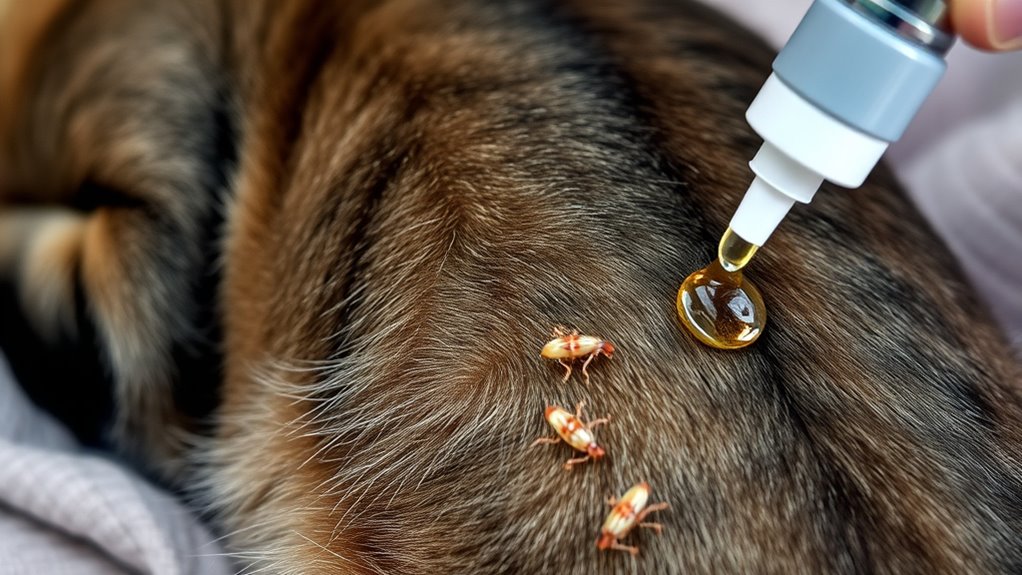
Flea medications work by targeting the nervous system of fleas and other parasites, quickly disrupting their essential functions. When you apply medication to your cat, it interferes with the parasite’s interaction and interrupts the flea lifecycle.
These treatments usually contain ingredients like insecticides or adulticides, which kill adult fleas on contact. Some formulations also affect eggs and larvae, breaking the cycle and preventing future infestations.
By disrupting the flea’s nerve signals, the medication causes paralysis and death within hours. This active interference prevents fleas from feeding and reproducing, reducing the overall parasite population on your cat and in your home.
Understanding the parasite interaction at each stage of the flea lifecycle helps explain how these medications are so effective. They target fleas at different points in their development, ensuring thorough control.
As a result, your cat becomes free of fleas faster, and the risk of reinfestation diminishes.
The Main Types of Flea Treatments for Cats Explained
There are several main types of flea treatments for cats, each targeting different stages of the flea lifecycle and fitting various needs. The most common options are topical treatments, oral medications, collars, and shampoos.
Topical treatments are applied directly to your cat’s skin and often give quick relief. They usually need to be reapplied every month or every few months. Oral medications work by entering your cat’s bloodstream, killing fleas when they bite, and typically require monthly doses for ongoing protection.
Topical treatments provide quick relief and need reapplication every few months.
Flea collars release active ingredients gradually, providing long-lasting defense that can last up to eight months. However, they need to be replaced or adjusted as needed. Shampoos provide fast, short-term relief but need to be used frequently for continued effectiveness.
Understanding the flea lifecycle helps you choose the best treatment plan. It also helps determine how often to treat your cat to break the cycle and prevent future infestations.
How Do Topical Flea Medications Work to Prevent Flea Infestations?
Topical flea medications are a popular way to keep your cat protected from pesky fleas. They work by killing fleas on contact, which means the fleas don’t even need to bite your cat to be affected. This helps prevent new infestations before they get started.
When applying these treatments, it’s really important to follow the instructions carefully. Proper application not only ensures that the medication works effectively but also keeps your cat safe. If you’re unsure about how to use it, don’t hesitate to ask your vet for guidance.
Understanding how these treatments work can give you peace of mind. It helps you stay confident that you’re doing what’s best for your kitty and keeping those fleas at bay!
How Topical Medications Work
When you apply topical flea medications, the active ingredients are quickly absorbed through your cat’s skin, allowing the medicine to spread across their body. This process, known as topical absorption, makes sure the medication reaches areas where fleas and their eggs hide.
Once absorbed, the active ingredients start working right away to kill existing fleas and prevent new infestations. How long the medication lasts depends on the product, but it usually provides protection for about a month.
During this time, the medication stays active on your cat’s skin, releasing ingredients gradually to keep fleas at bay. Because of this steady release, you don’t need to reapply the medication often, making it a convenient and effective option for flea prevention.
Application and Safety Tips
Applying topical flea medication correctly is really important to keep your cat safe and ensure the treatment works. Start by parting your cat’s fur at the spot recommended on the label, usually between the shoulder blades.
Use your fingers or an applicator to put the medication directly onto the skin, avoiding the fur. Follow the specific instructions that come with the product to make sure it absorbs properly.
Safety is key—keep the medication away from your cat’s mouth, eyes, and paws. Wash your hands thoroughly afterward and prevent your cat from licking the treated area for the time specified.
Always read and follow the manufacturer’s instructions carefully to avoid any adverse reactions and to get the best flea prevention.
What Are the Benefits of Oral Flea Medications for Cats?
Oral flea medications offer several advantages that make them a popular choice among cat owners. One key benefit is their ease of use since they are simple to administer and don’t require topical application.
Oral flea medications are easy to give and eliminate the need for topical treatments.
This can improve your flea prevention strategies, especially if your cat dislikes topical treatments or if you have multiple pets. Oral treatments also provide consistent, long-lasting protection, often needing only monthly doses.
This helps you keep effective flea control without having to reapply frequently. Plus, these medications work quickly to kill fleas, reducing discomfort for your cat and stopping fleas from spreading faster.
Because oral medications are absorbed into the system, they can be more effective against fleas hiding deep in the fur or around the tail. Overall, their convenience, reliability, and fast action make them a practical solution for keeping your cat flea-free and comfortable.
Active Ingredients in Flea Medications for Cats and How They Work
What are the active ingredients in flea medications for cats, and how do they work to eliminate pests? These ingredients target different stages of the flea life cycle, either killing adult fleas or preventing eggs and larvae from developing. Common ingredients include fipronil, which interferes with nerve signaling, and selamectin, which affects parasite nerve transmission, causing paralysis. These compounds are absorbed through your cat’s skin or ingested, ensuring effective medication absorption. The goal is to break the flea cycle quickly, reducing infestations.
| Ingredient | Mode of Action | Target Stage |
|---|---|---|
| Fipronil | Disrupts nerve signals, causing paralysis | Adults |
| Selamectin | Alters nerve transmission, paralyzing fleas | Adults |
| Lufenuron | Stops chitin formation, preventing eggs from hatching | Eggs & larvae |
| Nitenpyram | Quickly kills adult fleas after ingestion | Adults |
| Spinosad | Stimulates nervous system, killing fleas fast | Adults |
How Flea Resistance Can Reduce Medication Effectiveness in Cats
Fleas can actually develop genetic mutations that make them less affected by the usual treatments we use. So, when these resistant fleas survive and reproduce, they pass on those resistant traits to their babies.
That means your regular flea medications might not work as effectively anymore. It can become a real challenge to keep your cat protected from fleas if resistance builds up over time.
Genetic Adaptation of Fleas
As fleas keep breeding and adapting, they develop genetic changes that make them resistant to many common flea medications. These mutations can change their nervous systems or how they process chemicals, making treatments less effective.
Flea behavior also contributes to resistance. Some fleas avoid areas that are treated or change how they feed to escape exposure. Over time, these adaptations become more common in flea populations.
This makes it harder for standard treatments to work. You might notice fleas sticking around even when you’re using medication regularly.
Genetic changes in fleas mean they can survive treatments meant to kill them, so staying vigilant is important. Understanding how these changes happen helps explain why some medications lose their power over time.
Impact on Medication Effectiveness
When fleas develop resistance to medications, their ability to survive treatments makes common flea control products for cats less effective. Resistance often involves changes in the flea lifecycle, making it harder for medications to target all stages effectively.
If fleas adapt quickly, they can reproduce faster or avoid medication absorption altogether, which reduces how well treatments work. This means your cat might still be exposed to fleas despite regular treatments.
Resistant fleas can also change their physiology, making medications less effective against them. As a result, you may need to switch to different products or combine treatments to break the resistance cycle.
Understanding how fleas adapt helps you stay ahead and ensures your cat stays protected from persistent infestations.
Why Consistent Flea Treatment Is Key to Keeping Your Cat Flea-Free
Maintaining a consistent flea treatment schedule is crucial because fleas can quickly re-infest your cat if you’re not careful. They have a fast lifecycle — eggs, larvae, and pupae develop in just a few weeks — so prevention is key.
Missing doses allows fleas to mature and reproduce, undoing all your hard work. Regular treatments interrupt this cycle, helping your cat stay flea-free.
| Flea Stage | Time to Develop | Treatment Target |
|---|---|---|
| Eggs | 1-10 days | Ovicidal agents |
| Larvae | 5-20 days | Insect growth regulators |
| Pupae | 7-14 days | Environmental control |
| Adults | Immediate after emergence | Adulticide |
| Re-infestation | Continuous | Prevention strategies |
Sticking to your schedule helps target each flea stage and keeps re-infestation at bay. Consistency is your best defense, protecting your cat and your home.
Common Mistakes to Avoid When Applying Flea Medicine to Cats
Applying flea medicine correctly is key to keeping your cat flea-free, but some common mistakes can get in the way. One mistake is not paying attention to the right timing; applying the treatment too early or too late can reduce how well it works.
Make sure to follow the label instructions carefully for dosage. Overdosing can be toxic, while underdosing might not get rid of all the fleas. Environmental factors like humidity or outdoor exposure can also affect how effective the treatment is.
Follow label instructions precisely; improper dosage or environmental factors can reduce flea treatment effectiveness.
Grooming habits matter too. Frequent baths or lots of grooming could wash away the medication. Be aware of product interactions, like using other topical treatments or medications that might cause reactions.
It’s smart to be ready for emergencies if your cat shows allergic reactions or behavioral changes after treatment. Also, keep in mind age—kittens and older cats might need special formulations or doses.
Comparing Natural and Chemical Flea Treatments for Cats
Choosing between natural and chemical flea treatments for your cat depends on your priorities and your pet’s specific needs. Natural remedies often appeal to those looking for fewer chemicals and a gentler approach, but their effectiveness can vary.
These remedies include essential oils, herbal sprays, or diatomaceous earth, which some owners trust for a more holistic method. On the other hand, chemical flea treatments tend to be more reliable in terms of efficacy, often providing faster and more consistent results.
They include topical spot-ons, oral medications, or collars that target fleas directly and are backed by scientific testing. Natural remedies may be safer for sensitive cats but might need more frequent application.
Chemical treatments generally work better, especially for severe infestations. Some owners use a combination, applying natural options for maintenance and chemical treatments for heavy infestations.
How to Choose the Best Flea Medication for Your Cat’s Needs
Selecting the right flea medication for your cat depends on understanding your pet’s specific lifestyle, health status, and how serious the flea problem is.
Start by figuring out if your cat spends a lot of time outside or interacts with other animals. These factors help determine the best flea prevention methods.
Assess if your cat is outdoor or social with other animals to choose effective flea prevention methods.
If your cat has sensitivities or health concerns, talk to your veterinarian. They can help you choose a safe, effective treatment.
Consider options like spot-ons, oral medications, or topical treatments. Pick based on what’s easiest for you and suits your cat’s temperament.
Regular grooming, like using a flea comb, helps catch fleas early and see if the treatment is working.
Always follow the product instructions carefully. Combining medication with consistent prevention strategies reduces future infestations.
Choosing the right flea medication means balancing your cat’s needs with safe, effective options to keep your feline healthy and flea-free.
Frequently Asked Questions
How Long Does It Take for Flea Medication to Start Working?
Flea medication usually starts working within a few hours to a day, but it can take up to 24-48 hours to see full effects. It interrupts the flea life cycle, killing adult fleas and preventing eggs from hatching.
For the best results, follow the instructions carefully. Keep in mind, some medications work faster than others, so patience is key as you break the flea cycle and clear your cat of pests.
Are Flea Medications Safe for Kittens and Pregnant Cats?
Imagine a tiny shield wrapping your kitten or pregnant cat, protecting them from fleas. Flea medications can be safe if you choose products specifically formulated for kittens and pregnant cats.
Always prioritize kitten safety and follow pregnant cat precautions by consulting your vet before applying any treatment. This careful approach guarantees your feline friend stays healthy and flea-free, without risking their delicate health during vulnerable times.
Can Flea Medicine Cause Allergic Reactions in Cats?
Yes, flea medicine can cause allergic reactions in cats, especially if they have flea allergies or medication sensitivities.
You might notice symptoms like itching, swelling, or redness after applying the treatment.
To reduce the risk, always follow the product instructions carefully and talk to your veterinarian if your cat shows any adverse reactions.
Monitoring your cat closely after giving flea medication helps ensure they stay safe and comfortable.
How Often Should I Reapply Flea Treatments?
You should reapply flea treatments according to the product’s recommended flea treatment frequency, usually every 30 days.
Think of topical application methods as planting a protective shield around your cat that needs regular watering. Staying consistent guarantees the shield remains strong, keeping fleas at bay.
Always follow the instructions on the label, as over-application can cause issues, and under-application leaves your feline vulnerable.
Are There Any Side Effects of Flea Medication in Cats?
Flea medications can cause side effects like itching, vomiting, or skin irritations in cats. To keep your cat safe, watch for any unusual reactions after applying treatments.
You can also try combining flea prevention strategies, like regular grooming and natural remedies such as flea combs or herbal sprays. These methods can help reduce fleas without the risk of side effects.
Always check with your vet before trying new approaches. That way, you can make sure your cat stays safe while effectively controlling fleas.
Conclusion
By understanding how flea medicines work, you hold the key to a flea-free home. Think of your cat’s health as a fortress, where the right treatment acts as a vigilant guardian, warding off relentless pests.
With consistent application and the right choice, you’re not just fighting fleas—you’re creating a safe haven where your feline friend can thrive, unbothered by tiny invaders.
Your attentive care turns the battle into a victory, ensuring your cat’s comfort and happiness. Knowing how flea medicine works helps you make the best decisions for your cat’s health and well-being.