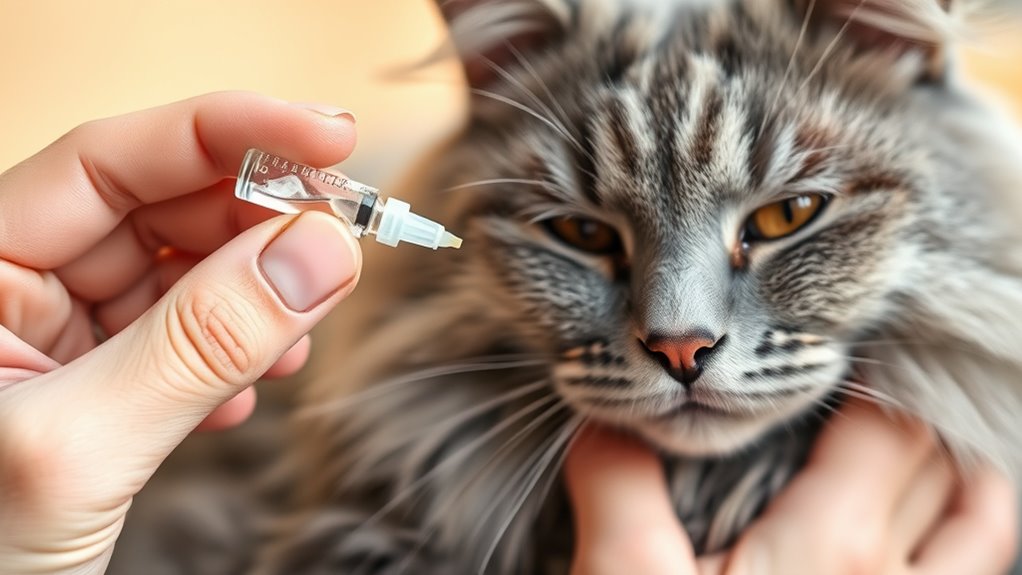
Safely Give Pain Medicine to Your Cat
Many cat owners know how challenging it can be to give your feline friend pain medicine. You’re not alone—many people struggle with making sure their cats get the care they need without stress or mishaps.
To safely give pain medicine to your cat, follow your veterinarian’s instructions carefully, avoiding self-prescribing or dosage errors.
Use a calm approach, gently restrain if needed, and mask the medication’s taste with treats or flavor-rich food.
Position the syringe or pill correctly and monitor your cat closely for any side effects like vomiting or behavior changes.
Capable techniques and awareness help guarantee safe administration—keep exploring for more tips to keep your cat comfortable and secure.
Key Takeaways
- Always check with your veterinarian to choose the right medication and dose. Never try to give your cat medicine without professional guidance to avoid causing harm.
- Gently restrain your cat and stay calm. Keeping a relaxed approach will help your cat feel more comfortable during medication time.
- To make it easier, hide the medicine in treats or flavored food your cat enjoys. This can make the process less stressful for both of you.
- Follow your vet’s instructions exactly for how much to give and when. Consistency is key to keeping your cat safe and comfortable.
- Watch your cat closely for any side effects or strange behaviors. If something seems off, don’t hesitate to contact your vet right away.
How to Choose and Dose the Right Pain Medicine for Your Cat
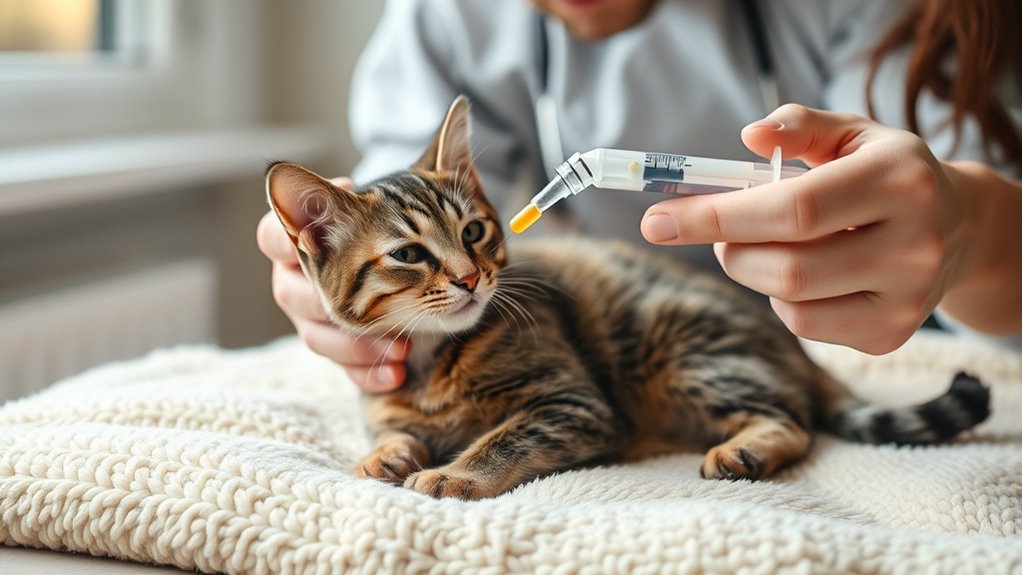
How can you guarantee you’re choosing the right pain medicine and dosing it safely? Start by understanding that effective pain management depends on accurately assessing your cat’s pain.
Your veterinarian is essential in determining the best medication based on your cat’s specific needs, health history, and pain level. Never guess or self-prescribe; over- or under-dosing can be dangerous.
Your vet will recommend the correct drug, dosage, and how often to give it. Pay close attention to your cat’s behavior and physical cues—like limping, vocalizing, or reluctance to move—as these help confirm the pain assessment.
Always follow the instructions carefully. If your vet adjusts the dose or switches medications, make sure you understand the changes.
Remember, safe pain management isn’t just about giving medication. It’s about choosing the right one, at the right dose, for your cat’s unique situation.
Proper feline pain assessment helps you make informed decisions to keep your cat comfortable and safe.
Preparing Your Cat and Environment for Medication Time
Getting your cat ready for medication time starts with creating a calm, comfortable environment. Make sure the space is quiet and free of distractions to help reduce your cat’s stress.
Create a quiet, distraction-free space to help your cat feel calm and secure before medication time.
Speak softly and use a gentle tone to help your cat feel safe. Spend a few minutes calmly petting or cuddling your cat before giving medication to build positive associations.
Offering treats or praise afterward encourages a positive experience, making future medication times easier. Keep everything you need close by, like the medication, syringe, or pill pocket, so you won’t have to leave your cat unattended.
Make sure the environment stays consistent each time. This helps your cat learn to associate it with calmness and safety. By setting up a peaceful space and fostering positive feelings, you can help reduce anxiety and make medication time smoother for both of you.
How to Give Pill or Capsule Medication to Your Cat
Giving your cat a pill or capsule doesn’t have to be a stressful experience—for either of you. The first step is to get the medication ready and prepared the right way, so you avoid any mistakes along the way.
When it’s time to give the medication, use a gentle and calm technique. Cats can pick up on your stress, so staying relaxed helps make the process easier. Also, try to mask the taste of the pill—maybe by hiding it in a treat or a small amount of tasty food—so your cat is less likely to resist.
With a little patience and the right approach, giving medication can become a smoother, less stressful routine for both you and your furry friend.
Prepare the Medication Properly
Before giving your cat a pill or capsule, it’s important to prepare the medication properly to ensure safety and effectiveness. First, check the storage instructions to make sure it’s kept in the right environment, which helps keep its potency.
Always verify the correct dosing schedule before administering, so you avoid giving too little or too much. Measure the dose carefully, especially if it’s a liquid or has been divided.
Keep the medication out of reach of your cat until it’s time to give it, to prevent accidental ingestion. If you’re using multiple medicines, organize them carefully to avoid mix-ups.
Proper preparation helps ensure your cat gets the right amount at the right time, maximizing the medication’s effectiveness and minimizing potential risks.
Use a Gentle Technique
Using a gentle technique when giving your cat a pill or capsule makes the process smoother and less stressful for both of you. Start by handling your cat gently, avoiding sudden movements that might cause anxiety. Approach calmly and speak softly to reassure your cat.
Use positive reinforcement, like treats or praise, immediately after giving the medication. This encourages cooperation in the future. If your cat resists, take a moment to relax and try again calmly.
Never force the pill into your cat’s mouth aggressively, as this can cause fear and injury. Instead, be patient and gentle, focusing on making the experience as positive as possible. This approach helps build trust and makes administering medication less of a struggle.
Mask the Taste Effectively
If your cat is sensitive to the taste of medication, masking it can make giving pills much easier. Use flavor boosters or a taste masking technique to hide the unpleasant flavor.
You can try wrapping the pill in a small piece of strong-flavored cheese or tuna. Another option is mixing the medication with a small amount of tasty gravy or broth designed for pets.
You might also consider using commercial taste masking gels or sprays that are safe for cats. These products help neutralize the medicine’s flavor and make it more appealing.
How to Administer Liquid Medicine Safely to Your Cat
To give liquid medicine to your cat safely, it’s important to start with proper restraint techniques to help keep your kitty calm and secure. You want to make sure you’re comfortable with the method so you don’t accidentally spill the medicine or hurt your cat.
Once you’re ready, gently but firmly hold your cat, maybe wrapping them in a towel if they tend to struggle. This helps prevent scratches and keeps your cat still during the process. With a little practice, you’ll get better at delivering the medicine quickly and smoothly, which makes it less stressful for both of you.
Proper Restraint Techniques
Gently restraining your cat is key for giving liquid medicine safely and effectively. Understanding your cat’s body language helps you handle them calmly and avoid stress. Keep your movements slow and deliberate to promote safe handling, and watch for signs of discomfort or agitation. Use a towel or soft blanket to wrap your cat if needed, giving them security and control.
Secure your cat gently but firmly, avoiding excessive pressure. Support their body properly, especially the chest and hindquarters. Keep your face at their level to help reduce their anxiety.
Watch for signs of stress like flattened ears or tail flicking, and adjust your approach as needed.
Correct Administration Method
Administering liquid medicine to your cat requires a calm, confident approach to guarantee safety for both of you. Hold your cat gently but securely, making sure their head stays steady.
Use a syringe or dropper to draw the correct dose, then position it at the side of their mouth, just behind the front teeth. Gently squirt the medication in, avoiding the throat to prevent choking.
Keep your hand steady and stay relaxed to help your cat feel more comfortable. After giving the medicine, softly praise your cat and offer a treat if possible.
This method ensures effective pain relief while keeping your cat’s trust. Staying calm and precise makes the process safer, easier, and less stressful for your feline friend.
Using a Syringe or Dropper Effectively for Precise Dosing
Using a syringe or dropper accurately ensures your cat gets the right dose of medication without stress or waste. Picking the right syringe, like a 1 ml or 3 ml, helps you be precise.
Learn to draw the exact amount needed, watching out for air bubbles and gently removing them. Hold your cat securely and position the syringe at the side of their mouth, aiming for the back of the throat.
Use smooth, steady pressure to give the medication, making it as comfortable as possible for your cat. Proper technique makes administering medicine safer and easier for both of you.
Tips to Make Giving Medication Less Stressful for Your Cat
To make giving medication less stressful for your cat, start by creating a calm environment and staying relaxed yourself. Cats are sensitive to your emotions and feline behavior, so your calmness helps reduce their anxiety.
Stick to a consistent medication schedule, which provides predictability and comfort for your cat. Use a quiet space free of loud noises or distractions to give the medicine, making it easier for your cat to stay calm.
Engage in gentle, soothing petting beforehand, and speak softly to reassure your feline friend. If your cat senses your confidence, they’re more likely to cooperate.
Keep treats or favorite toys nearby as positive reinforcement after the dose. Remember, patience is key—rushing can increase stress for both of you.
How to Spot and Manage Side Effects From Pain Medication
You want to keep an eye out for some common side effects like vomiting, diarrhea, or feeling really tired after giving your cat pain medication. It’s a good idea to watch your furry friend closely and take note of any changes in how they behave or if their appetite seems different.
If you notice that things are getting worse or if your cat is having a severe reaction, don’t hesitate to reach out to your veterinarian right away. It’s always better to be safe and get professional advice if you’re unsure.
Recognize Common Side Effects
Recognizing common side effects of pain medication is key to keeping your cat safe and healthy. Spotting reactions early lets you get veterinary help quickly and avoid complications.
Watch for signs like excessive drowsiness or being unusually tired. Loss of appetite or vomiting are also important clues.
Unusual behavior or agitation can indicate a problem, so keep an eye out for changes. Respiratory issues or trouble breathing are serious warning signs.
Catching these symptoms early helps prevent reactions from getting worse. Not all side effects are severe, but close monitoring is always best.
If you notice any of these signs or think your cat is having a reaction, contact your vet right away. Never change medication doses without professional advice.
Monitor Your Cat Closely
Monitoring your cat closely after giving pain medication is essential for catching side effects early. Watch for behavioral changes like hiding, aggression, or lethargy, which could indicate a reaction.
Environmental stressors, such as loud noises or new surroundings, may also increase side effects or discomfort. Keep a close eye on your cat’s activity, appetite, and bathroom habits, noting any differences from normal.
If you notice any concerning signs, act quickly to assess the situation. Reducing stress and keeping a calm, safe space helps your cat recover comfortably.
Your vigilance ensures you catch potential issues early, making it easier to manage side effects and keep your feline friend safe during recovery.
When to Seek Veterinary Help
If you notice any unusual behaviors or physical signs after giving your cat pain medication, it’s important to act promptly. Side effects can vary, so quick veterinary consultation is crucial for proper pain assessment and treatment. Watch for symptoms like excessive drooling, vomiting, lethargy, or difficulty breathing.
Sudden changes in behavior or activity levels are a red flag. Also, keep an eye out for loss of appetite or vomiting, which can indicate a problem.
Unusual sleepiness or agitation could signal adverse effects. Be alert for signs of allergic reactions, such as swelling or hives.
If you observe any of these signs, contact your veterinarian immediately. They can evaluate whether the medication is causing adverse effects and adjust the treatment plan accordingly. Remember, timely intervention guarantees your cat’s safety and comfort.
When to Contact Your Veterinarian About Your Cat’s Medication
Wondering when you should reach out to your vet about your cat’s medication? Monitoring your cat’s progress and pain levels is really important. If your cat starts acting strangely, like being very lethargic, losing interest in food, or hiding a lot, don’t wait—call your vet.
Also, if you notice side effects such as vomiting, diarrhea, or changes in how your cat breathes, get professional advice right away. Keep track of how your cat responds to the medication and report any concerns promptly.
Use this table to guide you:
| Situation | What to Do | Why |
|---|---|---|
| Unusual behavior or lethargy | Contact your veterinarian immediately | To keep your cat safe and adjust treatment if needed |
| Side effects like vomiting or diarrhea | Seek veterinary advice | To prevent complications |
| No improvement in pain | Update your vet on progress | To reassess pain management |
| Signs of allergic reaction | Get emergency care | To protect your cat’s health |
Always err on the side of caution and reach out to your vet whenever you’re unsure.
Alternatives to Oral Pain Medications: Patches, Topicals, and More
When giving your cat pain medication, consider alternatives to oral drugs like patches and topicals. These can provide effective relief with less stress for your feline.
Transdermal patches deliver medication through the skin, offering a less invasive way to manage pain. Topical gels can be applied directly to affected areas, reducing the need for oral pills and minimizing discomfort.
These non-pharmaceutical options are designed to target specific areas and are often easier to administer. Some alternatives include transdermal patches for steady medication release, topical gels for localized pain, and creams or ointments with soothing ingredients.
Herbal or natural remedies might also be options, but always check with your vet first. It’s important to ensure these options are safe and suitable for your cat’s specific needs.
Always consult your veterinarian before trying these alternatives. They can help you choose the best options to make pain relief easier and less stressful for both you and your feline.
Ensuring Your Cat Completes Their Pain Management Plan
| Time | Dose Given | Behavior/Comments |
|---|---|---|
| Morning | 1 pill or dose | Calm, relaxed. Remember to praise your cat or give gentle reassurance. |
| Afternoon | 1 pill or dose | Slightly more active. Keep an eye on their behavior and comfort. |
| Evening | 1 pill or dose | Resting comfortably. Continue encouraging positive behavior. |
| Night | 1 pill or dose | Sleeping peacefully. Consistent medication helps ensure good rest. |
| Next Day | Follow-up notes | Adjust if necessary. Regular adherence guarantees better pain management and faster recovery. |
Frequently Asked Questions
Can I Give Human Pain Medicine to My Cat?
You should never give human medications to your cat, as many can be toxic and endanger their safety. Human pain medicines like acetaminophen or ibuprofen are not safe for cats and can cause serious health issues.
To keep your cat safe, always talk to your veterinarian before giving any medication. Never assume that what works for humans is safe for your cat, since their bodies react differently to medications.
How Long Does It Take for Pain Medication to Work?
Think of pain relief as a gentle tide washing ashore; it varies based on your cat’s unique rhythm. Typically, you’ll see effects within 30 minutes to an hour, but the timeline depends on how the medication is absorbed.
Some meds act faster, while others take a bit longer. Keep a close eye on your cat, and if you don’t notice improvement, check with your vet to ensure proper pain management.
What Should I Do if My Cat Refuses Medication?
If your cat refuses medication, stay calm and try different ways to give it. For example, hide the pill in food or use a syringe to give liquid medicine.
You can also look into alternatives like transdermal gels or ask your vet about compounding options. Sometimes these can make giving medication easier.
It’s a good idea to ask your vet for tips or other forms of medication if your cat keeps refusing. Patience and gentle handling often help, but never force your cat, as it can make things worse.
If your cat continues to refuse medication, always seek professional advice.
Are There Natural Pain Relief Options for Cats?
Think of your cat’s pain as a storm brewing inside. You can explore natural relief options like herbal remedies, which act as calming rain, or acupuncture therapy, which helps dispel the storm altogether.
These methods, used under veterinary guidance, may help ease her discomfort naturally. Always talk to your vet first to make sure these options are safe for your cat’s specific needs.
This way, you can help her find peace without relying on harsh medications.
How Can I Tell if My Cat’s Pain Is Relieved?
You can tell your cat’s pain is relieved by watching for changes in pain signs and how they behave. Look for less vocalizing, fewer hiding spots, and better movement.
Notice if your cat’s posture looks more relaxed, they’re eating more, and grooming normally again. These are good signs that their pain is easing.
Keep observing your cat, and if you see any ongoing or new signs of pain, it’s best to check with your vet.
Conclusion
By carefully choosing, preparing, and administering your cat’s pain medication, you turn a challenging task into a calming routine. As you gently place the pill or liquid, imagine your feline friend feeling comforted, knowing you’re there for them.
With patience and vigilance, managing their pain becomes a quiet act of love. It’s like a soothing breeze that eases their discomfort, helping them heal and purr peacefully once more.
Giving pain medicine to your cat safely is all about creating a gentle, reassuring experience. Your care makes a big difference in helping your feline friend feel better.