How Do Cats Grieve When Another Pet Dies?
Losing a beloved pet can be heartbreaking, and watching your cat grieve can be just as tough. Many pet owners wonder how to support their feline friends during this difficult time. You’re not alone—many people struggle with understanding how cats show their grief and what they need to heal.
How do cats grieve when another pet dies? Your cat may show subtle signs of grief like hiding, withdrawing from interaction, or lingering near the departed pet’s spot.
They might also lose interest in play or eat less, or sometimes eat more. These behaviors can appear suddenly or gradually and vary between cats.
Supporting them with consistent routines, comfort items, and patience helps. If you’re curious about more ways to help your cat through this, there’s plenty to investigate ahead.
Key Takeaways
- Cats may withdraw, hide, or seek solitude to process their grief internally.
- Changes in eating habits and decreased activity are common signs of mourning.
- They might linger near the deceased pet’s resting area and vocalize more than usual.
- Grieving cats can develop new routines or territorial behaviors as coping mechanisms.
- Providing comfort and maintaining routines help support their emotional recovery.
How Can I Tell If My Cat Is Mourning a Pet?
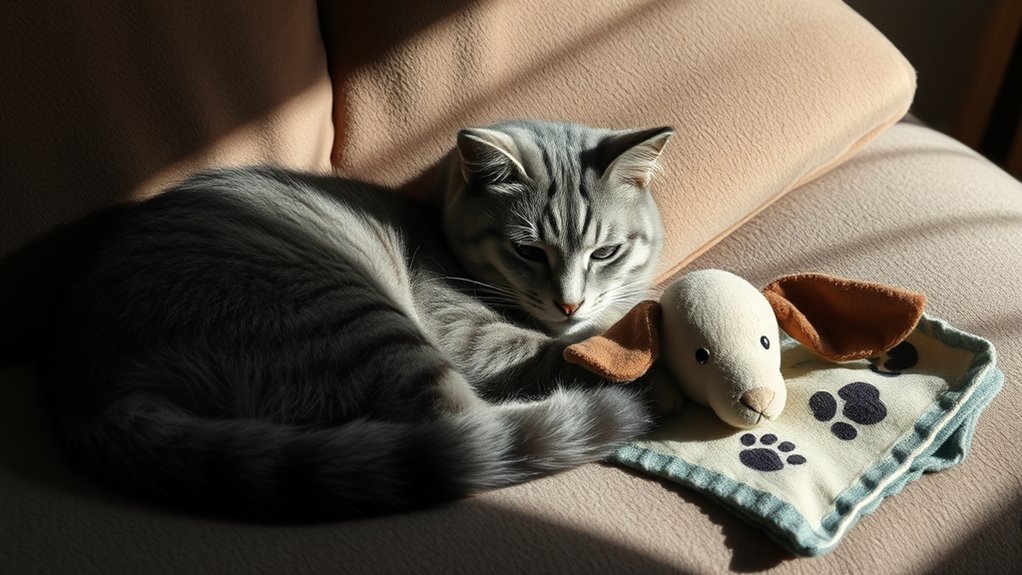
Wondering if your cat is mourning a lost pet? You might notice changes in their behavior that reveal their grief and emotions. They could become more withdrawn, hiding more than usual or avoiding your presence.
Some cats lose interest in play or food, showing a lack of energy that’s out of the ordinary. You might see them lingering near where the other pet used to rest or searching for them in familiar spots.
Cats may lose interest in play and food, lingering near their departed friend’s resting spots.
Vocalizations may increase; they might cry softly or seem more restless. These behaviors suggest your cat is processing the loss emotionally.
Recognizing these signs helps you understand their grief and respond with patience and comfort. Keep in mind, every cat shows their emotions differently, so observing their unique reactions is key.
What Are the Signs That My Cat Is Grieving?
You might notice your cat acting a bit differently than usual. Maybe they’re hiding more often or seem less interested in playing. It’s pretty common for cats to change their behavior when they’re grieving.
You might also see changes in their eating habits. Some cats eat less than they normally do, while others might eat more. Keep an eye on how they’re doing, because these signs can be their way of coping with loss.
Paying close attention to these changes can really help you support your cat through this tough time.
Changes in Behavior
When a cat is grieving, it often shows noticeable changes in behavior that can signal emotional distress. You might see your cat hiding more than usual, seeking solitude in quiet spots.
Vocal changes, like increased meowing or silence, can indicate confusion or sadness. Social withdrawal is common, with your cat avoiding interaction and play, seeming less interested in toys or affection.
You may notice territorial shifts, such as your cat claiming new areas or becoming more territorial. Grooming habits might decrease, leading to a less tidy coat, or increase as a sign of anxiety.
Sleeping patterns can change, with your cat sleeping more or less than usual. Overall, a marked decrease in interaction levels shows your cat is processing grief in its own way.
Altered Eating Habits
Changes in a cat’s eating habits often come with behavioral shifts when they’re grieving. You might notice your cat eating less or more than usual. They may lose interest in their favorite food or suddenly develop new preferences.
Some cats might skip meals altogether, while others hoard food or snack frequently. These changes show how they’re feeling and can be a sign they’re mourning. Pay attention to how your cat approaches food; altered eating habits are common signs of grief.
If your cat’s appetite doesn’t go back to normal after a few days, it’s a good idea to check with your vet. Recognizing these signs early helps you support your cat through their emotional adjustment.
Why Do Cats Grieve Differently Than Dogs or Humans?
You might notice that cats grieve differently than dogs or humans because they tend to process their emotions in a more subtle and internal way. Unlike dogs or people, who often show their feelings openly, cats are generally more reserved and independent.
Over time, evolution has shaped cats to be this way, helping them stay cautious and self-reliant. That means their way of expressing grief might not be obvious, but it’s just as real. Understanding these differences can help you better support your cat as they go through their unique way of mourning.
Emotional Processing Variations
Cats process grief differently from dogs and humans because their emotional responses are shaped by their unique biology and instincts. Unlike humans, they may not show sadness openly but instead give subtle signs.
Their coping mechanisms often involve internalizing emotions or seeking solitude. To understand these variations better:
- They might withdraw, avoiding interaction to process their feelings privately.
- Their emotional responses can be delayed, with signs appearing days or weeks after a loss.
- They may develop new routines or habits as a way to cope with the emotional upheaval.
Understanding these differences helps you interpret your cat’s behavior more accurately. Recognizing that their emotional responses are influenced by instinctual coping mechanisms allows you to support them through grief more effectively.
Evolutionary Behavioral Differences
Because of their distinct evolutionary history, cats have developed unique behavioral responses to grief that are different from those of dogs and humans. Their roots go back to solitary hunters, which shaped their behaviors for independence and subtle ways of communicating.
Unlike dogs, which came from pack animals, cats tend to process loss privately. They often withdraw instead of openly mourning. This reflects their survival strategies, which favor hiding vulnerability.
Cats’ reactions to grief are less obvious but deeply connected to their evolutionary past. That makes their responses more subdued and reserved. Understanding these differences helps you see that a cat’s way of grieving is shaped by its history—one that highlights independence, subtlety, and survival.
How Long Does Grief Usually Last for Cats?
Grief in cats doesn’t follow a strict timetable; instead, it varies depending on the individual and circumstances. Typically, the grief duration and emotional timeline can range from a few weeks to several months.
Cat grief varies individually, lasting from weeks to months, with behavioral and emotional changes over time.
During this period, you might notice changes in their behavior, appetite, or activity level. Some cats may show signs of mourning for about 2-4 weeks, while others might take longer to adjust.
To understand their emotional timeline, keep an eye on these key points:
- Initial mourning phase, characterized by withdrawal or lethargy.
- Gradual return to normal activity, which can take several weeks.
- Possible lingering signs of sadness, such as reduced playfulness, lasting longer in some cases.
What Are Practical Ways to Support a Grieving Cat at Home?
Supporting a grieving cat at home takes patience and gentle reassurance. Start by giving them comfort items like their favorite blanket or toy to help them feel secure.
Keep their environment calm and familiar, avoiding sudden changes or loud noises that might stress them out. Engage in gentle play with toys that tap into their hunting instincts, but don’t push if they’re not ready.
Let your cat grieve in their own way and at their own pace. Respect their need for solitude or company, whichever they prefer.
Stick to a consistent daily routine to help reduce their stress and make them feel safe. You might also add cozy spots around the house where your cat can retreat to if they need to.
Pay close attention to their behavior and give extra affection without overwhelming them. Your calm presence and understanding can really help ease their sadness and support their emotional healing during this tough time.
When Should I Take My Cat to the Veterinarian During Grief?
If you’re wondering when it’s time to take your cat to the veterinarian during their grieving process, pay close attention to changes in their health and behavior. Signs like losing their appetite, feeling very tired, or hiding more than usual could mean they need professional help.
Consider these situations for veterinary advice:
- If your cat refuses to eat or drink for more than a couple of days, it’s time to see the vet.
- Ongoing lethargy, weakness, or trouble moving should also prompt a visit.
- If your cat becomes aggressive or excessively vocal and those behaviors don’t improve, check with the vet.
If you notice any of these signs or if your cat’s condition gets worse, don’t wait. Grief can impact your cat both physically and emotionally. Getting professional help ensures they get the support they need to heal. Acting quickly can prevent complications and help your feline friend feel better sooner.
How Can I Create a Calm Environment for My Sad Cat?
Creating a calm environment is key to helping your sad cat feel safe and secure during this tough time. You can do this by giving your cat a quiet, cozy spot where they can retreat and relax.
Make sure this safe space is free of loud noises and disruptions. It should help your cat feel in control and comfortable. Adding soothing sounds like soft music or gentle nature noises can also help reduce anxiety.
Here’s a simple guide to making a calming environment:
| Aspect | What to Do | Why It Helps |
|---|---|---|
| Safe Space | Set up a quiet corner with familiar bedding | Provides security and comfort |
| Soothing Sounds | Play soft music or nature sounds | Eases stress and promotes relaxation |
| Routine | Keep feeding and playtimes consistent | Creates stability and familiarity |
Should I Introduce a New Pet While My Cat Is Grieving?
Introducing a new pet while your cat is grieving can be a bit tricky, so timing really matters. Keep an eye on your cat’s behavior and see if they seem ready for a new buddy. It’s also a good idea to choose a pet that’s gentle and gets along well with cats.
Rushing into it might just add more stress for your grieving cat, so think about whether they need more time to heal first. Patience is key here—giving your cat the space they need can make the whole process smoother for everyone.
Timing Is Important
Timing is essential when considering adding a new pet while your cat is grieving. You need to assess their grief duration and emotional resilience to prevent overwhelming them. Rushing this process can cause stress or confusion, which can hinder their healing.
Consider these points:
- Wait until your cat shows signs of emotional recovery, like returning to normal activity levels.
- Confirm their grief has stabilized, which might take weeks or months depending on the cat.
- Introduce the new pet gradually, giving your cat time to adjust emotionally.
Patience is key. A sensitive approach respects your cat’s healing process and prevents emotional overload. Giving them space and time helps ensure they’re truly ready for a new companion.
Observe Your Cat’s Behavior
Watching how your cat behaves after a loss is key to understanding if they’re ready for a new companion. Pay attention to their playful interactions. If your cat still shows interest in toys or other activities, they might be ready.
On the other hand, if they withdraw or show signs of distress, it’s best to wait. Notice how they respond to familiar scents; if they seek out the scent of the deceased pet or feel comfort around familiar belongings, they might need more time.
Introducing a new pet too soon can interfere with their grieving process. So, observe their behavior carefully and be patient. Wait until your cat shows signs of emotional readiness before thinking about a new companion.
Choose Compatible Pets
Deciding whether to bring a new pet into your home while your cat is still grieving needs careful thought about compatibility. You want to verify that the new pet’s breed and personality won’t upset or overwhelm your grieving cat.
Start by focusing on compatible breeds that are known for gentle, social behavior. This can help reduce potential conflicts and make the introduction smoother.
Next, assess pet personalities—look for calm, non-aggressive animals that can adapt to your cat’s emotional state.
Introduce the pets gradually, giving your cat time to adjust at its own pace without feeling threatened or overwhelmed.
Patience is key. If your cat shows signs of stress, consider waiting until it’s more receptive to new friends.
This careful approach helps create a peaceful, supportive environment for everyone involved.
How Can I Help My Cat Heal and Move Forward After Loss?
Helping your cat heal after a loss takes patience and gentle support. To ease their grief, create a comforting environment with familiar items like toys and safe spaces where they can retreat and feel secure.
Offer consistent routines to give them stability and reassurance. Watch their behavior, and avoid forcing interactions—let them approach you when they’re ready.
Providing cozy spots, such as soft bedding or hiding places, helps them feel safe. Remember, every cat heals differently, so give them the time they need.
| Comforting Toys | Safe Spaces |
|---|---|
| Provide familiar toys to comfort and distract | Create quiet areas for rest and privacy |
| Rotate toys to keep interest | Make sure these areas are cozy and secure |
| Use toys that mimic prey to stimulate | Avoid disturbances in these spaces |
| Let your cat choose when to engage | Respect their need for solitude |
What Are Tips for Supporting My Cat Through Grief?
Supporting your cat through grief involves more than just providing comfort; it requires active engagement and thoughtful actions. To offer effective grief support, consider these steps:
- Provide comfort items like familiar blankets or toys to create a sense of security and familiarity.
- Maintain a consistent routine to help your cat feel safe and reduce anxiety during this emotional time.
- Spend quality time with your cat, engaging in gentle play or quiet companionship to reinforce emotional bonds and show support.
These actions help your cat process loss and feel less alone. Be patient and observant for signs of ongoing distress, and adjust your approach as needed. Remember, your consistent presence and thoughtful gestures can greatly ease their grief. Small acts of kindness, like offering comfort items and maintaining routine, make a big difference in helping your cat navigate this difficult period.
Frequently Asked Questions
Can Cats Recognize the Remains of Their Deceased Companion?
Yes, cats can recognize the remains of their deceased companion through pet recognition cues and feline behavior. They rely on scent, sight, and sometimes sound to identify familiar animals.
When they encounter their deceased friend’s remains, your cat may sniff, stare, or show signs of curiosity or distress. Understanding this behavior can help you support your cat’s emotional well-being during such a difficult time.
How Do Age and Personality Affect a Cat’s Grieving Process?
Age impact plays a big role in how your cat grieves. Younger cats might adapt faster, while older cats could show mourning that lasts longer.
Personality traits also matter. Shy or anxious cats may hide more, while social cats tend to seek comfort from you.
You’ll notice that your cat’s behavior changes based on these factors. Giving them extra attention and patience makes it easier for them to process their loss.
Are There Specific Toys or Items That Comfort Grieving Cats?
They say “a change is as good as a rest,” and offering comfort items can help soothe your grieving cat.
Familiar objects like soft blankets, their favorite toys, or a cozy bed placed near their usual spots can make a big difference.
These items provide reassurance and familiarity, helping your cat feel safe during their mourning.
Engaging with these objects can ease their sorrow and help them heal, making your feline friend feel loved and secure again.
Can Scent Therapy Help a Cat Cope With Loss?
Yes, scent therapy can help a cat cope with loss by triggering familiar scent memories that evoke comfort. When you use a favorite blanket or item with your pet’s scent, it can create a positive emotional response.
This helps your cat feel more secure during this difficult time. Incorporating these scents into their environment may ease anxiety and provide reassurance.
How Do I Know if My Cat’s Grief Is Affecting Their Health?
Think of your cat’s health like a delicate garden. If you notice behavioral changes like hiding or losing their appetite, it could be a sign something’s wrong.
Health signs such as lethargy or vomiting might mean their grief is affecting them physically. These cues show that emotional distress can impact their overall health.
Keep a close eye on your kitty, and if these symptoms stick around, don’t hesitate to see your vet. Addressing their emotional pain early can help them feel better faster.
Conclusion
Remember, your feline friend’s heart may need gentle time and patience to find peace again. While they may drift into a quiet sunset of remembrance, your loving presence can be the guiding star through their shadowy grief.
With understanding and care, you help them find comfort in the quiet dawn after their sorrow, slowly rediscovering joy. Trust that, in time, their gentle spirit will bloom anew, whispering hope in the quiet corners of their heart.
When a pet passes away, cats often grieve in their own unique ways. They might become more withdrawn or seek extra comfort from their humans.
Being patient and offering gentle reassurance can make all the difference. Your consistent love helps them navigate their feelings and eventually find peace once again.