What Does Skin Twitching in Cats Mean When You Pet Them?
Many cat owners notice their pets twitching when you pet them and wonder what it means. You’re not alone—understanding your cat’s skin twitching can be confusing and sometimes worrying.
When you pet your cat and notice skin twitching, it’s often a normal reflex or a sign she’s extra sensitive in that area, especially if she seems relaxed.
However, persistent twitching, combined with redness, swelling, or signs of discomfort, could point to health issues like parasites or skin irritation.
Pay attention to her body language; if she shows signs of stress or pain, it’s best to seek advice.
Keep exploring to understand more about what your cat’s skin twitching might mean.
Key Takeaways
- Skin twitching can be a normal reflex response to touch or stimulation, showing that your cat is feeling sensitive or relaxed.
- However, if the twitching is persistent or comes with other symptoms, it could mean health issues like dermatitis, parasites, or infections.
- You’ll often notice twitching in sensitive spots like the belly or tail when gently petting your cat.
- If your cat shows signs of discomfort—like tense muscles, dilated pupils, or even aggression—it’s best to watch closely.
- If the twitching continues, gets worse, or is paired with redness, swelling, or behavioral changes, see a vet for advice.
Why Does My Cat’s Skin Twitch When I Pet Her? Normal or Concerning?
Have you ever noticed your cat’s skin twitching when you pet her and wondered if it’s normal or a sign of something concerning? Skin sensitivity varies among cats, and some simply react more noticeably to touch.
When you pet your cat, her skin twitching might be a normal response to her nerves or heightened sensitivity in certain areas. It could also be your petting techniques—if you press too hard or touch sensitive spots, your cat may twitch as a reflex.
A twitching response may be normal or a sign of sensitive spots needing gentle touch.
Some cats are more reactive to gentle strokes, especially around their bellies or tails. This twitching isn’t necessarily a problem but a sign that you may need to adjust your approach.
Pay attention to her body language. Relaxed muscles suggest comfort, while tense muscles or repeated twitching might indicate discomfort or overstimulation.
Understanding your cat’s skin sensitivity helps you refine your petting techniques, ensuring she feels safe and relaxed during your interactions.
What Causes Skin Twitching in Cats During Petting?
Skin twitching in cats during petting often happens because their nervous system reacts to the stimulation. This twitching mainly comes from how sensitive their skin is and how their nerves respond to touch.
When you pet your cat, certain spots can trigger quick, involuntary twitching. This is caused by the nervous system reacting to the sensation.
You might notice tiny, rapid movements like muscle contractions under the skin, sudden jerks, or fluttering sensations across the skin. These reactions happen because your cat’s nerves see the touch as either pleasurable or a bit too much.
This causes a reflexive response that helps cats process tactile feelings and sometimes protects sensitive areas. It’s normal and especially common if your cat has sensitive skin or is very reactive to being touched.
How to Recognize When Skin Twitching Is a Health Issue
While occasional skin twitching during petting is usually normal, persistent or unusual movements can be a sign of health issues. If your cat’s skin twitching becomes constant, intense, or happens with other signs like redness, swelling, or behavioral changes, it’s time to see a vet.
Pay attention to skin sensitivity—if your cat reacts painfully or tries to avoid being touched, it might mean something’s wrong. Look for signs like hair loss, sores, or excessive scratching, which can indicate discomfort or irritation.
Here’s a visual to help you understand the difference:
| Normal Twitching | Concerning Skin Issues |
|---|---|
| Occasional, gentle twitches | Persistent, painful movements |
| No redness or swelling | Redness, swelling, or sores |
| No behavioral changes | Reacts aggressively or seems distressed |
If you notice any of these signs, contact your veterinarian quickly. They can help find out what’s going on and keep your cat healthy.
Common Medical Conditions That Cause Cat Skin Twitching
You might notice your cat’s skin twitching, and it could be because of allergic reactions or irritations. These can make your kitty feel uncomfortable and cause inflammation. Sometimes, skin conditions like dermatitis or infections are to blame too.
Parasites such as fleas or mites are also common culprits that can lead to twitching skin. Knowing what might be causing the issue can help you take the right steps to help your cat feel better and soothe their skin.
Allergic Reactions and Irritations
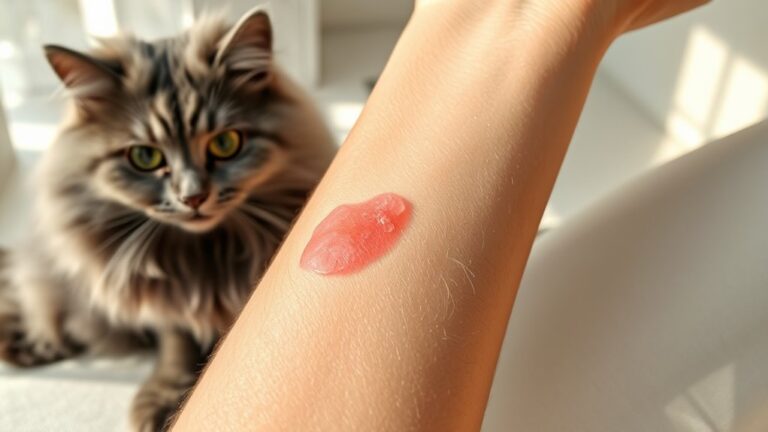
- Fluffy patches of skin with redness and swelling.
- Constant scratching or biting at specific areas.
- Fur loss from excessive grooming or rubbing.
These skin irritations can be caused by things like pollen, dust, certain foods, or household chemicals.
As your cat tries to find relief, you might notice twitching. Recognizing these signs early helps you identify the allergen and reduce the skin’s reaction, preventing further irritation.
Skin Conditions and Parasites
Skin twitching in cats can also come from various medical conditions and parasites that directly affect the skin.
Fleas, mites, and ticks are common culprits that cause irritation and twitching. These parasites feed on your cat’s blood or skin, leading to itching, discomfort, and constant twitching.
You might notice your cat scratching or biting at affected areas. In some cases, skin infections or dermatitis can also trigger twitching.
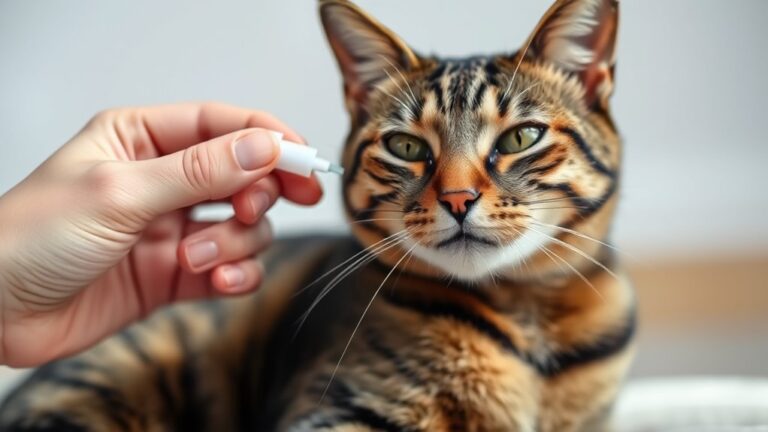
Effective treatment usually involves topical remedies that eliminate parasites and soothe the skin.
Regular grooming and vet visits are key to catching these issues early.
Addressing skin conditions and parasites promptly can help relieve your cat’s discomfort and prevent further problems.
How Cats Show They Feel Relaxed or Comfortable
When your cat feels relaxed, you’ll often hear those gentle purring sounds—it’s like their way of saying they’re happy and comfortable. It’s such a sweet little sign that they’re content with what’s going on around them.
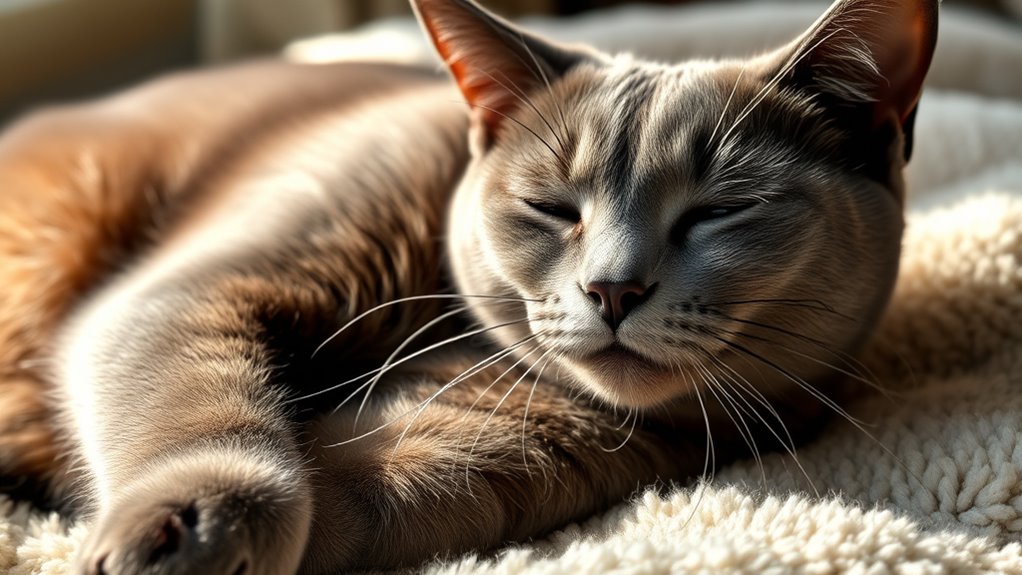
You might also notice their body language changing. They may lie on their side, stretch out, or curl up into a cozy ball. These relaxed postures show that they feel safe and at ease in your presence, which is always a good sign!
Gentle Purring Sounds
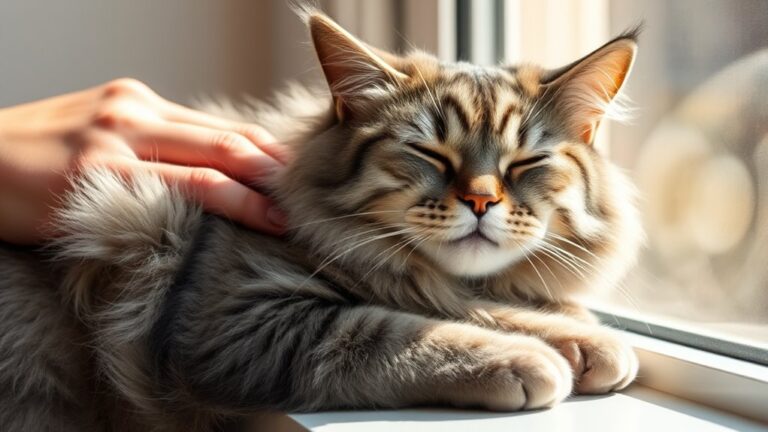
This soothing sound is their way of showing trust and happiness, especially during petting. As you softly stroke your cat, the gentle vibrations from their purring create a calming effect for both of you.
Imagine this: the soft hum of purring resonating through their chest, their eyes half-closed in bliss, and their body relaxed, leaning into your touch.
These signs confirm that your cat enjoys the soothing touch, and the gentle vibrations of purring help deepen your bond. It’s a clear indication they feel safe and loved in your presence.
Soft Body Language
A relaxed and comfortable cat often shows soft, fluid body language that signals trust and contentment. Body posture is key in feline communication to express how they’re feeling.
When your cat feels safe, they might stretch out with limbs relaxed and their tail resting or flicking gently. Their ears stay forward or in a neutral position, and their eyes may half-close in a calm, trusting way.
A loose, relaxed body shows they’re comfortable with you. You’ll notice their muscles are relaxed, and they might even knead or gently press against you. These subtle cues let you know your cat feels secure and at ease.
Signs That Your Cat’s Twitching Signals Stress or Discomfort
Twitching in your cat’s skin can be a subtle sign of stress or discomfort, often indicating that something isn’t quite right. Recognizing these discomfort signals is key to understanding your cat’s needs. Stress signals may include tense body language, dilated pupils, or excessive grooming. When your cat’s skin twitches, it could be a sign they’re overwhelmed or anxious.
Imagine your cat’s tail flicking rapidly, showing agitation. Or their ears pinned back, signaling unease. You might also notice sudden shifts in posture, like crouching or trying to hide.
These signs often come with skin twitching, revealing underlying stress signals. If you ignore them, your cat may become more withdrawn or even start destructive behaviors. Pay close attention to these cues and respond quickly to help ease their stress.
Recognizing these subtle signs can prevent further distress and improve your cat’s overall well-being.
How to Calm Your Cat During Petting Sessions
If you want your cat to stay calm during petting, it’s important to pay attention to their body language. Look out for signs that they might be getting uncomfortable, like twitching or stiffening — these are clues that they’ve had enough.
When you’re petting your cat, try to keep your movements gentle and slow. Sudden or rough motions can startle them and make them feel uneasy. Taking it easy helps your cat feel safe and relaxed, making the whole experience more enjoyable.
Getting to know your cat’s signals is really the key here. When you recognize how they respond, you can adjust your touch and timing. That way, petting becomes a calming, happy time for both you and your feline friend.
Recognize Signs of Discomfort
How can you tell if your cat is uncomfortable during petting? Pay attention to their discomfort signals and body language. Signs include:
- Flattened ears or twitching tail, which can mean they’re upset
- Tense muscles or sudden jerks, showing they want to get away
- Dilated pupils or rapid breathing, indicating stress
These cues help you recognize when your cat’s body language shows discomfort. If you see any of these signals, it’s best to gently stop petting and give your cat some space. Ignoring these signs can make them more stressed or even lead to aggression.
Use Gentle, Slow Movements
Using gentle, slow movements during petting sessions helps your cat stay relaxed and comfortable. A gentle touch and slow strokes signal that you mean no harm, reducing stress and preventing skin twitching caused by overstimulation.
When petting, focus on smooth, deliberate motions and avoid rapid or jerky movements. Pay attention to your cat’s body language—if they seem tense or start twitching, slow down or pause.
Consistently using gentle, slow movements builds trust and creates a calming environment. This approach encourages your cat to enjoy petting without feeling overwhelmed.
When to See the Vet About Your Cat’s Skin Twitching
Wondering when skin twitching in your cat calls for a vet visit? If the twitching sticks around, gets worse, or comes with other signs, it’s time to see a professional. During the vet visit, they’ll do a thorough skin check to find out if there’s an underlying issue like allergies, parasites, or neurological problems.
Consider making an appointment if you notice the twitching spreading or happening more often, especially if large areas of skin are affected. Also, if your cat is scratching, biting, or licking excessively, these are signs it’s uncomfortable.
Keep an eye out for other symptoms like hair loss, redness, swelling, or changes in your cat’s behavior. Prompt vet attention can help figure out whether the twitching is harmless or a sign of something more serious.
Ignoring persistent or severe symptoms might lead to discomfort or health issues down the line. Early diagnosis through skin exams can make treatment more effective and help keep your cat comfortable and healthy. When you’re unsure, it’s always best to check with your vet for peace of mind.
How to Observe and Record Your Cat’s Behavior for Better Care
Keeping a close eye on your cat’s behavior can give you helpful clues about their health and happiness. To do this well, focus on observing their routines at different times of the day.
Track activities like eating, grooming, sleeping, and playing. Notice any changes or strange behaviors, especially if they involve skin twitching or sensitivity. Keeping good records helps you spot patterns or triggers.
This makes it easier to talk to your vet if something seems off. Use a simple chart to jot down what you see, like this:
| Behavior Pattern | Time of Day | Notable Changes |
|---|---|---|
| Eating habits | Morning | Appetite decrease |
| Grooming | Afternoon | Excessive licking |
| Sleeping | Night | Restlessness |
| Play behavior | Evening | Reduced activity |
Tracking these details can really help ensure your cat stays happy and healthy.
Tips to Make Petting More Enjoyable and Reduce Twitching
Petting your cat should be a calming and enjoyable experience for both of you, but sometimes twitching or sensitivity can make it tricky. To improve your petting techniques and create a more relaxed environment, start by paying attention to your cat’s body language.
Always pet gently, focusing on areas they enjoy, like behind the ears or along the back. Watch for signs of discomfort, such as twitching or pulling away, and respect those cues.
You can also make the experience better by using soft, slow strokes to soothe your cat. Keep the environment quiet and free of sudden noises. Providing a cozy, warm spot where they feel safe can also help.
These small changes help your cat feel secure and reduce twitching. By adjusting your petting style and creating a calm space, you’ll build trust and make petting a more enjoyable activity for both of you.
Frequently Asked Questions
Can Skin Twitching in Cats Indicate Neurological Issues?
Skin twitching in cats can sometimes be a sign of neurological issues or muscle spasms, especially if it happens frequently or along with other symptoms. You might notice involuntary movements that seem unusual.
While occasional twitching is usually harmless, persistent or severe spasms could indicate a problem. It’s important to keep an eye on your cat’s behavior and overall health.
If you notice these signs, it’s best to consult your veterinarian promptly. They can help determine if there’s an underlying neurological condition and ensure your cat stays healthy and comfortable.
Does Age Affect the Likelihood of Skin Twitching in Cats?
Like an old, wrinkled apple, older cats tend to have more age factors that increase skin twitching. As they age, their sensitivity levels often rise, making their skin more reactive to touch.
Younger cats are usually less prone to twitching, but age still plays a role in how their skin responds. You might notice more twitching in senior cats, which can be linked to natural aging or underlying health issues.
Are Certain Breeds More Prone to Skin Twitching?
Certain breeds are more prone to twitching behavior, especially those with sensitive or thin skin. For example, Siamese and Sphynx cats often experience skin twitching more frequently than other breeds.
When you compare breeds, you’ll notice differences in skin sensitivity and responsiveness. This twitching can be a normal reaction to petting or a sign of underlying irritation.
How Does Diet Influence Skin Health and Twitching?
Your cat’s diet directly influences skin health and twitching. Providing dietary supplements with essential fatty acids supports healthy skin. Proper hydration levels also help prevent dryness and irritation.
Ensuring your cat gets a balanced diet helps avoid nutrient deficiencies that can cause twitching. Incorporate foods rich in omega-3 and omega-6 fatty acids, and talk to your vet about supplements. This can help maintain ideal skin condition and reduce twitching episodes.
Can Environmental Changes Trigger Skin Twitching in Cats?
Environmental changes can definitely trigger skin twitching in cats because they often have sensitive sensory responses. When you introduce new stressors like loud noises, unfamiliar smells, or sudden movements, your cat might react with twitching or skin flicking.
These responses are their way of processing environmental stressors. To help reduce this, create a calm, familiar setting and gradually introduce any changes to minimize their sensory overload.
Conclusion
Remember, “a little patience goes a long way.” If your cat’s skin twitching when you pet them is occasional and they seem relaxed, it’s probably normal.
But keep an eye out for signs of discomfort or health issues. Observing your cat’s cues helps you understand what’s normal and what’s not.
This understanding can strengthen your bond and ensure your cat stays healthy. When in doubt, always consult your vet.
Because a well-informed owner makes for a happy, healthy cat, especially if skin twitching is involved. Trust your instincts and watch for signs that tell you when to seek help.