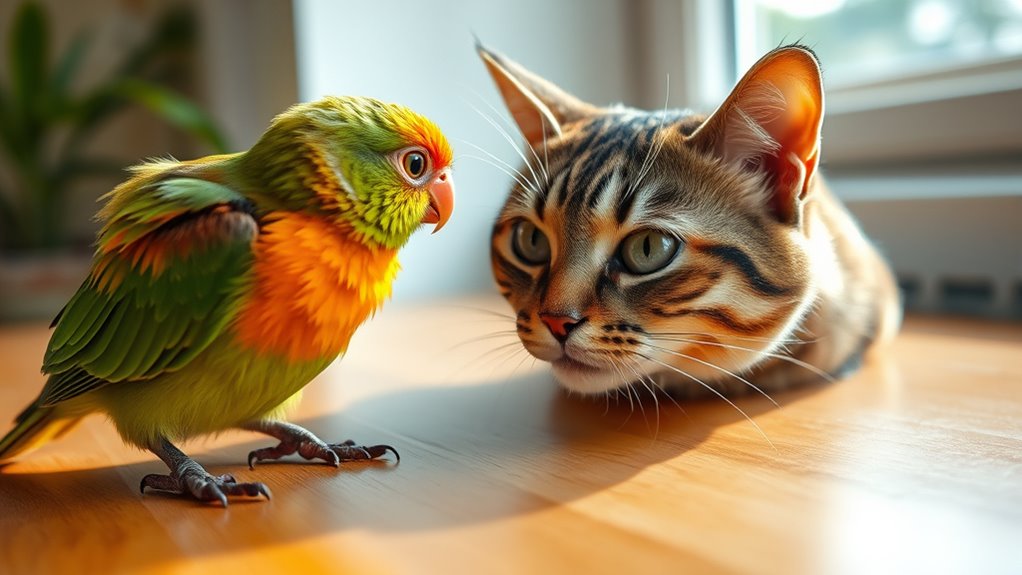
How to Determine If Native Pet Is Safe for Cats
Many pet owners worry about keeping their cats safe from local wildlife, and you’re not alone. It can feel overwhelming to figure out which native animals are harmless and which pose a risk.
To determine if a native pet is safe for your cats, start by observing its behavior from a safe distance and learn about its habits through reputable wildlife sources.
Look for signs that it’s non-aggressive, fearful, or indifferent around humans and pets.
Avoid animals that show territorial aggression or may carry diseases. Understanding your local wildlife’s traits helps you keep both your cats and native animals safe.
Keep exploring to uncover more helpful tips.
Key Takeaways
- Research the species’ natural behavior and diet to see if it might pose risks to your cats or if they can live peacefully together.
- Check with reputable wildlife organizations or local conservation groups to get reliable safety information.
- Watch how the animal interacts with people and other pets. Look for signs of aggression or if it seems calm and friendly.
- Find out if the species can carry diseases or parasites that are harmful to cats, like rabies or Salmonella.
- Keep a safe distance and avoid direct contact to prevent causing stress or accidental harm to either animal.
How Can You Tell Which Native Pets Are Safe for Cats?
Wondering how to identify which native pets are safe for your cats? The first step is understanding native species in your area. Some native animals naturally coexist with cats because they’ve evolved together, making them more likely to be compatible.
Research local wildlife to pinpoint species known for pet compatibility. For example, certain small reptiles or amphibians may be harmless. Keep in mind that not all native species are safe, so never assume safety based solely on their natural habitat.
Check reputable sources, like wildlife organizations or local agencies, to verify which species are generally safe around cats. Observing behavior can also help—if a native pet shows no signs of aggression or fear toward cats, it’s a good sign of compatibility.
What Are the Main Risks Native Wildlife Poses to Your Cats?
Native wildlife can actually be a pretty big risk to your cats. For starters, they can carry diseases and parasites that might make your pets sick. It’s also possible for your cats to get injured—whether that’s through predating on smaller animals or getting into fights with territorial wildlife.
And let’s not forget, when your cats see native animals around, they might try to chase or interact with them. This can lead to behavioral conflicts or even injuries if things get out of hand. So, it’s good to keep an eye on your cats and be aware of the wildlife in your area.
Disease Transmission Risks
While letting your cat explore outdoors can make their life more interesting, it also puts them at risk of catching diseases from local wildlife. These animals can carry illnesses that might infect your cat, making health issues more complicated.
Common dangers include parasites, bacteria, and viruses that spread through bites, scratches, or contact with contaminated surfaces. Knowing about these risks can help you protect your feline friend better.
Here’s a quick look at some wildlife species and the diseases they might carry:
| Wildlife Species | Disease Risks | Transmission Methods |
|---|---|---|
| Squirrels | Salmonella | Contact, feces |
| Birds | Avian flu | Bites, droppings |
| Raccoons | Leptospirosis | Urine exposure |
| Bats | Rabies | Bites, scratches |
Being aware of these risks lets you take specific steps to prevent disease and keep your cat safe.
Predation and Injury
Wildlife encounters can pose serious threats to your outdoor-access cat, as some animals may see your pet as prey or a threat. Native wildlife, driven by predator-prey dynamics, can attack or injure cats during habitat exploration. These encounters may result in bites, scratches, or worse injuries, especially when predators like hawks, foxes, or snakes are involved. Understanding the risks helps you protect your pet better.
Birds of prey can swoop down quickly, targeting small cats. Snakes may strike if threatened or cornered. Larger predators, like foxes, could attack or chase your cat. Territorial animals defend their space aggressively.
Injuries from fights or accidents can lead to infections or other health issues. Being aware of these risks helps you keep your cat safe outdoors.
Behavioral Conflicts
Native wildlife can also pose behavioral risks to your cats by creating conflicts that threaten their safety.
When your cats encounter native animals, they may show signs like increased aggression or heightened alertness. These stress signals often lead to chasing, territorial disputes, or defensive behaviors that can escalate into fights or injuries.
Even if your cats don’t physically attack, ongoing conflicts may cause anxiety, fear, or withdrawal. Over time, this stress can weaken their immune system or lead to chronic behavioral issues.
Recognizing these signs early helps you prevent escalation. Providing safe spaces and reducing encounters with native wildlife can lower stress and help keep your cats healthy and safe.
What Traits Indicate a Native Animal Is Safe for Your Household?
Identifying safe native animals for your household involves recognizing certain traits that show they’re compatible with your pets. Behavioral signs are especially important; animals that act calm, non-aggressive, and predictable are usually safer choices.
Look for species known for their gentle nature and low territorial instincts. These traits suggest they can get along well with household pets.
Consider these traits:
- Consistent, non-aggressive behavior around people and other animals
- No signs of extreme fear or defensiveness
- Gentle, non-intrusive interactions
- Active but not overly territorial or possessive
- Known to peacefully coexist with domestic pets in their natural habitats
How Do You Recognize Native Animals That Might Harm Your Cats?
While some native animals are safe companions for your cats, others can pose real threats. To recognize animals that might harm your cats, observe their wildlife interactions carefully. Animals like raccoons, skunks, or certain rodents may carry diseases or become aggressive if they feel threatened.
Pay attention to animals that frequent the edges of safe habitats, such as wooded areas or brushy zones near your home. These spots are often hotspots for potential conflicts. Signs of danger include animals that show little fear of humans or those that chase or attack small animals.
Certain species are known for territorial or defensive behavior. Keep a lookout for signs of bites, scratches, or unusual behaviors in your cats after outdoor visits. By understanding which native animals could threaten your pets, you can better manage their safe habitats and reduce risky wildlife interactions.
How Can You Learn About Local Native Species and Their Behavior?
To effectively learn about local native species and their behavior, start by consulting reputable sources like wildlife guides, local conservation groups, and government websites. These resources give you reliable info on species habits and habitats, helping you identify animals that might pose a risk to your cats.
Getting involved in local wildlife education is a great way to recognize signs of species activity and habits. You can attend community workshops or nature walks focused on native species to deepen your understanding.
Reading research articles or field studies on wildlife behavior can also be helpful. Connecting with local experts or conservationists provides valuable insights and firsthand knowledge.
Spend time observing animals in their natural environment, focusing on their behavior to learn more about their routines and interactions. Using online databases or apps dedicated to local flora and fauna is another easy way to boost your knowledge.
This approach helps you become familiar with native species, their routines, and potential interactions with your pets, making your environment safer for your cats.
How to Observe Native Animals Safely Around Your Cats
When you’re watching native animals around your cats, it’s a good idea to pay attention to their behavior. Notice if they seem curious or agitated—these signs can tell you a lot about how they’re feeling.
It’s best to keep a safe distance so you don’t accidentally stress or upset either the animals or your cats. Staying back helps prevent any unnecessary trouble and keeps everyone calmer.
Also, stay alert for any signs of danger or threats that might put your pets at risk. If you see something that seems off, it’s wise to step in or move away to keep everyone safe.
Recognize Animal Behavior Cues
Recognizing animal behavior cues is key to keeping your cats safe around native animals. Understanding these signals helps you interpret how animals might react during interactions, so you can step in if needed.
Look for signs like raised fur or bristling, which show agitation or aggression. Growling or hissing also indicates the animal is upset or feeling threatened.
Pay attention to ears and pupils—flattened ears or dilated pupils often mean discomfort. Watch the tail too: a high, wagging tail can mean excitement, while a low or tucked tail signals submission.
Notice if an animal is freezing or retreating; these behaviors suggest fear or unease. Recognizing these cues helps you decide whether an animal is open to interaction or needs space.
Being aware of these signals allows you to manage animal interactions better and prevent potential conflicts or injuries.
Maintain Safe Observation Distance
Maintaining a safe observation distance is key to preventing stressful encounters between your cats and native animals. Use observation techniques that keep both parties safe and calm.
Stay at a distance where your cats feel comfortable but can still observe the native animals without getting overly excited or aggressive. Use binoculars or a camera with a zoom lens to get a closer view without approaching too much.
Avoid sudden movements or loud noises that could startle the animals. Keep your own presence minimal and don’t interfere if the native animal is simply going about its activities.
Identify Potential Threats Quickly
Keeping a safe observation distance helps you spot potential threats quickly and accurately. When watching native animals around your cats, pay attention to wildlife interactions that could pose risks.
Recognizing signs of aggressive or territorial behavior is essential for safety. Focus on animals in their natural, safe habitats and avoid disturbing them.
Watch for sudden movements or vocalizations that might indicate agitation. Look for defensive postures or signs of distress.
Identify animals that approach or linger near your cats. Notice if wildlife is displaying territorial behaviors.
Stay alert for predators or animals with sharp claws or teeth. Being attentive can help you react before situations escalate.
When Should You Keep Native Pets and Cats Separate?
There are certain situations when it’s essential to keep native pets and cats separated to guarantee everyone’s safety. If you notice aggressive or unpredictable cat interaction, it’s best to keep them apart.
This is especially true when native pets are new to your home or haven’t been fully evaluated as safe. Creating safe habitats for both animals is vital; separate spaces prevent accidental confrontations or injuries.
Keep native pets in designated areas where they can’t access the cat’s usual environment, reducing stress and potential conflicts. If you’re unsure about a native pet’s behavior or temperament, it’s safer to keep them apart until you can assess their safety thoroughly.
What Behavior Signs Show a Native Pet Is Safe or Dangerous?
You can usually get a good idea if a native pet is safe just by observing how it acts around your cat. If it seems calm and relaxed, that’s a good sign—it probably feels comfortable and isn’t looking for trouble. On the other hand, if it’s showing signs of aggression or just seems restless, that’s a red flag and might mean trouble ahead.
Calmness and Relaxation
A native pet that feels safe and relaxed around cats will usually show calm behaviors, signaling it’s comfortable in the environment. This calmness helps reduce stress and supports peaceful coexistence. You might notice the pet lying quietly, avoiding rapid movements, or maintaining gentle eye contact.
Its body language should look loose and relaxed, with no signs of tension or fear. You might see it purring softly or making gentle vocalizations, and moving slowly and deliberately. A relaxed posture, like lying on its side, is also a good sign.
The pet will respond calmly to the cats’ presence, showing minimal or no aggressive gestures. These behaviors indicate the pet is comfortable and that the environment fosters a peaceful relationship. This reduces stress for both animals and encourages a safe, harmonious coexistence.
Aggression or Restlessness
When a native pet feels threatened or uncomfortable around cats, it often shows signs of aggression or restlessness. You might notice growling, hissing, or lunging toward the cat.
Restless behaviors like pacing, excessive scratching, or trying to escape can also be signals of stress or discomfort. These behaviors show that your pet isn’t at ease and may pose a risk to your cat’s safety.
Pay close attention to these signals and don’t ignore them. If your native pet keeps showing aggression or restlessness during interactions, it’s best to separate them.
Seeking advice from a veterinarian or animal behaviorist can help. Making sure both animals feel safe is key to a peaceful coexistence.
Who Can Help You Assess Native Pets and Keep Your Cats Safe?
Consulting with professionals is essential for accurately evaluating whether a native pet is safe around your cats. Wildlife experts and veterinary consultations provide the expertise needed to assess potential risks and behaviors.
These professionals can identify signs of aggression, health issues, or behavioral traits that might threaten your cats’ safety.
Seek wildlife experts’ advice on native animals’ habits and how they might interact with cats.
Schedule veterinary consultations for health and temperament assessments.
Use expert guidance to recognize warning signs of dangerous or stressed animals.
Obtain species-specific information to understand how native pets might react around cats.
Follow professional recommendations to develop a safe management plan.
How to Create a Safe Environment for Your Cats and Native Wildlife
Creating a safe environment for your cats and native wildlife involves thoughtful planning and proactive measures. Start by ensuring your yard is secure with fences that prevent cats from wandering into unsafe areas and wildlife from entering spaces where they might be harmed.
Create a secure yard with fences to protect both your cats and local wildlife.
Incorporate habitat protection strategies, like planting native plants that provide shelter and food for local species. This supports wildlife conservation efforts and benefits the ecosystem.
Keep harmful chemicals, pesticides, and trash out of reach to reduce risks for both your cats and wildlife. Designate specific areas where wildlife can thrive away from your pets, encouraging natural behaviors and reducing conflicts.
Regularly inspect your outdoor space for hazards like sharp objects or toxic plants. By creating a thoughtfully arranged environment, you help protect native habitats and promote wildlife conservation.
At the same time, you maintain a safe, enriching space for your cats. A balanced approach benefits all species involved.
Frequently Asked Questions
Are All Native Animals Equally Safe for Indoor Cats?
Not all native animals are equally safe for indoor cats. Native animal behavior can vary a lot, so some might pose risks because of aggression, disease, or unintentional predation.
It’s important to evaluate each native animal’s temperament and potential hazards before bringing it into your indoor cat’s space. Always prioritize your cat’s safety by researching the specific native animals involved.
Consult experts if needed and keep a close eye on interactions to prevent accidents or health issues. Being cautious helps ensure everyone stays safe and happy.
How Do Native Pets Differ From Invasive Species in Safety?
Native pets are generally safer than invasive species because they’re adapted to your local ecosystem. Invasive species can be like a wildfire, disrupting everything around them.
You’ll notice native animals tend to fit well with their environment and show behavioral differences that make them less threatening.
Invasive species often lack these natural checks, which can increase risks for your cats. Recognizing these differences helps keep your feline friends safe and your ecosystem balanced.
What Signs Indicate a Native Pet Is Comfortable Around Cats?
You can tell a native pet is comfortable around cats by observing its body language and social behavior. If it approaches calmly with a relaxed posture and keeps soft eye contact, that’s a good sign.
Playful or gentle interactions like sniffing or nudging also show trust.
On the other hand, if it flattens its ears, swats, or avoids eye contact, it might not feel safe or comfortable around cats.
Can Native Pets Transmit Diseases to Cats?
Native pets can transmit diseases to cats through disease transmission, especially if they carry zoonotic risks. You should always monitor interactions closely, as some diseases can jump between species.
Regular vet check-ups and vaccinations help reduce these risks. Keep native pets healthy and watch for signs of illness.
How Often Should I Supervise Interactions Between My Cats and Native Wildlife?
You should supervise your cats’ interactions with native wildlife for at least 15-30 minutes, especially during initial encounters.
A recent study shows 70% of wildlife behavior changes due to unmonitored pet interactions.
Keep a close eye during interaction, watching for signs of stress or aggression.
Your supervision helps prevent potential disease transmission and keeps both your cats and native wildlife safe.
This way, you can encourage positive and controlled interactions.
Conclusion
By staying informed and observant, you can create a harmony where both your cats and native wildlife thrive. Think of your home as a delicate dance floor—each step should be cautious and aware. Learning about local species, recognizing safe traits, and knowing when to keep pets apart will help you protect your feline friends.
With a little effort, you’ll turn your home into a safe haven where nature and your cats coexist peacefully. Knowing how to determine if native pet is safe for cats is key to creating this balance. By understanding local wildlife and monitoring your pets’ interactions, you can ensure everyone stays safe.