What to Know About Cat Allergies and Anaphylaxis Causes?
If you love cats but struggle with allergies, you’re not alone. Many people find themselves dealing with sneezing, itchy eyes, or skin rashes whenever they’re around feline friends. Understanding what causes these reactions is key to managing your symptoms effectively.
Cat allergies are caused by proteins in dander, saliva, and urine that trigger immune reactions, leading to symptoms like sneezing, itchy eyes, or skin rashes. Severe reactions, including anaphylaxis, can cause difficulty breathing and swelling, which require immediate emergency care.
Risk factors include family history, environmental triggers, and stress. Managing exposure and seeking treatment can help, but understanding the causes and warning signs is vital.
Stay informed and take steps to stay safe and comfortable around cats.
Key Takeaways
- Cat allergies are caused by proteins in dander, saliva, and urine, not by grooming or shedding itself.
- Severe allergic reactions, including anaphylaxis, can make it hard to breathe, cause swelling, and need urgent medical help.
- Common allergens include airborne dander, saliva proteins, and urine, which can stick to surfaces and spread easily.
- Managing exposure by cleaning frequently, using air filters, and keeping pets out of certain areas can help lessen allergy symptoms.
- Knowing the early signs of anaphylaxis and giving epinephrine quickly can prevent life-threatening complications.
What Causes Cat Allergies and How Do They Affect You?
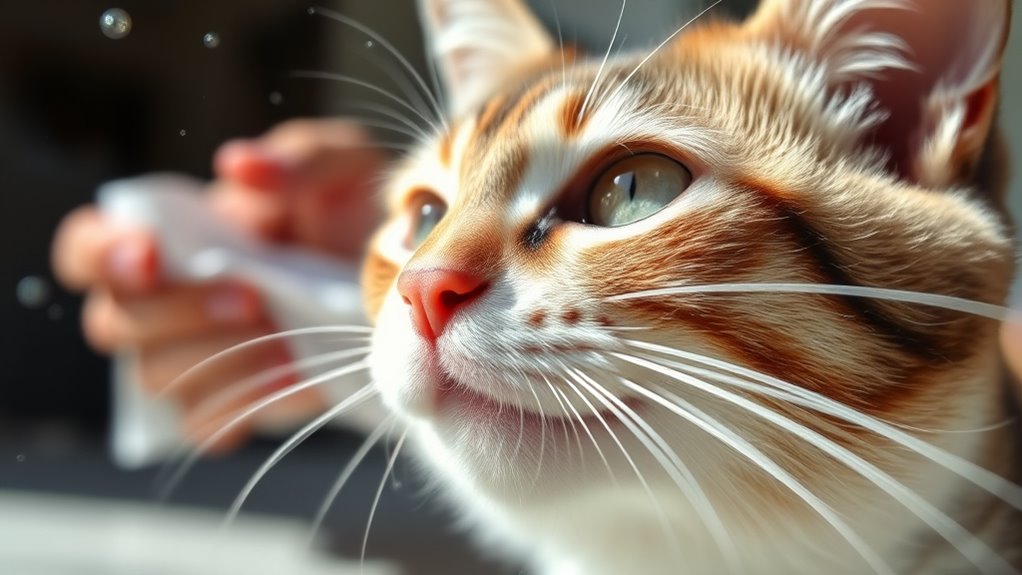
Cat allergies are caused by proteins found in a cat’s skin cells, saliva, and urine. These allergens stick to fur and surfaces, spreading easily around your home.
You might think that a cat’s behavior, like grooming or shedding, directly causes allergic reactions. But it’s actually the proteins they carry that trigger symptoms.
Many people believe petting a cat will always cause a reaction, but some can tolerate certain cats better than others. It depends on individual sensitivities.
Some people can tolerate certain cats better than others, depending on their individual sensitivities.
Your immune system reacts to these proteins, leading to symptoms like sneezing, itchy eyes, or asthma attacks. It’s important to know that allergen levels can vary based on grooming habits and environment, not just behavior.
Understanding that allergies are caused by specific proteins, not just being around cats, helps you manage exposure better and reduce reactions.
Key Allergens in Cats That Trigger Reactions
Several specific proteins in a cat’s body trigger allergic reactions in sensitive people. Cat dander, which is tiny skin flakes that shed constantly, contains these allergenic proteins. They can become airborne and settle on surfaces, making them easy to inhale.
Saliva proteins are another major source. When cats groom themselves, these proteins stick to their fur and skin. When the saliva dries, it releases allergens into the environment. Urine allergens also play a role, especially in litter boxes or contaminated areas, since they contain proteins that can cause reactions.
Environmental triggers like dust, mold, or tobacco smoke can make sensitivities worse by carrying these allergens further. If you’re allergic, cat dander, saliva proteins, urine allergens, and environmental triggers all contribute to your symptoms. It’s important to limit exposure and keep your living space clean.
What Are the Symptoms of Cat Allergy and Anaphylaxis?
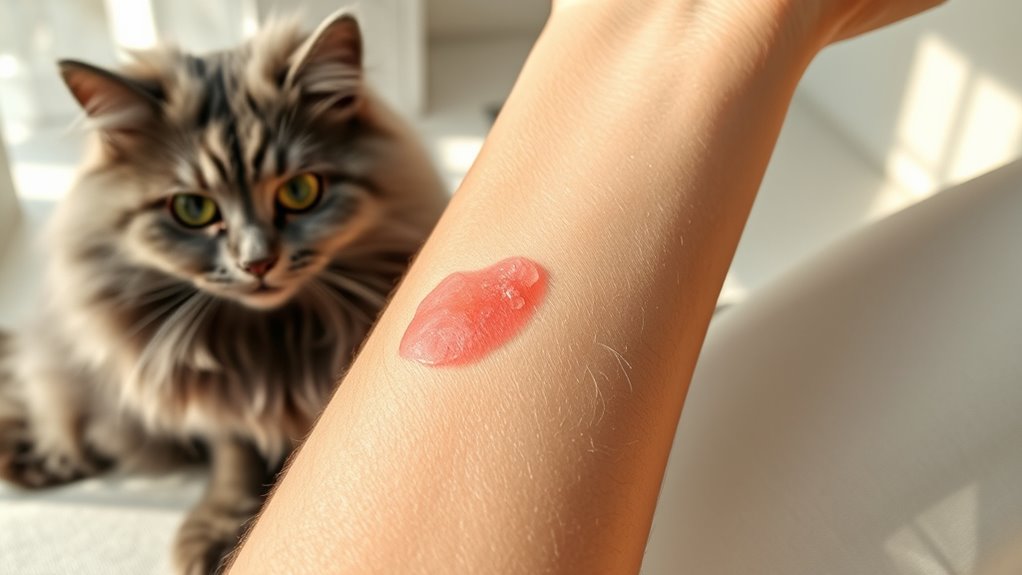
When you’re exposed to allergens like cat dander, saliva proteins, or urine, your immune system may react and cause various symptoms. Common signs include sneezing, a runny or stuffy nose, itchy eyes, and skin rashes.
In more serious cases, you might experience wheezing, trouble breathing, or swelling of the throat. These reactions can range from mild to severe and may require allergy testing to confirm what’s causing them.
Recognizing these symptoms early is important for managing your allergies and avoiding triggers effectively.
| Mild Symptoms | Severe Symptoms |
|---|---|
| Sneezing | Shortness of breath |
| Itchy eyes | Swelling of face or throat |
| Nasal congestion | Chest tightness |
| Skin rash or hives | Loss of consciousness |
| Watery eyes | Anaphylaxis that needs immediate care |
Being aware of these signs helps you seek treatment quickly and better control your allergy responses.
Risk Factors That Worsen Cat Allergy Severity
Certain factors can significantly increase the severity of your allergic reactions to cats. Environmental triggers like dust, cigarette smoke, and pollen can amplify your sensitivity to pet dander, making symptoms worse.
Your genetic predisposition also plays a role. If allergy or asthma runs in your family, you’re more likely to experience severe reactions. Stress factors, both emotional and physical, can weaken your immune system, heightening your response to allergens.
Age influences your allergy severity. Children and older adults may face increased risks. Seasonal variations can lead to fluctuations in allergy symptoms, especially during high pollen seasons when your immune system is already taxed.
Your lifestyle choices, such as pet exposure, cleanliness, and diet, can either help or worsen your allergy severity. Overall, understanding how these factors interact helps you better manage your allergy triggers and reduce the risk of severe reactions.
Can Cat Allergies Lead to Anaphylaxis? Signs and Risks
While cat allergies are common and often cause mild to moderate reactions, in rare cases, they can trigger a life-threatening condition called anaphylaxis. Proteins found in dander, saliva, and urine can sometimes cause these severe responses in sensitive individuals.
Signs of anaphylaxis include difficulty breathing, swelling of the face or throat, rapid heartbeat, dizziness, and loss of consciousness. If you experience these symptoms after being around cats, seek emergency medical help right away.
Even though it’s rare, the risk of anaphylaxis highlights the importance of prevention, especially if you know you’re allergic. Avoid exposure to cat allergy triggers whenever possible.
Carrying emergency medication like an epinephrine auto-injector can be lifesaving. Recognizing the signs and understanding the risks help you act quickly and reduce the severity of reactions.
How to Reduce Cat Allergens at Home Effectively
If you want to cut down on cat allergens at home, the first step is to keep things clean. Regularly vacuum carpets, furniture, and curtains to pick up dander and hair that can trigger allergies. Don’t forget to wipe down surfaces too—dust and dander love to settle there.
Another good idea is to set up some cat-free zones, especially in the rooms you spend the most time in. This way, you can give yourself a break from allergens when you need it most. Keeping those areas free of cats and cleaning them often can really help lower the allergen levels and make your home more comfortable.
Regular Cleaning Practices
Regular cleaning is one of the most effective ways to reduce cat allergens in your home. Keeping a consistent cleaning schedule helps control dust and allergen buildup.
Use vacuum techniques with high-efficiency filters to trap pet dander effectively. Consider vacuuming carpets and upholstery regularly. Fabrics like leather or microfiber tend to harbor fewer allergens than plush textiles.
Surface wipes are great for quickly removing allergens from furniture and surfaces. Air filtration with HEPA filters can also improve indoor air quality. Pet grooming outside the home helps minimize shedding and dander transfer.
Ensuring proper room ventilation helps disperse airborne allergens, reducing their concentration indoors. By combining these cleaning practices, you can lower allergen levels and create a healthier environment for allergy sufferers.
Creating Cat-Free Zones
Creating designated cat-free zones is one of the most effective ways to limit allergen spread throughout your home. These areas help you create safe spaces where allergens are kept at bay.
By restricting cats from bedrooms or living rooms, you make refuge zones for relief and comfort. Think about how these zones can protect your health and give you peace of mind.
Here’s a visual to inspire your efforts:
| Zone | Key Features | Benefits |
|---|---|---|
| Bedroom | No cats allowed, air purifiers | Restful sleep, allergy relief |
| Living Room | Designated cat-free furniture | Reduced allergen exposure |
| Kitchen | Strictly no cats, clean surfaces | Safer food prep, cleaner air |
| Bathroom | Keep cat allergens out | Fresh, allergen-free space |
| Office | Minimize allergens during work | Improved focus, comfort |
Creating these cat-free areas improves your allergy management and overall quality of life.
Medical Treatments for Cat Allergy Relief
If you’re dealing with cat allergy symptoms, there are some medications that can help you feel better quickly. Antihistamines, for example, are great for providing fast relief from sneezing, itching, and runny noses.
On the other hand, if you’re looking for a longer-term solution, immunotherapy options like allergy shots might be worth considering. These can gradually reduce your sensitivity to cats over time, making allergies less of an issue.
And don’t forget about nasal sprays—they can be really helpful for easing congestion and making you feel more comfortable overall.
Antihistamines for Relief
Antihistamines are commonly used to relieve the symptoms of cat allergies, like sneezing, itching, and runny noses. They come in many options, including prescription and over-the-counter choices, so you can find one that fits your needs.
When using antihistamines, pay attention to the dosage to ensure they work well and are safe. Some medications might cause drowsiness, so if you need to stay alert, opt for non-drowsy formulas.
Always follow the recommended dosage instructions and talk to your healthcare provider if you’re unsure which antihistamine is best for you or if you’re taking other medications. Using them properly can make allergy symptoms much more manageable and boost your comfort.
Immunotherapy Options Available
Immunotherapy offers a targeted way to manage cat allergies by gradually desensitizing your immune system to feline allergens. It involves exposing you to small, controlled doses of allergens to help your body build tolerance over time.
There are different types of immunotherapy, like allergy shots and sublingual tablets, tailored to your needs. These treatments can significantly reduce allergy symptoms and improve your quality of life.
The effectiveness varies from person to person. Regular sessions help your immune system become less reactive, which lessens the severity of your allergies.
It’s important to work closely with your healthcare provider to find the best option for you. Treatment duration can range from several months to years, depending on your response.
Consistent administration and monitoring are key to getting the best results from immunotherapy.
Nasal Spray Solutions
Nasal corticosteroids are a popular choice because they reduce inflammation and help ease allergy symptoms over time. Unlike oral medicines, nasal sprays target the problem area directly, often with fewer side effects.
Using nasal sprays regularly can help improve your quality of life by reducing allergy flare-ups. Some sprays are available over the counter, while others need a prescription.
Be sure to follow your healthcare provider’s instructions for correct use and dosage. Including nasal spray solutions in your allergy plan can make a big difference in how comfortably you breathe around cats.
Living Safely With Cats Despite Allergies
You can still enjoy your feline friend by trying out some simple strategies. Focus on creating a home that cuts down on allergens while respecting your cat’s natural habits. With consistent allergy care, you can keep a happy, healthy bond without risking your health.
Regularly brush and bathe your cat to help reduce dander buildup. Using air purifiers with HEPA filters in common areas can also make a big difference.
Designate specific spots for your cat so allergens don’t spread everywhere. Keep pets out of bedrooms and on furniture to lower your exposure.
When to Seek Emergency Care for Anaphylaxis
If you start noticing signs like difficulty breathing, swelling, or a sudden drop in your blood pressure, it’s super important to get emergency help right away. Don’t wait around or try to handle a severe reaction on your own—that’s when calling 911 is the best move. Acting quickly can really make a difference and could save your life during a serious anaphylactic episode.
Recognizing Severe Reactions
How can you tell when a cat allergy reaction is dangerously severe? Recognizing the signs involves understanding what triggers reactions and how severe they are.
If symptoms escalate quickly or involve multiple body systems, that’s a clear warning. Look for difficulty breathing, swelling of the face or throat, persistent dizziness, or a sudden drop in blood pressure.
These signs mean the allergy has worsened and you need emergency care right away. Watch for rapid breathing or wheezing, swelling around the lips, tongue, or throat, loss of consciousness or confusion, and severe chest tightness or pain.
If you notice any of these, seek emergency help immediately to prevent life-threatening complications.
Immediate Emergency Actions
Recognizing the signs of a severe allergic reaction is only the first step. Knowing when to seek emergency care can make all the difference.
If symptoms escalate quickly, activate your emergency response plan immediately. Call 911 or your local emergency number if you notice difficulty breathing, swelling of the throat or tongue, dizziness, or losing consciousness.
Quick action is essential to effective allergy management.
| Symptom | Action |
|---|---|
| Difficulty breathing | Call emergency services, administer epinephrine if available |
| Swelling of throat/tongue | Seek immediate medical help |
| Sudden dizziness or fainting | Activate emergency response |
| Rapid or weak pulse | Get medical assistance promptly |
| Loss of consciousness | Call emergency services immediately |
Final Tips for Managing Cat Allergies and Staying Safe
To effectively manage your cat allergies and stay safe, adopting a thorough approach is essential. Focus on allergy management strategies that reduce allergen exposure and create safe environments.
Regular cleaning, including vacuuming with a HEPA filter and washing bedding, helps minimize allergens. Consider establishing designated pet-free zones to limit allergen spread indoors.
Using air purifiers can improve air quality and reduce allergic reactions. Moreover, consult with your healthcare provider about medications or allergy shots to better control symptoms.
When visiting others with cats, ask about their cleaning routines and whether allergen levels are controlled. Staying vigilant about your environment and symptoms can prevent severe reactions.
Frequently Asked Questions
Can Cat Allergies Develop Suddenly in Adults?
Yes, cat allergies can develop suddenly in adults. Sudden sensitivities might happen even if you’ve never had issues before.
Your immune system can change over time, which can lead to new allergies. Increased contact with cats or just being around them more can trigger these reactions.
If you notice symptoms like sneezing, itchy eyes, or difficulty breathing, it’s a good idea to see a healthcare professional. They can confirm if it’s a new cat allergy and help you figure out the best treatment.
Are Certain Cat Breeds Less Allergenic Than Others?
Some hypoallergenic breeds are less allergenic because they produce fewer allergy triggers like dander and saliva. Breeds such as Siberian, Balinese, and Russian Blue are often recommended for allergy sufferers, but no cat is completely hypoallergenic.
You might still experience allergy symptoms, so spending time with a breed beforehand can help. Regular grooming and cleaning can also reduce allergy triggers, making it easier to enjoy having a cat.
Do Cat Allergies Improve Over Time Without Treatment?
While some people believe allergies naturally improve over time, evidence shows that’s not always the case. Allergy symptoms often stay the same or even get worse.
You might want to consider allergy testing to find out what triggers your reactions. Natural remedies like antihistamines or nasal rinses could also help.
But if your symptoms are severe, it’s important to see a healthcare professional. Remember, allergy management varies, and taking proactive steps can help you control your reactions around cats.
Can Children Outgrow Cat Allergies?
Children can outgrow cat allergies, especially if they had early childhood exposure, which may help their immune system build tolerance. However, it varies from person to person.
You should consider allergy testing to determine their current sensitivity. If symptoms lessen over time, chances are they might outgrow the allergy.
Yet, some kids continue to be allergic into adulthood, so ongoing monitoring and consultation with an allergist are essential.
How Do Environmental Factors Influence Cat Allergy Severity?
Environmental factors have a big impact on how severe your cat allergy symptoms are. For example, studies show that up to 80% of allergy sufferers notice their reactions get worse in damp, dusty, or smoky environments.
These conditions boost allergen levels and make your immune system react more strongly. Pet dander, pollen, and mold are common triggers, so keeping your space clean and well-ventilated is key to reducing allergens and managing symptoms.
Conclusion
Living with cat allergies is like navigating a maze—you need to be aware of the twists and turns to stay safe. Just last year, a friend avoided a severe reaction by recognizing her symptoms early and seeking help quickly.
Remember, understanding your triggers and having a plan can turn a potential disaster into something manageable. With the right knowledge and precautions, you can enjoy the companionship of cats without risking your health.
Stay informed, stay prepared. Knowing about cat allergies and anaphylaxis causes is key to staying safe and healthy.