
How Long Do Cat Allergy Symptoms Last After Exposure?
Many people who are allergic to cats know how frustrating it can be to deal with symptoms that linger long after exposure. You’re not alone—cat allergy symptoms can really disrupt your day and make you feel uncomfortable.
After exposure, your cat allergy symptoms can last from a few hours to several days depending on how sensitive you are and the allergen level. Mild reactions may fade within a day, but more severe or prolonged exposures can cause symptoms to persist up to a week.
Factors like cleaning habits and environment influence this duration.
If you’re curious about ways to reduce symptoms and prevent long-lasting reactions, there’s more helpful information ahead.
Key Takeaways
- Symptoms usually show up within minutes to an hour after you’re exposed and can last from a few hours to several days.
- Mild symptoms tend to clear up within 24 to 48 hours once you remove the allergen.
- Severe reactions might stick around for several days or even up to a week if you’re still exposed.
- How long symptoms last depends on how much allergen you’re exposed to, the environment, and your individual sensitivity.
- If symptoms last longer than two weeks or get worse, it’s a good idea to see a doctor.
How Quickly Do Cat Allergy Symptoms Appear After Exposure?
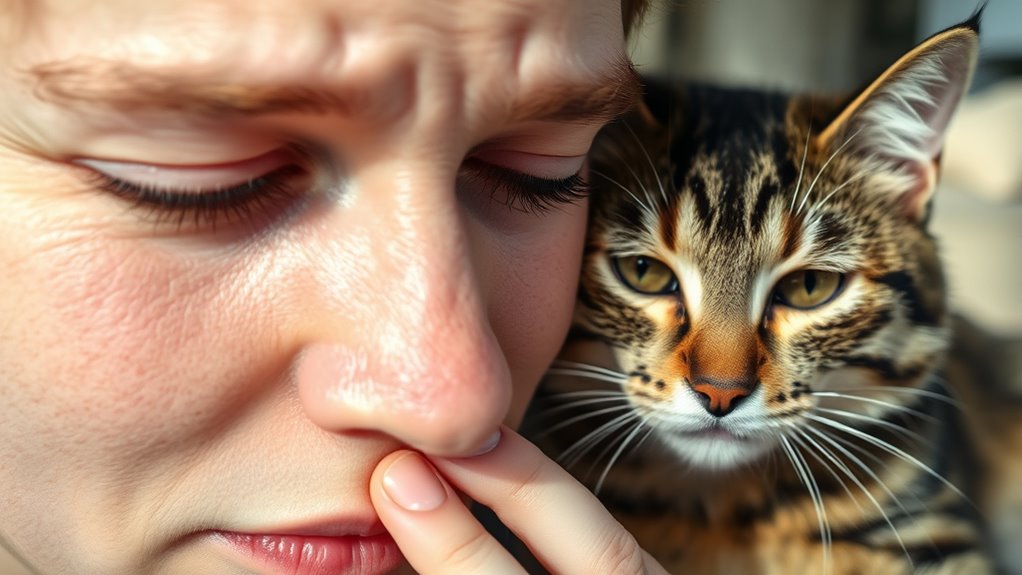
Have you ever wondered how fast your allergy symptoms might kick in after encountering a cat? Usually, symptoms show up within minutes to an hour after exposure. When you come into contact with cat dander, your immune system recognizes it as a threat and reacts accordingly.
This response causes symptoms like sneezing, itchy eyes, or a runny nose to appear quickly. How fast this happens depends on your sensitivity. Some people notice symptoms almost immediately, while others might take a little longer.
If you’re highly allergic, your body reacts faster, often within minutes. For less sensitive folks, symptoms may take more time to develop. Recognizing how quickly your symptoms appear can help you better understand your allergy and manage exposure.
What Factors Influence How Long My Allergy Symptoms Last?
Your allergy symptoms can last longer or shorter depending on how much time you spend around cats and how sensitive you are to their allergens. If you’re around cats a lot or have a strong allergy, your symptoms might stick around for a while.
Environmental things like humidity and how well-ventilated your space is also make a difference. For example, high humidity can make allergens stick around longer, while good air circulation can help clear them out faster.
Getting a handle on these factors can really help you manage your symptoms better and maybe even shorten how long they last.
Exposure Level and Duration
The duration of allergy symptoms often depends on how much allergen you’re exposed to and for how long. Higher allergen levels and longer exposure tend to make symptoms worse and last longer.
Your exposure timing also matters; early or late in the day can influence how your body reacts. To get a clearer picture, consider this:
| Exposure Level | Impact on Symptoms |
|---|---|
| High allergen concentration | Symptoms start quickly and last longer |
| Short exposure | Symptoms may be mild and brief |
| Extended exposure | Symptoms can persist for hours or days |
Lowering exposure levels and the time you’re exposed can help reduce how long symptoms last. Still, the overall effect depends on these factors.
Individual Allergy Sensitivity
Individual sensitivity to cat allergens varies widely, which affects how long allergy symptoms last. Your genetic factors play a big role in this, influencing how your immune system reacts. If you’re highly sensitive, symptoms may last longer and become more intense.
On the other hand, lower sensitivity can mean shorter, milder reactions. Several factors influence how long your allergy symptoms persist, including your immune response strength, which is shaped by genetics.
Your body’s ability to adapt or develop tolerance over time also matters. Additionally, having other allergies or sensitivities can make symptoms worse, and your overall immune health and age can change your sensitivity level.
Understanding your personal sensitivity helps you set realistic expectations and plan your treatment better. Recognizing these factors ensures you’re more prepared for how long symptoms might last after exposure.
Environmental Conditions Factors
Environmental conditions play a big role in how long allergy symptoms stick around after exposure to cat allergens. Things like humidity, temperature, and air circulation can affect how allergens stay in the air or settle on surfaces.
High humidity levels can boost allergen particles, making symptoms last longer. On the other hand, good ventilation helps spread allergens out and clear them away more quickly. Environmental exposure to dust, mold, or other triggers can also make symptoms worse and prolong their duration.
Cleaning habits like vacuuming regularly and washing bedding can help cut down on allergen buildup and shorten how long symptoms last. Overall, keeping your environment clean and having good airflow can really impact how long allergy symptoms persist after contact with cats.
Adjusting these conditions can make a noticeable difference and help manage allergy duration more effectively.
How Long Do Acute Cat Allergy Reactions Usually Persist?
Acute cat allergy reactions usually last a few hours to several days, depending on how much allergen you’re exposed to and your individual sensitivity. The length of symptoms varies based on your immune response and exposure level.
Mild reactions, like sneezing or watery eyes, often go away within a few hours and fade quickly. Moderate reactions, such as nasal congestion or cough, may last 1-3 days before improving.
Severe reactions can last longer, sometimes up to a week, especially if you’re still exposed or haven’t taken medications. How fast you manage your symptoms can also make a difference.
Using antihistamines or other treatments can help shorten the duration of acute symptoms. Knowing this timeline helps you understand what to expect and when to see a doctor if symptoms get worse or stick around longer than usual.
Can Repeated Exposure Make Symptoms Last Longer?
Repeated exposure to cat allergens can cause symptoms to last longer or become more severe over time. As you continue to encounter cat dander, your immune system may develop some tolerance, but this isn’t guaranteed and varies between people.
For some, repeated exposure can actually sensitize the immune response, leading to longer-lasting allergy symptoms. This makes managing symptoms trickier because they might stick around even after you leave the source.
Over time, your body might react more strongly, causing inflammation and discomfort that lasts longer than before. To prevent this, try strategies like minimizing exposure, cleaning regularly, or using air purifiers.
If your symptoms keep coming back or get worse, it’s a good idea to see an allergy specialist. They can help you create a plan to manage your allergies and see if immunotherapy might help you build more tolerance over time.
Signs That Your Allergy Symptoms Are Winding Down
You’ll probably notice your allergy symptoms easing up when you start sneezing less often and your breathing feels easier. It’s like your respiratory passages are opening up and clearing out.
And you might see your eyes stop itching and watering so much—that irritation begins to fade. These are good signs that your body is recovering, and your allergy symptoms are winding down.
Reduced Sneezing Frequency
As allergy symptoms start to fade, many people notice their sneezing happens less often. This decrease in sneezing is a good sign that your allergy symptoms are winding down. You might begin to feel relief as your body gets used to fewer allergy triggers.
Here are some signs to look for:
- Fewer sneezing episodes each day.
- Shorter sneezing fits.
- Less irritation in your nose and throat.
- Overall feeling of less congestion.
These changes show your immune response is calming down. Keep avoiding allergy triggers to help keep up the relief. Remember, less sneezing means your body is healing and your allergy symptoms are easing.
Clearer Respiratory Passages
When allergy symptoms start to get better, many people notice their respiratory passages become clearer and less congested. You might find it easier to breathe and feel relieved as mucus clears out.
Adding breathing exercises can help you take deeper breaths and increase your lung capacity, supporting your recovery. Nasal rinses also work well in flushing out allergens and reducing inflammation in your nasal passages.
As these symptoms ease up, you’ll likely see less congestion and more natural breathing. These signs mean your allergy symptoms are winding down, helping you regain comfort and clarity in your respiratory system.
Sticking with these techniques can speed up your recovery and help you feel normal again sooner.
Diminishing Eye Irritation
Noticing your eye irritation gradually lessens is a strong sign that your allergy symptoms are winding down. You might see your eyes less red and feel less itchy. To speed this up, try using eye drops to soothe irritation or cold compresses to reduce swelling.
Keep an eye on these signs: reduced redness and swelling around your eyes, less intense itching and watering, improved comfort after applying eye drops or cold compresses, and a decrease in the need to rub or touch your eyes.
If these symptoms persist or worsen, it’s a good idea to see a healthcare professional. Using eye drops regularly and applying cold compresses can help speed your recovery and show that your allergy symptoms are starting to fade.
How Long Do Symptoms Usually Remain After Exposure Ends?
After you remove yourself from a cat’s environment or the allergen exposure ends, your allergy symptoms don’t disappear immediately. The duration of symptoms varies based on how long you’ve been exposed and your individual sensitivity.
Usually, mild symptoms like sneezing or a runny nose last a few hours to a day after exposure stops. More intense reactions like coughing or wheezing might last longer—up to several days.
Mild symptoms fade within a day, while severe reactions can last several days.
Your body needs time to clear the allergens from your system, which affects how long symptoms stick around. Factors like allergen levels and your immune response also play a role.
Generally, once exposure ends, symptoms gradually fade over 24 to 48 hours. But some people might experience lingering symptoms for a few days, especially after prolonged or intense exposure.
Monitoring your symptoms and understanding your exposure timeline can help you better manage your allergy response.
When Should You See a Doctor for Prolonged Allergy Symptoms?
Prolonged allergy symptoms can be worrying, especially if they last more than a few days. If your symptoms stick around or get worse, it’s a good idea to see a doctor for a check-up. Persistent symptoms might mean something else is going on or that you’re having a serious allergic reaction.
You should see a doctor if:
- Your symptoms last more than two weeks even after trying treatment.
- You have trouble breathing, wheezing, or feel tightness in your chest.
- You notice swelling of your face, lips, or throat.
- Your symptoms are really interfering with your daily life or sleep.
These signs suggest your allergy might be more serious or need special treatment. Don’t ignore ongoing symptoms—they could be a sign of a bigger problem. A healthcare professional can help find the cause and create a plan to control your allergies and avoid complications.
Does Allergy Severity Affect How Long Symptoms Last?
The severity of your allergy symptoms can directly influence how long they last. If allergy testing shows you’re highly sensitive to cats, your symptoms might be more intense and stick around longer.
Severe reactions like intense sneezing, congestion, or asthma often take more time to go away. In contrast, mild symptoms usually clear up faster, especially with good management.
The more severe your reaction, the more likely you’ll need targeted treatments such as antihistamines or nasal sprays to help reduce symptoms quickly.
Managing severe allergy symptoms promptly can shorten how long they last. But it’s important to understand that the underlying severity plays a big role in how long they stick around.
Regular allergy testing can help determine your sensitivity level. This guides personalized strategies to control symptoms and may help reduce how long they last.
What Can Help Shorten the Duration of Cat Allergy Symptoms?
Using effective allergy medications can really help you feel better faster by quickly reducing your symptoms. It’s also a good idea to take some environmental steps, like cleaning your space more often and using air purifiers, to cut down on the triggers that worsen your allergies. When you combine these strategies, you give yourself the best shot at shortening how long your allergy symptoms stick around.
Effective Allergy Medications
When you want to reduce the duration of cat allergy symptoms, choosing the right medications can make a real difference. Antihistamines like loratadine or cetirizine help block allergic responses quickly. Decongestants can also provide relief from nasal congestion.
Furthermore, immunotherapy benefits include gradually desensitizing your immune system, which can lessen symptom severity over time. To get the most out of your treatment, consider these steps:
- Use antihistamines early to prevent symptoms from getting worse.
- Combine antihistamines with nasal sprays for targeted relief.
- Talk to your doctor about immunotherapy if symptoms stick around.
- Follow medication instructions carefully to shorten how long your symptoms last.
Choosing the right mix of medications can really help you manage and reduce allergy symptoms effectively.
Environmental Control Strategies
Implementing effective environmental control strategies can greatly reduce the duration of cat allergy symptoms. Using air purifiers with HEPA filters helps capture airborne allergens, decreasing exposure and symptom severity.
Regular cleaning routines are essential; vacuuming carpets, upholstery, and curtains with a HEPA filter vacuum removes accumulated dander. Washing bedding and plush toys weekly prevents allergen buildup.
Keep your home well-ventilated to reduce allergen concentration. Designate pet-free zones, especially bedrooms, to limit exposure during sleep.
Maintaining a clean environment minimizes allergen presence, helping you recover faster after exposure. Combining these strategies creates a less allergenic space, making allergy symptoms more manageable and shorter in duration.
Consistency is key to effectively controlling your environment and alleviating symptoms.
How Can You Prevent or Minimize Long-Lasting Allergy Reactions?
To prevent or minimize long-lasting allergy reactions to cats, it’s important to take proactive steps to reduce your exposure to allergens. Focus on allergy-proofing your home and managing pet dander effectively.
Here are four key strategies:
- Regular Cleaning: Vacuum using a HEPA filter and dust surfaces often to get rid of pet dander.
- Create Allergen-Free Zones: Designate certain rooms, like the bedroom, as cat-free areas.
- Use Air Purifiers: Invest in high-efficiency air purifiers to cut down airborne allergens.
- Wash Hands and Clothing: Always wash your hands after handling your cat, and change clothes to prevent allergen spread.
Implementing these steps can significantly lower allergen levels and reduce how long allergy symptoms last, helping you enjoy your home with fewer issues.
Frequently Asked Questions
Can Allergy Medications Speed up Symptom Resolution?
Yes, allergy medications can help speed up symptom relief. Antihistamines like loratadine or cetirizine work quickly to block histamine effects, so you feel better sooner.
Decongestants can clear up nasal congestion, and nasal sprays target inflammation right where it’s happening. Using the right medication and dose makes a big difference in how fast you recover.
Just remember to follow the recommended doses. Overusing these medicines can cause side effects. When used properly, they usually shorten your allergy symptoms and help you feel better faster.
Do Different Cat Breeds Cause Varying Allergy Durations?
Different cat breeds can influence allergy duration, but it’s like chasing a moving target. Hypoallergenic breeds are less likely to trigger prolonged symptoms because they produce fewer breed-specific proteins that cause allergies.
However, no breed is completely allergy-proof. Your reaction depends on your sensitivity level and exposure.
How Does Age Affect Allergy Symptom Length?
Your age plays a role in how long allergy symptoms last, often affecting their severity and duration. Younger people tend to have quicker, more intense reactions, while older adults might notice milder or shorter symptoms.
This difference is mainly due to how the immune system develops and your past exposure to allergens. As you get older, your body’s response can change, making symptoms either stick around longer or become less severe.
It really depends on your personal allergy history and overall health. So, age influences not just how bad your symptoms are, but also how long they tend to last.
Are There Natural Remedies to Reduce Symptom Duration?
To shorten cat allergy symptoms, try simple home remedies like using air purifiers to clear allergens and incorporating dietary changes that boost your immune response.
Essential oils like eucalyptus or peppermint can soothe symptoms when diffused. These natural remedies may help reduce symptom duration, providing relief faster.
Consistently practicing these strategies creates a calming, clean environment, helping you feel better sooner and live more comfortably despite allergies.
Does a History of Allergies Influence Reaction Duration?
Yes, a history of allergies can influence how long your symptoms last. Your immune response might be more sensitive to triggers like cat dander, leading to a stronger and longer-lasting reaction.
If you’re allergic, your body reacts more intensely, which can extend how long symptoms stick around. Knowing what sets off your allergies helps you manage reactions better.
It may also help reduce how long symptoms last after exposure. Being aware of your triggers means you can take steps to minimize reactions and recover more quickly.
Conclusion
Understanding how long cat allergy symptoms last helps you manage exposure, recognize signs, and seek help when needed.
By knowing what triggers longer reactions and how to reduce their duration, you can better handle your allergy.
Knowing when to see a doctor is key to staying healthy and avoiding unnecessary discomfort.
Preventing, minimizing, and addressing allergy symptoms isn’t just about relief — it’s about reclaiming your comfort, your health, and your life.
If you’re wondering how long cat allergy symptoms last after exposure, staying informed puts you in control.
Stay prepared and proactive so you can enjoy your space without constant worry about allergy flare-ups.