Signs Cats Have Seasonal Allergies
Dealing with a kitty that seems itchy, sneezy, or uncomfortable during certain times of the year can be really stressful.
If your cat is showing signs of seasonal allergies, you’re not alone—many pet owners struggle with this issue every year.
You’ll notice signs like persistent scratching, sneezing, watery eyes, and skin irritation in your cat if they have seasonal allergies.
They may also rub their face frequently or develop rashes and bald patches from excessive grooming.
Respiratory issues like sneezing and nasal discharge are common too.
If these symptoms continue or worsen, veterinary help is essential.
Keep exploring to uncover more ways to keep your kitty comfortable during allergy season.
Key Takeaways
- Persistent itching, scratching, or face rubbing can be signs your cat has allergies.
- If your cat is sneezing a lot, coughing, or has a runny nose, it might be irritated by allergies.
- Watery or red eyes often indicate an allergic reaction affecting the eyes.
- Skin issues like rashes, irritation, or bald patches are common signs of allergies.
- Excessive grooming leading to hair loss can also be a response to allergies.
How Do Seasonal Allergies Affect Cats?
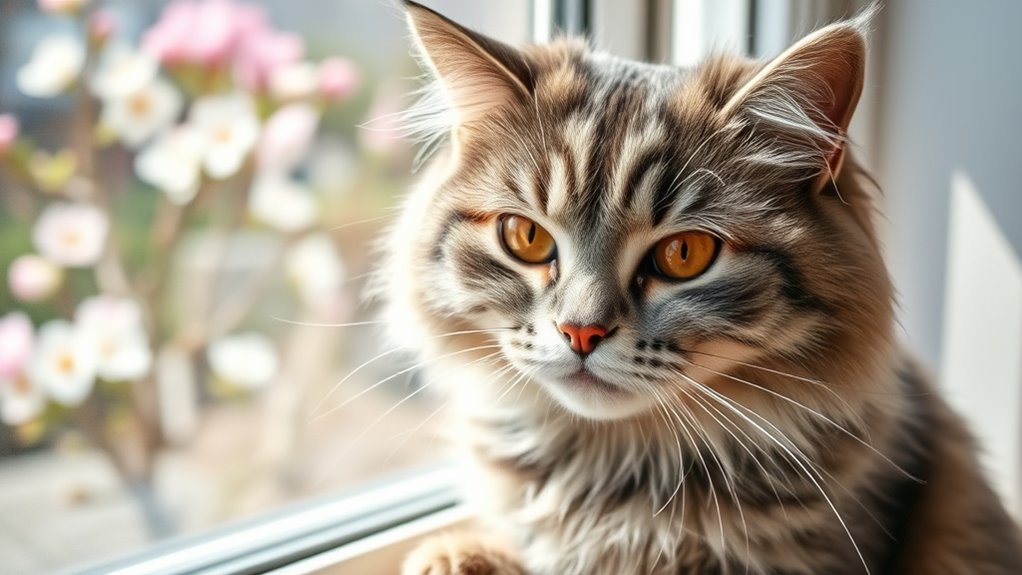
When spring and fall roll around, your cat may start showing signs of allergies. It’s important to understand how seasonal changes can impact their health. Seasonal allergies trigger an immune response that causes your cat to react to airborne allergens like pollen, mold, or dust.
These triggers can lead to symptoms such as sneezing, itching, and watery eyes. With each allergy season, your cat’s immune system overreacts, mistaking harmless substances for threats. Managing this allergy response involves allergy management strategies, such as limiting exposure to outdoor allergens and using hypoallergenic products.
Keeping your home clean and reducing dust can also help. Recognizing these patterns allows you to take proactive steps to minimize discomfort. By understanding how seasonal allergies influence your cat’s immune response, you can better support their health and comfort during these times.
Proper allergy management reduces symptoms and helps your feline friend enjoy the changing seasons.
What Causes Allergies in Cats?
Allergies in cats happen when their immune system overreacts to substances that are usually harmless. One common trigger is pollen, especially during peak seasons when plants release a lot of pollen into the air.
When your cat breathes in or touches pollen, their immune system sees it as a threat. This causes the release of chemicals like histamine, which leads to symptoms like sneezing, itching, or watery eyes.
Other things that can cause allergies include dust mites, mold spores, and certain chemicals in cleaning products or perfumes. These substances can also trigger an immune response, making your cat uncomfortable.
Genetics can play a part, making some cats more prone to allergies than others. Knowing what causes allergies helps you reduce your cat’s exposure and better manage their symptoms.
How Can You Recognize Cat Allergy Symptoms?
How can you tell if your cat is suffering from allergies? Recognizing feline sensitivity involves noticing subtle changes in behavior and appearance. Common allergy symptoms include sneezing, coughing, and watery eyes.
You might also see your cat scratching more than usual or rubbing their face against furniture. These signs show an allergic reaction and suggest that allergy management might be needed.
Here are some specific symptoms to watch for:
- Frequent sneezing or coughing
- Excessive grooming or hair loss
- Red, irritated skin or watery eyes
Paying close attention helps you spot allergy symptoms early. This way, you can consult your veterinarian for proper diagnosis and treatment.
Managing your cat’s allergy symptoms involves reducing exposure to allergens and possibly trying different strategies. Being proactive helps keep your feline comfortable and healthy, especially during seasonal changes when allergies tend to flare up.
What Are the Common Signs of Itchy Skin and Excessive Grooming?
One of the most noticeable signs of allergies in cats is when they start scratching or grooming themselves excessively. This behavior often indicates skin irritation caused by allergic reactions.
You might notice your cat biting or licking certain areas more often, especially around the face, paws, or neck. Their grooming habits may become obsessive, leading to bald patches or irritated skin.
Excessive grooming can also cause redness, inflammation, or sores. If your cat’s skin looks inflamed or they seem uncomfortable, it’s a clear sign that allergies could be involved.
Pay attention to how often your cat grooms and whether they do so with increased intensity or for longer periods. These signs of itchy skin and overgrooming are key indicators of allergy-related discomfort.
Addressing these symptoms early can help prevent further skin problems and improve your cat’s overall well-being.
How Do Allergies Lead to Sneezing and Respiratory Issues?
When your cat comes into contact with an allergen, their immune system overreacts, triggering inflammation in their respiratory passages. This is basically their way of trying to fight off what it perceives as a threat.
Because of this inflammation, your cat might start sneezing more than usual, cough, or even have trouble breathing. Getting to know how allergies can affect their respiratory system can help you spot the signs early on and get them the right care they need.
Inflammatory Response Trigger
Allergies in cats activate their immune system, which triggers an inflammatory response that affects their respiratory system. When your cat encounters an allergen, their immune system overreacts and releases chemicals like histamine.
This causes blood vessels to expand and tissues to swell, leading to symptoms like sneezing and nasal congestion. You might notice increased mucus production or itchy, inflamed tissues on your cat.
To understand this better, remember that the immune system mistakenly sees harmless substances as threats. The inflammatory response causes swelling, redness, and irritation.
These reactions are your cat’s way of trying to get rid of the allergen. This explains why they might sneezing or feeling uncomfortable during allergy season.
Respiratory System Impact
Allergies can directly impact your cat’s respiratory system by causing inflammation and irritation in their nasal passages and airways. This leads to frequent sneezing, nasal congestion, and sometimes difficulty breathing. Over time, the irritation can increase the risk of secondary respiratory infections.
Here’s how allergy symptoms show up:
| Symptom | Effect |
|---|---|
| Sneezing | Clears irritants from nasal passages |
| Nasal Discharge | Shows inflammation |
| Breathing Difficulties | Means reduced airflow and labored breathing |
| Coughing | Irritation spreading to the throat |
These signs indicate your cat’s respiratory system is affected. It’s important to identify and manage allergies quickly to avoid more infections and discomfort.
How Do Allergies Cause Eye and Nose Discharge?
Allergic reactions cause inflammation in your cat’s nasal and eye tissues, which leads to increased mucus production. This is why your cat might have eye discharge and a runny nose—it’s the body’s way of flushing out allergens.
The inflammation makes blood vessels in these areas more permeable, so fluid leaks into nearby tissues. That’s why you might see watery or cloudy eye discharge and a runny nose.
To understand this better, think of excess mucus as the body’s way to trap and get rid of allergens. Eye discharge can be clear, thick, or watery depending on how severe the reaction is.
Nose discharge usually appears as watery or thick mucus, showing irritation. These signs mean your cat’s immune system is overreacting to seasonal allergens, causing inflammation and extra mucus.
Recognizing these symptoms helps you manage your cat’s allergic response more effectively.
What Gastrointestinal Symptoms Are Associated With Cat Allergies?
Have you noticed your cat experiencing upset stomachs or changes in bowel movements? These could be signs of gastrointestinal distress linked to allergies.
Cats with seasonal allergies may develop symptoms like vomiting, diarrhea, or constipation. Often, these issues come from allergic reactions to environmental triggers that cause inflammation in the digestive tract.
Dietary changes can sometimes make these symptoms worse, especially if your cat has sensitivities or food allergies. Watch for signs like frequent licking of the lips, excessive grooming around the stomach, or unusual stool patterns.
If your cat’s gastrointestinal symptoms persist or get worse, it’s important to see your veterinarian. They can help figure out if allergies are the cause and recommend the right treatment or dietary adjustments.
Recognizing these signs early can help prevent more discomfort and make managing your cat’s seasonal allergy symptoms easier.
How Can I Identify and Reduce Environmental Allergens?
Wondering how to spot and minimize environmental allergens that may be affecting your cat? Identifying allergen sources in your home is key. Environmental control means reducing exposure to triggers like pollen, dust mites, mold, or cigarette smoke.
Identify and reduce environmental allergens like pollen, dust, and smoke to help keep your cat healthy and comfortable.
To help, consider these steps:
Keep windows closed during high pollen seasons and use air purifiers with HEPA filters to trap airborne allergens. Regularly clean and vacuum your home, especially carpets and upholstery, to remove dust, pet dander, and mold spores.
Wash your cat’s bedding and toys often to minimize allergen buildup.
When Should I See a Vet About My Cat’s Allergies?
Knowing when to seek veterinary care for your cat’s allergies can make all the difference in managing their health effectively. If your cat shows persistent itching, sneezing, or skin irritation despite home remedies, it’s time to see a vet.
They may recommend allergy testing to identify specific triggers, whether environmental or food-related. If your cat develops symptoms like vomiting, diarrhea, or weight loss, these could indicate food sensitivities that need professional diagnosis.
Don’t delay if symptoms worsen or don’t improve after avoiding suspected allergens. A veterinary visit is essential to develop a tailored treatment plan, which may include medications, special diets, or allergy shots.
Prompt veterinary attention ensures your cat’s discomfort is properly diagnosed and managed, helping prevent chronic issues or secondary infections. Early intervention can greatly improve your cat’s quality of life and help avoid unnecessary suffering.
How Can You Help Your Cat Feel Comfortable During Allergy Season?
During allergy season, you can help your cat feel more comfortable by creating a calm, allergen-reduced environment. Reducing exposure to triggers can ease symptoms and improve their overall comfort. You might consider:
Create a calm, allergen-reduced space to help your cat feel comfortable during allergy season.
- Regularly vacuuming and dusting to minimize airborne allergens.
- Using air purifiers with HEPA filters to improve indoor air quality.
- Providing natural remedies like herbal supplements or calming sprays, after consulting your vet, to promote allergy relief.
Additionally, keep your cat’s bedding clean and wash it frequently. Limiting outdoor activities during peak pollen times can also help reduce exposure. Creating a stress-free space with cozy hiding spots allows your cat to rest comfortably.
Frequently Asked Questions
Can Seasonal Allergies in Cats Be Hereditary?
Yes, seasonal allergies in cats can be hereditary. You might notice allergy symptoms running in your cat’s family, which suggests genetic factors play a role.
To confirm, you can consider allergy testing. It helps identify specific triggers and determine if allergies are inherited.
Recognizing hereditary tendencies allows you to manage your cat’s environment better. Work with your vet to reduce allergy symptoms effectively.
Are Certain Cat Breeds More Prone to Seasonal Allergies?
Yes, some cat breeds are more prone to seasonal allergies because of their genetic makeup and sensitivity. Breeds like Siamese, Burmese, and Abyssinians often tend to show allergy symptoms more frequently.
It’s a good idea to keep an eye on your cat during allergy seasons, especially if they belong to a breed known to be sensitive. Regular vet visits and limiting exposure to potential allergens can really help ease their discomfort.
How Long Do Seasonal Allergy Symptoms Typically Last?
Imagine your cat scratching at the air, eyes watering like dew on a morning leaf. That’s how allergy triggers can affect them. Typically, allergy symptoms last for a few weeks, matching peak pollen or mold levels.
The duration varies based on exposure and how sensitive your cat is. During this time, you might notice sneezing, itching, and watery eyes. With quick management, these symptoms can ease before they take over your feline friend’s comfort.
Do Diet Changes Help Reduce Allergy Symptoms in Cats?
Diet changes can help reduce allergy symptoms in cats by supporting allergy management. You should consider incorporating dietary adjustments like hypoallergenic or limited ingredient foods, which minimize exposure to common allergens.
These changes can strengthen your cat’s immune response and reduce inflammation. Always consult your veterinarian before making dietary adjustments, as they can recommend specific options tailored to your cat’s needs.
This can improve your cat’s comfort and overall health during allergy season.
Can Cats Develop Allergies to Indoor Plants During Allergy Seasons?
Like a detective sniffing out clues, you may notice your cat develops allergy symptoms during certain seasons, and indoor plant allergens could be the culprit.
Yes, cats can develop allergies to indoor plants, causing symptoms like sneezing, itching, or watery eyes.
These plant allergens become triggers, especially during allergy seasons, making your feline friend uncomfortable.
Keep an eye on their reactions and consider removing or relocating suspect plants to reduce their discomfort.
Conclusion
Remember, an ounce of prevention is worth a pound of cure. By staying vigilant and recognizing the signs of seasonal allergies early, you can help your cat feel more comfortable during allergy season.
Regular check-ups, minimizing environmental triggers, and working with your vet can make a big difference. Don’t wait until allergies take a toll. Your proactive care can mean the difference between misery and comfort for your feline friend.
Stay attentive, and your cat will thank you!